Science and technology
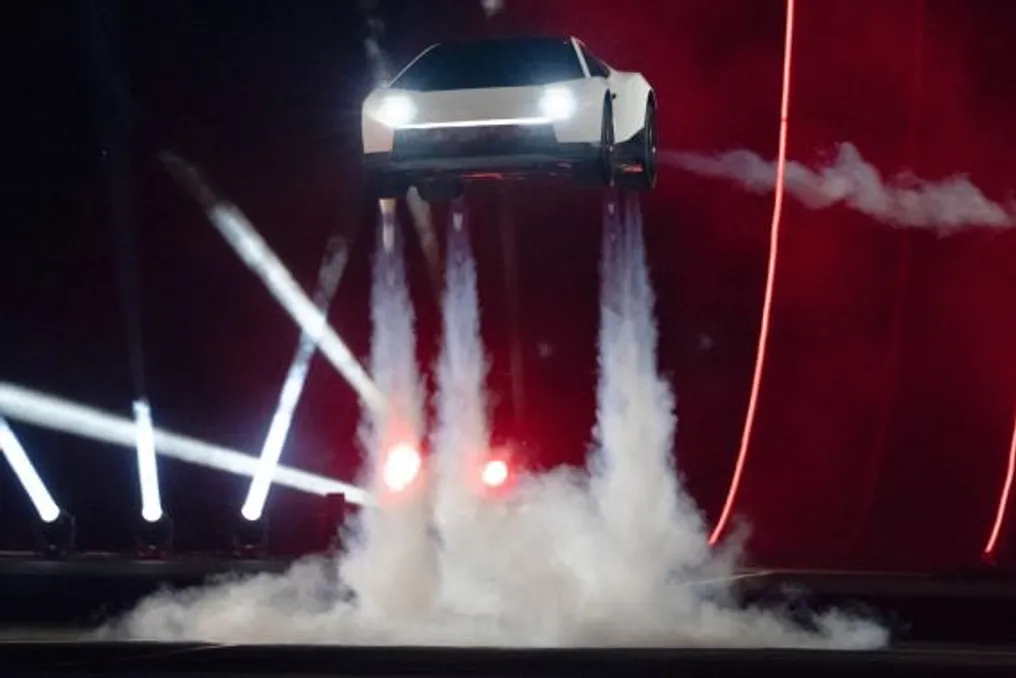
Tesla Roadster rocket booster system runs for five seconds and requires up to six hours to recharge
The new Tesla Roadster made an impression during its presentation by jumping over other cars. However, this trick comes at a time cost. According to Lars Moravy, Vice President of Vehicle Development at Tesla, the Thrust version's engines operate for about five seconds, and currently, recharging them takes between two and six hours. This information was presented in a video for the British magazine Top Gear. The manufacturer's goal is to reduce this time to less than thirty minutes. The boosters were developed in collaboration with SpaceX, Elon Musk's rocket company. These devices, called cold gas thrusters, do not burn fuel; they release compressed nitrogen in short bursts from a reservoir. In the Thrust version, the reservoir holds 200 liters and operates at a pressure of up to 10,000 pounds per square inch (psi)—which is more than 300 times higher than the pressure in a car tire calibrated to 32 psi. Moravy described the refueling process by connecting the car to an external nitrogen source. Since most common high-pressure systems reach about 6,000 psi, the owner will require specialized industrial equipment to fill the tank, according to Motor1's website. The Rocket version, which is single-seater and equipped with approximately ten boosters distributed across the body, uses even larger reservoirs, around 600 liters. The Roadster was unveiled on October 15th in Texas (USA). At the event, the car climbed a ramp, flipped over, and jumped over five models of the same make. Tesla offers the car in three variants: Performance, without boosters; Thrust, with rear boosters that, according to the company, allow the car to accelerate from 0 to 96 km/h in less than 0.9 seconds; and Rocket. Currently, the manufacturer charges only for the reserve version: 267 thousand reals ($50,000 USD) for Performance and 1.3 million reals ($250,000 USD) for Thrust. The Rocket version is available only by invitation. Elon Musk, CEO of Tesla, promises to begin production in 2028. The supercar was first introduced in 2017, with the initial launch scheduled for 2020.
November 1, 23:00Moon approaches Mars and Jupiter early in the week, causing lunar occultation in certain regions
November 1, 19:06OpenAI CEO Sam Altman argues that RAM memory should be allocated in data centers and not in user PCs
November 1, 18:21November Astronomical Calendar: Notable Events Include Voyager 1's Historic Distance and End of Mercury Retrograde
November 1, 18:20Artificial intelligence leads to the disappearance of traditional entry-level engineering positions in the IT sector
November 1, 17:34Kavach technology launched on 67 km of railway line in Rajasthan to prevent collisions
November 1, 17:23Mukhiddin Muhammad oʻgʻli Pazilidin defends his PhD dissertation in economics
November 1, 15:38China plans to send astronauts to the Moon before 2030 and establish a research station there
November 1, 15:19Tehran and New Delhi hold talks on deepening technological cooperation
November 1, 14:20Second Russian internet satellite 'Rassvet-3' burned up in the atmosphere; project difficulties are being discussed
November 1, 13:17Attention Test: Try to find 10 mistakes in the image in 10 seconds
November 1, 12:21NASA's Swift Telescope Rescue Mission Fails; Satellite Set to Re-enter Earth on November 6
November 1, 11:39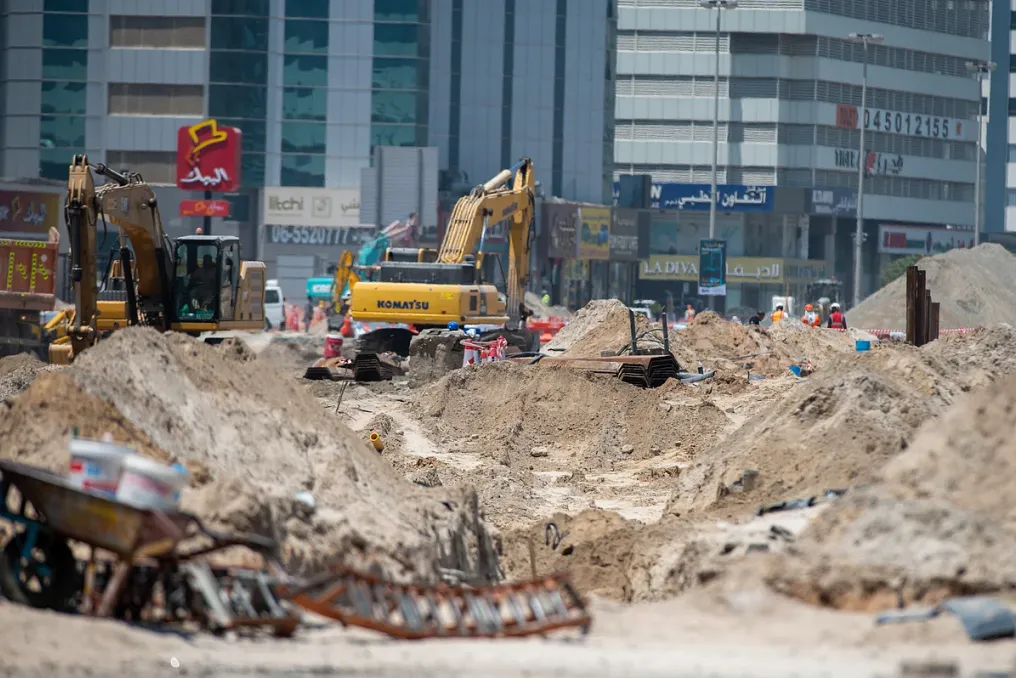
Dubai plans to reduce traffic congestion and accidents using an artificial intelligence strategy
The Roads and Transport Authority of Dubai (RTA) has approved a series of goals within its updated Artificial Intelligence (AI) Strategy. These goals include reducing traffic congestion by 3–5 percent, shortening the processing time for inquiries and complaints by 20–30 percent, and decreasing waiting times at Customer Satisfaction Centers by 14–16 percent. Furthermore, the authority intends to reduce service delivery times in these centers by 15–20 percent, decrease the number of road traffic accidents involving drivers with new licenses by 10–20 percent, and shorten procurement cycles by 10–15 percent. Planned measures also include saving 10–15 percent of working time in operational and engineering fields. The strategy, launched by Mattar Al Tayer, CEO and Chairman of the RTA Executive Council, aims to expand the application of AI across Dubai's entire transport network and public services. The main focus is on increasing the speed, efficiency, and convenience of daily processes for residents. The strategy covers 41 areas across RTA's agencies, sectors, and departments, with the first two phases of its implementation affecting 11 business areas. These include vehicle licensing, road traffic, roads, public transport, customer service, procurement, and human resources management. Over a period of more than two and a half years, RTA plans to develop 40 AI-based products, 11 of which are already completed, and implement four foundational projects. The strategy is expected to generate over 300 million AED in annual added value and lead to 50 percent of operations and services being migrated to the Agency AI ecosystem. Al Tayer noted that the updated strategy moves RTA's digital transformation beyond AI applications that support staff and operations, directing it towards systems capable of analyzing information, forecasting outcomes, and providing services. He emphasized that this initiative aligns with Dubai's broader ambitions to accelerate the adoption of AI in the public sector and strengthen the emirate's position as a global hub for intelligent solutions.
November 1, 10:28Huawei's Qiankun driving assistance system surpasses 17.3 billion kilometers of driver-supported mileage
November 1, 09:50AI agents create over 20,000 Tencent Cloud TDSQL-C databases daily, growth exceeds 80 times
November 1, 09:50CXMT refutes Micron's arguments regarding 4F² DRAM density and announces first samples by year-end
November 1, 09:50Experts warn of surveillance risks via home cameras in the UAE due to weak security settings
November 1, 05:00Leading Scientists Discuss Artificial Intelligence at Global Laureates Forum
October 31, 15:17