Work
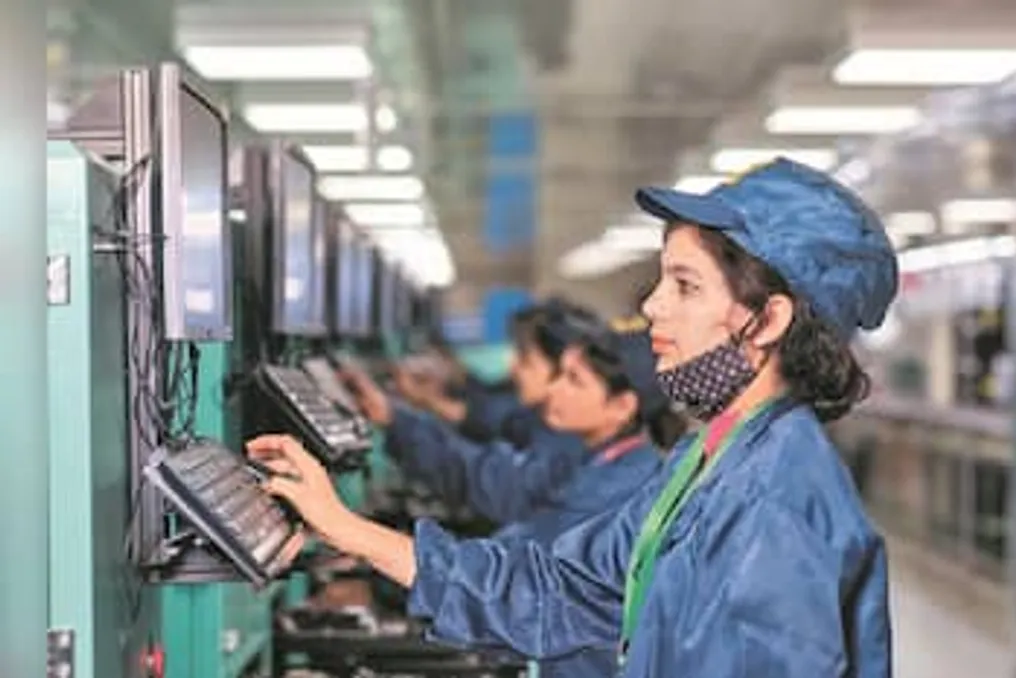
Icrier study shows growth in female employment in India, but under less favorable conditions
According to a study conducted by the Indian Council for Research on International Economic Relations (Icrier), the number of women in the labor force in India has almost doubled between 2017–18 and 2025. However, this growth is concentrated in unprotected employment sectors, accompanied by a reduction in working hours and an expansion of the wage gap. The study, titled 'Participation Paradox: Women's Work and Time Use in India from 2017–18 to 2025,' found that women have taken up more paid work, while their unpaid domestic responsibilities have not decreased. This has resulted in them having less time for rest and self-care. The authors, including Tanu M Goyal, Shravani Prakash, Ketaki Gaikwad, and Arjuna Tandon, based on data from the Periodic Labour Force Survey (PLFS), reported that the number of working women increased from 104 million in 2017–18 to 201 million in 2025. Meanwhile, the ratio of female workers rose from 22 percent to 38 percent. It should be noted that the figures for 2025 are based on a revised PLFS with an increased sample size and calendar period, and the authors caution about the need for caution when comparing with 2017–18 data. The increase in employment was concentrated in rural India and the agricultural sector. The female worker ratio in rural areas increased from 23.7 percent to 44.9 percent, while in urban areas it grew from 18.2 percent to 25.9 percent. The share of men in the primary sector of rural areas decreased from 54.1 percent to 47.2 percent, while the share of women in rural areas increased from 70.7 percent to 73.3 percent. The study noted: 'Structural transformation is visible for men, but it has largely bypassed women in the country.' Regular wage employment could not keep pace with the growth rate. Among rural women, self-employed workers increased from 13.9 million to 56 million, raising their share in rural female employment from 18.6 percent to 37.2 percent. Meanwhile, regular wage employment increased from 7.9 million to 13.9 million, but its share decreased from 10.5 percent to 9.3 percent. The authors concluded that 'the additional women entering the workforce primarily came through self-employment and unpaid family labor, which are the most unstable and least paid categories.' The authors suggest that such a sharp rise in rural India is harder to interpret as a reaction to improved opportunities; rather, it indicates that rural women are 'drawn in out of necessity, whether in agricultural activities or home-related enterprises.' The report also mentions an alternative view presented by the Economic Survey for 2023–24 and some researchers, according to which the growth was driven by opportunities. Average weekly hours decreased for all groups between 2017–18 and 2025, but the working week for rural women decreased the most—by more than six hours. The study notes: 'The increase in participation along with the reduction in hours per worker implies an expansion of the workforce towards increasingly marginal, low-intensity activities.' The wage gap also widened. The nominal monthly wage of rural men increased by approximately 65 percent over the specified period, while for rural women, this growth was 41 percent. In 2025, rural women earned about 45 percent of the monthly salary of rural men, compared to 53 percent previously. In nominal terms, the monthly gap in rural areas almost doubled, increasing from approximately 4200 rupees to over 8000 rupees. Unpaid labor of women remained virtually unchanged. Time use surveys for 2019 and 2024 show that the difference in unpaid domestic labor remained generally constant—about 223 minutes per day among participants in 2024, and the difference in caregiving increased from 58 to 63 minutes. In 2024, working women also had less time for self-care than women overall: 18 minutes less in rural areas and 31 minutes less in urban areas, while working men had slightly more time than men overall. Six out of ten women not in the labor force cited childcare and household obligations as the main reason, whereas men had almost no such reasons. The authors call for a shift from maximizing participation to ensuring structural transformation. They recommend implementing more childcare services, enforcing kindergarten rules, introducing paid paternity leave and shared parental leave, setting employment targets for women in production-related incentive schemes, as well as social protection for women working in the gig economy, and conducting regular time use surveys alongside PLFS.
November 1, 20:48Ster-Kinekor lost legal appeal in employee dismissal case over popcorn tasting
November 1, 16:35Workers Protest in Bangladesh Over Wage Hike, Riots Occur
November 1, 14:52Engineer Earning 100 Thousand Rupees in Village Considers Moving to City Due to Boredom
November 1, 14:22Process After Submission of the 8th Departmental Commission Report: Five Key Stages
November 1, 13:30Forecast for Consumer Price Index Increase: DA for Central Staff May Reach 67% Before the 8th Salary Committee Report
November 1, 09:22UAE Legislation: Possibility to Prohibit Employees from Working for Competitors After Termination
November 1, 08:21Jammu and Kashmir Government Begins Traditional Relocation of State Offices to Jammu
October 31, 21:03Friend's advice: Should you change jobs for a salary increase in Pune or stay in the city with lower expenses?
October 31, 12:01List of professions unavailable to migrants to be expanded in Khanty-Mansi Autonomous Okrug
October 31, 10:08Former Microsoft Employee Starts 30-Day Challenge After Firing Before Diwali
October 31, 09:06Labor court rules to reinstate Ster-Kinekor employee fired for eating popcorn
October 31, 09:00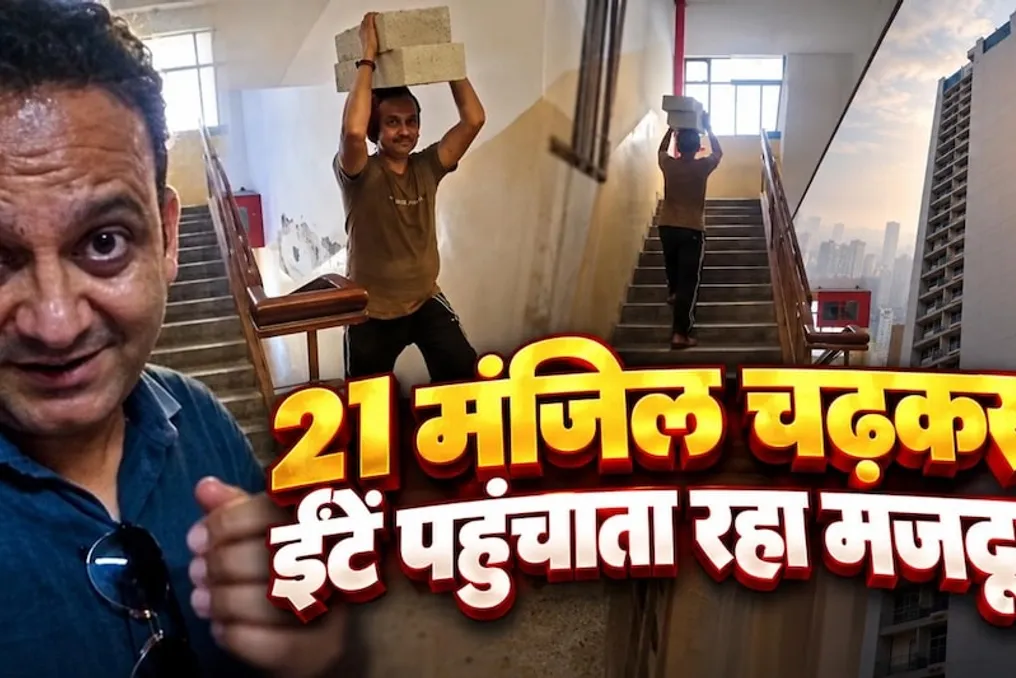
Worker carries bricks to the 21st floor by stairs despite four elevators in the building
A video that went viral on social media has once again raised questions about how construction workers are treated in society. The video shows a construction worker carrying heavy bricks to the 21st floor using only the stairs. Notably, the building where he was working has four elevators installed. This clip prompted public questions: why did the worker have to endure such difficulties if elevators were available? Was he prohibited from using the elevators? Perhaps this is related to the residential complex's rules or simply because the people involved in construction did not consider the worker's convenience? The exact reason for what happened in the video is unclear, so it cannot be stated that the worker was intentionally denied access to the elevator. However, this incident drew attention to a problem faced by workers in many large residential complexes across the country. As the video shows, despite the presence of four elevators in the building, workers have to carry bricks to the 21st floor by stairs. In modern metropolises, high-rise buildings are being constructed that offer residents numerous amenities such as elevators, parking lots, security, and gardens. Nevertheless, the situation of workers employed in these buildings often differs. Various rules are established in many residential complexes for residents and employees. For example, some places provide separate entrances or service elevators for service personnel, couriers, cleaners, and builders. These measures are based on practical considerations, such as protecting elevators from dirt, dust, and construction materials, preventing interference with people's movement, and maintaining cleanliness in the building. However, the problem arises when these rules lead to workers being deprived of even basic conveniences. If the building has a service elevator, it can be used to transport construction materials. If the elevator is unavailable or its use is impossible, other measures must be provided to ensure the workers' safety. A person should not be forced to experience excessive physical strain just because they are earning a wage. Various rules regarding elevator usage are in place in large complexes. In some places, elevators are intended exclusively for residents, while separate service elevators are used for transporting goods. Sometimes there is a concern that dust, cement, or other items might fall in the elevator during the transportation of construction materials. In such cases, the complex management may impose restrictions on elevator use. Furthermore, in some places, contractors performing construction or repairs must organize the delivery of materials for the workers themselves. If the contractor does not provide adequate resources for the workers, the burden may fall directly on them. Nevertheless, this does not mean that workers should climb many floors with heavy objects up the stairs. The purpose of establishing rules should be to maintain order, not to complicate anyone's life. Imagine how difficult it is to breathe after several trips up the stairs in your own home. How much harder is it for a person who has to carry heavy bricks on their shoulders or back to the 21st floor? Construction workers are subjected to physical labor daily: they lift bricks, carry sand and cement, and sometimes work at heights. Constantly carrying heavy loads up stairs puts enormous pressure on the body. This can lead to muscle spasms, back and knee injuries, fatigue, and an increased risk of falling. This becomes especially difficult if the worker has already been at work for many hours.
October 31, 08:46IBPS releases recruitment notification for three posts; applications start on October 29
October 31, 08:06Thousands protest in Italy against inflation and military spending
October 31, 03:34Central Canadian Union Announces Refusal to Handle Military Cargo Bound for Israel
October 30, 23:30What to do in case of electoral harassment in the workplace, according to experts
October 30, 23:26Uttar Pradesh Government Launches Skill Development and Employment Program for Youth in Five Districts
October 30, 19:47Age limit for government positions increased by five years in Tamil Nadu
October 30, 19:04