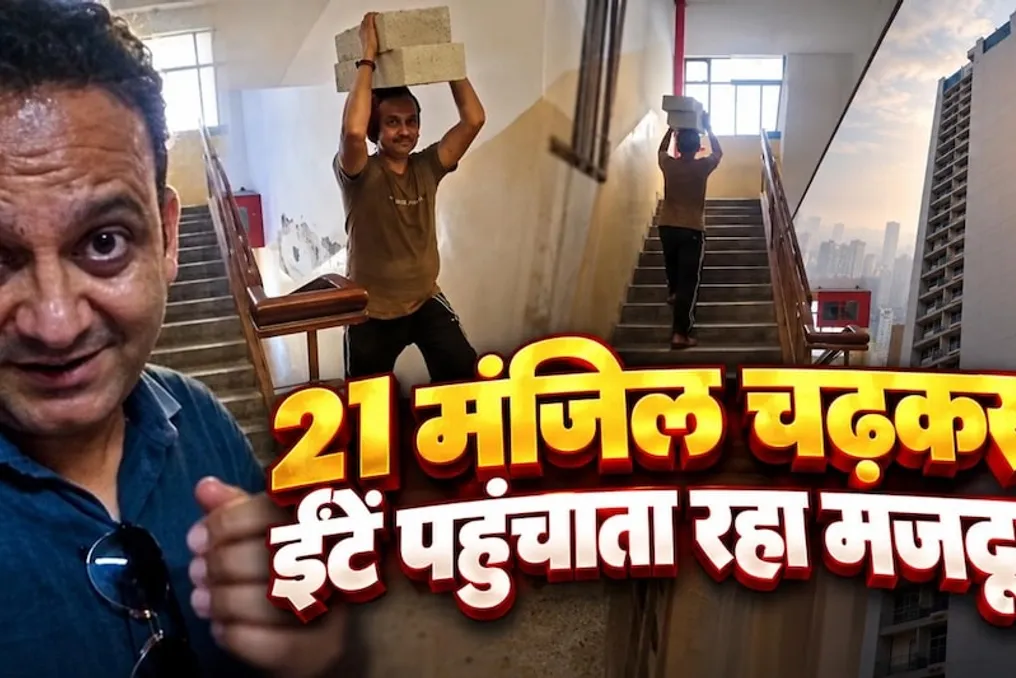
A video that went viral on social media has once again raised questions about how construction workers are treated in society. The video shows a construction worker carrying heavy bricks to the 21st floor using only the stairs. Notably, the building where he was working has four elevators installed.
This clip prompted public questions: why did the worker have to endure such difficulties if elevators were available? Was he prohibited from using the elevators? Perhaps this is related to the residential complex's rules or simply because the people involved in construction did not consider the worker's convenience?
The exact reason for what happened in the video is unclear, so it cannot be stated that the worker was intentionally denied access to the elevator. However, this incident drew attention to a problem faced by workers in many large residential complexes across the country. As the video shows, despite the presence of four elevators in the building, workers have to carry bricks to the 21st floor by stairs.
In modern metropolises, high-rise buildings are being constructed that offer residents numerous amenities such as elevators, parking lots, security, and gardens. Nevertheless, the situation of workers employed in these buildings often differs. Various rules are established in many residential complexes for residents and employees. For example, some places provide separate entrances or service elevators for service personnel, couriers, cleaners, and builders. These measures are based on practical considerations, such as protecting elevators from dirt, dust, and construction materials, preventing interference with people's movement, and maintaining cleanliness in the building.
However, the problem arises when these rules lead to workers being deprived of even basic conveniences. If the building has a service elevator, it can be used to transport construction materials. If the elevator is unavailable or its use is impossible, other measures must be provided to ensure the workers' safety. A person should not be forced to experience excessive physical strain just because they are earning a wage.
Various rules regarding elevator usage are in place in large complexes. In some places, elevators are intended exclusively for residents, while separate service elevators are used for transporting goods. Sometimes there is a concern that dust, cement, or other items might fall in the elevator during the transportation of construction materials. In such cases, the complex management may impose restrictions on elevator use. Furthermore, in some places, contractors performing construction or repairs must organize the delivery of materials for the workers themselves.
If the contractor does not provide adequate resources for the workers, the burden may fall directly on them. Nevertheless, this does not mean that workers should climb many floors with heavy objects up the stairs. The purpose of establishing rules should be to maintain order, not to complicate anyone's life.
Imagine how difficult it is to breathe after several trips up the stairs in your own home. How much harder is it for a person who has to carry heavy bricks on their shoulders or back to the 21st floor? Construction workers are subjected to physical labor daily: they lift bricks, carry sand and cement, and sometimes work at heights.
Constantly carrying heavy loads up stairs puts enormous pressure on the body. This can lead to muscle spasms, back and knee injuries, fatigue, and an increased risk of falling. This becomes especially difficult if the worker has already been at work for many hours.