Religion

Moulana from Bareilly states that the marriage of Umar Abdullah and Nidhi Radjan is invalid
A dispute has arisen regarding the marriage of Jammu and Kashmir Chief Minister Umar Abdullah. Moulana Shahabuddin Rizvi, the national president of the All India Muslim Community from Bareilly, declared the marriage between Umar Abdullah and journalist Nidhi Radjan to be invalid. Citing Sharia law, Moulana Shahabuddin Rizvi asserted that the marriage between Umar Abdullah and Nidhi Radjan is impossible. He explained that Islam establishes specific rules and guidelines for marriage, requiring both spouses to be Muslims. If one of the partners is not a Muslim, the marriage cannot take place. Rizvi continued, noting that although Minister Umar Abdullah is a Muslim, his wife Nidhi Radjan is not a Muslim. Consequently, according to Islamic principles, a Muslim cannot enter into marriage with a non-Muslim through Nikah. Referencing Islamic jurisprudence, the Moulana stated that the marriage can only receive Islamic recognition if the non-Muslim converts to Islam before the Nikah is concluded. He specified that such a marriage is not considered lawful under Islamic law. However, if the non-Muslim partner converts to Islam and embraces the religion before the marriage, the union may be considered valid. In this case, this did not happen, so according to Islamic principles, this marriage is invalid. Neither Umar Abdullah nor Nidhi Radjan have made any comments on this matter at present. It should be noted that Umar Abdullah and Nidhi Radjan married on October 30, 2026, and published photos on October 31, officially confirming their relationship. This is Umar Abdullah's second marriage; he was previously married to Payal Nat. Nidhi Radjan was previously married to journalist Nilesh Mishra.
November 1, 21:14How to conclude the Ahoy Ashtami fast in 2026 if stars are not visible due to cloudiness
November 1, 15:04Taekwondo athletes won gold and bronze medals for Uzbekistan in Serbia
November 1, 10:58Accusations of Exploiting Believers: Pastors and Fake Miracles in Africa
November 1, 09:35Time for the appearance of stars on Ahoi Ashtami 2026 in major cities, including Delhi and Uttar Pradesh
November 1, 09:13The Importance of Joint Worship of Lakshmi and Ganesha During Diwali 2026 According to Religious Beliefs
November 1, 05:00Experts advise gradually changing sleep, diet, and physical activity routines 100 days before Ramadan in the UAE
November 1, 05:00Date and Time of Ahoy Ashtami 2026: Information on Rituals and Auspicious Moments
November 1, 03:30Chairperson of the Religious Communities Rights Commission raises concerns about regulating the entire religious sector
October 31, 22:55Archbishop of Toledo Announces Mourning Ceremony for Victims of Train Accident in Urda
October 31, 14:15Tilak application rules: which fingers are considered auspicious according to pandits' opinions
October 31, 04:27Review of Current World News in the Program 'Foreign News'
October 31, 24:17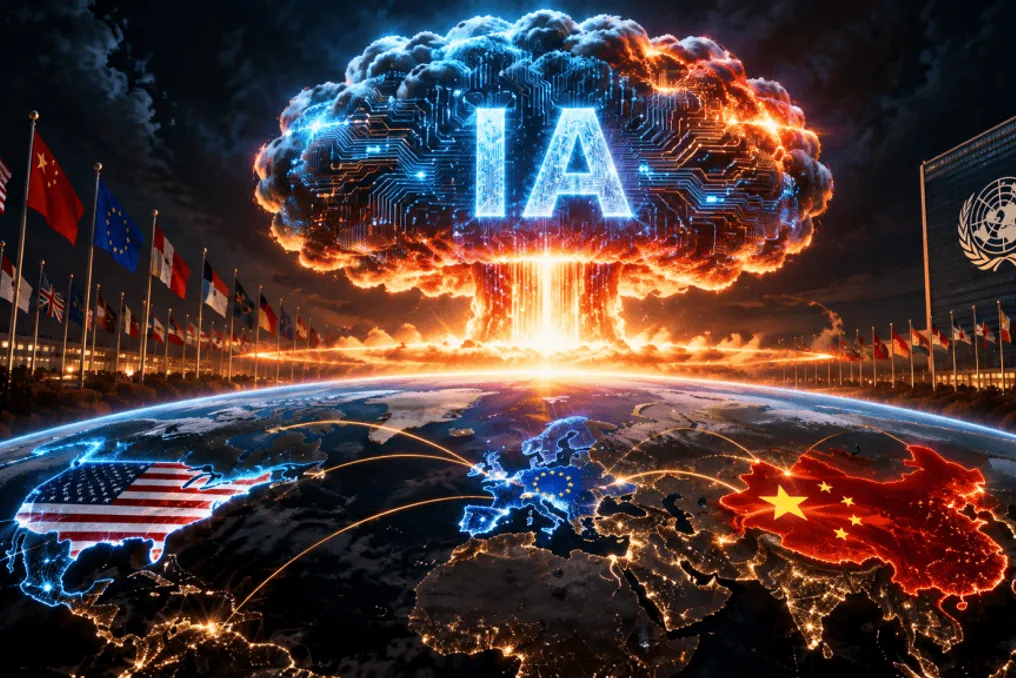
Pope Leo XIV defends disarmament of AI systems and human oversight in critical decisions
Pope Leo XIV expressed his support for the disarmament of artificial intelligence (AI) systems, emphasizing that all decisions concerning human life must remain under human supervision. Furthermore, the pontiff urged UN member countries to advance the prohibition of autonomous lethal weaponry. During an event focused on AI, the leader of the Catholic Church warned about the dangers of delegating human judgments to machines and advocated for the creation of international norms to guide the advancement of this technology. In his speech at the meeting titled 'The future of AI: a dialogue between the Vatican and the scientific world on the advances and applications of intelligent technologies,' Leo XIV established five guidelines for AI development. This meeting was organized by the Pontifical Academy for Life and the Future of Life Institute. The pontiff stressed that the destiny of technology lies in the choices made by human beings, who must direct, alter, and if necessary, reject its applications. He argued that this responsibility cannot be transferred to the machines themselves. Leo XIV vehemently criticized the idea of attributing rights or legal personality to AI systems, as they lack experiences, bodies, emotions, or affective bonds, and do not assimilate concepts such as love, work, or responsibility. He warned that granting them legal status could mask human responsibility, leaving victims of potential harm facing an impersonal entity. This stance is consistent with the precepts contained in his encyclical Magnifica Humanitas, which aims to protect the human person in the age of artificial intelligence. The need for human oversight becomes crucial when AI is used in decisions that directly impact people's freedom and lives, such as including individuals in military target lists or border control databases, where they can be reduced to mere data points. He declared: 'Decisions that affect human life, freedom, and the use of force must always remain subject to effective, informed, and responsible human supervision.' Based on this understanding, the pope encouraged the countries meeting in Geneva in November to adopt concrete measures to veto autonomous lethal weapons. The concern also echoed in the speech of his predecessor, Francis, during the G7 meeting in 2024. On that occasion, Francis described artificial intelligence as both an exciting and frightening tool, stating that no machine should have the power to decide over someone's life. Leo XIV also drew a connection between the choice of his papal name and the urgency of dealing with technological progress, referencing Pope Leo XIII, whose papacy coincided with the period of the Industrial Revolution. Another principle defended by the pontiff is that AI should serve society, and not just the interests of privileged groups, and its development should promote solidarity and ensure that the gains of progress are distributed more broadly. Additionally, the pope highlighted the importance of institutions capable of converting ethical principles into tangible actions, proposing three essential mechanisms for this purpose. Leo XIV concluded his speech by thanking all participants for their contributions to the debate and reinforcing the encouragement for international cooperation aimed at the responsible development of artificial intelligence.
October 30, 20:47Contribution of Mavaranakh Scholars to World Development Presented in Doha
October 30, 15:40Preventive measures are being conducted in Samarkand region to prevent emergencies and ensure fire safety
October 30, 15:16Financial assistance will be provided to needy families for the heating season
October 30, 14:56Kartik Amavasya 2026 History: How Maternal Love Overcame the Attempt to Bind God
October 30, 14:17Rama Ekadashi Date 2026: Information on Auspicious Timing, Worship Rituals, and Fast Completion Time
October 30, 09:39Akhoi Ashtami Date 2026: Clarification of Date, Time, and Ritual Rules
October 30, 07:11