How to conclude the Ahoy Ashtami fast in 2026 if stars are not visible due to cloudiness
Read more
Aaj Tak
www.aajtak.in

How to conclude the Ahoy Ashtami fast in 2026 if stars are not visible due to cloudiness

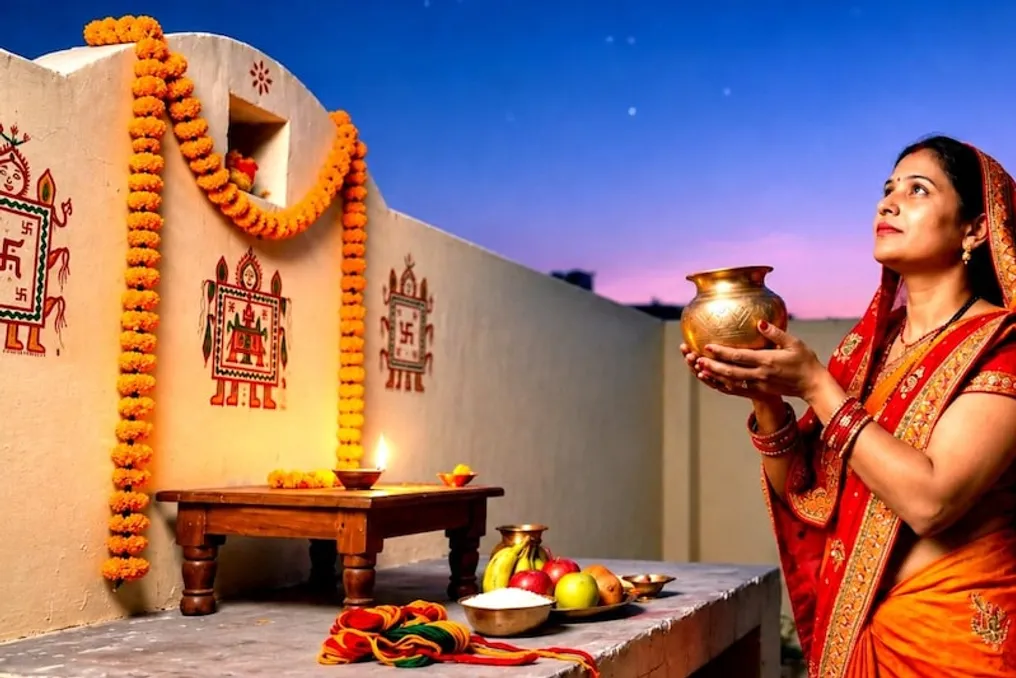
Women observing the Ahoy Ashtami fast in 2026 await the appearance of the stars in the evening. After a full day of fasting dedicated to wishing longevity and well-being for their descendants, they offer an offering (Arghya) to the stars and then conclude the fast. However, if the sky is covered with clouds or the stars are obscured by air pollution, the question arises regarding the proper way to conclude the fast without observing the stars.

Offering Arghya to the stars is one of the main traditions of Ahoy Ashtami. But in case of bad weather, the sky is often not clear. In such a situation, it is recommended to first find out the established time of starrise in your city. If even at this time the stars remain hidden by clouds, you can follow the tradition by remembering the stars and making the offering at the designated time. To do this, you should fill your palm with water, add a little milk, invoke Ahoy Mata, praying for the happiness of the descendants, and make the offering of water while facing the sky. After this, the fast can be concluded according to family customs. Nevertheless, there are different opinions in various families regarding this situation.

Sometimes, due to bad weather in one city, the stars may not be visible, while the sky in another city is clear. In such cases, some families choose the option of viewing the stars via video call from another location. This is considered a common alternative practice, although classically it is not considered a mandatory rule for everyone. Therefore, it is best to follow your family's traditions.

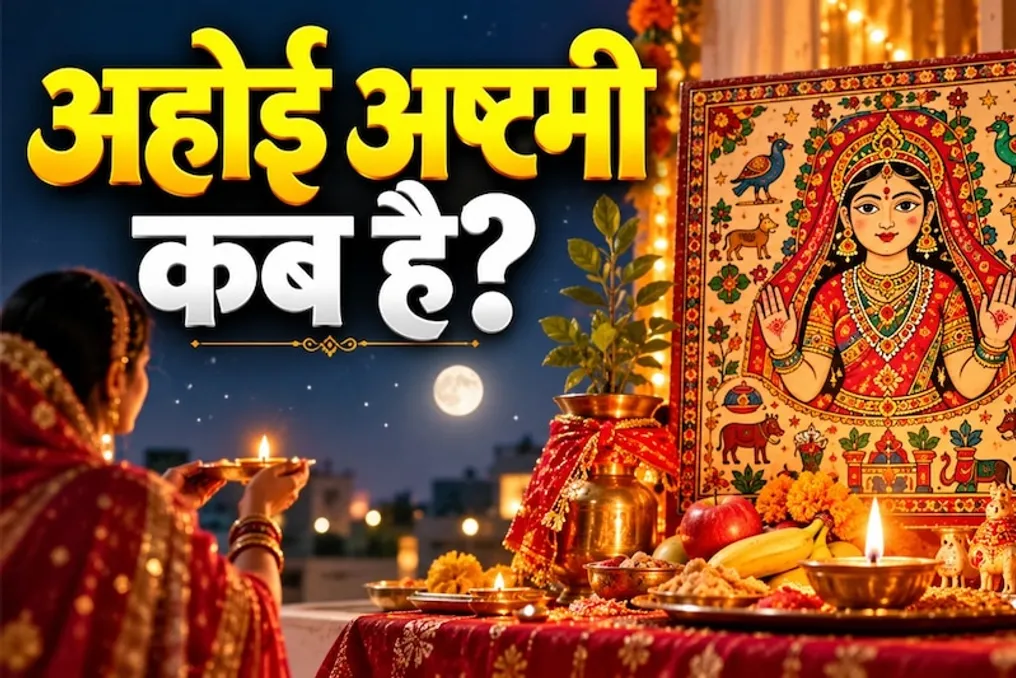
On the day of Ahoy Ashtami, preparations should be made for the evening worship. For conducting the ritual, you can use a photograph of Ahoy Mata or draw her image on the wall and perform the worship according to all rituals. Then, you need to light a lamp and bring fruits, sweets, and other items for worship. During the time of star observation, you can take water in your palm, add a little milk, and make the offering while looking at the stars. You must wish longevity, good health, and a happy life for the descendants. After the worship, you should perform Aarti to Ahoy Mata and receive blessings from the elders of the family.

This year, the Ahoy Ashtami fast will be observed on November 1, 2026, on Sunday. According to the Panchang, the Ashtami Tithi will begin on November 1 at 14:51 and last until November 1 at 13:10. The auspicious time for worship: from 17:36 to 18:54. Star observation time: around 18:00. Moonrise time: around 23:40. These timeframes are specified for New Delhi. Since sunset and starrise times can vary in different cities, you must check the schedule according to the Panchang of your city.

Usually, the Ahoy Ashtami fast is concluded after the star offering. However, some families have the tradition of offering Arghya to the Moon. Women whose homes follow the custom of concluding the fast after observing the Moon may follow this tradition. Before making the offering to the Moon, it is necessary to find out the moonrise time in your city. It is important to remember that the rules and traditions associated with the Ahoy Ashtami fast may differ in different regions, so for concluding the fast, priority should be given to your family's beliefs.
Similar stories

Time for the appearance of stars on Ahoi Ashtami 2026 in major cities, including Delhi and Uttar Pradesh
Read more
www.aajtak.in

Time for the appearance of stars on Ahoi Ashtami 2026 in major cities, including Delhi and Uttar Pradesh

For women observing the Ahoi Ashtami 2026 fast, the evening period holds special significance. After a full day dedicated to prayers for the well-being and longevity of children, mothers worship Ahoi Mata and await the appearance of stars in the sky. According to religious beliefs, the fast is only completed after offering (Arghya) to the stars. Since the sunset time and star visibility vary across different localities, it is important to know when the stars will become visible in major cities such as Delhi, Noida, Lucknow, and others to correctly conclude the fast.

The Ahoi Ashtami fast this year falls on Sunday, November 1, 2026. Traditionally, the fast is broken by observing the stars in the evening. The approximate time for star observation depending on the city is as follows:

  • Delhi: 18:00
  • Noida: 18:01
  • Ghaziabad: 18:00
  • Lucknow: 17:48
  • Calcutta: 17:22
  • Jaipur: 18:08
  • Chandigarh: 18:00
  • Bhopal: 18:05
  • Mathura: 18:00
  • Vrindavan: 18:00
  • Agra: 17:59
  • Varanasi: 17:41
  • Chennai: 18:04

It should be noted that the specified timeframes are approximate, and the actual visibility of stars may vary due to weather conditions, cloud cover, and local circumstances.

According to Panchang data, the Ashtami date begins on November 1 at 14:51 and ends on November 2 at 13:10. In Delhi, the auspicious time for performing the ritual is from 17:36 to 18:54. In Delhi, the stars are expected to appear around 18:00, and the moonrise is expected around 23:40.

After observing the stars, the fast is traditionally concluded. For this, women perform an evening ritual worshipping Ahoi Mata. The process of breaking the fast includes the following steps: first, taking a bath and wearing clean clothes in preparation for Puja; then lighting a lamp before the image or picture of Ahoi Mata; next, offering roli, akshat, flowers, and sweets to Ahoi Mata; during the worship, listening to or reading a story about the Ahoi Ashtami fast; when the stars appear in the sky, Arghya is offered to them using water from a pot; after this, prayers are offered for a long, healthy, and happy future for their children; finally, after offering food to Ahoi Mata, the fast is declared complete.

In some regions, there is a tradition of concluding the fast by observing the Moon rather than the stars. However, in most parts of North India, the fast is concluded after offering to the stars. In Delhi, the moon is predicted to rise around 23:40, which may require women following this tradition to wait until late at night. It is important to conclude the fast according to family customs.

In Hinduism, the Ahoi Ashtami fast is observed with the intention of wishing children a long life, good health, and a happy life. On this day, mothers observe a fast without water from morning till evening, after which they worship Ahoi Mata and listen to relevant stories. There is a religious belief that sincere observance of the fast and worship of Ahoi Mata guarantees blessings upon offspring.

Akhoi Ashtami Date 2026: Clarification of Date, Time, and Ritual Rules
Read more
www.aajtak.in

Akhoi Ashtami Date 2026: Clarification of Date, Time, and Ritual Rules

In Hinduism, Akhoi Ashtami holds special significance as mothers observe this fast hoping for the long life, good health, and happy lives of their children. On this day, Akhoi Mata is revered, and there is a tradition of offering (Arghya) to the stars in the evening.

According to the Panchang, this fast is observed annually on the eighth day (Ashtami) of the dark month of Kartik. However, due to discrepancies in the start and end times of the fast, misunderstandings often arise regarding the exact date. In 2026, there are also questions about the date of Akhoi Ashtami. To dispel doubts, we consult astrologer Pravin Mishra to learn the exact date of the fast, the rules for conducting it, auspicious times, and the history of Akhoi Mata.

When will Akhoi Ashtami be in 2026?

According to the Panchang, the Ashtami of the dark month of Kartik begins on November 1, 2026, at 14:51. It concludes on November 2, 2026, at 13:10. Therefore, according to the rising date (Udayati), the Akhoi Ashtami fast will be observed on November 1.

Auspicious time for Akhoi Ashtami in 2026

Auspicious time for worship during Akhoi Ashtami: from 16:59 to 18:15. Time for observing the stars: around 17:22. Moonrise time: around 23:05.

How to observe the Akhoi Ashtami fast

On the day of Akhoi Ashtami, one should take a bath and perform ablutions early in the morning. After this, the ritual should be performed in the home temple, and a decision should be made to observe the fast for the well-being of the offspring. Throughout the day, all fasting rules must be followed. In the evening, preparations should be made for the worship of Akhoi Mata. For the worship, an image or picture of Akhoi Mata is placed; in some homes, an image of Akhoi Mata is also drawn on the wall.

During the worship, offerings of flowers, rice, and other tributes should be made. In the evening, worship of Akhoi Mata is conducted, after which a story about the fast is read or listened to. Then, one must observe the stars and offer them Arghya. Concluding the ritual, prayers are offered for the long life, good health, and prosperity of the family's descendants.

Who is Akhoi Mata?

Akhoi Mata is considered a form of Goddess Durga. According to religious beliefs, the Akhoi Ashtami fast is observed with the wish for longevity, strong health, and a happy life for the descendants. On this day, mothers worship Akhoi Mata according to established rituals. It is believed that worshipping and observing the Akhoi Mata fast brings happiness and prosperity to the descendants' lives, as well as well-being to the family.

History of the Akhoi Ashtami fast

According to an ancient legend, there lived a merchant in a city who had seven sons, seven daughters-in-law, and one daughter. Before Diwali, preparations began for cleaning and renovating the house. For this, the merchant's seven daughters-in-law and daughter went to the forest to dig land. While digging the earth, the merchant's daughter's infant died. When Sehu learned about this, she was very upset and angry. She decided to curse the merchant's daughter. Then the youngest daughter-in-law stepped forward and offered to take the curse instead of her sister-in-law.

After this, misfortunes began to happen to the youngest daughter-in-law's children, and she started suffering from grief. Family members also became worried about her condition. Then a wise pandit advised her to serve Mother Cow (Gau). He explained that the grace of Mother Cow could relieve her from suffering. The youngest daughter-in-law began to sincerely serve Mother Cow. The joy from her devotion and service prompted Gau to help her, and Sehu, pleased with her devotion, lifted her curse. After this, happiness returned to the youngest daughter-in-law's life, and prosperity returned to her family, and her descendants received the blessing of a happy life.

Popular