Kartik Amavasya 2026 History: How Maternal Love Overcame the Attempt to Bind God
Read more
Aaj Tak
www.aajtak.in

Kartik Amavasya 2026 History: How Maternal Love Overcame the Attempt to Bind God

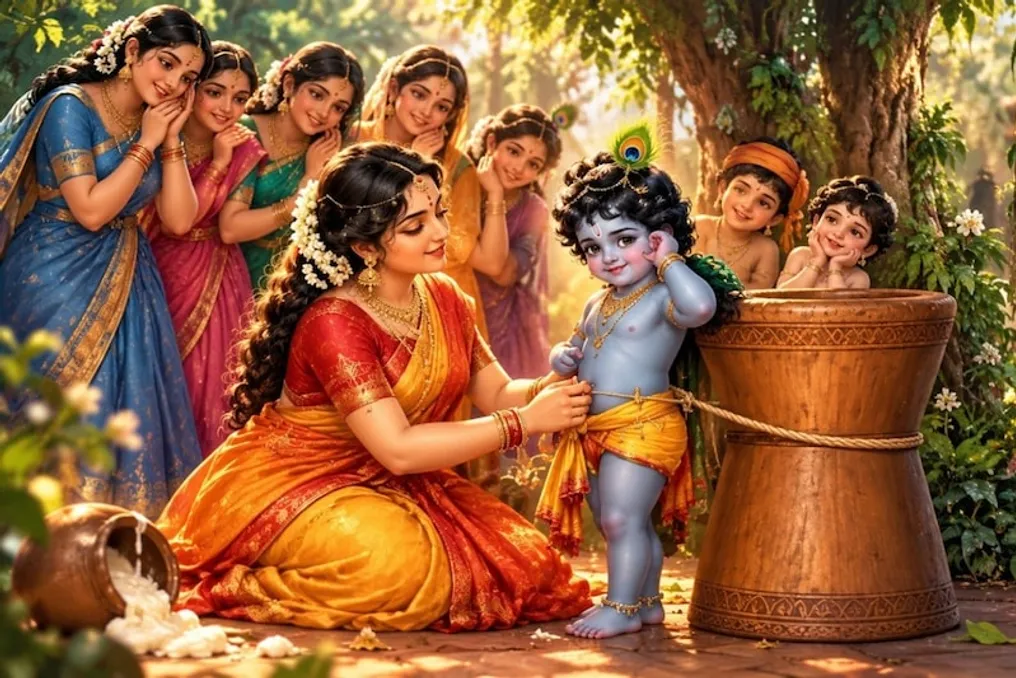
Kartik Amavasya 2026 is associated with the celebration of Diwali, which in the Treta Yuga is linked to the return of Lord Shri Rama to Ayodhya after fourteen years of exile. In the Dwapara Yuga, this festival has a special connection to the Lila of Yashoda-Damodara, when Lord Krishna, who embodies the entire universe, was captured by the love and tenderness of Mother Yashoda while being tied up in a pot.

Despite the ropes used to try and bind God being too short, His play demonstrated a new meaning in the face of maternal love and selflessness. In memory of this divine event, the tradition of worshipping Yashoda-Damodara and offering lamps is observed daily in the month of Kartik.

The month of Kartik is a special time for remembering devotion to Lord Krishna, the love of Radha Rani, and the Lila of Damodara. In temples during this month, the Lord is worshipped in the form of Damodara. Devotees offer their devotion to God by lighting lamps. The practice of lamp offering and singing Harinama Sankirtana during this period teaches the devotee the feeling of love, devotion, and closeness to God.

According to the description of the Damodara Lila in the Srimad Bhagavatam, Mother Yashoda tried to tie Balakrishna due to his mischief. No matter what ropes she tried to use, each one was two inches too short. Eventually, seeing the Mother's fatigue, tender affection, and sincere efforts, the Lord Himself agreed to be bound. It is because of this event that the Lord was given the name Damodara. The word 'Dam' means rope, and 'Udar' means belly. The message of this Lila is that God can be attained not only through force or spiritual practices but also through pure love and devotion.

Numerous Lilas of Lord Krishna are remembered in the month of Kartik. Within traditions related to the cattle fair of Gopashtami, the cow is revered. During Govardhan Puja, the Lila of Giriraj's support is remembered, when the Lord lifted the Govardhan hill to protect the residents of Braj. Similarly, the subjugation of Indra's pride, the destruction of the serpent Kaliya, and the Lila of Maharas in Braj also hold a special place in the tradition of Krishna Bhakti. Although the birth of Lord Krishna is celebrated in the month of Bhadrapada, His naming occurred in the month of Kartik, and the childhood Lilas hold particular significance in Kartik.

Similar stories

Employees of the vocational education system gathered at the sports ground
Read more
uza.uz

Employees of the vocational education system gathered at the sports ground

The republican final of the 'Director's Cup' sports competition among employees took place at the central office of the Agency for Vocational Education and staff of the system organizations.

Start of Kartik Maas in 2026: Rules for Worshiping Tulsi and Lighting Lamps
Read more
www.aajtak.in

Start of Kartik Maas in 2026: Rules for Worshiping Tulsi and Lighting Lamps

In Hinduism, the month of Kartik Maas is considered an exceptionally sacred period dedicated to worshipping Lord Vishnu, performing charity, and observing religious rituals. Special importance is given during this time to the rituals of honoring Tulsi and lighting lamps. According to religious beliefs, if one lights a lamp near the Tulsi plant, worships Lord Vishnu, and helps those in need during Kartik Maas, prosperity and well-being will come to the home. It is believed that good deeds performed with sincere faith during this month yield special rewards.

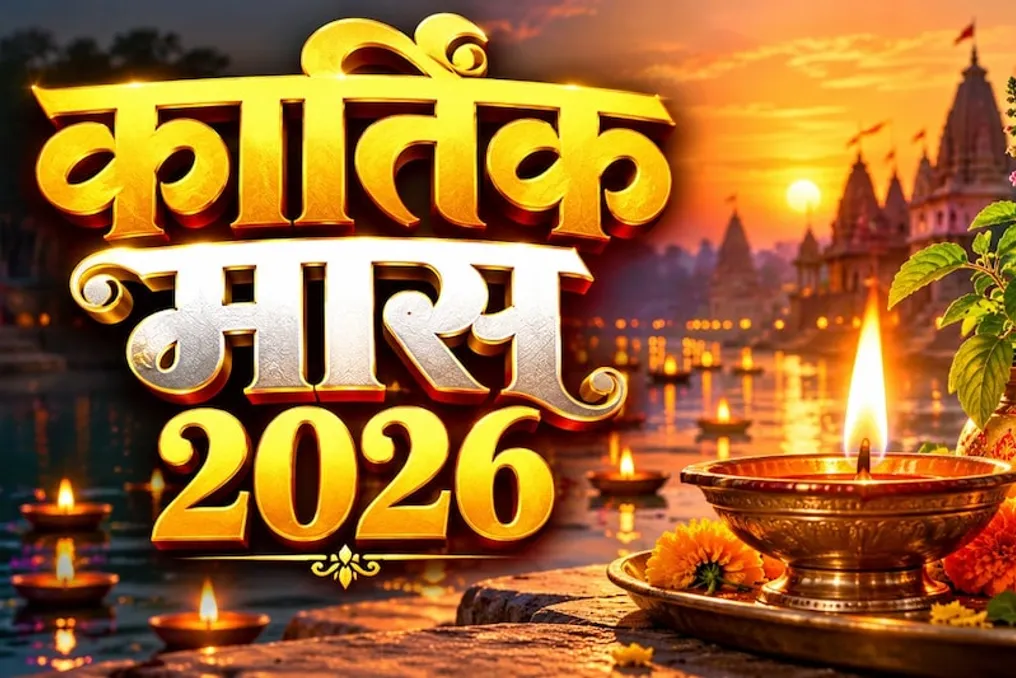
According to the lunar calendar, Kartik Maas will begin on October 27, 2026, and end on November 24, 2026. Important festivals such as Dhanteras and Diwali will be celebrated during this month. To learn about the religious significance of Kartik Maas, rules of conduct, and dietary recommendations, astrologer Shailendra Pandey was consulted.

Why is Kartik Maas considered special?

Every month in the Hindu Panchang is associated with a specific constellation. The name Kartik Maas originates from the Kritika constellation. In Hinduism, the months of Shravan, Margashirsha, and Kartik hold great significance. Kartik Maas is the last month of Chaturmas. There is a belief that performing prayers, observing fast days, bathing in the Ganges, and engaging in charity during this month earns merit. Furthermore, many devotees visit holy places for worship and participate in religious ceremonies.

Significance of Worshipping Tulsi and Lighting Lamps

Special attention is paid to the rituals of honoring Tulsi and lighting lamps during Kartik Maas. Religious tradition states that regularly lighting a lamp near Tulsi and worshipping Lord Vishnu during this month maintains peace and tranquility in the home. Therefore, many people light lamps near Tulsi in the morning and evening. Charity is also considered auspicious during this period. Additionally, some people perform circumambulation of Panchkosi or 14 Kosi, as well as the circumambulation of Govardhan.

What to Pay Attention to During Kartik Maas

During Kartik Maas, it is recommended to pay close attention to diet and daily routine. Since the season changes during this period, it is important to consume nutritious food and maintain a regular sleep and wake schedule. According to beliefs, consuming milk, ghee, nuts, and seasonal fruits is beneficial during this month. It is also recommended to spend some time in the morning sunlight and maintain a regular daily routine. At the same time, daytime sleeping should be avoided.

Why is Tulsi Worshipped in Kartik Maas?

In Hinduism, the Tulsi plant is considered very sacred. In religious scriptures, Tulsi is also called Vrinda. According to mythological history, Vrinda was devoted to Lord Vishnu, and her husband was Shankhachud. This legend describes events related to Vrinda's curse and Vishnu's form as Shaligram. Religious beliefs emphasize the special significance of Tulsi leaves in worshipping Lord Vishnu. Therefore, worshipping Tulsi and Tulsi Vivah during Kartik Maas is considered auspicious. There is a tradition of caring for the Tulsi plant, lighting a lamp near it, and offering Tulsi leaves to Lord Vishnu. It is believed that worshipping Tulsi brings peace to the home and the grace of Lord Vishnu.

How to Light Lamps in Kartik Maas?

Lighting lamps holds special significance during Kartik Maas. During this month, after morning ablutions, one should light a lamp at the main entrance of the house and in the prayer corner. A lamp using ghee or sesame oil can be used. While lighting the lamp, one should remember Lord Vishnu and Mother Lakshmi. During this month, it is also necessary to donate grains, clothes, or other necessary items to needy people. According to beliefs, regularly lighting lamps during Kartik Maas promotes peace and prosperity in the home.

How to Worship Lord Vishnu in Kartik Maas?

Worshipping Lord Vishnu during Kartik Maas is considered auspicious. After morning ablutions, one should worship Lord Vishnu by offering him Tulsi leaves. During this time, one can recite mantras of Lord Vishnu or the Vishnu Sahasranama Patha. In the evening, one should worship Mother Lakshmi and light a lamp near Tulsi, while also reciting the Lakshmi Ashtakam. Religious beliefs assert that performing daily rituals during Kartik Maas brings mental peace and well-being to the family.

Local beliefs about the ban on staying overnight in Nidhivan in Vrindavan, related to Radha and Krishna
Read more
www.aajtak.in

Local beliefs about the ban on staying overnight in Nidhivan in Vrindavan, related to Radha and Krishna

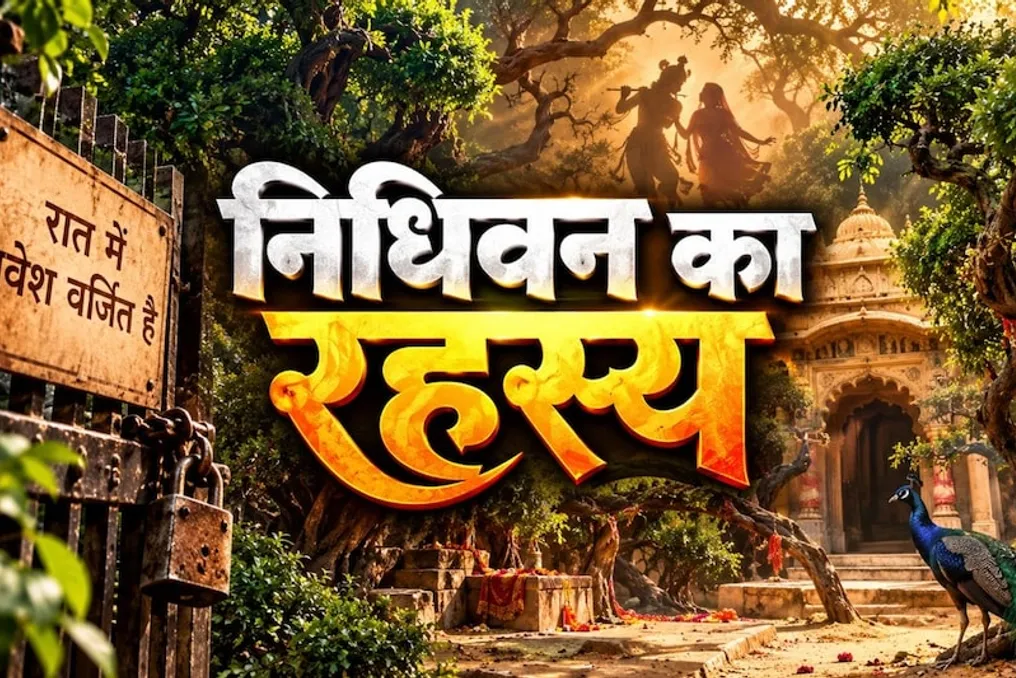
Vrindavan, known as the city of Lord Krishna in Uttar Pradesh state, is rich with stories associated with Kanhaiya. Among such significant places is Nidhivan, which attracts attention due to its unusual structure and religious beliefs. According to local legends, this place is connected to the divine play (raslila) of Radha Rani and Lord Krishna.

According to these beliefs, a divine play takes place here at night. Due to this tradition, Nidhivan is cleared of visitors and closed until evening. The text then examines the features of Nidhivan and its connection to the Banke Bihari temple.

Why is Nidhivan closed at night:

The entrance to Nidhivan impresses with its unique vegetation. The trees here do not grow straight and tall but are small shrubs whose branches lean towards each other. Local beliefs link these shrubs to the divine activities of Lord Krishna, Radha Rani, and the gopis. Among pilgrims, there is a widespread belief that the divine play takes place here at night, and these shrubs are part of it.

This unique structure gives Nidhivan distinct characteristics among other religious sites in Vrindavan. Pilgrims carefully study these shrubs and are interested in the beliefs associated with them. Although there are many visitors during the day, the area is cleared before sunset, and the gates are closed for the night.

Nidhivan empties out at night

The most important belief associated with Nidhivan is the divine play that occurs at night. Religious tradition states that Lord Krishna performs the divine play with Radha Rani and the gopis here at night. Consequently, Nidhivan is cleared of people and closed until evening. No one is allowed to stay here overnight, and similar rumors exist even about animals and birds. It is said that a person who stays here at night may encounter misfortunes.

The colorful palace of Nidhivan is also special

The colorful palace located within Nidhivan also holds special religious significance. It is believed that this place is connected to the divine activities of Radha Rani and Lord Krishna. Stories related to the Colorful Palace and Nidhivan have long circulated among people. This is why pilgrims visiting Vrindavan make sure to visit this place—some want to see the unique shrubs of Nidhivan, while others want to learn about the associated religious beliefs.

The connection between Nidhivan and the Banke Bihari Temple

The Banke Bihari Temple in Vrindavan is one of the famous temples of Lord Krishna, where a large number of devotees arrive daily. According to religious beliefs, the image of Banke Bihari originated from Nidhivan. Therefore, a special religious connection is considered to exist between Nidhivan and the Banke Bihari Temple.

The tradition of visiting the Banke Bihari Temple is also unique. A curtain is periodically lowered in front of the Thakur's idol. It is believed that devotees might become completely lost upon seeing the charming form of Lord Krishna. Because of this belief, the curtain is slightly pulled aside during the temple visit. This practice is a distinctive feature of the temple. It is also known that Lord Krishna is called Banke Bihari; according to religious beliefs, 'Banke' means turned in three directions, and 'Bihari' means the player. Lord Krishna's Tribhanga mudra is related to this name. Pilgrims from all over the world come to Vrindavan to see his captivating form. In the temple, devotees stand in long queues waiting for their turn. Some come with hope, and some come to thank God after a wish has been fulfilled. The traditions of this temple and the faith of the people in Lord Krishna make it special.

Popular