Engineer Earning 100 Thousand Rupees in Village Considers Moving to City Due to Boredom
Read more
Aaj Tak
www.aajtak.in

Engineer Earning 100 Thousand Rupees in Village Considers Moving to City Due to Boredom

Many remote employees face the need to overcome various difficulties to work from home or in a village, away from the hustle and bustle of big cities. While this lifestyle is favorable for some, others experience significant challenges. Nevertheless, it allows for savings on rent and many daily expenses. However, the question arises: is the income and savings high enough for a happy life?

The story of a software engineer who earns 100 thousand rupees monthly while living in a village raises exactly this question. Despite a good salary and low expenses, he is tired of village life and is now considering moving to the city. The engineer reached out to Reddit users for advice to find out more about the situation.

The software engineer shared his problem with users on the subreddit r/developersIndia. He stated that he has about a year of experience and works entirely remotely. Since he lives with his family in a village, he does not have to pay rent, and other expenses are limited. Because of this, he can save most of his monthly salary of 100 thousand rupees. His concern, however, is not related to work, but rather that village life seems too monotonous to him, despite the financial benefits.

In his Reddit post, the engineer noted that there are few options for entertainment and leisure outside the home in the village. There are no gyms, cinemas, or cafes. Moreover, there is no access to food delivery services like Swiggy or Zomato. He added that sometimes he wants to eat something delicious, watch a movie, or just take a walk, but there are no such places in the village. His daily routine consists of waking up, working, using his phone, and sleeping.

To get out of this situation, he is considering living in the town of Kota, located about 80 kilometers from his village. There, he can find amenities such as a gym, cinema, and restaurants. However, moving to the city means increased expenses for rent, food, and other household needs. He is also concerned that his savings might not remain the same after the move. Furthermore, since the job remains remote, he is unsure how much his daily life will change in the city.

The engineer's post sparked various opinions among Reddit users. Some advised him to move to the city and lead such a lifestyle. Others suggested using the freedom afforded by remote work to travel and work in different places. One user advised him to spend a few days in the mountains or by the sea. Another suggested that he could try living in the city for a while if he wanted to experience city life.

Similar stories

UniAteneu integrates startup creation into the curriculum of its information technology courses
Read more
g1.globo.com

UniAteneu integrates startup creation into the curriculum of its information technology courses

The Ateneu University Center (UniAteneu) has restructured the curriculum matrix for its six undergraduate courses in Information Technology (IT). Furthermore, laboratories dedicated to Robotics and Innovation have been inaugurated, yielding notable results, such as an alumnus leading a company operating in Brazil and the United States, and a group of students and graduates who developed an Artificial Intelligence (AI) focused on self-knowledge.

The IT programs were reformed to keep pace with the progress of AI. Currently, the institution offers three bachelor's degrees in Computer Engineering, Computer Science, and Software Engineering, along with three technological undergraduate courses: Systems Analysis and Development (ADS), Computer Networks, and Information Technology Management. All these courses aim to provide high-level training aligned with the demands of the Information Technology market.

The most noticeable change occurs at the beginning of the academic journey: the 'Artificial Intelligence Engineering' discipline has been incorporated into all six courses starting in the first semester. According to the coordination, the objective is for the student to complete the first period with the capacity to manage AI projects, allowing them to seek internships, provide services, or get a job early in the course.

Professor Mr. Sandro Costa Mesquita, coordinator of UniAteneu's IT courses, clarified that AI is no longer a topic reserved for the end of the course or research. He stated that today it functions as a starting point. By learning from the first semester how AI is created, trained, evaluated, and implemented, the student views the rest of the content from another perspective and can already add value to the market. This constitutes the formation of an AI manager, someone who understands the capabilities and limitations of the technology and how to integrate it into real processes.

Labs for cutting-edge disciplines

The intention is for the student not to limit themselves to studying these subjects only theoretically, but also to build and test solutions throughout their undergraduate studies. To support this new curriculum matrix, UniAteneu invested in campus infrastructure, building two Robotics labs, two more Informatics labs, and an innovation room. These spaces support subjects such as 'Artificial Intelligence', 'Machine Learning', 'Deep Learning', 'Computer Vision', 'Internet of Things', 'Quantum Computing', and 'Robotics'. As mentioned by Professor Mr. Sandro Mesquita, the purpose is for the student to develop and test solutions in projects that replicate demands from companies and the public sector.

One of the results highlighted by the institution is the success of graduates in entrepreneurship. Luccas Lima, an alumnus of UniAteneu's ADS Course, is the CEO and founder of Netup, a technology company that combines systems, Artificial Intelligence, data, and automation for corporations. Netup is headquartered in São Paulo and operates in Florida, United States, and recently participated in the Siará Tech Summit 2026, held in Fortaleza this October.

AI that asks questions instead of giving answers

Another project involving the academic community of Ateneu University Center is SophChat, an Artificial Intelligence designed for human development, combining knowledge, experts, and technology. Unlike conventional assistants, this model was not designed to provide ready-made answers; it guides interaction through questioning, following a methodology inspired by the Socratic method. This allows the user themselves to discover the origin of an insecurity, indecision, or discomfort they cannot name.

Davy Barros is the originator of this initiative. His premise is that contemporary society simultaneously lives in the age of information and the age of disconnection. SophChat emerges as a hub for human development, uniting technology, knowledge, and experts to help a person understand their identity and purpose.

The behavioral logic of the model is supervised by Wesley Bohry, an expert in DISC and Enneagram since 1990 and creator of the DeHu Super Humans method. The technical team responsible for the model's training and development consists of three generations of UniAteneu: Professor Mr. Sandro Mesquita, alumnus Luccas Lima, and Rodrigo Mesquita, a Software Engineering student. The coordinator of UniAteneu's IT courses emphasized that SophChat exemplifies what the new curriculum seeks to generate. He highlighted that it is not a common chatbot, but rather a model with specific behavioral logic, curated by an expert and trained to formulate the correct question instead of offering the most probable answer. The participation of an undergraduate student in this project, alongside an entrepreneurial graduate, demonstrates that the AI training offered transcends the classroom and materializes in real products used by real people.

Training connected to the market

The commitment of UniAteneu's IT courses is to train professionals who do not need to wait until graduation to start their activities. This curriculum reform follows a trend observed in the Ceará market itself. Fortaleza has become a hub for events and innovation initiatives, and UniAteneu encourages the participation of faculty and students in these environments, whether as mentors, exhibitors, or participants.

For the coordination, the combination of an updated curriculum, the availability of laboratories, and contact with the innovation ecosystem is what enables the student to enter the market prepared to act early. Professor Mr. Sandro Mesquita reiterated that, with the use of AI resources in the first semester, labs for solution creation, and an environment rich in nearby events and companies, the student is able to undertake entrepreneurship, research, or be hired long before receiving the diploma. The examples of Netup and SophChat represent the beginning of what is expected to be seen more frequently.

About UniAteneu

The Career Support Nucleus (NAC) is the sector responsible for guiding and monitoring students throughout their academic and professional journey. Ateneu University Center strengthens its presence in higher education in Ceará through quality academic training linked to the changes and needs of the job market. The institution maintains strategic collaborations with various companies and organizations, preparing professionals capable of different areas, which increases the chances of access to internships and job vacancies for students and alumni.

An important differentiator of the institution is the Career Support Nucleus (NAC), which assists in planning and developing students' academic and professional trajectories. Additionally, UniAteneu provides an educational experience that unites theoretical knowledge with practical experience, using modern and well-equipped laboratories, under the supervision of qualified and experienced professors in their respective fields. As a result of this focus on academic excellence and employability, UniAteneu trains new professionals in Information Technology every semester, ready to operate with technical competence, responsibility, and strategic vision in private companies, public agencies, and civil society entities, thus contributing to the advancement of the job market and society.

Technical Specialist Who Experienced Layoff Receives Job Offer in UAE with Salary Up to 15 Million Rupees
Read more
www.aajtak.in

Technical Specialist Who Experienced Layoff Receives Job Offer in UAE with Salary Up to 15 Million Rupees

The career of a technical specialist went through many difficulties, including losing his first job and disappointment over low salary, but he managed to achieve significant growth by receiving a job offer in the United Arab Emirates (UAE) with an annual package of about 15 million rupees.

This professional shared his experience, emphasizing that lack of success at the beginning of the journey is not an obstacle to further career growth. He started his career with an annual salary of 2.9 lakh rupees, but thanks to constant efforts, learning new technologies, and waiting for the right moment, he reached impressive heights.

In his post published on the social platform Reddit, the specialist recounted that he started working at L&T Infotech as a manual tester. He had to lose this job because he failed to pass the company's necessary internal exams. At that time, his annual income was about 2.9 lakh rupees. However, he did not give up; following a friend's advice, he applied to IBM and got a job there approximately 15 days later.

At IBM, he was assigned tasks related to JD Edwards, but his real interest was in Big Data. He began studying this field independently, but due to a lack of experience, he could not get into the desired projects. Nevertheless, after many attempts, in May 2020, he managed to get the opportunity to work on a big data project.

He noted that to master new responsibilities and understand the work, he had to work 14–15 hours daily. Despite these efforts, his annual salary remained around 3.78 lakh rupees until January 2022. Since the salary increase was not substantial, he began looking for new career and financial opportunities in other companies, which subsequently led to an increase in his income.

According to the report, he then joined Airbus, where his annual package was about 23 lakh rupees, plus he received a signing bonus of 5 lakh rupees. There, he worked with Palantir Foundry and participated in major projects. However, he experienced disappointment due to receiving a low performance rating after some time, as he stated that he contributed to the projects but did not receive the expected recognition.

After that, he started applying for other vacancies again. The specialist reported that during this period, he received about 15 offers and chose a job at Thoughtworks with an annual package of 48 lakh rupees. Approximately two months later, he received another offer from another organization—62 lakh rupees per year plus a 5 lakh rupee signing bonus. In this last case, he was also given the option to work from home.

After almost 9.5 years of career ups and downs, this technical specialist was presented with the opportunity to work with a consulting firm in the UAE. According to the report, the annual package associated with this opportunity is estimated at about 15 million rupees. However, for him, this decision is driven not only by the desire to earn more money; he also considers gaining international work experience, facing new challenges, and professional development important.

Plastic Water Tank Manufacturing Business: Investments and Potential Profit
Read more
www.aajtak.in

Plastic Water Tank Manufacturing Business: Investments and Potential Profit

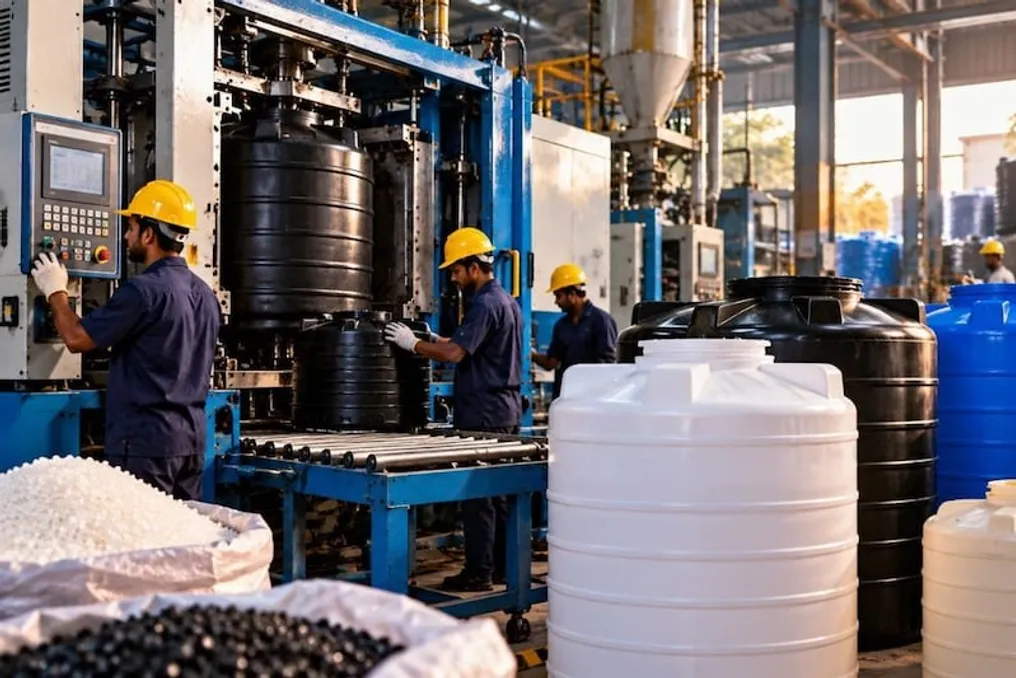
Regardless of the season, plastic water tanks are needed everywhere. If you plan to start a business manufacturing such tanks, questions may arise regarding necessary costs, equipment, and regulatory requirements. The following discusses the essential elements for launching a water tank manufacturing business and cost calculations.

Various components are required for water tank production. Launching a production unit for plastic tanks involves expenses for equipment, molds, raw materials, premises, electricity, and personnel. According to an old report by the MSME Development Institute in Trishur, total capital investments to set up a plastic reservoir production unit could have been around 53.04 lakh rupees. This amount included fixed investments of approximately 24.16 lakh rupees and working capital for three months of about 28.87 lakh rupees. However, it should be noted that this report is outdated, and when creating a new project budget, current prices for equipment, raw materials, rent, electricity, and salaries must be considered.

Rotational molding, or rotomolding, is used in the manufacturing of plastic tanks. Additionally, depending on the tank size, molds, raw material preparation equipment, and quality control systems may be required. According to various media sources, the cost of one machine for rotomolding water tanks can be around 7 lakh rupees or more, while a two-arm biaxial machine can cost up to 18 lakh rupees, with more powerful machines costing more.

Plastic resins, such as polyethylene, are typically used to manufacture plastic tanks. The demand for raw materials varies depending on the volume, weight, and design of the tank. A masterbatch for coloring and other production-related materials are also necessary. The production unit requires a sufficiently spacious premises to accommodate equipment, store raw materials, and safely warehouse finished products. When choosing a rented premises, the monthly rent payment and electricity costs must be factored into the budget.

If you do not have enough capital to open a large factory, you can consider the option of dealership or resale of water tanks. In this model, tanks are purchased from an existing company and then sold to customers, equipment stores, plumbers, builders, or other participants in the construction industry. This approach eliminates the need to install production equipment but requires funds for initial inventory, rent for a shop or warehouse, transportation, and adherence to distributor terms. The investment size will depend on the company, region, inventory volume, and business scale, so an exact figure cannot be established without knowing supplier prices and dealership terms.

The cost of tanks varies depending on their volume: for a 500-liter tank, the price ranges from 6,000 to 12,000 rupees and above; for 1000 liters—approximately from 7,000 to 17,000 rupees and above; and for 2000 liters—from 14,000 to 25,000 rupees and above.

Popular