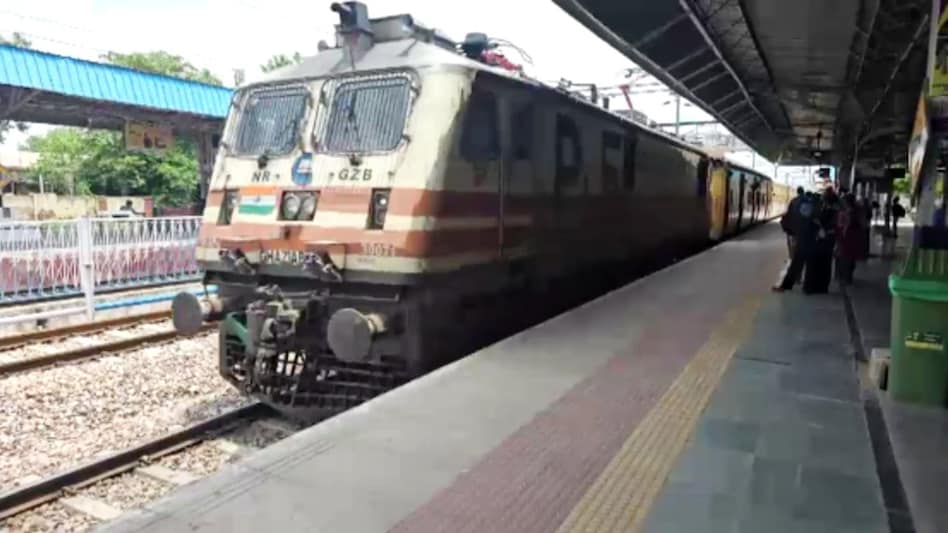
Kavach technology launched on 67 km of railway line in Rajasthan to prevent collisions
Read more
Aaj Tak
www.aajtak.in

Kavach technology launched on 67 km of railway line in Rajasthan to prevent collisions

The Kavach technology has been implemented on the Kanauta-Bandikui railway section in Rajasthan, which is intended to eliminate railway accidents. On this 67-kilometer stretch, which belongs to the West North Western Railway, trains are operating using the modern Kavach system across seven block sections. This is the first implementation of the Kavach technology on the West North Western Railway, and it was launched after numerous tests. Initially, the Kavach technology was installed on 250 kilometers of railway tracks.

The standard Kavach system has been successfully launched on the 67-kilometer Kanauta-Bandikui section in the Jaipur West North Western Railway division. The seven block sections include: Kanauta-Bassi, Bassi-Jhar, Jhar-Jatwara, Jatwara-Dausa, Dausa-Bhankri, Bhankri-Arnia, and Arnia-Bandikui. After the installation of the Kavach system, field tests were conducted, during which the train was checked from all sides, including the braking system, speed, and signal passage.

Furthermore, speed testing was carried out on the Jhar-Jatwara section at speeds up to 50 kilometers per hour, as well as testing at the established full sectional speed on the Kanauta-Bassi section, along with checking all relevant parameters.

According to Amit Sudarshan, an official of the West North Western Railway, the Kavach system will be implemented across the entire jurisdiction of the West North Western Railway. However, in the initial phase, the Kavach technology will be installed on 1586 kilometers of railway tracks, with about 70 percent of the work already completed. In the current fiscal year, the launch of the Kavach system is planned for over 250 kilometers of railway tracks, which will bring direct benefits to train traffic management.

The standard Kavach system is a modern passenger safety system aimed at enhancing safety during railway operations. This system functions automatically to prevent the risk of collisions that may occur during head-on or rear movements under specified conditions. Additionally, according to the established operating mode of Kavach, the automatic braking system is activated if the set speed is exceeded.

The system also supports necessary safety measures by automatically assisting in situations where a train stops unexpectedly or without authorization in a block section, through the SOS function. The system has special provisions to ensure safety during train actions such as roll-back and roll-forward. There is also the possibility for the driver to manually send an SOS signal in an emergency.

The successful commissioning of the standard Kavach system on the Kanauta-Bandikui section is an important step for the West North Western Railway towards strengthening railway safety using modern technologies. This will reinforce efforts to improve train safety and ensure reliable railway operation.

Automatic Braking
With Kavach technology, if the driver misses a signal, the system will automatically reduce the train's speed and activate the brakes.

Collision Prevention
If two trains meet on the same railway line, the Kavach technology will stop both trains, and both the railway management and the train drivers will be notified.

Help in Bad Weather
During adverse weather conditions, the driver will receive information about signals. Furthermore, train movement will not be affected during fog, and trains will not be delayed. The Kavach technology will also provide the driver with complete information about stations and platforms.

Low Cost
This technology is indigenous and developed at a low cost. The railway lines of the West North Western Railway are being fully equipped with Kavach technology.

Prevention of Running a Red Signal
If the driver mistakenly crosses a railway line signal, the Kavach technology will immediately activate the train's emergency brakes.
Similar stories

Northern High-Speed Rail Corridor Announced: Delhi to Assam Route
Read more
www.aajtak.in

Northern High-Speed Rail Corridor Announced: Delhi to Assam Route

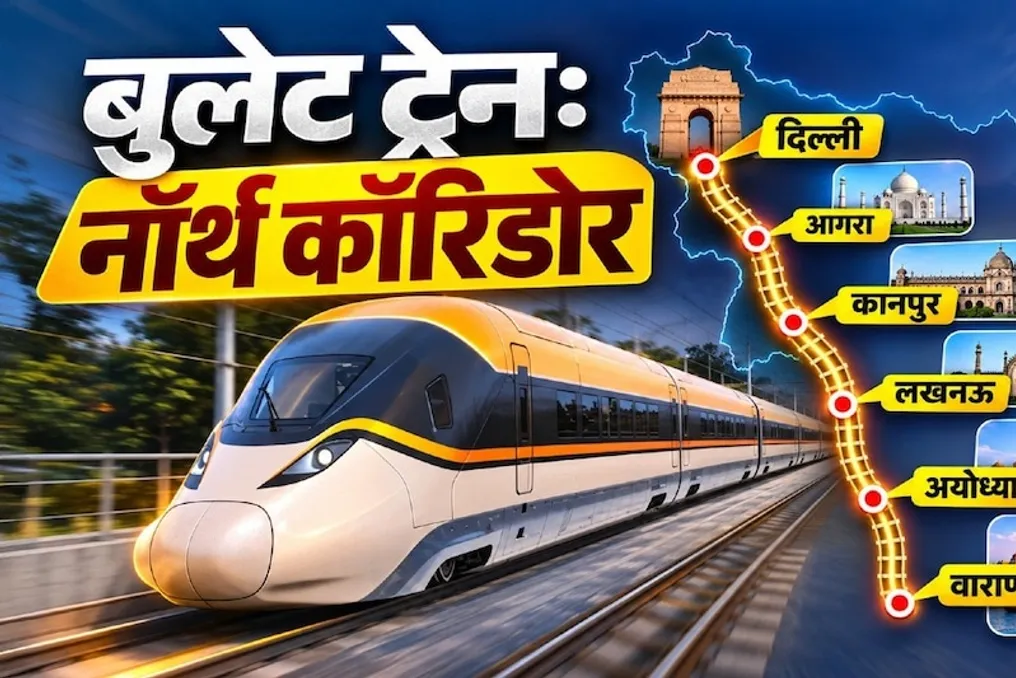
A major announcement was made regarding the expansion of the country's high-speed train network. Union Minister of Transport Ashwini Vaishnaw stated in Varanasi that Prime Minister Narendra Modi has approved the project for the Northern High-Speed Rail Corridor.

The proposed corridor will start in Delhi and pass through Agra, Kanpur, Lucknow, Ayodhya, Prayagraj, and Varanasi, subsequently reaching Patna, Siliguri, and Guwahati.

According to the transport minister, upon completion of this corridor, travel time will be reduced: from Delhi to Agra it will take 59 minutes, to Kanpur—1 hour and 45 minutes, and to Lucknow—2 hours and 12 minutes. Reaching Varanasi from Delhi will take approximately 3 hours and 33–35 minutes.

Before launching the new 'Vande Bharat Sleeper Express' service between Varanasi and New Delhi, Ashwini Vaishnaw provided details on the projected route and travel times for the high-speed trains. He specified that the distance from Lucknow to Varanasi will be covered by the high-speed train in 1 hour and 21 minutes. The minister cited an approximate travel time from Delhi to Varanasi of 3 hours and 33 minutes, while Chief Minister Yogi Adityanath estimated it at about three and a half hours.

Vaishnaw announced plans to make high-speed rail fares affordable, emphasizing that they will be significantly lower than air ticket prices. He noted that this project will benefit youth, middle-income earners, and small business owners. Furthermore, the minister reported that the entire project will be implemented under the 'Make in India' principle, including the manufacturing of all components, from supports to beams, within India, with young Indian workers and welders participating in the construction.

The Transport Minister also announced the launch of 10 MEMU services for Varanasi and surrounding areas, as the demand for local transport grows with urban expansion. These trains will connect places such as Banaras City, Banaras Kent, Banaras Station, and Rajatalab. It is expected that these trains will ease the lives of city youth, small traders, passengers from surrounding areas, and pilgrims.

The launch of a MEMU service between Varanasi and Prayagraj was also announced. This train will run daily, departing from Prayagraj Rambagh and passing through Jusi, Handia Khas, Gyanpur Road, Madhosinh, and Rajatalab to Banaras. Overall, the introduction of 10 MEMU services will improve railway connectivity in Varanasi and neighboring regions.

Chief Minister Yogi Adityanath confirmed his support for the plan to launch the high-speed train between Delhi and Varanasi, which will reduce travel time to approximately three and a half hours. He also mentioned that 157 railway stations in Uttar Pradesh have been modernized, equipped with contemporary amenities and improved design.

During the event, Ashwini Vaishnaw criticized the Congress and Samajwadi Party regarding the Uttar Pradesh railway budget. He stated that when the Samajwadi Party governed in Uttar Pradesh and the Congress governed nationally, the railway budget amounted to only 100 billion rupees. Vaishnaw asserted that under Narendra Modi's leadership, this budget increased to 20 thousand crore rupees, and that after Yogi Adityanath took office, the railway budget of Uttar Pradesh saw multiple increases.

Additionally, the minister highlighted the popularity of the Vande Bharat Sleeper service on the Kolkata-Guwahati route, noting its international interest. He reported that representatives from Eurostar and the BBC had sent correspondents to review this train, and the train received positive feedback in their videos. The Vande Bharat Sleeper service between New Delhi and Varanasi was also inaugurated during the event.

High-speed Vande Bharat Sleeper train starts service between Varanasi and Delhi tomorrow
Read more
www.aajtak.in

High-speed Vande Bharat Sleeper train starts service between Varanasi and Delhi tomorrow

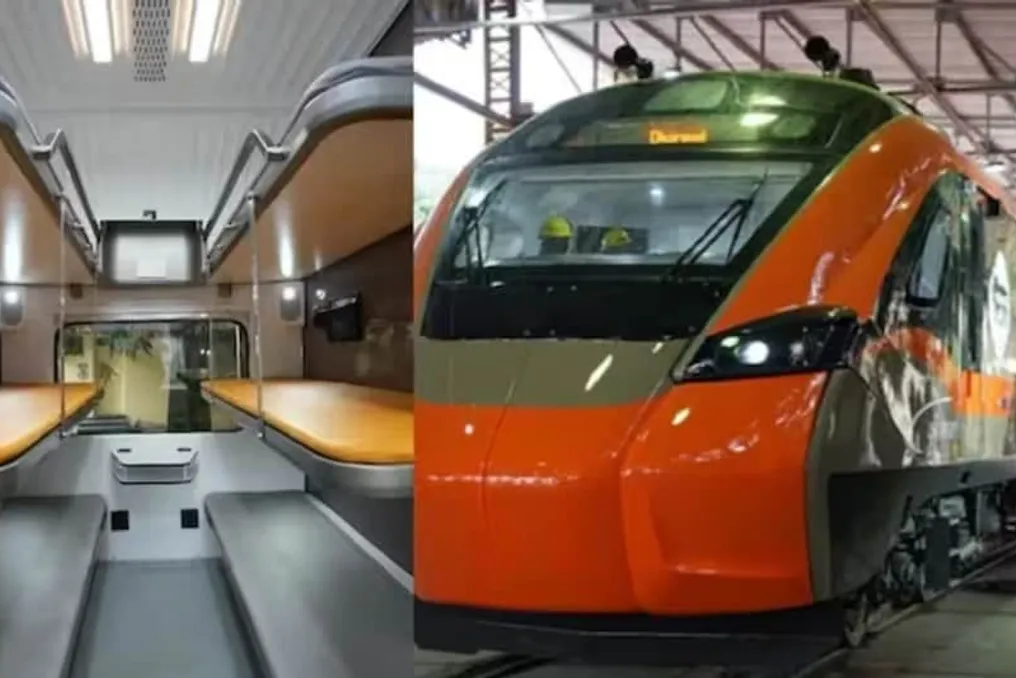
Indian Railways is launching another new Vande Bharat Sleeper train. Its commencement is scheduled for tomorrow, October 31. This route will connect several major cities, running between Varanasi and Delhi.

The train's speed is 160 kilometers per hour, which will allow it to complete the journey faster than other trains. According to Indian Railways information, the trip on the Vande Bharat Sleeper from Baba Vishwanath city to the nation's capital will mark the beginning of a new experience in modern rail travel.

Dr. Shivam Sharma, CPRO of Central Broad Gauge Railway, provided details about the Sleeper Vande Bharat. He stated that the opening of this train will take place on Saturday, October 31, 2026, at Varanasi station as a special train number 02527. This special service will provide passengers from Kashi, Sangam Nagari Prayagraj, the industrial city of Kanpur, historical Aligarh, and Ghaziabad with a new mode of connection to the national capital.

This special train, connecting Kashi and the national capital with modern railway amenities and sleeping experience, will add new significance to the link between these two points. Dr. Sharma specified that the special train number 02527, operating on the Banaras–New Delhi Vande Bharat Sleeper route, will depart from Banaras (BNRS) after noon at 16:15. It will arrive in Prayagraj at 18:00, at Kanpur Central station at 20:05, at Aligarh station at 23:20, depart at 23:22, arrive in Ghaziabad at midnight at 01:10, and reach New Delhi station at 2:00 AM.

The article does not contain detailed information about the train's specifications.

Popular