
Dubai plans to reduce traffic congestion and accidents using an artificial intelligence strategy
Read more
Khaleej Times
www.khaleejtimes.com

Dubai plans to reduce traffic congestion and accidents using an artificial intelligence strategy

The Roads and Transport Authority of Dubai (RTA) has approved a series of goals within its updated Artificial Intelligence (AI) Strategy. These goals include reducing traffic congestion by 3–5 percent, shortening the processing time for inquiries and complaints by 20–30 percent, and decreasing waiting times at Customer Satisfaction Centers by 14–16 percent.

Furthermore, the authority intends to reduce service delivery times in these centers by 15–20 percent, decrease the number of road traffic accidents involving drivers with new licenses by 10–20 percent, and shorten procurement cycles by 10–15 percent. Planned measures also include saving 10–15 percent of working time in operational and engineering fields.

The strategy, launched by Mattar Al Tayer, CEO and Chairman of the RTA Executive Council, aims to expand the application of AI across Dubai's entire transport network and public services. The main focus is on increasing the speed, efficiency, and convenience of daily processes for residents.

The strategy covers 41 areas across RTA's agencies, sectors, and departments, with the first two phases of its implementation affecting 11 business areas. These include vehicle licensing, road traffic, roads, public transport, customer service, procurement, and human resources management.

Over a period of more than two and a half years, RTA plans to develop 40 AI-based products, 11 of which are already completed, and implement four foundational projects. The strategy is expected to generate over 300 million AED in annual added value and lead to 50 percent of operations and services being migrated to the Agency AI ecosystem.

Al Tayer noted that the updated strategy moves RTA's digital transformation beyond AI applications that support staff and operations, directing it towards systems capable of analyzing information, forecasting outcomes, and providing services.

He emphasized that this initiative aligns with Dubai's broader ambitions to accelerate the adoption of AI in the public sector and strengthen the emirate's position as a global hub for intelligent solutions.
Similar stories

China plans to send astronauts to the Moon before 2030 and establish a research station there
Read more
www.aajtak.in

China plans to send astronauts to the Moon before 2030 and establish a research station there

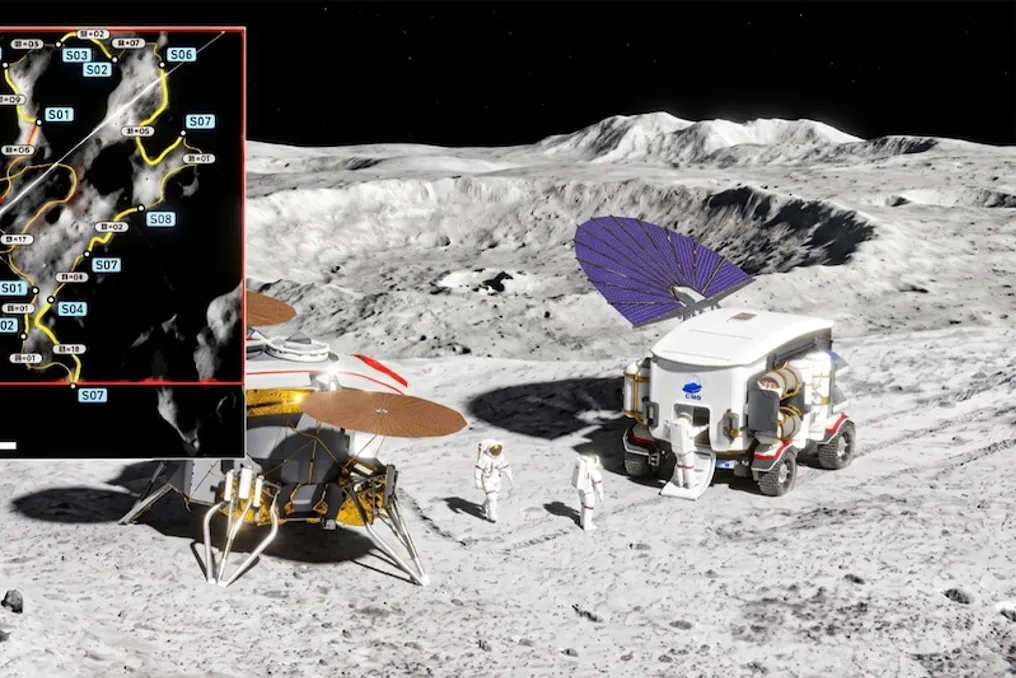
China has officially announced plans to land humans on the lunar surface and build a scientific base there. At the seventh Human Space Symposium, held on October 31, 2026, it was stated that the first mission with astronauts, referred to as 'Taikonauts,' will take place before 2030.

Two Long March-10 carriers are planned for this task. One will deliver the landing module to lunar orbit, and the second will carry the Mengzhou spacecraft, which will transport three Taikonauts. Both craft will rendezvous in orbit, after which two cosmonauts will descend to the surface using the landing module.

The crew is scheduled to spend three days on the surface, conducting daily spacewalks. These excursions will be used for sample collection or equipment installation. This plan has been developed to minimize risks.

China is conducting a series of uncrewed tests, including a full mission rehearsal simulating the actual flight. Only after the successful completion of these tests will the final mission be launched. China's ambitions are not limited to a single landing; the future includes the construction of a research station on the Moon.

This strategy echoes NASA's Artemis program. The US is also aiming to return to the Moon in the near future. China is accelerating its development pace, moving toward the common goal of lunar expansion, but utilizing its own technological path. All key components—the Long March-10, the Lanyu landing module, and the Mengzhou spacecraft—are products of domestic development.

Landing humans on the Moon holds not only symbolic significance but also contributes to the development of new technologies. Furthermore, it lays the foundation for future resource extraction on the Moon or preparation for missions to Mars. China has already accumulated significant experience through its space station and rover missions and is now preparing to take the next major step.

Simply put, China states that three of its astronauts will go to the Moon by 2030 using two rockets. They will stay on the surface for three days, carrying out work, provided current tests are successfully passed, allowing China to secure a place alongside the US on the Moon.

Popular