Popular

Anger of Kiwi Bowler Matt Henry After Captain Tom Latham Refuses Video Review in India vs New Zealand Match
During the two-match series of test games between India and New Zealand, held at Basin Reserve in Wellington, New Zealand captain Tom Latham made a decision that proved highly disadvantageous to the team on the second day of the match (November 20). Matt Henry made a strong appeal, attempting to get Kel Rahul out, but the umpire ruled that he was not out. However, Latham decided not to use the Decision Review System (DRS), although subsequent review showed that the ball hit the stumps. If a review had been called, Rahul could have been declared out. This incident occurred in the seventh over of India's first innings. Matt Henry's fourth ball struck Rahul's pad. Replay analysis demonstrated that the ball was in line with the stumps and touched both the middle and off-stump. Had DRS been used, Rahul could have been given out. Seeing this, Henry angrily threw his sweater out of the field. Henry's teammates, including fast bowler Jamieson, also looked disappointed. Earlier, in the fourth over, New Zealand used DRS on an appeal by Kyle Jamieson, but the third umpire did not change the decision due to a lack of clear evidence, and ball tracking was not conducted. Although New Zealand initially hoped their review would be successful, later match officials informed the team that they had missed the opportunity. New Zealand's fast bowlers also created difficulties for Jasprit Bumrah. One of Henry's balls went past the off-stump, and another was deflected by Bumrah above mid-on. Although Kyle Jamieson managed to create several edges, the fielders in the slip and leg side were unable to catch the ball. Glenn Phillips also dropped one ball in the leg side. Despite good performances from their bowlers, New Zealand struggled to take wickets. Jasprit Bumrah and Kel Rahul scored 130 runs in the beginning of India's first innings, with Bumrah contributing 85 runs. Previously, New Zealand, having lost the toss, scored 368 runs in their first innings, thanks to contributions from Henry Nicholls, who remained on the field with 175 runs, and Glenn Phillips with 118 runs.
November 20, 11:02How Motorcycle Mechanics Become Masters: They Diagnose Faults by Sound
November 20, 11:02Six Ideas for a 2027 Vacation: From Zanzibar to South Africa by Train
November 20, 11:00Dubai Schools Ban Teachers from Using Personal Phones and WhatsApp to Contact Students
November 20, 10:58Fertility Decline: IVF Now Required in the Age of 30–35 Due to Several Reasons
November 20, 10:57Tashkent Metro asks passengers to use less crowded stations due to increasing load
November 20, 10:50Review of the film 'Om: Operation Mole': Strengths of Dhanush and Mammootty's acting, film rating
November 20, 10:48New FARO Connect electronics retailer opens in South Africa, promising lower prices than competitors
November 20, 10:46SatSure raises 200 crore rupees in Series B round to develop satellite and AI capabilities
November 20, 10:42Professor turned traditional Tamil Nadu kolams into a computer language
November 20, 10:41Qualcomm CEO calls layoffs performance-based, employees accuse company of bias
November 20, 10:41Studies show positive impact of friendly relationships on human health
November 20, 10:41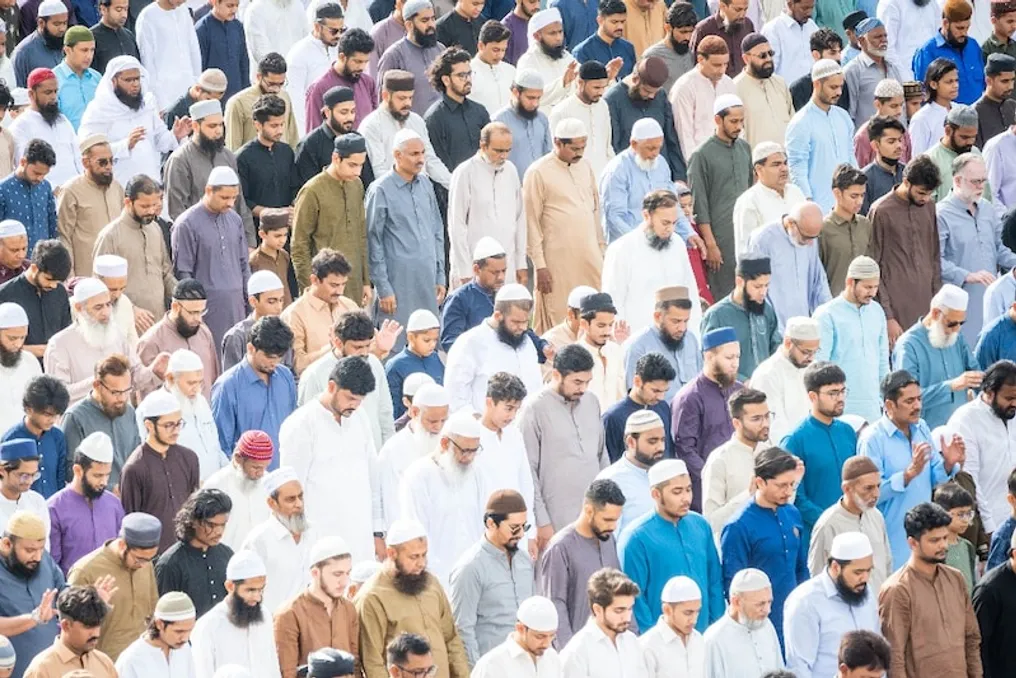
Study shows Muslim population share in India could significantly increase in coming decades
According to a new study, the Muslim population of India may grow faster than the Hindu population in the coming decades. This projected growth occurs even though the average fertility rate among Muslim women is showing a steady decline. The reason for this phenomenon was identified in the new work, which points to the relatively young age structure of the Muslim community. The report by the American research organization Pew Research Center forecasts that the share of Muslims in India will increase by approximately 57% between 2020 and 2070. Although the Hindu population will also grow, the pace of this growth is expected to be slower. According to the report, in 2020, the share of Muslims was about 15% of India's total population, while by 2070 it could reach 20%. Meanwhile, the share of Hindus is predicted to decrease from approximately 79% to 76%, remaining more than three-quarters of the country's population. This report, published on November 18, contains forecasts of changes in the size of seven major religious groups in 201 countries and regions worldwide. According to it, by 2070, India could become the second largest country in the world with a Muslim population; Indonesia currently holds the second spot, but Pakistan may overtake it in the future to take the first place. The question of why the Muslim population will grow despite declining fertility lies in the combination of age and the average number of children in the Muslim community. Although the fertility rate among Muslim women in India is higher than among Hindu women, this gap has significantly narrowed over the last three decades. Data from the National Family Health Survey (NFHS) shows that in 1992–93, the birth rate among Muslim women was 4.4 children per woman, which dropped to 2.36 by 2019–21. Correspondingly, the birth rate among Hindu women in 1992–93 was 3.3 children per woman, which fell to 1.94 by 2019–21. Despite the overall decline in fertility in both groups, the current rate for Muslim women remains higher, and the low average age of the Muslim population also plays a significant role. A key finding from the Pew Research Center report is the five-year age gap between the Muslim and Hindu populations of India. In 2020, the average age of Muslims was 24 years, while the average age of Hindus was 29 years. Experts note that a larger proportion of youth in any community means that more people will reach marriage and childbearing age in subsequent years. Thus, even with a decline in the average number of births, the total population can continue to grow. In demography, this phenomenon is called the 'population momentum.' Simply put, having a large number of young people allows the population to grow for many decades, even if the fertility rate falls. The Ministry of Health also pointed to population momentum as one of the reasons for India's population growth, noting in a statement in the Lok Sabha in 2016 that the large number of young people reaching reproductive age contributed to population increase despite slowing growth rates. Parallel to the forecasts of Muslim population growth, an interesting fact is also observed: India has recorded the sharpest decline in the fertility rate among Muslim women. According to NFHS data, this indicator was 2.62 in 2015–16 and dropped to 2.36 by 2019–21. Over the same period, the fertility rate among Hindu women decreased from 2.13 to 1.94. This indicates a significant reduction in the average number of children among Muslim women, linked to the adoption of family planning methods and increased awareness. Overall fertility in India has also dropped to 2 according to NFHS-5, which is below the replacement level. The replacement level is the indicator where a generation supports the size of the next generation, equivalent to the birth of approximately 2.1 children per 10 women. Pew Research Center believes that in the coming decades, the difference in fertility between Hindus and Muslims may narrow further. The report used data from the UN World Population Prospects for 2024, which suggests that due to increased female education levels and wider access to contraceptives, fertility in different communities will gradually converge. The report's forecast indicates that by 2100, the fertility gap between different communities will likely narrow significantly.
November 20, 10:37YourStory and Google Cloud India launch voice AI hackathon with an ₹8 lakh prize pool
November 20, 10:30Financial difficulties at SpiceJet lead to flight disruptions; Delhi airport issues warning to passengers
November 20, 10:29Cornmeal Chela Recipe: A Tasty Option for the Winter Season
November 20, 10:27Center introduces stricter control over antibiotic production and raw material trade
November 20, 10:21Center proposes strengthening quality control of medicines at all stages from production to pharmacies
November 20, 10:20