How Motorcycle Mechanics Become Masters: They Diagnose Faults by Sound
Read more
Aaj Tak
www.aajtak.in

How Motorcycle Mechanics Become Masters: They Diagnose Faults by Sound

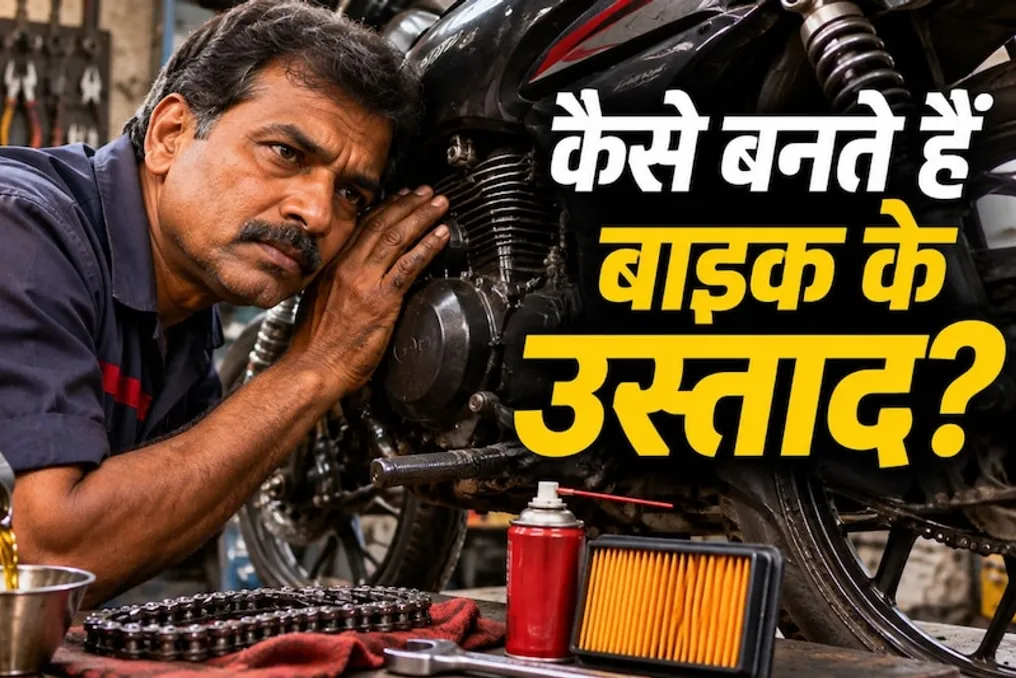
Motorcycle riders often have to consult a mechanic for minor issues. Sometimes the engine makes strange noises, sometimes the chain is noisy, and at times there are difficulties starting the motorcycle. In such cases, a good specialist is one who can determine the fault not only visually but also by the sound of the machine's operation.

It is interesting that performing this work requires more than just knowing mechanisms and tools; it requires many years of experience. During a recent conversation with one of the mechanics, similar information was shared. The mechanic stated that he has about fifteen years of experience in this field. Now he is able to understand the nature of the problem in a motorcycle simply by hearing its sound on the road.

When asked if he could diagnose faults solely by sound, he replied that after fifteen years of practice, this became possible. According to the mechanic, sometimes it is enough just to start the motorcycle to understand what the problem might be. For example, when inspecting one motorcycle, he first asked to check the engine oil. He noted that even when pressing the starter pedal, he could suspect a problem related to the engine oil.

This is why, for an experienced mechanic, the sound of a motorcycle serves as a kind of indicator. Nevertheless, visual inspection of the vehicle is necessary for precise confirmation of the fault. People usually believe that the function of engine oil is only to maintain the proper functioning of engine parts, but its role is much broader. Inside the engine, numerous components constantly come into contact with each other, and the oil helps reduce friction between them and control the temperature.

In the video, the mechanic also provided information about fully synthetic engine oil. He explained that quality oils contribute to the correct operation of the engine's internal parts. Furthermore, in some motorcycles, engine oil is related to the operation of the clutch and gearbox. However, not every motorcycle uses the same oil; the class and requirements specified by the manufacturer must be taken into account.

Chain cleaning is an important part of motorcycle maintenance. Road dust, dirt, and old grease can accumulate on the chain. If cleaning is not done in a timely manner, it can lead to noise in the chain and its rapid wear. The mechanic mentioned that for chain cleaning, a chain cleaner is primarily used. This helps remove accumulated dirt.

After this, chain lubricant is applied to ensure smooth chain movement. He also explained that people used to use engine oil or Mobil on the chain. But regular engine oil is not a substitute for specialized chain lubricant. Using chain lubricant ensures smooth movement and can reduce dust adhesion and splashes compared to regular oil.

The job of a motorcycle mechanic involves not only fixing faults but also serving customers. During the conversation, when asked how he interacts with customers rushing in for service, he replied that he receives different types of clients. Some leave their motorcycle at the workshop and pick it up in the evening. Others stay near the mechanic until the work is finished and constantly ask about the readiness time of the motorcycle. According to the mechanic, about eighty percent of his clients leave the motorcycle, while twenty percent remain on site during the repair.

To become a motorcycle mechanic, it is not enough to just learn how to use tools. It is necessary to have knowledge of various parts such as the engine, clutch, gearbox, brakes, and chain. It is also important to understand what fault might be hidden behind a certain sound or symptom. From the words of a mechanic working in this profession for 15 years, it is evident that constant work and repair of various types of vehicles contribute to the accumulation of experience. It is this experience that gradually transforms an ordinary mechanic into a true master of his trade.

Similar stories

Honda introduces Honda Sensing Ride technology for motorcycles to prevent accidents
Read more
www.aajtak.in

Honda introduces Honda Sensing Ride technology for motorcycles to prevent accidents

When riding a motorcycle, there is a risk that the driver may not notice approaching traffic from behind, especially due to blind spots. However, Honda has introduced a futuristic technology that can warn the rider about potential danger from behind, the risk of a frontal collision, and the need to brake.

The company demonstrated this system, called Honda Sensing Ride, at the EICMA 2026 exhibition. This radar technology includes ten safety features. Thus, the motorcycle will not only provide speed but also warn about road hazards around it.

It is important to note that the system not only alerts the rider but can also assist in controlling the motorcycle in certain situations. Initially, this feature will be available on the 2027 Honda Africa Twin Sport model.

The Honda Sensing Ride technology is similar to the Honda Sensing system used in the company's cars, but it has been specifically developed to meet the needs of motorcyclists. This system is equipped with millimeter-wave radar sensors at the front and rear of the motorcycle, which monitor surrounding vehicles and road conditions.

The system assesses the position of both the rider and the motorcycle, after which it issues a warning to the rider or assists in performing specific tasks. Below is a description of the ten key functions and their benefits.

  1. Adaptive Cruise Control (ACC): This function helps maintain the set speed of the motorcycle while keeping a safe distance from the vehicle ahead, reducing the need for frequent throttle adjustments by the rider.
  2. ACC with Stop & Go: This is an advanced version of adaptive cruise control. In heavy traffic with frequent stops, it regulates the motorcycle's speed according to the needs, relieving the rider from constant use of the throttle and brake.
  3. Group Ride Assist: This function is designed specifically for group rides. It helps maintain a proper distance between motorcycles traveling together.
  4. Distance Assist: If the rider accelerates and the motorcycle begins to approach the vehicle ahead, this function helps adjust the distance between them, thereby reducing the probability of a collision.
  5. Emergency Brake Assist: If there is a threat of collision with a vehicle ahead, and the rider suddenly presses the brake, this system provides additional braking assistance. It works in conjunction with the rider's brake application, applying balanced braking.
  6. Forward Collision Warning: If there is a high probability of colliding with a vehicle ahead, this function warns the rider in advance via the motorcycle's speedometer, using an audible signal and indicator.
  7. Brake Pulse: This function operates in conjunction with forward collision warnings. If the system determines that the rider is ignoring the warning, it more actively draws the rider's attention to the danger in case of a potential collision.
  8. Blind Spot Information: This addresses a common problem. If another vehicle enters the motorcycle's blind spot from the side, this function activates an indicator on the mirror, flashing or lighting up to warn the rider.
  9. Rear Collision Warning: If a threat of collision with a vehicle approaching from behind is detected, the system flashes the motorcycle indicators, warning the driver of the vehicle behind.
  10. Rear Distance Information: This function displays information on the dashboard about the speed, type, and size of a vehicle rapidly approaching from behind, helping the rider remain vigilant about traffic from behind.
Old driving tips for rain, contrasting with modern automotive technology
Read more
flatout.com.br

Old driving tips for rain, contrasting with modern automotive technology

The contemporary vehicle has distanced the driver from the mechanics of the automobile. In the early days of motoring, driving required knowledge that is now almost forgotten: it was necessary to know how to decompress the cylinders to start the engine, calibrate the ignition timing, and sometimes even manually lubricate the valve system before starting the trip.

Currently, we not only dispense with these skills, but owner's manuals have also stopped including many technical specifications that were previously provided, such as the diameter and stroke of the pistons, the compression ratio, or the number of engine valves. On the other hand, these manuals now serve to warn the car owner about the danger of ingesting coolant.

The effect of this is a generation of drivers who often possess only basic knowledge of engaging gear in D, accelerating, braking, and turning the steering wheel. Any more complex procedure is outside their domain. Even changing a tire, which was once a fundamental skill for any driver, has become something that causes concern.

Ideal motorcycle warm-up time: what the bike itself indicates
Read more
autopapo.com.br

Ideal motorcycle warm-up time: what the bike itself indicates

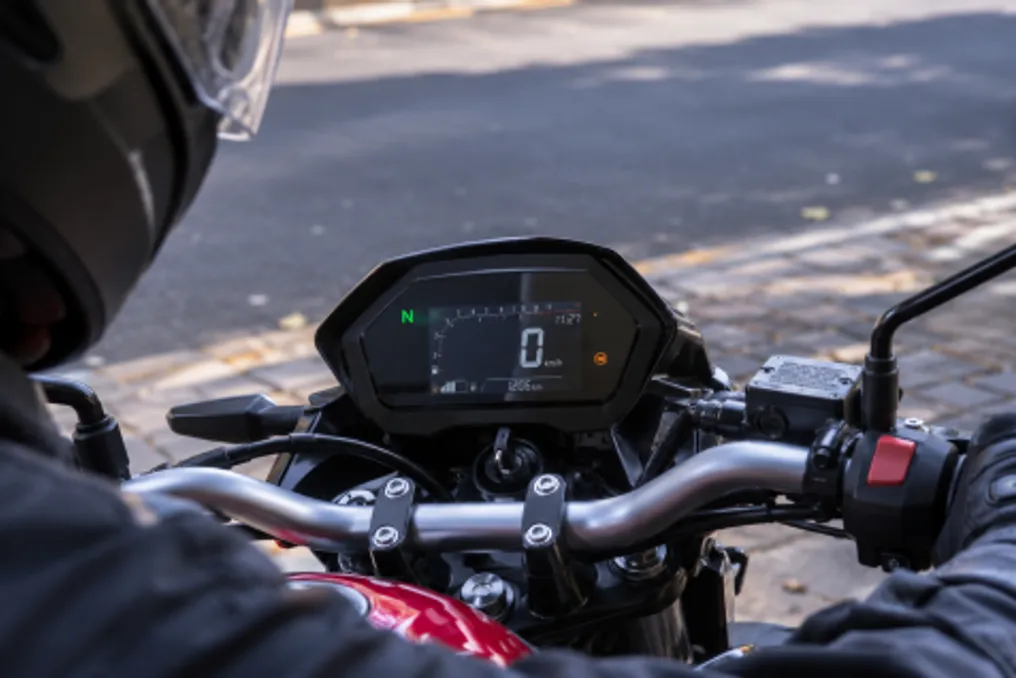
Many motorcyclists accustomed to using their bikes daily perform the procedure automatically: they start the engine, put on their helmet, and leave immediately. However, doing this hastily can result in high costs from corrective maintenance. There is a necessary waiting period, based on technical reasons, although it is shorter than popular belief suggests. The indicator that the engine has reached readiness is observed in the idle speed.

Analysis of operating temperature

According to Bismark do Vale, an engineer specializing in Honda sector research, the starting point for understanding this subject is the operating temperature. Engines, especially those equipped with electronic injection, are designed to operate within a specific thermal range to achieve maximum performance. He clarifies that both overheating and running at very low temperatures cause a loss of energy efficiency. To maintain this average, motorcycles without a dedicated cooling system—which often use only air—rely on other mechanisms.

When the engine is cold, the electronic injection system enriches the air-fuel mixture to accelerate the temperature increase. This effect is noticeable in the engine's RPM. The bike operates at a higher rotation than the standard idle until it approaches the ideal temperature, at which point it returns to the usual operating level. Bismark states that immediately after starting the bike, it exhibits a higher rotation, which stabilizes after a few minutes.

In practice, the engine starts around 1,300 or 1,400 rpm and drops to approximately 1,100 or 1,200 rpm, depending on the model. This reduction in rotation serves as a signal. There is no universally applicable time; the minimum time is determined by what the injection itself indicates, and it varies according to the bike model, climatic conditions, and geographical location. Although mechanical wear justifies the wait, Bismark prioritizes the issue of pollutant emissions. The catalytic converter only performs its function adequately after heating up.

He emphasizes that the catalytic converter requires an ideal temperature to decompose molecules and reduce the harmfulness of gases to the environment and humans. Before reaching this range, the unit cannot convert gases with the same effectiveness, summarizing that the main focus must be on managing pollutant emissions.

The role of lubrication

The second relevant factor is related to lubrication, which is important for both the cost-conscious motorcyclist and the engine's health. When the bike is off, the oil drains into the crankcase. When started, the pump needs to pressurize this oil and send it to the top of the engine, from where it flows down by gravity, lubricating the components along the way. This process takes a few moments, and this interval holds the risk. Bismark warns that when starting and leaving immediately, the oil has not yet reached the cylinder head.

Although there is wear during idling, it is quickly compensated for by the arrival of the oil. The most significant damage occurs due to the habit of accelerating with a newly started engine. The specialist warns that applying rotation immediately after starting the engine intensifies this process, increasing the wear on various components. The damages mainly affect the top part of the engine, such as the cylinder head and camshafts, in addition to the piston.

For this reason, even after the idle speed stabilizes, the first kilometers require gentle throttle handling. Riding is different from abruptly accelerating during gear changes. The notion that letting the bike warm up for a few minutes is beneficial does not hold up and can have the opposite effect. Stopped, the bike does not receive the essential airflow to aid in cooling. In air-cooled motorcycles, the impact is direct: after being running and stopped for a few minutes, there is a tendency for the engine to overheat.

In water-cooled motorcycles, the fan assumes this function, but it also has limits. The logic is clear: the greater the desired performance, the greater the need for cooling and the more complex the system to manage this heat. A CG, for example, which does not have a radiator, heats up more if kept running and stopped than a motorcycle designed to dissipate heat. The same model requires different approaches depending on the location. Bismark uses examples from Manaus and Curitiba to illustrate this. In Manaus, a CG kept at idle for more than five minutes while the rider makes a delivery will tend to heat up more than normal. In cold regions, such as Curitiba, the engine takes longer to reach operating temperature, making the wait slightly more tolerable.

In conclusion, the practical recommendation boils down to three steps: start the bike, wait for the idle speed to return to normal level, and begin riding without demanding high rotations in the initial stretches. It is crucial to avoid both extremes: neither engaging first gear while the engine is still accelerated by the injection, nor leaving the bike running stopped for long periods.

Popular