New FARO Connect electronics retailer opens in South Africa, promising lower prices than competitors
Read more
TechCentral
techcentral.co.za

New FARO Connect electronics retailer opens in South Africa, promising lower prices than competitors

A new technology retailer, FARO Connect, has opened in South Africa, planning to compete with other market players by offering lower prices on refurbished computers and smartphones. The company guarantees that it will be the cheapest in the market for refurbished products by 3%.

Amber Dandy Young, who heads the business, announced this in an interview with TechCentral in Cape Town this week. FARO Connect is the technology division of FARO, a South African fashion retail chain that acquires surplus goods from global brands such as Zara, Nike, and Adidas, and sells them at 60% of their original retail price.

FARO was founded in 2023 by Dandy Young, David Thorr, William MacCaren, and Chris Mahanyai. Today, FARO has 25 stores, many located in townships, and raised $6 million in early 2025. The new business operates as specialized zones within existing FARO stores.

The first store opened at N1 City Mall in Cape Town on Wednesday, followed by stores in Walmer Park in Gqeberha and Atterbury Value Mart in Pretoria East on Thursday and Friday, respectively.

Main assortment and quality standards

The central element of FARO Connect's offering is refurbished devices. The company sells refurbished Apple devices only in Grade A and B, as well as new and refurbished Samsung phones, and new Android phones from brands such as Xiaomi and Honor; feature phones are not sold.

Every refurbished device undergoes a check against a blacklist of stolen and lost phones and is tested to confirm network unlocking. The screen, cameras, buttons, ports, speakers, and microphones are checked. Grade A devices must retain at least 85% of their original battery capacity and come with a 12-month warranty. Grade B devices, which may have minor cosmetic defects, require retaining at least 80% capacity and are provided with a six-month warranty.

Dandy Young noted that since retailers selling refurbished phones already exist, the company is not creating a new category. However, FARO Connect is banking on customer trust in the FARO brand, especially in a market where buying a refurbished device can cause uncertainty.

Customers have the option to pay in cash, use a 'buy now, pay later' option in two or four interest-free installments through Stitch, or enter into a lease agreement with a small down payment, monthly payments, and the option to purchase the device at the end of the term through MoPhones. Device financing has become an active market; for example, the investment group DNI allocated up to 500 million rand to Mission Mobile, which sells smartphones on installment.

SIM cards from Vodacom, MTN, Cell C, and Telkom are available in the stores, and data packages will soon be available. Currently, FARO Connect does not conduct online sales.

The launch of the company is planned for a three-month concept testing period during which it will be compared with competitors. If successful, FARO plans to integrate FARO Connect into all its stores within two years, expand its range, and possibly open standalone stores.

Use of artificial intelligence in FARO's business

The fashion company behind this project relies heavily on artificial intelligence. Since FARO purchases any surplus goods, customers rarely find the same item in different sizes, and the group manages hundreds of thousands of line items. According to Dandy Young, traditional enterprise resource planning systems cannot handle FARO's tasks. 'Creating this business would be very difficult without AI.'

Brands send FARO lists of available stock, numbering hundreds of thousands of items, which are now analyzed using AI. FARO is developing what Dandy Young calls the 'FARO brain'—a data platform integrated into all parts of the business. Store employees can record voice notes about customer comments, which are then analyzed and passed on to buyers.

However, there are limitations. As she said, 'it will take time before we allow AI to make significant decisions, such as automatic inventory ordering.'
Similar stories

Shenzhen Electronics Finds Growing Market in Kenya Due to Affordability and Variety
Read more
cgtn.com

Shenzhen Electronics Finds Growing Market in Kenya Due to Affordability and Variety

Goods manufactured in the southern Chinese city of Shenzhen, ranging from household blenders to smart TVs, phones, and other gadgets, are capturing an increasingly significant market in Kenya. The main factors contributing to this success are affordable pricing and a wide product assortment.

Retail stores in Nairobi note that Chinese electronics are becoming more popular among consumers seeking inexpensive home appliances. This growth coincides with the APEC leaders' summit held in Shenzhen, which brings together business leaders to explore investment, innovation, and economic cooperation opportunities in the Asia-Pacific region.

For Kenyan sellers, China's industry has become an important source of goods that meet various consumer needs and purchasing power. Moses Taikun, an electronics store owner in Nairobi, asserts that Chinese products have gained a competitive edge over goods from markets such as Turkey and Italy due to their relatively low prices.

Taikun noted that Chinese goods move faster than similar items from Turkey or Italy because China produces the most accessible products. He cited household blenders as an example, which consumers can purchase for approximately 1500 Kenyan shillings (about $11.53 USD), depending on the model.

According to the retailer, the availability of numerous brands and models allows buyers to select products that suit their budget and domestic needs. He also believes that the emergence of affordable Chinese electronics has changed the model of consumer purchasing in Kenya. Previously, buying electronics was a privilege of those with sufficient means, but now, in his opinion, these goods are accessible to anyone.

Shenzhen's Growing Manufacturing Influence

Shenzhen has transformed into a key technology and manufacturing hub for China, possessing industrial clusters covering semiconductors, communication equipment, smart manufacturing, and smart devices. This urban production ecosystem facilitates its connections with global markets, allowing products made there to reach consumers worldwide.

The APEC leaders' summit, held in Shenzhen from November 17 to 18, 2026, gathered over 2000 political and business representatives from 21 APEC economies and 13 non-APEC economies. Discussions focused on regional connectivity, artificial intelligence, digital economic cooperation, and sustainable development. The summit serves as a platform for business and policymakers to explore opportunities for expanding trade, investment, and economic interaction in the Asia-Pacific region.

For Kenyan consumers, the growing accessibility of Chinese electronics demonstrates how international production and trade links can influence daily expenses, making home appliances more affordable. As trade ties between China and African markets continue to develop, Shenzhen's industry remains an important part of the broader discussion on technology, affordability, and access to consumer goods.

TVS Motor opens first store in Brazil and plans to increase production capacity to 130 thousand units by 2027
Read more
business-standard.com

TVS Motor opens first store in Brazil and plans to increase production capacity to 130 thousand units by 2027

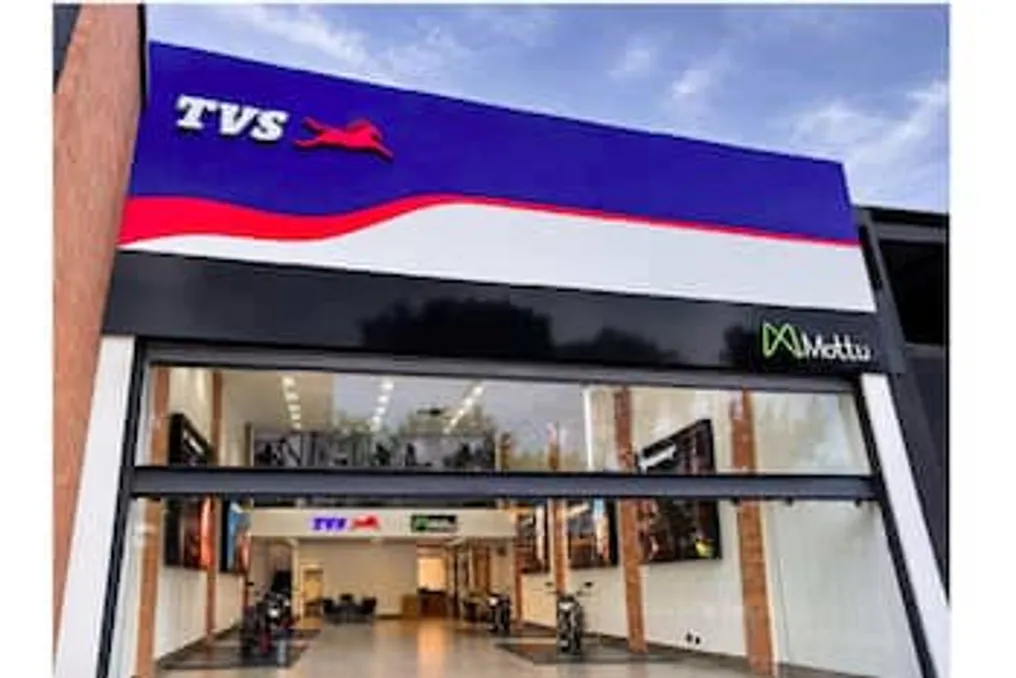
TVS Motor has announced the launch of its first flagship store in São Paulo, Brazil. This move is part of the company's broader strategy to expand production capacity, strengthen its retail network, and develop service infrastructure in the country.

According to reports released by the company, TVS Motor intends to increase its annual production capacity in Brazil to 130,000 units by 2027, up from the approximately 110,000 units projected for 2026.

As a global two-wheeler manufacturer ranking third worldwide, TVS Motor also plans to open three more new retail outlets in Brazil during 2027. These new stores will be opened in collaboration with local partner Mottu, with an initial focus on the Southeast and Central-West regions.

Furthermore, the company plans to modernize existing locations to expand its brand presence in retail. Through the partnership with Mottu, TVS Motor gains access to a network comprising over 500 sales points and 168 service centers across Brazil. Authorized service centers will receive manufacturer-trained technical teams as well as support in ensuring the availability of local spare parts.

Peyman Kargar, President of International Business at TVS Motor Company, emphasized the strategic importance of Brazil for the company. He stated that the partnership with Mottu allows investment in local potential, expansion of the retail network, and strengthening the service ecosystem necessary for building a sustainable and long-term business.

The new flagship store in São Paulo features a showroom area of 149 square meters within a total area of about 250 square meters. It showcases the company's products, including models such as the TVS NTORQ 125, TVS Raider 125, TVS Apache 160, and TVS Apache 200.

TVS Motor operates in over 90 countries worldwide and has served more than 50 million customers globally, including 18 Latin American markets where the company has been present for over 15 years.

Платформа доставки еды Ownly от Rapido планирует усилить позиции на пяти рынках к концу 2026 года
Read more
business-standard.com

Платформа доставки еды Ownly от Rapido планирует усилить позиции на пяти рынках к концу 2026 года

Food delivery platform Ownly, which was launched by the ride-hailing company Rapido, intends to reinforce its market presence in several key areas by the close of 2026. Specifically, the company plans to deepen its involvement in Delhi's National Capital Region (NCR), Mumbai, Pune, Chennai, and Ahmedabad.

In addition to strengthening its foothold in these established markets, Ownly has broadened its operational scope to include Kolkata, signaling an effort to build up its presence in the eastern regions of the nation.

According to a statement from the company, the expansion into Kolkata supports Ownly's broader goal: to ensure that food delivery becomes more equitable, accessible, and affordable for the upcoming 100 million Indians. The strategic focus for Ownly's growth encompasses Delhi NCR, Mumbai, Pune, Chennai, and Ahmedabad, with the objective of solidifying and enhancing its standing across these territories by the end of 2026.

A distinguishing feature of Ownly is its operating model, which utilizes a zero-commission structure, contrasting with traditional food delivery services that impose commissions on restaurants. The company states that this approach helps make food ordering more budget-friendly by presenting menu prices without inflationary pressure from the platform and charging consumers only for delivery, free from undisclosed platform fees.

This specific business model is engineered to support restaurant profitability while simultaneously ensuring consumer affordability, thereby lessening the necessity for heavy reliance on promotional discounts to drive order volume. Ownly integrates Rapido's existing infrastructure, utilizing the ride-hailing company's technology, logistical network, and location intelligence for its food delivery activities.

Deliveries are executed by Rapido's network of Captains, who receive compensation for every completed order. Users can access the platform either through a dedicated application available on both Android and iOS, or via the existing Rapido application. The platform is strategically positioning itself as an alternative to commission-based competitors, aiming to achieve greater affordability in food delivery for the next 100 million Indians.

Popular