Golden Chapel in Recife displays 18th-century Baroque art and faces conservation issues
Read more
Viagem e Turismo
viagemeturismo.abril.com.br

Golden Chapel in Recife displays 18th-century Baroque art and faces conservation issues

Located in the Historic Center of Recife, the Golden Chapel is considered one of the oldest and most impressive Baroque ensembles in Brazil. Its roots date back to the late 17th century, and it continues to charm visitors due to the profuse use of gold and cedar carvings in its interiors.

The name Golden Chapel is a nickname acquired over the centuries, resulting from the rich decoration of the place. Its official name is Chapel of the Novices of the Third Order of Saint Francis of Assisi. This chapel is part of the complex of the Convent and Church of Santo Antônio and, although it no longer holds masses, remains accessible during the week.

The cornerstone of the chapel was laid in 1696, and it was inaugurated for the public the following year. In the three decades that followed, the Golden Chapel received several improvements. During a period of economic prosperity driven by the peak of sugar production, the images of the space were richly decorated, which consolidated its nickname.

The beauty of the place, combined with easy access near Santo Antônio, in the central area of Recife, makes it a recommended destination on any trip to the capital of Pernambuco. The visit also includes the convent's cloister where the Golden Chapel is located, as well as the Franciscan Museum of Sacred Art, which exhibits pieces representative of Catholic traditions.

Despite its historical relevance, visitors have reported in recent years a lack of maintenance, which threatens the heritage. In February 2025, the Church of Santo Antônio, which is part of the same complex, was closed due to the risk of collapse caused by a termite infestation in the roof.

To visit the Golden Chapel, an entrance fee of R$15 is required, which includes a guided tour of the Franciscan Museum of Sacred Art and the cloister. It is important to note that the chapel does not receive tourists on Saturdays and Sundays, nor during lunchtime. Normal operating hours are Monday to Friday, from 8 am to 12 pm and from 2 pm to 4 pm.

Additionally, the space may be closed for religious events or other previously scheduled activities, so it is advisable to follow the Golden Chapel's social media to confirm the schedule before visiting.
Similar stories

Chartres Cathedral in France preserves centuries of history and Gothic architecture
Read more
viagemeturismo.abril.com.br

Chartres Cathedral in France preserves centuries of history and Gothic architecture

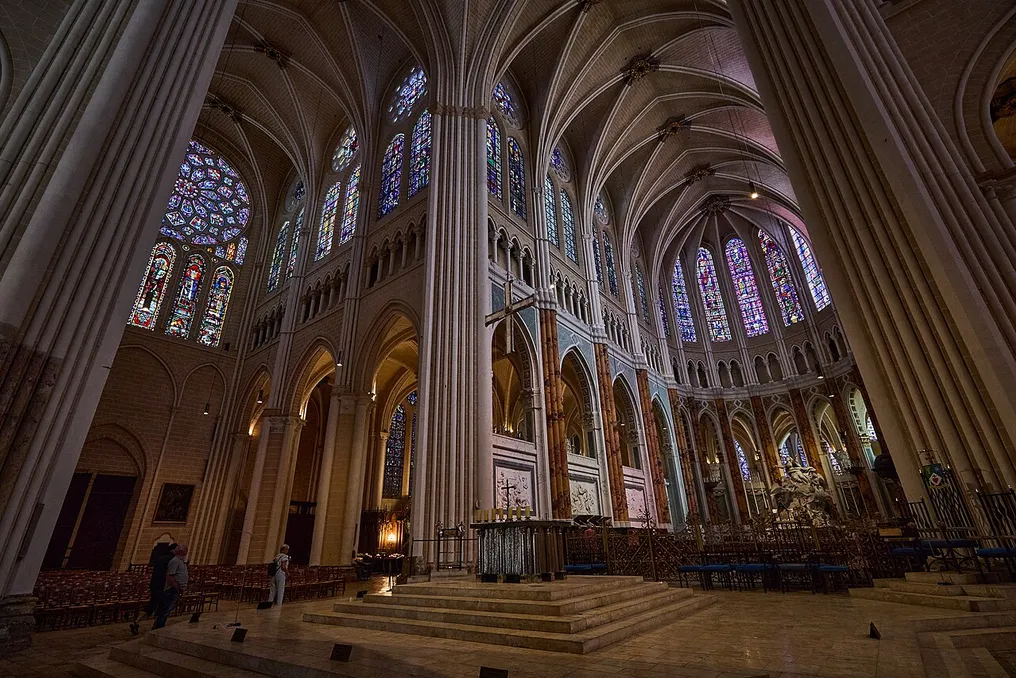
Chartres Cathedral, located in France, has roots dating back to the 12th century and is considered one of the country's main cultural symbols. Its elevated structure allows it to be seen from more than 20 kilometers away on clear days, dominating the regional landscape.

Situated approximately 80 kilometers southwest of Paris, the cathedral is easily accessible for day trips from the French capital and is part of national tourist routes. Its official name is Notre-Dame de Chartres, and it has been a UNESCO World Heritage site since 1979, sharing Gothic architectural renown with Notre-Dame de Paris.

It is important to note that 'Notre-Dame' means 'Our Lady' in French, a common term in medieval cathedrals and churches dedicated to the Virgin Mary.

Chartres Cathedral is recognized as one of the first and most complete cathedrals of the global Gothic style, although its history is marked by several reconstructions following successive fires. The first major renovation occurred in 1020, when Bishop Fulbert of Chartres erected a vast Romanesque cathedral, of which a large crypt remains.

In 1134, another fire allowed for improvements to the monument, resulting in the construction of the western façade, the Royal Portal, and the south tower. However, the modifications in the Gothic style that defined the current structure began in June 1194, after new flames destroyed a large part of the Romanesque building. During this event, the relic of the Veil of Mary was preserved intact in the crypt, which many consider a miracle.

The two towers of the façade also attest to the reconstruction: although both survived the 1194 fire, the top of the north tower was only completed in the 16th century, featuring additional Flamboyant Gothic ornamentation.

The reconstruction phase began immediately and was completed in 27 years, in 1221. The cathedral was solemnly consecrated in 1260, in the presence of King Louis IX, known as Saint Louis. The adoption of the Gothic system replaced the robust Romanesque walls with pointed arches, rib vaults, and high arcades, allowing for the installation of monumental windows.

Currently, the cathedral houses one of Europe's richest collections of medieval stained glass, featuring over 5,000 painted figures. An element of great religious value is the Veil of Mary, or 'La Sainte Chemise,' a relic donated by King Charles the Bald in 876, which is supposedly what Mary used when giving birth to Jesus.

Another notable aspect relates to the coloring of the stained glass, which has a specific name: the renowned blue tone of the 12th century, called 'Chartres Blue,' is visible in the famous stained glass window 'Notre-Dame de la Belle Verrière.'

To travel from Paris to Chartres, the most convenient station is Gare Montparnasse. From there, TER Rémi regional trains depart, making the direct journey in about 1 hour and 20 minutes, covering approximately 80 kilometers. Upon arriving at Chartres station, one can view the top of the cathedral from a distance and complete the journey on foot, enjoying a pleasant walk through the city's historic center.

Entry to the Cathedral is free and open daily from 8:30 AM to 7:30 PM. To avoid long waits, it is recommended to book the visit in advance through the venue's official website, as times are usually released only a few days ahead. The website also provides information on audio guides available for rent in the monument's bookstore, with options in English, French, and Spanish.

Popular