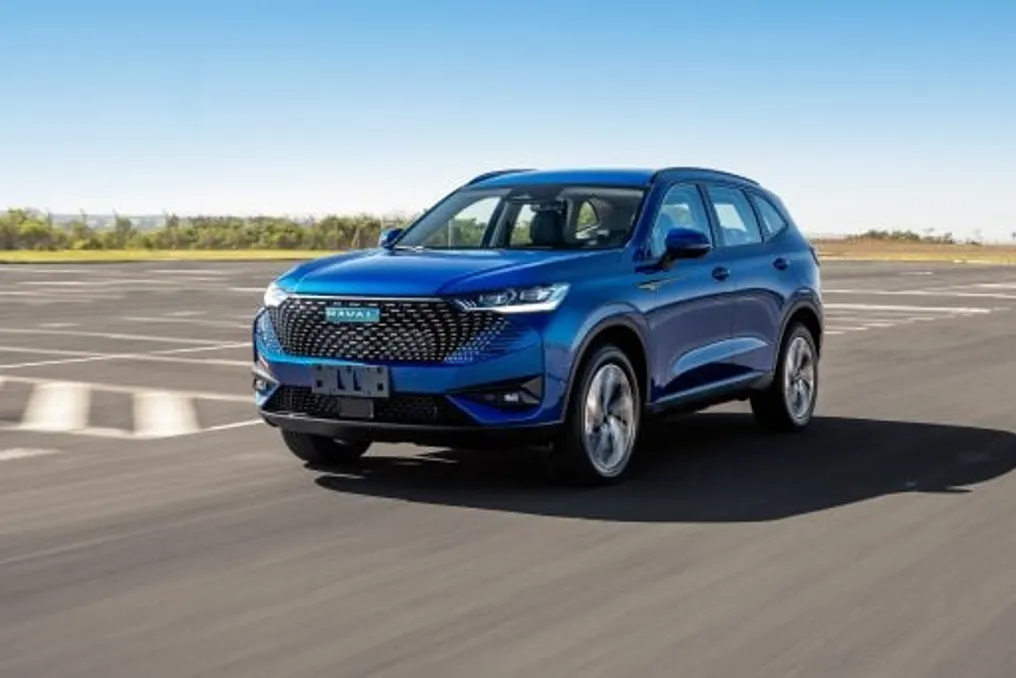
During 2024, established manufacturers in Brazil announced considerable investments in their operations. A common point in these announcements was the promise to introduce national flexible hybrid cars and launch new models, many of which are scheduled to arrive in 2027.
In 2026, each brand's planning to maintain relevance against growing Chinese competition became clearer. Below, we detail what is known about the hybrid models that traditional brands will offer starting in 2027.
Chevrolet
Chevrolet in Brazil is the last manufacturing unit to produce large compact vehicles after the brand's closure in China. For this reason, the solutions developed for the national line are being created locally.
The Chevrolet Sonic will receive a 48-volt mild hybrid system in 2027, and this technology will be extended to the Tracker and Montana models. This system aims to reduce both consumption and emissions of the three-cylinder 1.0 turbo engine, which is already known for its economy.
Furthermore, Chevrolet plans to launch the plug-in hybrid Captiva, although it will not be flexible. The vehicle is already available on the brand's website and will be assembled under an SKD regime at the multi-brand PACE factory located in Ceará.
Honda
Honda has committed to manufacturing flexible hybrid cars using the e:HEV technology in Brazil. This system will be implemented in the next generation of the HR-V, integrating the naturally aspirated 1.5 engine with an electric component.
According to information gathered by Quatro Rodas, the City and WR-V versions will start featuring a 48-volt mild hybrid system, aiming to reduce emissions. This functionality represents an unprecedented and more accessible option in the global market.
Renault
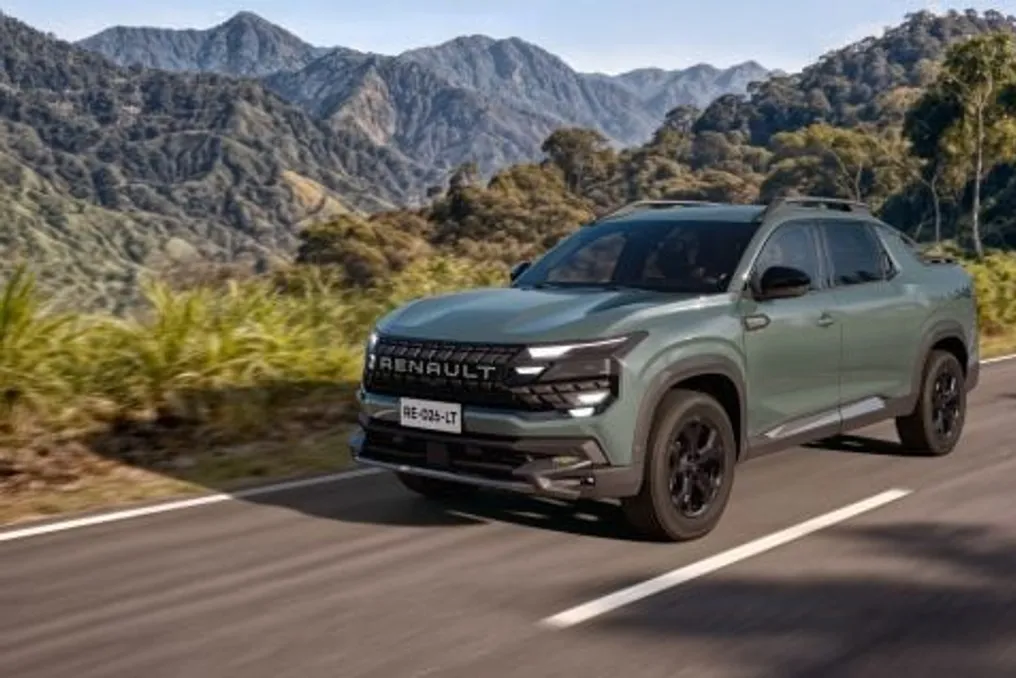
The Renault Boreal model and the Niagara pickup have been confirmed to receive the E-Tech 4x4 system in Brazil in 2027. Although this system already exists in Europe, where it is classified as mild hybrid, it exceeds the limits of known 48-volt systems.
In this system, the front axle is driven by the 1.3 turbo engine with the conventional mild hybrid. The major difference lies in the rear axle, which incorporates a 31 hp and 8.8 kgfm electric motor coupled to a two-speed gearbox with a reduced ratio for off-road use. This transforms the Boreal and Niagara into four-wheel-drive vehicles and allows them to operate exclusively on electricity under certain conditions. This rear motor operates at speeds of up to 140 km/h and uses a 48-volt battery with a capacity of 0.84 kWh.
Additionally, Renault is developing a plug-in hybrid SUV based on the Geely EX5 EM-i platform. According to the portal Autos Segredos, this will be the new Arkana generation model.
Toyota
Toyota was a pioneer in producing hybrid vehicles in Brazil, but currently faces the challenge of recovering lost ground, as Chinese competition has overshadowed its low-power electrified models.
The brand has already announced the development of a flexible plug-in hybrid system, which will be applied to the recently presented Corolla Deck pickup, expected in 2027. However, before that, the company should implement a new version of its HEV system, already used in other markets and which will arrive in the Lexus UX300h. The latter uses the 2.0 Dynamic Force engine combined with more powerful electric motors capable of generating almost 200 hp.
Volkswagen
Volkswagen will offer electrified flexible options in two distinct configurations in Brazil. The simplest option involves 48-volt mild hybrid systems, starting with the launch of the Tukan pickup in 2027. This MHEV system will be integrated into the new generation 1.5 TSI engine, which is already more efficient regardless of electrification, and will also be adopted with the 1.0 TSI engine.
The second hybrid configuration will be full hybrid and will be introduced in a novel vehicle, named project Saga, which is likely to be a coupe SUV, possibly succeeding the Nivus. Volkswagen's full hybrid was presented in Europe in 2026, equipping the Golf and T-Roc models. Its operating mechanism is similar to Toyota's HEV, where the combustion engine alternates between generator and propulsion functions.