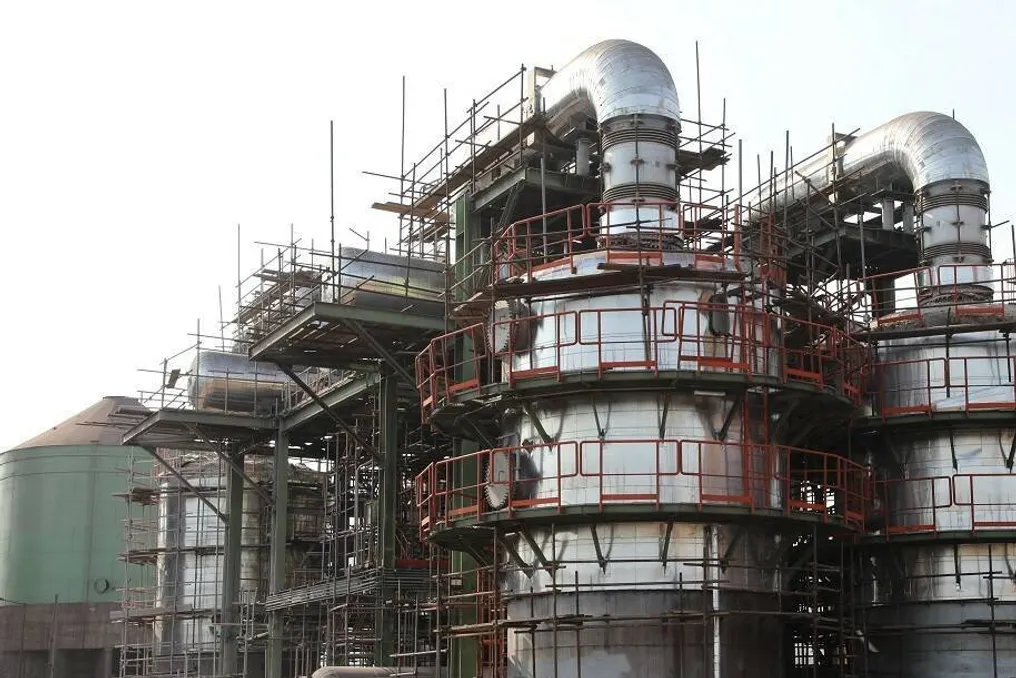
Iranian researchers develop ultrasonic technology for fuel oil desulfurization
Read more
Tehran Times
www.tehrantimes.com

Iranian researchers develop ultrasonic technology for fuel oil desulfurization

Researchers from Iran have created a new technology to remove sulfur from heavy fuel oil using an ultrasonic reactor and a process known as AQP. This breakthrough is viewed as part of the country's efforts to transition from technology localization to independent creation and export of its own industrial products.

The technology was developed under the leadership of Reza Mokhtar, who is a researcher, inventor, and senior energy expert. It aims to solve two serious problems in Iran's oil refining industry: the high sulfur content in fuel and the country's dependence on foreign technologies in advanced refining processes.

For a long time, Iran's oil and gas industry focused on adapting and reverse-engineering foreign technologies. While this approach helped local enterprises reduce dependence on imported equipment and expertise, it did not allow them to become developers of original technologies.

According to the developers, the AQP process marks a shift in this approach. They claim that the technology was developed entirely domestically—from initial laboratory research and reactor design stages to the creation of a semi-industrial pilot unit to demonstrate commercial potential.

Solving Two Major Refining Problems

One of the main challenges facing the refining and power generation sectors in Iran is the sulfur content in heavy fuel, known as mazut. Burning high-sulfur fuel releases pollutants that cause serious environmental problems, making desulfurization increasingly important amid tightening environmental regulations.

Traditional hydrodesulfurization methods used to treat heavy oil streams typically require significant energy consumption, high temperatures, and pressures, as well as a large hydrogen consumption. These requirements can make the application of such methods economically challenging, especially at facilities where large-scale investment is not feasible.

The second problem is technological dependence. The market for advanced desulfurization processes has historically been controlled by a small number of international technology suppliers, forcing countries like Iran to rely heavily on purchasing foreign equipment.

The AQP process is designed to offer an alternative. Instead of using large reactors operating under extreme temperatures and pressure, this technology utilizes ultrasonic waves to form microscopic bubbles inside the reactor. Their rapid and violent collapse, called acoustic cavitation, creates localized conditions conducive to oxidation reactions at near room temperature.

Thanks to this process, sulfur compounds are converted into substances that can then be separated from the fuel oil in a subsequent processing stage. The resulting material can be used as a recyclable byproduct. Developers state that this method allows for the production of cleaner fuel while simultaneously reducing capital costs and energy consumption compared to conventional methods, and helps refineries comply with growing environmental demands.

From Laboratory Research to Industrial Application

The development of this technology went through several stages, starting with experiments on a laboratory scale and ending with the design, construction, and optimization of ultrasonic reactors by Iranian scientists. The project reached the stage of a semi-industrial pilot unit, which the developers consider proof that the process has moved beyond theoretical and laboratory investigations and possesses potential for industrial implementation.

They emphasize that the technology was created without copying existing foreign designs, obtaining licenses, or receiving technology transfer from an international company. Furthermore, the developers report that the process has undergone technical evaluation and official registration through recognized bodies, which, they assert, confirms the scientific and technical merits of the technology and distinguishes this achievement from announcements based solely on scientific reports.

From Technology Localization to Export

This project represents an example of a broader shift in Iran's approach to industrial development: moving from adapting and localizing foreign technologies to creating its own patented processes with the potential for international commercialization. If the AQP process is successfully commercialized and adopted by industrial consumers, it will provide Iran with an opportunity to enter the global market not only as an oil and petroleum product producer but also as a supplier of specialized refining technologies.

Developers believe that this experience can serve as a model for other sectors of Iran's oil and gas industry, demonstrating how domestic scientific and engineering capabilities can be transformed into commercially viable industrial solutions. Thus, this achievement is seen not merely as the creation of a new desulfurization process, but as an effort to change Iran's position in the global value chain of technology—from a country that predominantly buys and adapts advanced technologies to one striving to develop, commercialize, and export its own technological expertise.

Similar stories

Iran prepares to commission its first fully domestic nuclear fusion system
Read more
www.tehrantimes.com

Iran prepares to commission its first fully domestic nuclear fusion system

The head of the Atomic Energy Organization of Iran (AEOI) announced on Sunday that Iran is preparing to launch its first fully national nuclear fusion system. This event marks a new stage in the country's efforts to develop its competencies in nuclear science and advanced technologies.

Mohammad Eslami, the head of AEOI, noted in a television interview that Iranian scientists have made significant progress in developing this system and expressed hope for its commissioning according to the project schedule.

According to Eslami, this project will demonstrate Iran's scientific and technological capabilities, as well as its potential for advancement in areas at the forefront of global research.

Ali Naourizi, head of the Iranian Advanced Technologies Company, explained the scientific basis of the project. He specified that nuclear fusion occurs when two light isotopes combine under specific physical conditions, causing a fusion reaction.

Naourizi added that the radiation generated by this process can be used in the production of radiopharmaceuticals and the creation of modern medical diagnostic systems. In the long term, the goal is to develop a system capable of generating high electrical currents without energy loss within the system itself, highlighting the potential of fusion technology for various scientific and energy needs.

Production and Export Potential of Iran's Bentonite Industry
Read more
www.tehrantimes.com

Production and Export Potential of Iran's Bentonite Industry

This article analyzes the bentonite industry in Iran, highlighting recent data on production, key areas of industrial application, and export opportunities. It examines the role of bentonite in drilling fluids, metallurgy, construction, iron ore granulation, and absorbent production.

Furthermore, the material explains the technical requirements, quality specifications, processing conditions, and supply chain aspects that international buyers should consider when purchasing bentonite from Iran.

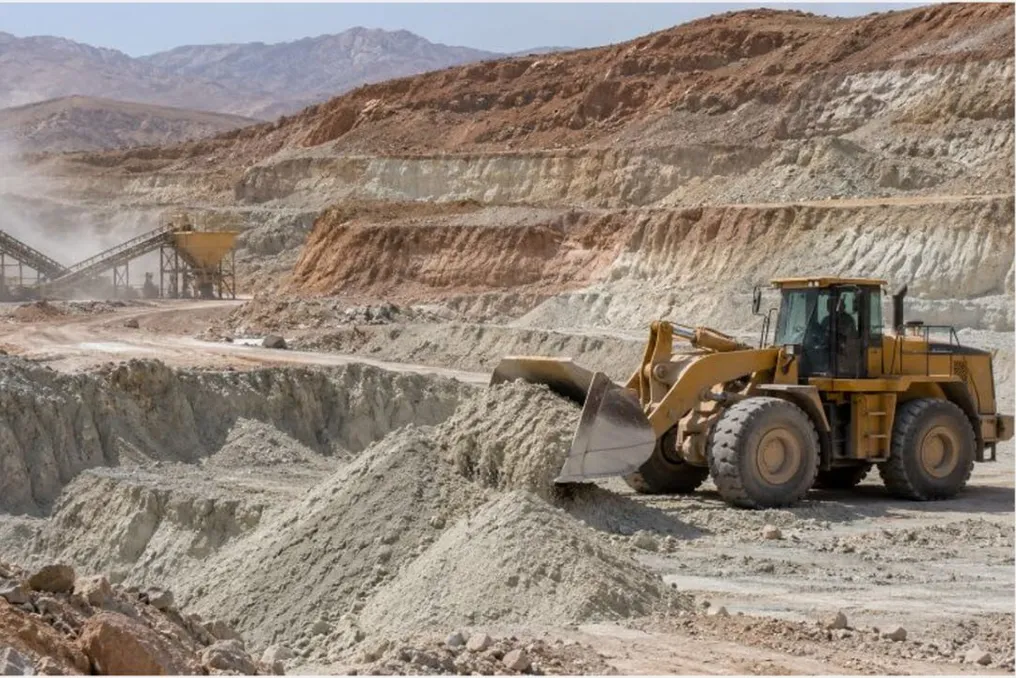
Iran is a recognized producer of industrial minerals, including bentonite—a clay material used in manufacturing, engineering, and processing. According to data from the U.S. Geological Survey (USGS), bentonite production in Iran was estimated at 1.3 million metric tons in 2024, slightly less than in 2023 (1.31 million metric tons) and 2022 (1.34 million metric tons).

USGS data also records production of 715,000 metric tons in 2020 and 1.15 million metric tons in 2021. These figures reflect domestic production scales, not export volumes. Product availability for international buyers is determined by domestic demand, production capacity, product grade, and logistics.

Why Bentonite is Important for Industrial Markets

Bentonite is a natural clay composed mainly of smectite group minerals, particularly montmorillonite. Its ability to absorb water, swell, bind particles, and form suspensions makes it useful in many industrial processes.

Commercially significant are sodium and calcium bentonites. Sodium bentonite usually exhibits a greater swelling capacity, while calcium bentonite is chosen for applications where its specific adsorption and binding properties are suitable. Effectiveness depends on mineral composition, exchangeable cations, processing conditions, and application; buyers must compare test results with their process requirements.

Main Industrial Applications

Bentonite performs various functions across different industries, and each application requires specific material properties.

In oil and gas drilling, bentonite is used in water-based drilling fluids to hold deposits, maintain wellbore stability, and control fluid loss. Buyers often assess viscosity, filtration properties, particle size, and swelling behavior.

In casting and metalworking, it serves as a binder in molding sand, increasing mold strength and casting quality. Key evaluation parameters include moisture content and green strength.

In construction and civil engineering, certain grades are used in soil excavation with suspension support, drilling operations, and sealing, where swelling behavior and low permeability are important.

In iron ore granulation, bentonite binds fine ore particles into green granules before further processing. Granule quality can depend on binding properties, moisture requirements, and particle size distribution.

Bentonite is also used in absorbent products, such as cat litter. Here, characteristics like absorption capacity, clumping ability, granule size, and dust formation are important. It should be noted that no single grade suits all tasks.

Product Technical Specifications and Stability

For industrial buyers, a product description does not replace technical specifications. Depending on the intended use, evaluation may include:

  • Montmorillonite content to determine mineral composition.
  • Moisture, which affects storage, handling, and processing.
  • Particle size distribution, which influences dispersion and product behavior.
  • Free swelling index to assess expansion under specified test conditions.
  • Viscosity and filtration properties, especially for drilling fluids.
  • Binding properties for casting and granulation.

Acceptance limits vary depending on the specific application. Buyers must predetermine the required grade, testing methods, target values, and tolerances before requesting commercial offers.

Documentation is equally important. A Certificate of Analysis (COA) provides test results for a specific batch; a Technical Data Sheet (TDS) summarizes product properties; and a Safety Data Sheet (SDS) contains handling and safety information. If necessary, independent testing and pre-export inspection can help confirm compliance with agreed specifications. Testing methods and measurement conditions must accompany the results, otherwise, viscosity and swelling values may not be directly comparable.

From Production to International Shipment

The mere presence of natural resources does not guarantee reliable supply. Processing, quality control, packaging, and transportation affect whether the product reaches the buyer in the required condition.

Depending on the target grade, processing may include drying, grinding, sieving, and particle size classification. Packaging must protect the material from moisture and contamination during storage and transport. Buyers and suppliers must also agree in advance on order volume, packaging type, inspection responsibility, delivery terms, and necessary shipping documents.

A competitive offer depends not only on price but also on product consistency, documentation, packaging, and delivery reliability.

Iran's Bentonite Export Potential

Iran's stated production provides a significant domestic base for industrial use and potential international supply of bentonite. However, export potential cannot be determined solely by production figures. It depends on the availability of suitable grades, processing capabilities, domestic consumption, quality assurance, logistics, and the requirements of target markets.

Different buyers prioritize different characteristics. A drilling fluid operator may focus on viscosity and filtration characteristics, while a foundry buyer may place greater importance on binding properties. Therefore, suppliers and trading companies must clearly convey product specifications and tailor each offer to the buyer's intended application.

Before ordering, buyers must confirm the grade, batch documentation, packaging, quantity, and applicable trade terms.

Vornaco and Sourcing Bentonite Internationally

As an international trading company dealing in industrial minerals, Vornaco collaborates with enterprises looking into options for sourcing bentonite for industrial needs. Buyers can review bentonite supply solutions from Vornaco and discuss product specifications, bulk order requirements, packaging, and delivery terms according to their needs.

Conclusion

The production of bentonite in Iran and its wide range of industrial applications form the basis for participation in regional and international supply chains. Reliable supply requires specifications tailored to the specific application, consistent quality, clear documentation, appropriate packaging, and coordinated logistics.

Popular