
Chief Justice Solyakanth advises law schools to teach students responsible AI use and practical work
Read more
Aaj Tak
www.aajtak.in

Chief Justice Solyakanth advises law schools to teach students responsible AI use and practical work

The country's Chief Justice (CJI) Solyakanth issued several important recommendations regarding the necessity of changes in current legal education methods. He believes that studying law should not be limited only to textbooks; students also need practical experience working in courts and an understanding of real legal problems.

In this regard, he proposed including work related to providing legal aid in the requirements for obtaining a bachelor's degree in law.

These remarks were made by CJI Solyakanth during the opening session of the first annual international conference on legal education 2026, held in Hyderabad and organized by the Commonwealth Legal Education Association. In his speech, he emphasized the importance of practical training in legal education, working with legal aid, and the responsible application of artificial intelligence (AI).

He also suggested granting academic credits to students who complete more hours of legal aid than required by the standard. In his view, this encourages students to help people from low-income groups who have limited access to legal services.

CJI Solyakanth shared his views on the growing role of AI in legal education. Instead of a complete ban on using AI in legal research, he insists on teaching students its responsible application. According to him, future lawyers and judges must understand the difference between information obtained with the help of AI and decisions made by the human mind.

Students must be able to use technology while maintaining the capacity for human understanding and independent decision-making in legal matters. These proposals came at a time when the influence of AI is constantly growing on the labor market, workflows, and teaching methods, making practical experience in legal education even more significant.

The Justice called on law schools to develop clear guidelines regarding the use of AI in academic activities and information provision. Addressing CLEA, he requested the creation of model guidelines for law schools and journals in Commonwealth countries. He noted that AI can contribute to legal research, but students are obliged to verify the results obtained from it against primary sources.

The CJI also opposed the unjustified implementation or complete prohibition of AI use, stressing that students must take responsibility for their work. He warned against excessive reliance on software for detecting academic misconduct.

In his opinion, instead, oral examinations should be conducted, and students should be asked to defend the mentioned legal officials to assess their true understanding of the subject.

CJI proposed making a minimum number of legal aid hours a mandatory requirement for obtaining a bachelor's degree, and granting additional academic credits to students who work beyond the required volume. He believes that legal clinics should evolve beyond classroom exercises, including student work with panel lawyers and paralegal volunteers through legal aid agencies.

Emphasizing the need to integrate clinical learning into core subjects of law, he also recommended practical sessions on evidence, criminal procedure, family law, and constitutional law.

Similar stories

Despite AI's ability to write code, knowledge of which products to develop remains critically important
Read more
yourstory.com

Despite AI's ability to write code, knowledge of which products to develop remains critically important

Artificial intelligence simplifies the software creation process, allowing product managers, designers, and subject matter experts to turn ideas into prototypes even without deep coding skills. Nevertheless, transforming these prototypes into reliable products that solve real problems remains a complex task.

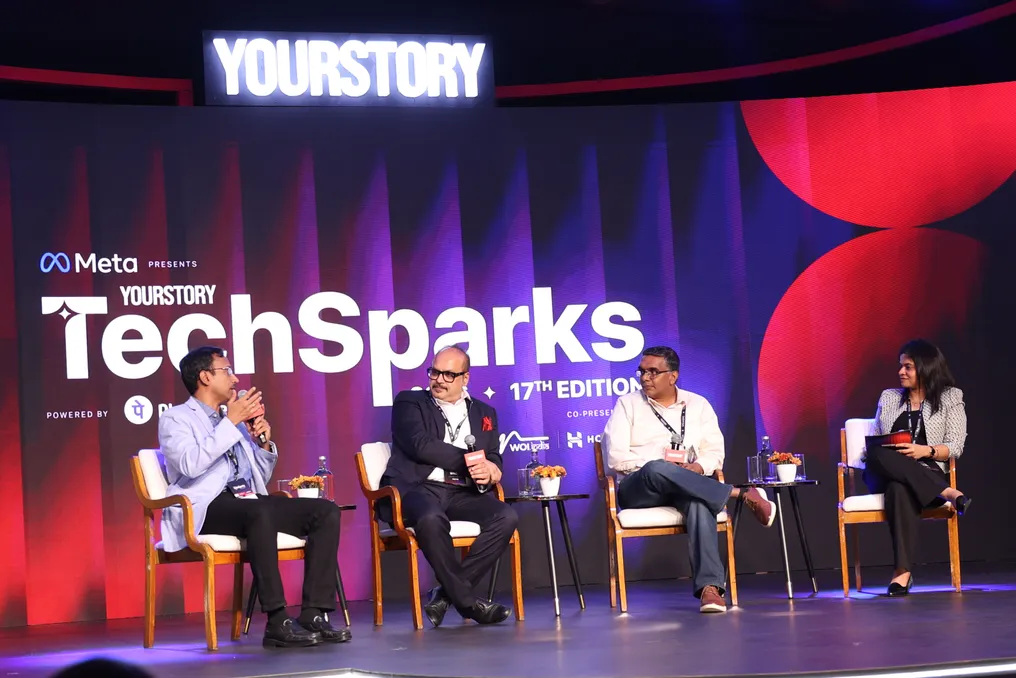
During the TechSparks 2026 event, a panel discussion titled 'From Who Can Code to Who Can Build' highlighted these changes. Participants included Srinivas Chamarthy, Senior Vice President of Engineering, Site Head, and Country Head at Diligent India; Madhusudan N. Murthy, Head of Digital Engineering and Technology Strategy at EY GDS; and Arun Kalyanaraman, VP of Engineering at Target in India. The discussion was moderated by Chhavi Mahajan, Content Director at YourStory.

AI-driven development allows business teams to test concepts, demonstrate ideas, and gather feedback much earlier. However, a prototype demonstrating an idea's functionality is not yet ready for full production. Applications must still meet requirements for security, scalability, and reliability.

Murthy noted that while AI facilitates experimentation, companies must clearly distinguish between a proof-of-concept and a production-ready application. Engineering teams still need to identify vulnerabilities, implement safeguards, and ensure systems can handle real-world load. He emphasized: 'This is good, it's a very positive development, but it also needs its limitations.'

Kalyanaraman stated that AI can not only accelerate code writing for developers but also optimize the entire development cycle—from problem definition and solution testing to stakeholder approval. He stressed that fundamental engineering knowledge, architectural thinking, and technical depth will remain indispensable, even as AI changes how solutions are built.

He gave an example where a product owner, engineer, and UX specialist used AI tools and large language models to create a prototype of a complex concept and present it to management in just one week. Without these tools, this process could have taken anywhere from six weeks to two months. The advantage lay not only in faster coding but also in the ability to validate the idea and make decisions more quickly.

Chamarthy observed that in the era of generative AI, coding is becoming a commodity, shortening the path from prototype to customer feedback and subsequent production launch from a potential nine-month cycle to one or two months. As speed increases, he believes that knowing what *not* to build gains greater value, meaning ideas must be tested in a sandbox while experienced engineers strengthen them in terms of security, scalability, and confidentiality.

As companies transition from using AI to assist developers to implementing agents capable of performing tasks with limited supervision, they must define the level of autonomy. Chamarthy advised that this should depend on associated risks, the potential impact of the solution, and the ability to reverse the outcome. He suggested organizations consider whether a solution is a 'two-way door' or a 'one-way door,' noting that significant financial or strategic decisions require human oversight and contextual judgment.

Chamarthy warned that access to AI-based coding tools cannot replace engineering expertise. Experienced engineers understand architectural decisions that affect long-term maintenance, security, and scalability, including risks that may not be obvious in a prototype. His advice was to encourage experimentation, but in a controlled environment: 'Don't stop the code. Test it in the sandbox.'

This allows a larger number of employees to test ideas, giving engineering teams the opportunity to analyze applications, fix weaknesses, and prepare them for release.

Since AI simplifies code generation and answer retrieval, the importance of understanding precisely which problems are worth solving increases. Kalyanaraman compared using AI to consulting a genie who grants only three wishes. Obtaining a useful result depends on the ability to ask the right questions and understand the limitations. He stated: 'In a world where answers can be easily obtained, the ability to ask the right questions will become a truly critical skill.'

People who understand customer needs, business processes, and operational requirements are better equipped to identify solutions that create real value. Engineering teams will also need systemic thinking and platform expertise to help non-engineers develop applications without risking production systems.

This shift also has implications for talent development. Murthy reported that EY GDS is preparing employees for an AI-managed workplace by combining experienced specialists and young talent. Existing employees bring knowledge of clients and systems, while new team members offer fresh approaches and develop new technical skills.

Chamarthy added that teams need a balance of strengths: organizations should upskill existing employees familiar with their products and customers while simultaneously attracting recent graduates capable of working with AI tools. He also noted that engineer effectiveness should be measured by the problems teams solve for clients, not just by metrics like lines of code written or tickets closed. Since AI handles routine work, the results delivered by engineering teams become a more telling measure of their contribution.

The panelists expect employees and AI agents to work even more closely. As agents take on more complex tasks, companies will have to rethink workflows, accountability, and performance expectations. They must also ensure that safeguards keep pace with technological capabilities.

Murthy described a future where managers will oversee AI agents alongside humans. He said: 'The future I see is getting accustomed to agents reporting to you, not just people.'

Kalyanaraman concluded that the New Technological Order is not just about what AI can do for us, but how we evolve in our thinking, engineering practices, and decision-making processes to maximize its potential. While AI simplifies software creation, companies will still require engineering expertise, industry knowledge, and human judgment to determine which ideas are worth developing and which prototypes are ready for production.

Ministry of Education approves national guidelines for the use of Artificial Intelligence in Brazilian education
Read more
olhardigital.com.br

Ministry of Education approves national guidelines for the use of Artificial Intelligence in Brazilian education

The Ministry of Education (MEC) officially released on Tuesday (10th) the national standards regulating the use of artificial intelligence (AI) in the Brazilian educational system. These rules apply from early childhood education to higher education, defining clear limits for the use of technology by students, teachers, and educational institutions.

One of the significant changes compared to the previous opinion, approved by the National Council of Education (CNE) in September, is the permission for AI tools to assist in grading essay questions. However, the assignment of the final grade remains the responsibility of the teachers.

The document's rapporteur explained that the previous version did not specify whether the use of AI in this type of assessment was prohibited. The modification aims to allow technology to function as support, provided there is constant human oversight.

The guidelines also stipulate that automated systems must never fully replace the function of education professionals or assume responsibility for pedagogical decisions. The rules vary according to the age group of the students and the level of education.

In early childhood education, children cannot use AI systems, even with teacher assistance. Educators, in turn, can use these tools for planning, pedagogical management, and accessibility purposes, provided the goal is to remove learning obstacles.

For elementary school in the initial years (1st to 5th grade), the use of AI is restricted to pedagogical activities that are planned, conducted, and supervised by education professionals. Students are prohibited from accessing these systems autonomously or without supervision, including interaction with conversational or generative tools, even when teachers are present. An exception exists for assistive technologies designed to overcome learning barriers, following specific criteria.

In the final years of elementary school (6th to 9th grade), generative AI tools can be used in pedagogical activities mediated by educators. However, individual, autonomous, or unsupervised student access remains prohibited. The document also provides for the gradual inclusion of AI education in the curriculum, alongside topics of digital, media, and computational literacy, aiming to equip students to understand how these tools work, recognize biases, fact-check information, and distinguish technological assistance from their own intellectual production.

At the higher education level, institutions are permitted to apply AI in teaching, research, and extension activities. Technology can also be a subject of academic study and investigation. Universities and other entities must create their own policies to regulate the use of these tools, integrating them into pedagogical projects, regulations, and institutional development plans.

A crucial aspect is transparency: institutions must specify when students and researchers need to declare the use of AI in their work. In scientific research, for example, its use must be reported if the tool's contribution is relevant to text writing, data analysis, literature review, programming, or other phases of the investigation. The guidelines are clear in stating that AI systems cannot be considered authors of academic or scientific works; the responsibility for the content and results always rests with students, teachers, and researchers.

In terms of university administration, automated tools can assist in planning, indicator analysis, and detecting dropout risks. However, decisions that significantly affect students' rights or academic trajectory cannot be made solely by AI systems. Finally, teacher training courses must incorporate content on digital literacy, pedagogical application of emerging technologies, critical analysis of educational data, and the ethical implications of AI.

This approval comes at a time when AI is already part of the routine of many Brazilian students. According to the 15th edition of the TIC Education survey, 37% of basic education students reported using generative AI tools in school research, but only 19% mentioned receiving any guidance from teachers on the use of the technology. With these new rules, the MEC seeks to standardize practices that already occur in schools and universities, balancing the benefits of AI with the need for human supervision, data protection, and pedagogical responsibility.

Popular