Prime Minister Modi stated that companies need ITI specialists, and they deserve the same respect as IITs
Read more
Aaj Tak
www.aajtak.in

Prime Minister Modi stated that companies need ITI specialists, and they deserve the same respect as IITs

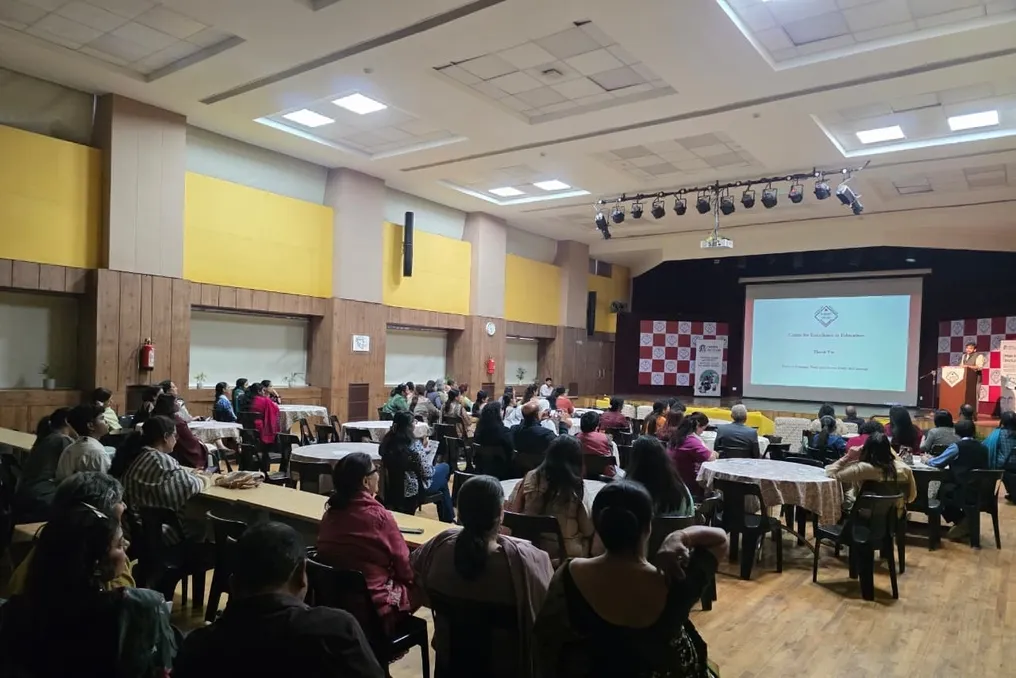
Prime Minister Narendra Modi called on society to change its attitude towards students studying in Industrial Training Institutes (ITIs). He emphasized that vocational education and practical skills should receive the same respect as traditional university degrees.

During his visit to Lucknow on November 21, 2026, to attend the Fifth National Skill Convocation Ceremony at Indira Gandhi Pratisthan, Modi noted that students and their families often feel ashamed admitting that their child is studying in an ITI rather than a university or college.

Modi stated that such students should be given as much respect as students studying in IITs. He explained that people are embarrassed because studying in an ITI is associated with practical and physical work (manual labor).

The Prime Minister stressed that the true strength of any company lies in its qualified specialists trained in ITIs. He clarified that although the number of employees with academic degrees in companies may be small, the daily work largely depends on highly skilled workers trained in vocational institutions.

He cited examples of large companies where, despite having people with academic qualifications, the main driving force and real power of the company comes from a couple of hundred specialists trained in ITIs.

Calling for a change in public opinion regarding vocational education, Modi spoke of the extreme necessity of a major psychological shift in society. He also congratulated Minister Jayanta Chaudhary and his team, and highly praised the confidence and presentation of the students who received certificates at the event. Modi noted that the appearance and behavior of the students demonstrated the importance of recognizing their achievements and confidence.

He added that the attire of his ITI students looked more magnificent than the clothing of the university graduation ceremony participants, highlighting their high level of confidence and self-control.

Similar stories

PM Modi states that the world needs skilled professionals, not just diploma holders
Read more
www.aajtak.in

PM Modi states that the world needs skilled professionals, not just diploma holders

During his visit to Lakhnau, Prime Minister Narendra Modi emphasized that the modern world requires not just graduates with diplomas, but highly skilled workers. He noted that Indian artisans have made a significant contribution to the creation of modern cities in countries such as Saudi Arabia, Dubai, Abu Dhabi, Qatar, and Kuwait.

Modi mentioned that the royal families of these countries highly value the craftsmanship and diligence of Indian artisans. He also stated that many nations annually request thousands of skilled workers from India, including specialists trained in ITIs.

Speaking at a graduation ceremony in Lakhnau on Saturday, he addressed the youth, urging them to value skills and learn trades. According to him, relying solely on certificates and diplomas will not be enough in the future; demand will grow for those who possess true mastery.

The Prime Minister reminded that after gaining independence, the country was long under the influence of a mentality of dependence, which led to an excessive focus on clerical positions and diplomas, while skills and abilities remained in the shadows.

He recounted a story from his grandfather Dharmadhikari's book about a master's student who came asking for patronage, constantly referring to his degree. His grandfather asked him about practical skills—whether he could drive or cook—but the young man could not answer, continuing to talk only about his academic qualification.

Modi stated that times are changing, and in the future, mastery, not paper certificates, will gain value. He reiterated that in the Gulf countries, the work of Indian artisans who created magnificent and modern metropolises is being discussed.

He added that many countries today need thousands of skilled personnel from India, and they require not only university graduates but also people trained in ITIs. He considers the next twenty years extremely important for India, which can develop by respecting professional skills in the 21st century.

Responding to concerns about job losses due to artificial intelligence, Modi assured that no one can take away the job of a person who possesses real skills. He urged the youth not to limit themselves only to diplomas and certificates, but to definitely learn some craft.

Referring to the COVID-19 pandemic period, he noted that many workers returned to their villages then, and it became evident that even with money, daily life cannot be sustained without skilled workers. During that period, skilled workers ensured the functioning of many vital services.

In Modi's opinion, a young person learning a trade is not just working with machines but is simplifying people's lives, thereby strengthening the nation's power. He cited the example of India's transition from importing mobile phones to manufacturing them domestically and exporting them to other countries.

He also reported that after 2014, his government built about five thousand new ITI centers over a decade, and the number of students there increased by more than half a million, with the proportion of girls rising by more than two and a half times.

Modi stressed that the government's priority is to improve the quality of education in ITIs, ensuring good teachers and modern equipment. Previously, outdated specialties were taught in some places, but now over thirty new fields have been launched in ITIs, such as aerospace construction, artificial intelligence, cybersecurity, drone technician, green hydrogen, industrial robotics, and electric vehicles. Courses in animation, special effects, and semiconductor techniques are also being conducted, meeting the needs of the present and future.

The Prime Minister noted that regardless of the number of highly qualified doctors in a hospital, trained specialists are needed to operate the installed equipment. If ITI workers who maintain the machines are absent, the hospital's work suffers. In the skills of ITI students, he sees the strength of the country.

He pointed out the need to modernize ITI curricula, update equipment and train instructors in new technologies, and ensure that training is directly linked to industry. Through the PM Setu program, 60 billion rupees are allocated in this direction.

Modi concluded that the rapid development of the country creates new opportunities for employment for skilled workers. He cited the example of building housing for low-income groups: when four hundred million homes were built for the poor, orders appeared for electricians, carpenters, and other artisans, and water and electricity supply was ensured thanks to the efforts of skilled youth. He also mentioned the gas supply crisis during the Middle East war.

Education Minister Delhi Aashish Sood presented a special handbook at Vasant Valley School, emphasizing the importance of empowering RTE students
Read more
www.aajtak.in

Education Minister Delhi Aashish Sood presented a special handbook at Vasant Valley School, emphasizing the importance of empowering RTE students

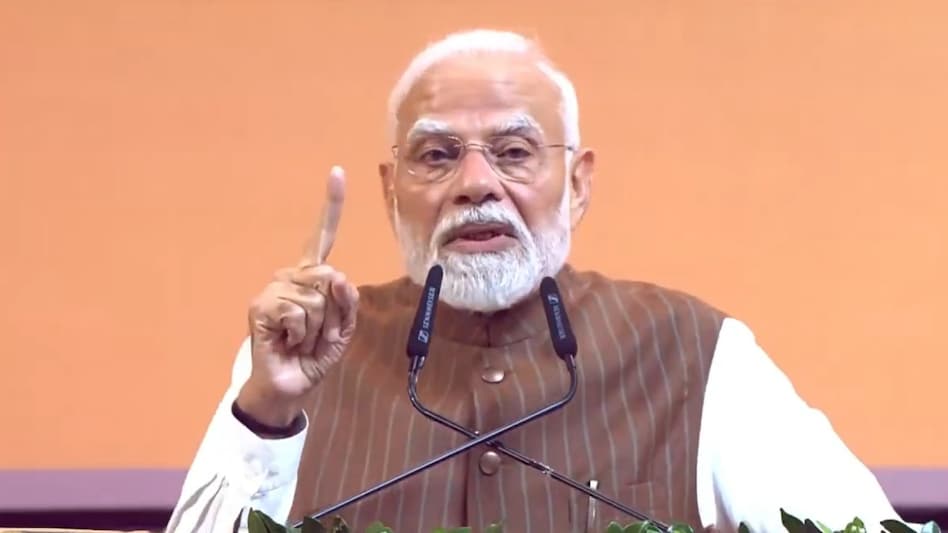
The Education Minister of Delhi, Aashish Sood, visited Vasant Valley School in Vasant Kunj and participated in a special conference where a unique handbook titled 'Inclusion in Action: Lessons from RTE 12(1)(c) Implementation in Delhi Classrooms' was presented.

The core idea behind the Vasant Valley School initiative is to create an inclusive educational environment where children admitted under the Right to Education (RTE) quota receive the same welcome, respect, and encouragement for development as other students, regardless of their financial status.

Addressing the attendees, Education Minister Aashish Sood noted that merely ensuring school admission is not enough; it is crucial that children feel accepted, actively participate in all activities, and gain self-confidence. He raised the important question of how comfortable children from RTE quota beneficiaries feel in the classroom, whether they participate in lessons, and if they can openly express their opinions.

Sood emphasized that no one is born with a predetermined family economic status that could determine a child's intelligence, talent, or abilities. He insisted that educational institutions must be such that every child feels respected, receives support for growth, and never feels like an 'outsider' in their class. Furthermore, he linked inclusive education to a great responsibility for the mental and emotional well-being of children.

Vasant Valley School Principal Sharmila Bakshi stated that her institution does not allow any difference between children from affluent families and those admitted under the 25 percent RTE quota. She stressed: 'For us, every child who enters the school is simply a child, regardless of whether they come from a wealthy family or a family benefiting from the RTE quota. We do not differentiate between students who pay tuition and those who study for free.'

Sharing the school's view on inclusive education, Bakshi said that every child should have the opportunity to recognize their abilities and boost self-esteem. She added: 'If we give every child a chance to excel and become a 'hero,' fear and lack of confidence in them will gradually disappear. This also promotes mutual respect among peers. Our role as teachers is to support children's enthusiasm, whether in sports, art, music, or academics. If we can help a child advance in any of these areas, that is our true success.'

Bakshi acknowledged that children from economically vulnerable backgrounds often do not receive the same academic support at home as children from well-off families. In this regard, the school provides additional tutoring and support when necessary to bridge this gap.

The handbook launched at this conference is based on a study conducted by Indus Action in collaboration with Vasant Valley School and Alstonia Impact. This study examined the implementation of Section 12(1)(c) of the Right to Education Act of 2009 in private schools in Delhi. According to this rule, non-government private schools are obligated to reserve 25 percent of seats in primary classes for children from Economically Weaker Sections (EWS) and Disadvantaged Groups (DG).

The study surveyed 9 private schools in Delhi, inspected 26 classrooms, and conducted over 160 interviews with students, parents, teachers, and principals. The research identified 14 practical methods that proved effective on the ground for strengthening inclusion in schools.

Rahul, Director of Indus Action, explained that the goal of this study was to find out what happens to children after they are admitted under the RTE quota. He stated: 'Admission is just the beginning. We wanted to understand if these children feel like part of the school, whether they receive the same quality of education as other students, if they face discrimination, and if they can adapt to the school atmosphere?'

He also explained that children from low-income families may lack amenities such as laptops and internet at home, and their parents may not be educated enough to help them with their studies. Among the 14 key recommendations identified in the study are encouraging leadership qualities among RTE students, implementing special remedial classes, providing career counseling, and allocating specialized...

Popular