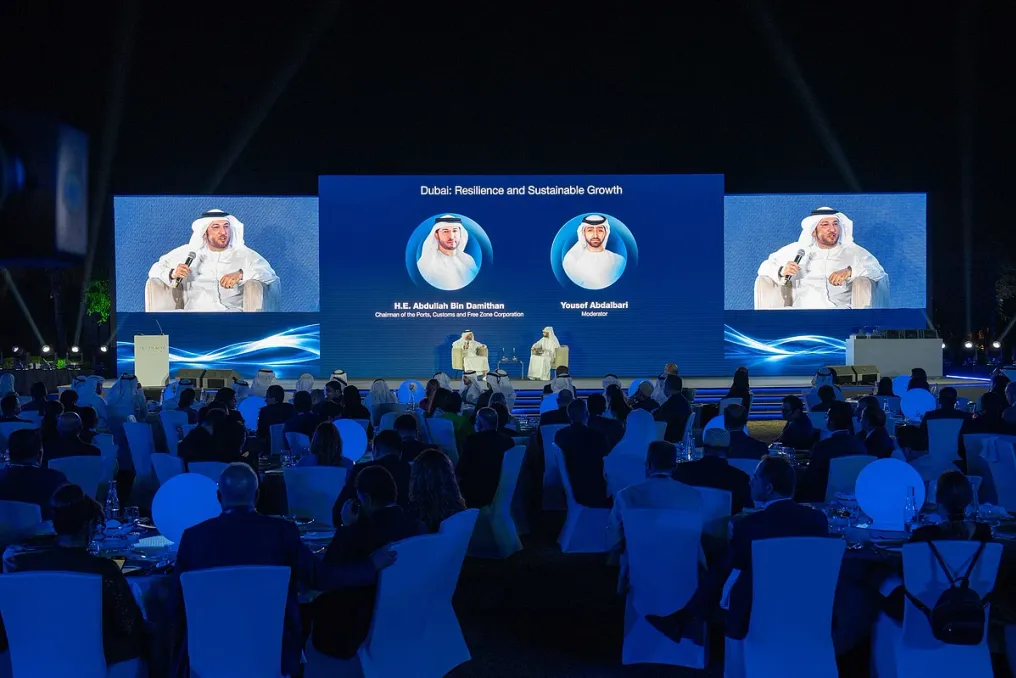
Dubai managed to sustain trade operations throughout the year, which proved to be a test for global commerce, as ports, customs, and free zones functioned as an integrated system covering sea, air, and land transport, despite the ongoing regional military conflict. This was reported by Abdullah Bin Damitan, Chairman of the Ports, Customs, and Free Zones Corporation.
Speaking at the fourth-quarter meeting of the Dubai Chamber of Commerce's Business Groups and Business Councils in 2026, Bin Damitan emphasized that authorities acted promptly and listened to the private sector, noting that many of the best solutions came directly from the companies themselves.
He stated: «This year tested world trade. Dubai maintained trade movement because the ports, customs, and free zones operated as a single system covering sea, air, and land. We acted quickly and listened to business.»
During an open dialogue organized by the Dubai Chamber of Commerce, which gathered 384 participants, Marwan Ahmed Bin Galita, CEO of the Dubai Municipality, was present. Bin Damitan highlighted the resilience of the Dubai economy, its ability to adapt to changing circumstances, and its competitiveness in meeting the growing needs of the business community.
He added that «many of the best solutions came from the companies themselves, and the Business Groups and Business Councils are our partners in their search. Dubai's commitment to the business community remains unwavering. We will continue to invest, listen, and act so that companies here have every reason to grow with confidence.»
Following the start of the regional conflict on February 28, 2026, various sectors of the regional economy were affected. Dubai switched to alternative trade routes to maintain trade turnover. Meanwhile, UAE ports in Fujairah and Khorfakkan demonstrated significant growth in trade activity after the closure of the Strait of Hormuz.
Mohammed Ali Rashed Luta, President and CEO of the Dubai Chamber of Commerce, noted that effective public-private partnership played a key role in strengthening Dubai's economic competitiveness and achieving the goals of the Dubai Economic Agenda (D33).
Luta stressed that «Business Groups and Business Councils play a vital role in forecasting the needs of economic sectors, identifying opportunities for growth and expansion, and providing practical solutions in response to changes in the global economy.» He also added that «close cooperation between the private sector and government structures is necessary to create a flexible, investment-friendly business environment and develop more effective mechanisms to meet the priorities of the business community.»
In the first nine months of 2026, the Dubai Chamber of Commerce, together with the Business Groups, reviewed 60 laws and draft laws, with 70 percent of private sector recommendations being adopted. In the same period in 2025, the chamber reviewed 42 laws and draft laws with an adoption rate of 64 percent.
During this period, the chamber also launched the Dubai Builders Business Group, the Dubai Construction Technology Business Group, and the Holiday Homes Business Group. The Kenyan Business Council and the Uzbekistan Business Council were established, and 226 meetings were held with the Business Groups and Business Councils.
The Dubai Chamber of Commerce also initiated specialized Agentic AI training programs aimed at equipping 14,000 companies from the Dubai Chamber of Commerce's Business Groups and Business Councils with the knowledge and practical skills to implement this technology in their operations. Participants also learned about the Business in Dubai platform—a digital gateway connecting companies wishing to establish or expand their presence in the emirate with accredited partners and exclusive offers. Services cover finance, technology, logistics, marketing, business growth support, as well as product testing, inspection, and certification.