Chinese electrified vehicles establish themselves as good alternatives in the Brazilian used car market
Read more
AutoPapo
autopapo.com.br

Chinese electrified vehicles establish themselves as good alternatives in the Brazilian used car market

The used car market scenario in Brazil has undergone significant transformations due to the entry of Chinese vehicles. These models have driven a drop in both values and demand for non-electrified automobiles, specifically in the price range between R$ 100,000 and R$ 200,000.

Additionally, there has been a decrease in the prices of new cars, which has directly impacted the used versions of these same models. Resellers have expressed dissatisfaction on social media, reporting that traditional cars, such as the Toyota Corolla, Jeep Compass, and Honda Civic, are accumulating stock at dealerships.

In parallel, there is an increase in interest in used Chinese electrified cars. These vehicles maintain factory warranty coverage, may benefit from IPVA exemption in certain regions, and offer lower operating costs.

The myth that Chinese cars suffer from high depreciation has been refuted. Units used for private purposes have well preserved their value and can be traded for amounts higher than the Fipe Table.

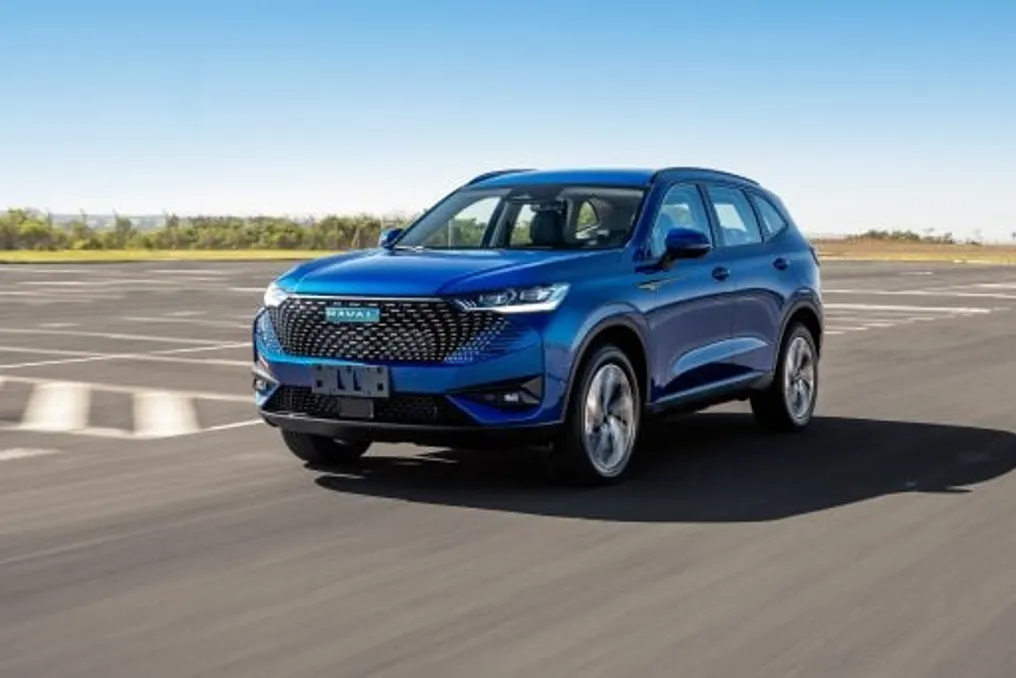
Five suggestions for used Chinese electrified cars considered good purchases have been selected. GWM successfully initiated its presence in Brazil and built a positive reputation regarding its after-sales service. Within the Haval H6 line, the PHEV34 version is highlighted as an attractive choice for the used car market, as it offers the largest battery capacity and best performance while maintaining a more sober design.

This mid-to-large SUV delivers 393 hp and 77.7 kgfm of combined torque. Its 34 kWh battery exceeds that of some compact electric vehicles and guarantees a range of 113 km, in addition to supporting fast charging. The list price of the 2024 Haval H6 PHEV34 is R$ 188,730, and it can be found on the market for around R$ 190,000. This value is lower than that of the zero-mileage HEV version and still includes the factory warranty.

Another recommended option for a used family plug-in hybrid SUV is the 2023 Caoa Chery Tiggo 8 PHEV. This seven-seater model has a listed price of R$ 156,044. It operates with a plug-in hybrid system that generates 317 hp and 56.6 kgfm, driving the front axle. The all-electric mode range reaches 54 km.

This plug-in hybrid version came quite well-equipped from the factory, including dual-zone air conditioning, ADAS package, 360° camera, and panoramic sunroof. Although its design has been recently renewed, the 2023 model still appears modern on the roads.

The BYD Seal was a Chinese electric vehicle that registered greater depreciation due to two main factors: its focus on a sporty sedan niche and the discounts offered by the manufacturer on new units. However, for those looking for a used car, the 2024 Seal offers excellent performance. Its Fipe Table price is R$ 204,132, comparable to a new hybrid Toyota Corolla. With this investment, the buyer acquires a car with 530 hp, 60.2 kgfm, accelerating from 0 to 100 km/h in 3.8 seconds and having a range of 372 km. Features include ADAS assistants, fixed panoramic roof, and ventilated front seats.

The GWM Ora 03 did not achieve high sales volumes like the BYD Dolphin, but achieved good results with customers who used it privately. Since it was not widely used as a taxi or ride-sharing car, it is easier to find examples in good condition in the used market. The top-of-the-line GT version featured a sporty look with red details inside. However, this version is suggested for another reason: it has the largest battery in the Ora 03 and offers a range of 319 km. Its list price is R$ 139,652. This retro-styled hatchback was also well-equipped, featuring an ADAS package, automatic air conditioning, seven airbags, electronic parking brake, and electrically adjustable front seats. Only the first year/model lacks a spare tire and connected services, items introduced in the 2025 line.

The BYD Dolphin GS was the model that started the current phase of Chinese electrified cars in Brazil. It was launched in 2023 with a price compatible with a top-of-the-line compact, popularizing electric vehicles in the country. First year/model units have a list price of R$ 115,010. Vehicles not used in ride-sharing apps are usually advertised for amounts higher than this.

The BYD Dolphin GS offers a balanced set for daily use, with a 95 hp engine and a range of 291 km. When purchasing one, it is recommended to check the wear on the rear seat to determine if it was used professionally and also observe if the steering column presents any noises.
Similar stories

Major automakers reveal plans for 2027 hybrid vehicles
Read more
autopapo.com.br

Major automakers reveal plans for 2027 hybrid vehicles

During 2024, established manufacturers in Brazil announced considerable investments in their operations. A common point in these announcements was the promise to introduce national flexible hybrid cars and launch new models, many of which are scheduled to arrive in 2027.

In 2026, each brand's planning to maintain relevance against growing Chinese competition became clearer. Below, we detail what is known about the hybrid models that traditional brands will offer starting in 2027.

Chevrolet

Chevrolet in Brazil is the last manufacturing unit to produce large compact vehicles after the brand's closure in China. For this reason, the solutions developed for the national line are being created locally.

The Chevrolet Sonic will receive a 48-volt mild hybrid system in 2027, and this technology will be extended to the Tracker and Montana models. This system aims to reduce both consumption and emissions of the three-cylinder 1.0 turbo engine, which is already known for its economy.

Furthermore, Chevrolet plans to launch the plug-in hybrid Captiva, although it will not be flexible. The vehicle is already available on the brand's website and will be assembled under an SKD regime at the multi-brand PACE factory located in Ceará.

Honda

Honda has committed to manufacturing flexible hybrid cars using the e:HEV technology in Brazil. This system will be implemented in the next generation of the HR-V, integrating the naturally aspirated 1.5 engine with an electric component.

According to information gathered by Quatro Rodas, the City and WR-V versions will start featuring a 48-volt mild hybrid system, aiming to reduce emissions. This functionality represents an unprecedented and more accessible option in the global market.

Renault

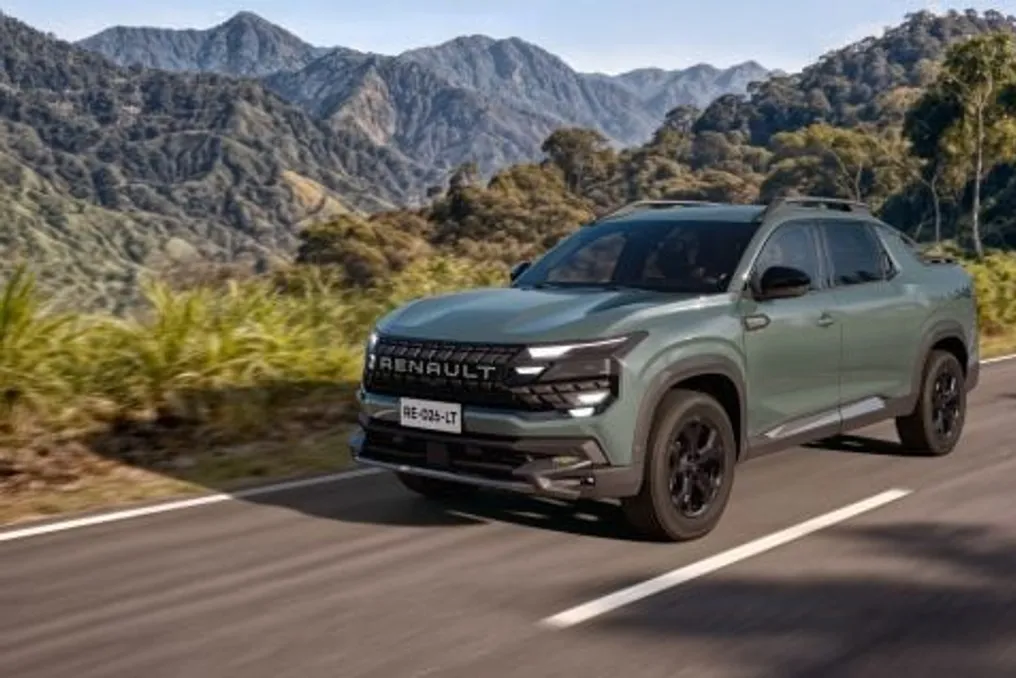
The Renault Boreal model and the Niagara pickup have been confirmed to receive the E-Tech 4x4 system in Brazil in 2027. Although this system already exists in Europe, where it is classified as mild hybrid, it exceeds the limits of known 48-volt systems.

In this system, the front axle is driven by the 1.3 turbo engine with the conventional mild hybrid. The major difference lies in the rear axle, which incorporates a 31 hp and 8.8 kgfm electric motor coupled to a two-speed gearbox with a reduced ratio for off-road use. This transforms the Boreal and Niagara into four-wheel-drive vehicles and allows them to operate exclusively on electricity under certain conditions. This rear motor operates at speeds of up to 140 km/h and uses a 48-volt battery with a capacity of 0.84 kWh.

Additionally, Renault is developing a plug-in hybrid SUV based on the Geely EX5 EM-i platform. According to the portal Autos Segredos, this will be the new Arkana generation model.

Toyota

Toyota was a pioneer in producing hybrid vehicles in Brazil, but currently faces the challenge of recovering lost ground, as Chinese competition has overshadowed its low-power electrified models.

The brand has already announced the development of a flexible plug-in hybrid system, which will be applied to the recently presented Corolla Deck pickup, expected in 2027. However, before that, the company should implement a new version of its HEV system, already used in other markets and which will arrive in the Lexus UX300h. The latter uses the 2.0 Dynamic Force engine combined with more powerful electric motors capable of generating almost 200 hp.

Volkswagen

Volkswagen will offer electrified flexible options in two distinct configurations in Brazil. The simplest option involves 48-volt mild hybrid systems, starting with the launch of the Tukan pickup in 2027. This MHEV system will be integrated into the new generation 1.5 TSI engine, which is already more efficient regardless of electrification, and will also be adopted with the 1.0 TSI engine.

The second hybrid configuration will be full hybrid and will be introduced in a novel vehicle, named project Saga, which is likely to be a coupe SUV, possibly succeeding the Nivus. Volkswagen's full hybrid was presented in Europe in 2026, equipping the Golf and T-Roc models. Its operating mechanism is similar to Toyota's HEV, where the combustion engine alternates between generator and propulsion functions.

New version of MG Windsor's popular SUV coming, expected to offer more range
Read more
www.aajtak.in

New version of MG Windsor's popular SUV coming, expected to offer more range

The facelift version of the MG Windsor, one of the company's best-selling cars, is being prepared for launch. According to reports, this facelift model will include several improvements, including external and internal design changes as well as a larger battery.

This facelift version of the Windsor EV is set to hit the market in 2027. MG first introduced this car in 2024, and it is currently the brand's top-selling model. Initially, the company launched this EV with only a 38kWh battery, but in 2025, it was offered with an option featuring a 52.9kWh battery.

In 2025, the Windsor became the best-selling electric car, and by 2026, it surpassed sales of 80,000 units, which is a significant achievement for an electric vehicle. This car has been available in the Indian market for the past three years, and now its facelift version is awaited.

To meet this demand, the company may incorporate a larger battery pack with the facelift. A report from Autocar India suggests that the Windsor could be equipped with a 61kWh battery, providing greater range compared to previous variants.

Currently, the car comes in 38kWh and 52.9kWh battery options, offering estimated ranges of 332 kilometers and 449 kilometers, respectively. The facelifted model will also feature a front axle mounted e-motor, although no details are available regarding the power of this new motor. Furthermore, both the exterior and interior of the Windsor will be upgraded.

Currently, no test mule of the car has been publicly displayed, making it difficult to predict how the exterior updates will look. It is possible that the Windsor EV facelift might be available at a higher price than the current model. Currently, this car is sold at an ex-showroom price ranging from ₹14.85 lakh to ₹19.15 lakh.

Evolution of the Chinese automotive industry: from copies to electrification leaders before the release of GTA 6
Read more
autopapo.com.br

Evolution of the Chinese automotive industry: from copies to electrification leaders before the release of GTA 6

In 2026, vehicles manufactured in China consolidated themselves as an essential part of the global automotive market. In Brazil, these cars represented 22.65% of accumulated sales in 2026, with BYD being the fourth best-selling brand. This scenario contrasts significantly with the landscape of 2013, the year GTA 5 was released.

The Chinese industry has shown a remarkable transformation over the last thirteen years. Between the release of GTA 5 and GTA 6, the Asian country surpassed the phase of producing low-quality vehicles or mere copies of established models, assuming a leading position in electrification.

Brazil began receiving Chinese automobiles in 2007 with the introduction of the Effa M100. At that time, the selling appeal lay in the affordable cost combined with a more complete set of equipment, but the inferior quality generated apprehension in many consumers.

Although China maintains the strategy of offering more economical and well-equipped vehicles compared to Western competition, its current quality standards are equivalent or even superior. Furthermore, there is strong investment in hybrid and electric technologies. To illustrate this progression, changes in five distinct brands were analyzed.

BYD

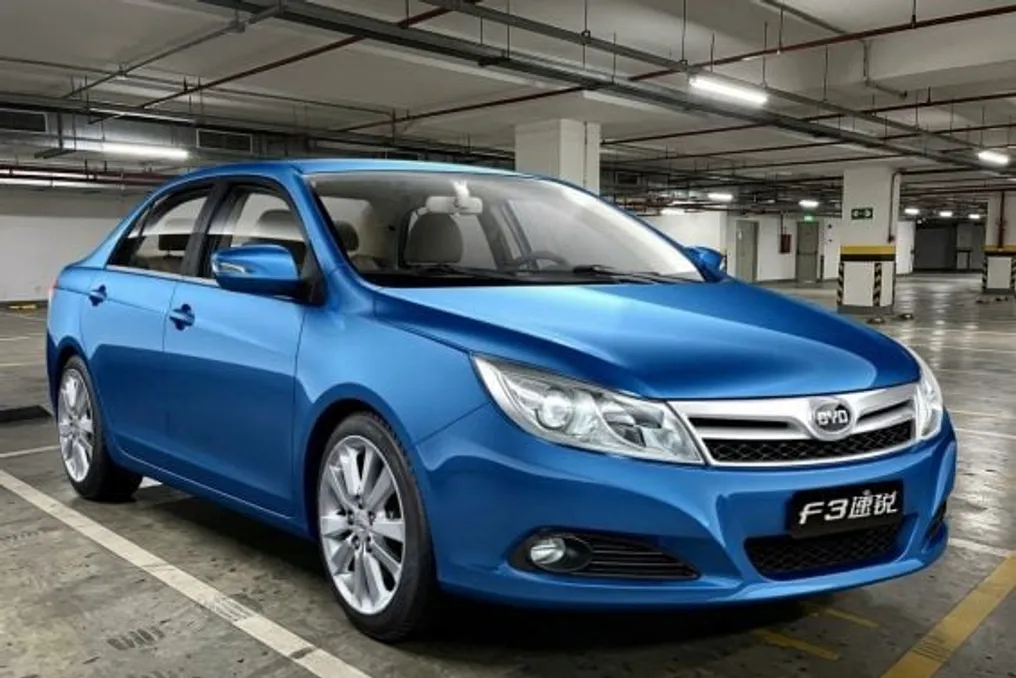
BYD started its operations as a battery manufacturer before expanding into automobile production. One of its first models was the medium sedan F3, which was a replica of the ninth-generation Toyota Corolla and was known in Brazil as "Brad Pitt".

In 2013, the second generation of the BYD F3, now with the Plus suffix, was still a copy of the Corolla, this time the tenth generation, featuring larger modifications to the front and rear. Its engine was a 1.5 naturally aspirated unit. Later, the F3 was replaced by the Qin, whose second generation shares a platform with the King sold in Brazil. The current model has no direct link to the Toyota Corolla, only sharing market segmentation, and operates exclusively with plug-in hybrid mechanics.

GWM

When GTA 5 was released, GWM still used its full name, "Great Wall Motors". Initially, the company produced a pickup truck that imitated the Toyota Hilux before diversifying its product line. The first Haval H6 was launched in 2011 and gained great acceptance, directing the brand's focus to pickups and SUVs. In 2013, the year GTA 5 was released, Haval established itself as an independent brand.

At that time, GWM was already signaling its current trajectory, and the Haval H6 was praised for its high level of comfort, good equipment, and high quality standard. It became the best-selling SUV in China for 103 consecutive months. Currently, Brazil receives the third generation of the Haval H6, which is always electrified and features flex engines. This model is already a sales success in the country and ranks among the top ten best-sellers.

Chery

Chery entered the Brazilian market during the first wave of Chinese cars, presenting the subcompact QQ. In 2013, the brand offered a more varied line in Brazil, including the Tiggo SUV, the Cielo mid-hatch, and the Face compact.

To illustrate this evolution, the focus was on the Tiggo, which had larger dimensions and was comparable in price to the Ford EcoSport. The first version of the SUV was an obvious copy of the Toyota RAV4, with a front design reminiscent of the Honda CR-V. Its direct successor, the Tiggo 5X, is manufactured in Brazil by Grupo Caoa. The contemporary SUV features high build quality, refined interior finishing, ADAS package, and competitive prices. A hybrid variant is expected to arrive in 2027.

Changan

Changan previously had a presence in Brazil under the name Chana, which eventually became a joke. Its initial operation focused on small utilities, aiming to attract customers from the old Volkswagen Kombi and Fiat Fiorino. In China, the brand also had a passenger car line. A model launched in 2013 was the CS35, a compact SUV with a length of 4.20 meters. This vehicle was designed at Changan's design center in Turin, Italy, without inspiration from other automobiles.

The CS35 was also the first car to adopt the current nomenclature used by the brand in its popular SUVs. Equipped with a 1.5 turbo engine from Mitsubishi or a 1.6 naturally aspirated engine, it served as a base. Currently, Changan is represented in Brazil by Grupo Caoa, marketing the Uni-T, CS55, and CS75 SUVs, all equipped with flex engines and a wide technological package.

Geely

When GTA 5 was released, Geely already owned Volvo but only marketed its own projects. Its entry-level model was the LC, an urban hatchback that competed with the Chery QQ. Its design was inspired by the Panda bear, featuring headlights resembling paw prints. The LC was briefly sold in Brazil during Geely's operation, represented by Grupo Gandini.

Currently, in the era of GTA 6, the successor to the LC is the Geely EX2. This compact electric hatchback was launched in China in 2024, generating a long waiting list, and has become the best-selling car in the country. In Brazil, its launch occurred in 2025, also with long queues. It offers low prices, good autonomy, and interior space superior to many SUVs. By the end of 2026, the EX2 will begin production in Brazil.

Popular