RBI Governor calls on banks to increase small business lending, noting greater economic impact
Read more
Business Standard
business-standard.com

RBI Governor calls on banks to increase small business lending, noting greater economic impact

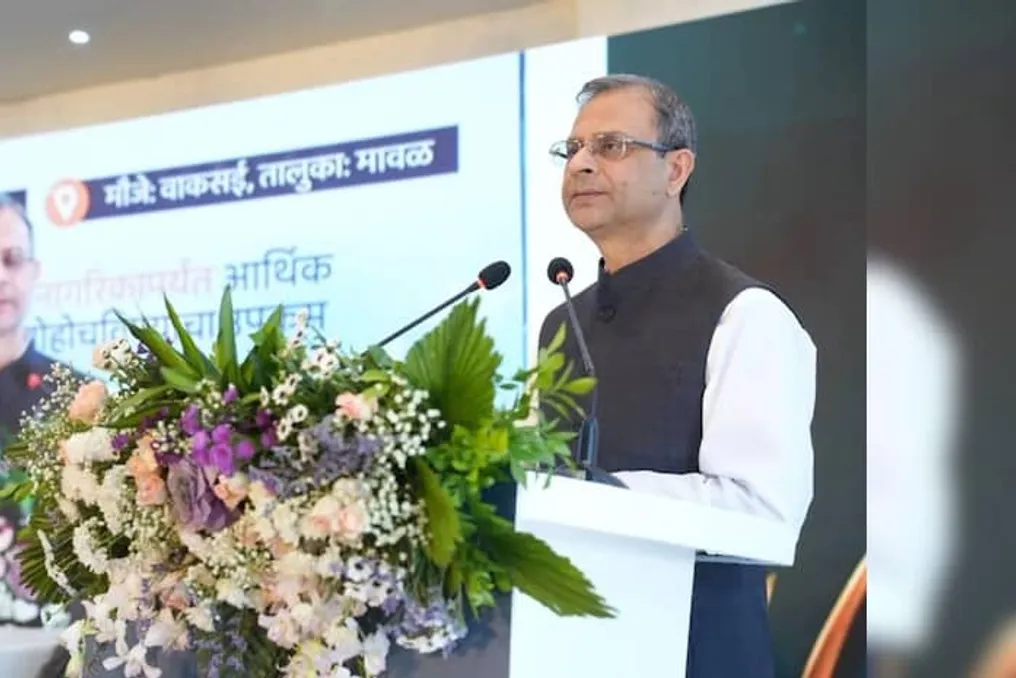
The Governor of the Reserve Bank of India (RBI), Sanjay Malhotra, called on banks to accelerate lending to small and micro-enterprises. He emphasized that the economic benefit from distributing loans among small companies can be significantly higher than from providing large loans to individual corporate borrowers.

Speaking at a financial inclusion event organized by the Bank of Maharashtra in the village of Vaksay, Pune district, Malhotra stated that a large loan of 1000 crore rupees given to a large enterprise would only benefit one entity. However, if the same amount were provided to small businesses, the overall positive effect could exceed one hundredfold.

He added that if the funds were distributed among micro-enterprise borrowers, the benefit could increase up to a thousandfold. The RBI Governor noted that his appeal is based on the results of banks' efforts to expand services for rural communities and socially vulnerable populations.

Continuation of the Financial Inclusion Program

Malhotra reminded the need for inclusive development, insisting that progress must encompass all segments of society and all regions. He also mentioned the government's financial inclusion program, under which over 600 million bank accounts have been opened.

Nevertheless, he stressed that financial inclusion must go beyond mere access to bank accounts and include improving financial and digital literacy. As banking services increasingly move to a digital format, Malhotra strongly advised people to exercise caution when using them.

He warned against fraudulent schemes promising unusually high returns. The Governor advised extreme vigilance if anyone offers returns of 20, 30, or even 40 percent in a short period, as such high figures are often linked to hidden risks or fraud. He also cautioned people against sharing one-time passwords (OTPs), clicking unknown links, or responding to suspicious messages.

Malhotra urged responsible and conscious use of digital banking services to protect citizens from any form of digital fraud. These financial inclusion events will be held across the country until December 31 as part of the Department of Financial Services' National Campaign for Financial Inclusion.

The event in Vaksay village gathered over 500 participants who received banking services and state-supported social security schemes. Nidhi Saxena, Director and CEO of the Bank of Maharashtra, reported that the bank has increased its network of business correspondents from 3,000 to 10,000 in two years and conducted 3,691 camps.
Similar stories

Mobile phones dominate consumer loans during Diwali: 74% of applications
Read more
business-standard.com

Mobile phones dominate consumer loans during Diwali: 74% of applications

The festive shopping season in India is increasingly being financed through loans. According to data from the platform Lentra for the period from November 1 to November 9, 2026, the number of consumer loan applications increased by 22% compared to the previous festive period. Furthermore, demand is shifting towards smaller cities and rural markets.

The analysis showed that rural India accounted for 58% of all consumer loan applications, while urban India provided 42%. Additionally, tier-three cities surpassed major metropolises, indicating an expansion of the geographical base for borrowing-financed consumption. These figures suggest that the demand for festive loans is no longer solely concentrated in large cities; smaller towns and rural markets are becoming important drivers for purchasing goods such as smartphones, televisions, refrigerators, and washing machines.

The average size of the consumer loan was estimated at approximately 28,000 rupees, reflecting the scale of purchases being financed through credit.

How were credit-financed purchases in India in 2026

The age profile of borrowers highlights the growing significance of young consumers in the festive lending market. Approximately 62% of consumer loan applicants were under 35 years old, with the 22–35 age segment becoming the typical borrower group. Mobile phones held a dominant position in the borrowing basket: nearly 74 out of every 100 applications were for mobile phones, while the remaining 26 applications were distributed across other categories of durable consumer goods. This concentration of demand for smartphones indicates their continued importance as a primary consumption item among young borrowers. Lentra's analysis showed that men aged 22–25 were particularly active in financing mobile phones.

However, the picture changes when considering gender and age together. Women showed a stronger inclination towards financing home appliances, especially in the age group over 35. Women's borrowing patterns reveal a different consumption story. Women constituted 31% of consumer loan buyers in urban areas compared to 24% in rural regions. This difference suggests that women's participation in credit-financed consumption remains higher in cities, although their share of borrowings in rural areas is also significant. The data also points to different product preferences among women: while men typically took loans for mobile phones, home appliance purchases were more popular among women aged 35 and older.

Women's borrowings for two-wheelers offer another insight into changing consumer trends. Out of every 100 applications for two-wheeler loans among women across all urban tiers, 57 were for motorcycles, 39 for scooters and mopeds, and four for electric two-wheelers.

Change in India's Festive Shopping Basket State by State

State statistics demonstrate how varied consumer preferences are across different markets. Gujarat and Rajasthan emerged as smartphone-oriented markets. Mobile phones accounted for 86% of consumer loan applications in Gujarat, compared to the national average of 74%. In Rajasthan, this share reached 82%. Television financing was more pronounced in South India. LED televisions made up 13.6% of consumer loan applications in Telangana and 12.4% in Tamil Nadu, exceeding the national average of 7.4%. Refrigerators are more noticeably represented in eastern and southern markets, accounting for 6.8% of applications in West Bengal and 6.6% in Karnataka, against the national average of 4.6%. Madhya Pradesh also recorded a higher share—6.1%.

In North India, washing machines became a stronger category. They accounted for 15% of consumer loan applications in Punjab, compared to the national average of 4%. Haryana showed a share of 8.3%, and Delhi—6%. The data also reveals diverse demand patterns in other states. Air conditioners accounted for 6% of applications in Andhra Pradesh, which is 2.5 times the national share of 2.4%. Maharashtra stands out with audio systems, which accounted for 2.1% of applications compared to the national average of 1.6%. In Bihar and Uttar Pradesh, inverters and batteries had a higher share of applications—1.3% and 1.1% respectively, compared to the national average of 0.6%.

According to Rajesh Kumar, CEO of Lentra, 'India does not have a single festive shopping basket. What matters is where this demand comes from. Since rural markets contribute to 58% of applications, and tier-three cities are surpassing megacities, the activity of festive lending is clearly extending beyond the largest cities.'

Farmer Kajodmal Earns Lakhs by Selling Solar Energy Alongside Farming, A Successful Model in Rajasthan
Read more
www.aajtak.in

Farmer Kajodmal Earns Lakhs by Selling Solar Energy Alongside Farming, A Successful Model in Rajasthan

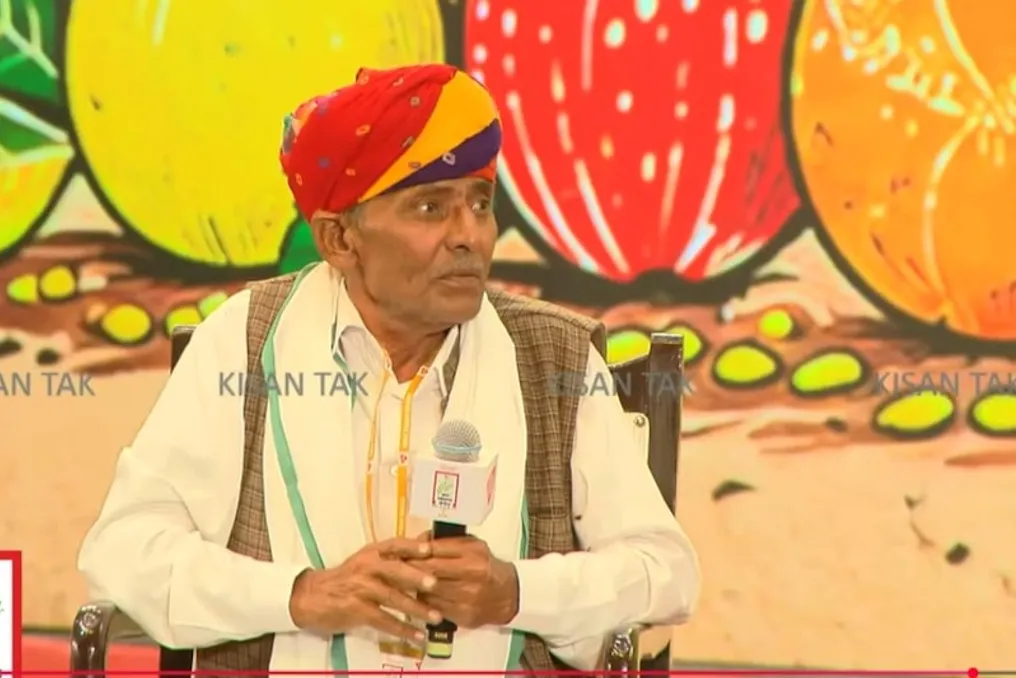
New opportunities are emerging to increase farmers' income by integrating agriculture and solar energy. Farmer Kajodmal from Kundanpur village in Jaipur district of Rajasthan is an example of this success. He installed solar panels on his farm, which not only created a source of income from electricity generation but also developed an agricultural model where both crop production and power generation are possible on the same land. Kajodmal shared his experience at the 'Double Blast of Food and Energy' session of India Today's Bharat Agriculture Conference 2026.

Kajodmal stated that he applied for installing a solar plant under the Pradhan Mantri Kisan Urja Suraksha evam Utthan Mahabhiyan (PM-KUSUM) scheme in 2019. His Power Purchase Agreement (PPA) was made at the rate of Rs 3.14 per unit. He owns a total of eight acres of land. Initially, he installed standard height solar panels, which reduced the area available for farming and affected crop yield.

After installing the solar panels at a higher elevation, farming possibilities increased on Kajodmal's farm, and he started cultivating maize, chili, and other vegetables. Notably, even during the extreme heat of May-June, at temperatures of about 45 degrees Celsius, his maize yielded well. He mentioned that he cultivated maize using techniques like drip irrigation and mulching, which led to better water utilization and provided a suitable environment for the crop.

Currently, he is growing tomatoes, cucumbers, and bottle gourd along with chilies on his farm. He also plans to cultivate dragon fruit and strawberries in the future.

According to Kajodmal, high-mounted solar panels provide several benefits to crops. The temperature beneath the panels remains comparatively lower, providing relief to crops during the hot season. Additionally, the crops receive a favorable climate even in winter. Because the panels are high, the risk of theft is reduced, and they accumulate less dust and dirt.

He also mentioned that he is preparing to grow tomatoes in a novel way; tomato vines will be spread upwards supported by the pillars of the solar panels and bamboo. This method, combined with mulching, is expected to improve the quality and yield of tomatoes.

Kajodmal is also earning a good income through electricity generation from the solar plant. His plant has a capacity of approximately one megawatt. After repaying the loan installments taken from the bank, he saves about Rs 1.25 lakh per month from electricity sales, resulting in an annual income of about Rs 15 lakh from electricity. He has a Power Purchase Agreement (PPA) with the Distribution Company (DISCOM) for selling electricity, under which he receives payment at the rate of Rs 3.14 per unit. The income from vegetable cultivation is separate, and he receives payment for it approximately every three months.

Popular