Scandal surrounding the celebration of Pakistani umpire with players causes discontent in India
Read more
Aaj Tak
www.aajtak.in

Scandal surrounding the celebration of Pakistani umpire with players causes discontent in India

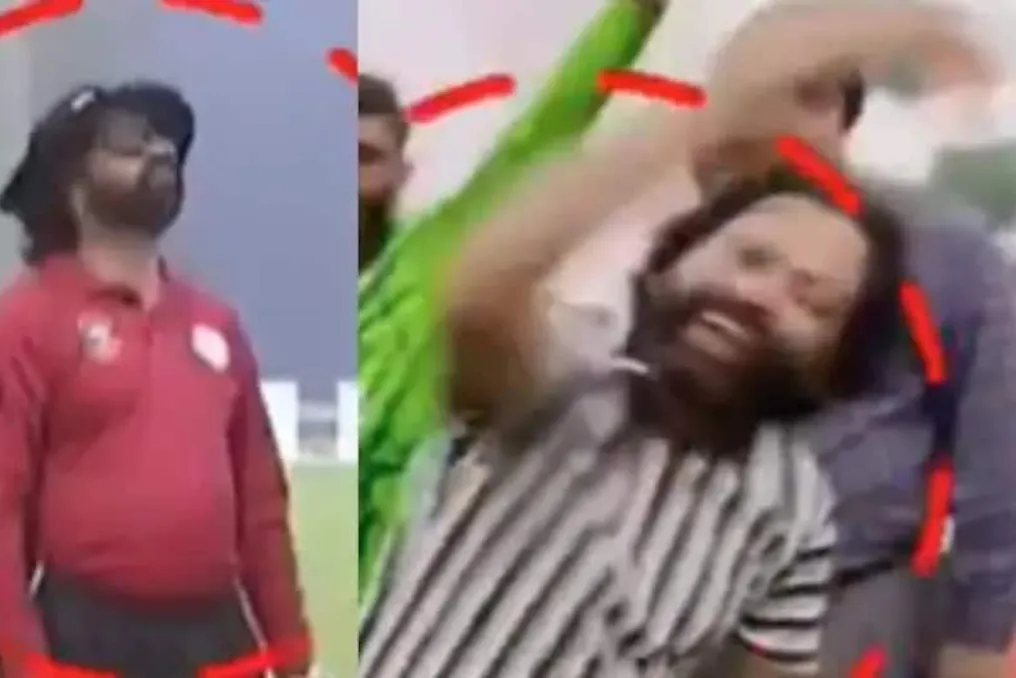
The conflict between India and Pakistan in cricket has spread even to blind cricket. Following the Asia Cup final for blind cricket, the Indian team raised questions regarding the behavior of the Pakistani umpire. The Cricket Association of Blind India (CABI) stated that video footage shows the Pakistani umpire celebrating with the players, using gestures resembling a crashed jet aircraft.

CABI questioned the impartiality of the umpire, noting that match officials should not participate in celebrations with any team. Tension already existed between the teams due to the final, which was affected by rain, and Pakistan's declaration as the winner.

In its statement, CABI indicated that the Pakistani umpire officiated all matches of the 2026 Asia Cup for blind cricket, yet he was observed celebrating with the Pakistan team. The association emphasized that the umpire's duty is to remain neutral, and he should not appear to support or stand alongside any team. CABI expects neutral conduct from match officials.

Previously, the Asia Cup final for blind cricket between India and Pakistan in Dhaka did not take place due to rain. Nevertheless, Pakistan was declared champion based on the best average score. The Indian team expressed disagreement with this decision, arguing that since the final was not played and there was no reserve day, both teams should have been recognized as joint winners.

The dispute escalated when the Chairman of the World Blind Cricket Council (WBCC) and the head of the Pakistan Blind Cricket Board, Sultan Shah, did not accept the technical committee's recommendation for a joint victory. Subsequently, the match referee was instructed to declare Pakistan the winner. CABI Secretary, Shailendra, criticized this decision, accusing Pakistan of winning the title without playing the final match. In his view, the average score from league matches should only be used to determine team qualification, not for the final.

India participated in this tournament as the reigning champion, having won the title in 2016. In the group stage, Pakistan defeated India by one run and topped the table. India advanced to the final by defeating Bangladesh. After Pakistan was declared the winner, Indian players refused to participate in the trophy presentation ceremony. CABI also warned that it might refuse to play against Pakistan in the future until the dispute is resolved.

This new controversy once again drew attention to a past incident involving Pakistani fast bowler Haris Ruf. In September 2025, during the Super-4 match against India in the Asia Cup, Ruf made gestures interpreted as imitating a falling jet aircraft. He also showed six fingers. At that time, this was linked to Pakistan's statements about military clashes between India and Pakistan, and his gestures were also criticized. Now, with the appearance of video featuring the Pakistani blind cricket umpire, questions are once again arising about similar gestures in games between India and Pakistan.
Similar stories

Harshit Rana caused a stir during the India vs Pakistan match
Read more
www.aajtak.in

Harshit Rana caused a stir during the India vs Pakistan match

During the match between the India A and Pakistan A teams at the West Park International Cricket Stadium in Doha on Sunday, November 22, Harshit Rana drew attention with his aggressive playing style.

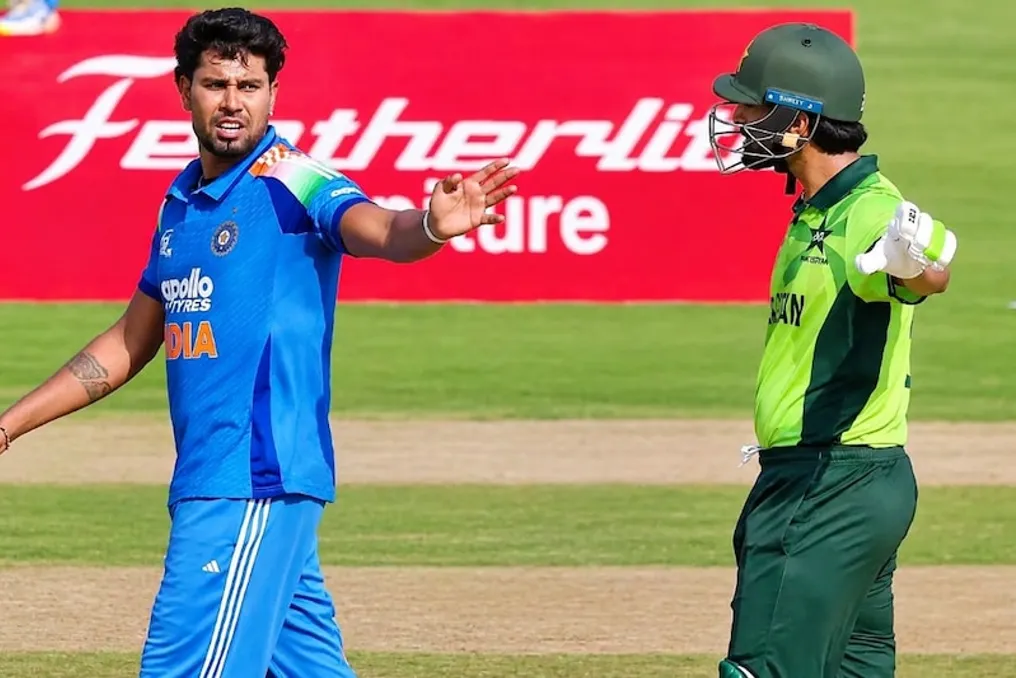
In this contest, which was part of the ACC Men's Asia Cup Rising Stars 2026, a tense verbal altercation occurred between Indian fast bowler Harshit Rana and Pakistani batsmen Shamil Hussain and Mad Sadakat. Harshit attempted to put pressure on both players during his deliveries, and after Shamil was dismissed, he further heightened the tension by saying goodbye to him in an aggressive manner.

Harshit Rana also started a verbal exchange with Mad Sadakat. Despite the ball hitting Mad's head and bat without being properly timed, he continued to confront the batsmen. His strategy proved successful against Shamil Hussain: in the eighth over, the Indian player used a slow and floating ball from Ayush Badoni, but Shamil could not time the shot correctly, and the ball went into the hands of the bowler positioned at the short third man end. After Shamil's dismissal, Harshit bid him farewell in an aggressive manner.

Harshit returned to the India A squad after a long absence due to injury. Although he conceded runs in the early overs against Pakistan, he maintained his line and length of bowling. Later, he also dismissed Rohail Nazir, who scored no runs, and engaged in a verbal dispute with the new batsman Hasan Nawaz.

Previously, Harshit Rana demonstrated excellent performance in the match against Nepal, where he took four wickets for 16 runs in six overs. In that match, the India A team won against Nepal by a score of 306 runs.

Pakistan A won the toss and decided to bat first. The team showed a strong start, but India managed to slow the pace by regularly dismissing batsmen. Since the field coverage also aided the spinners, the Indian team adopted a strategy of increasing pressure in the middle overs.

Dilip Vengsarkar criticized the behavior of the Indian team players after the U-19 final against Pakistan and called on the ICC to take action
Read more
www.aajtak.in

Dilip Vengsarkar criticized the behavior of the Indian team players after the U-19 final against Pakistan and called on the ICC to take action

Following the Indian team's victory over Pakistan in the U-19 Asia Cup final, criticism from the sports community was sparked by the behavior of some players. Dilip Vengsarkar, former captain and chief selector of India, sharply criticized the players' actions, deeming such conduct contrary to the spirit of sport and negatively affecting young athletes.

During the final match against Pakistan, held on Saturday (November 14), the Indian players celebrated exuberantly after winning the title. During the celebration, one player approached the Pakistani goalkeeper very closely, shouted at him, and used insults. Furthermore, some other players made indecent gestures towards the dressing room and the Pakistani players themselves. This situation sparked discussions among fans of the Indian team.

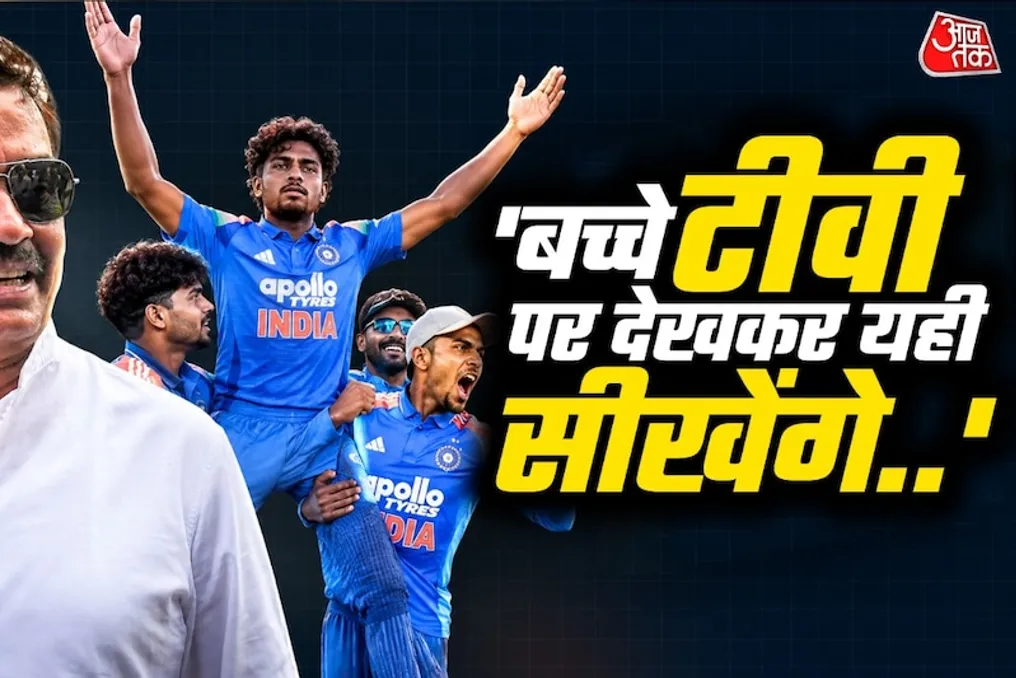
In an interview with the Times of India (TOI), Vengsarkar stated that such behavior is unacceptable in the game. He noted that young athletes watch such scenes on television and then imitate them during matches at the U-14, U-16, or U-19 level. He questioned where this development would lead and emphasized the need to teach players proper conduct both on and off the field, utilizing the National Cricket Academy (NCA/COE) or other channels.

Despite the former great batsman acknowledging that strong emotions and passion often dominate matches between India and Pakistan, he did not excuse the improper behavior. He explained: 'I understand that India-Pakistan matches are very emotional and passion reaches its peak. But that does not mean that one can behave inappropriately. It sets a wrong example for young players.'

Vengsarkar, who is actively involved in grassroots cricket development in Mumbai, reported observing similar behavior in his academies. He said: 'I see the same thing in my academies. When any team wins, players run around the field, pull out stumps, and start dancing. This didn't happen before. They see such scenes on TV and then copy them.'

Calls for strict action from ICC and ACC

Vengsarkar demanded that the International Cricket Council (ICC), the Asian Cricket Council (ACC), and umpires send a clear message regarding player conduct. He insisted that a strict Code of Conduct must exist to maintain discipline in the game. In his view, communication with players from officials should take place before every tournament. Regardless of whether the players are at the U-19, U-17, or U-23 level, they must be clearly informed about what behavior is acceptable on the field and what is not.

The 70-year-old Vengsarkar added that while controlling player celebrations after tense matches ending in a last-ball victory can be difficult for match officials, coaches must also fulfill their duties. He cited a past example, noting that he witnessed similar behavior in Bangladesh several years ago (the 2020 U-19 World Cup final). He pointed out that Pakistan acted that way, and now India has done the same, which cannot be justified. He concluded that the most important thing is to set the right example, as young cricketers constantly observe and learn from top-level players.

India wins U-19 Asian Cup against Pakistan with a decisive late surge in the final
Read more
www.aajtak.in

India wins U-19 Asian Cup against Pakistan with a decisive late surge in the final

The U-19 Asian Cup final between India and Pakistan became one of the most memorable matches. The Indian team managed to secure a tense victory on the last ball, winning the title.

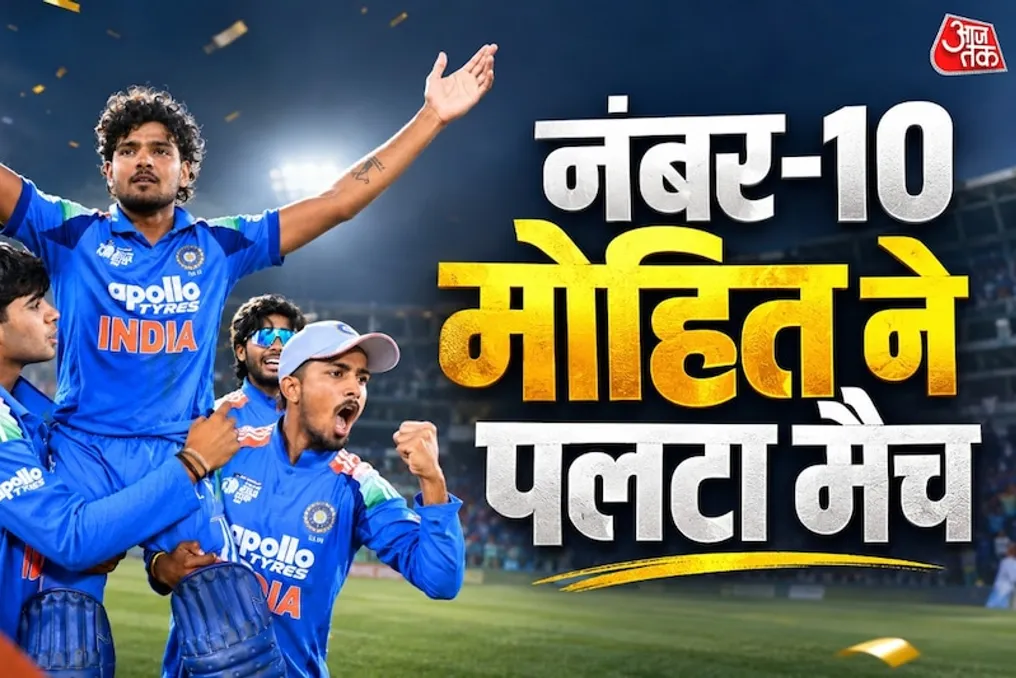
The situation seemed hopeless for India. After Kavya Patel was dismissed on the 41.3 over, the team's score stood at 252/8, requiring 86 runs from the remaining 51 balls. However, Manul Chauhan and Mohit Ulwa staged an incredible comeback, allowing India to defeat Pakistan.

After Kavya Patel returned to the field, Mohit Ulwa came in to bat. Kavya could not score any runs, going to the pavilion after only two balls. Pakistan noted this wicket, which increased the pressure on the Indian team. Meanwhile, Manul Chauhan remained on the field and, along with the new batsman Mohit Ulwa, began attacking the Pakistani bowlers. Both players started scoring quickly, changing the course of the match.

The crucial partnership between Manul Chauhan and Mohit Ulwa brought 57 runs to the team. Manul scored 47 runs, while Mohit, coming in at tenth, scored 49 runs without being dismissed in just 26 balls. Their play was characterized by high aggression and the ability to perform under pressure.

Although Manul Chauhan was dismissed on the 48th over, Mohit continued to fight. Chigurupati Venkata, who came in at eleventh, supported him, adding 11 invaluable runs without being out. Ultimately, Mohit dragged the match to the last ball, securing India's victory.

Prior to this, chasing a target of 338 runs, Indian captain Lakshychandani and Aryavir Sehvag demonstrated a brilliant start. They formed a partnership of 97 runs for the first wicket. Aryavir scored 58 runs off 61 balls, and Laksh scored 80 runs off 101 balls. Aryavir hit 9 fours, and Laksh hit 5 fours.

After this, the Indian team began losing wickets. Difficulties arose after Anway Dravid was dismissed on the 37th over. Nevertheless, Manul and Mohit did not give up and achieved the championship.

Earlier, Pakistan, having won the toss, batted first and scored 337 runs in 50 overs while losing 9 wickets. Usman Khan delivered a magnificent century, scoring 107 runs off 111 balls. Abdul Qadir contributed 80 runs off 54 balls, and captain Farhan Yusuf added 60 runs.

On the bowling front for India, Kavya Patel was the most successful bowler, taking 4 wickets for 68 runs. Chigurupati Venkat also took 3 wickets for 40 runs. The Indian bowlers managed to prevent Pakistan from exceeding a score of 350 runs in the final overs.

Popular