Chinese company develops technology to determine embryo sex in egg with over 98% accuracy
Read more
UzDaily
uzdaily.uz

Chinese company develops technology to determine embryo sex in egg with over 98% accuracy

The Chinese company Ningxia Xiaoming Agriculture & Animal Husbandry Co., Ltd. has created a technology that allows for the determination of embryo sex inside an egg with an accuracy level exceeding 98%, according to the Uzbekistan Chamber of Commerce and Industry.

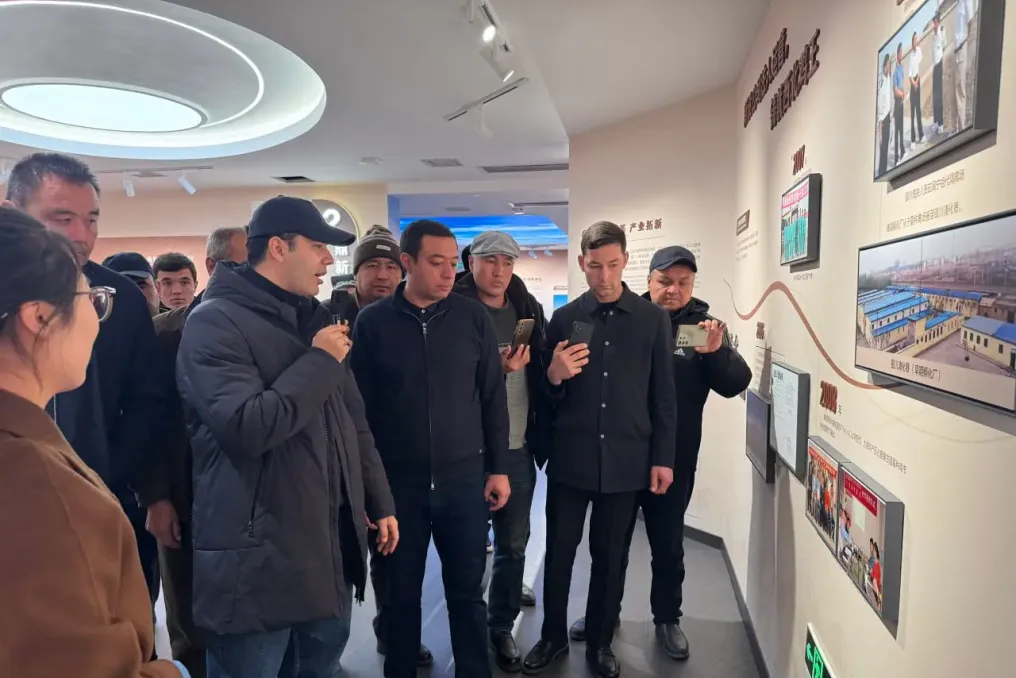
A delegation of Uzbek livestock breeders, led by Sherzod Ibragimov, Deputy Chairman of the Chamber of Commerce and Industry, familiarized themselves with this development during a visit to study China's experience in animal husbandry.

The delegation visited the company's production facilities in Inchuan city. This firm specializes in poultry breeding, genetics and selective breeding, egg incubation, and broiler production. The company was founded in 2011 and conducted its initial public offering in 2021, being included in the ChiNext board of the Shenzhen Stock Exchange.

The company operates poultry farms, incubation centers, and specialized production sites in various regions of China. According to the company itself, in 2025 it sold 278.4 million poultry products, accounting for about 25% of China's commercial broiler market.

One of the technologies presented uses artificial intelligence and hyperspectral imaging to determine the sex of the embryo inside the egg without the need to crack it open. The system provides results on the thirteenth day of incubation with an accuracy of over 98%.

Automated egg control and sorting contribute to optimizing the incubation process, reducing additional costs, and more efficient use of resources on poultry farms. Furthermore, the company integrates poultry production, egg incubation, and broiler supply into a single production system, which, according to the firm, guarantees quality control of genetic material and production stability.

During the visit, the parties discussed opportunities for applying Chinese experience in Uzbekistan, implementing modern incubation technologies, and developing the poultry industry. Prospects for technological and investment cooperation with the Chinese company were also considered.
Similar stories

China's espionage efforts target semiconductors for AI long before the Nvidia scandal
Read more
business-standard.com

China's espionage efforts target semiconductors for AI long before the Nvidia scandal

According to officials, China's intelligence agency is conducting a covert campaign aimed at assisting the country's companies in acquiring advanced chips for artificial intelligence and gathering intelligence on the sector.

When China's top intelligence agency updated its priorities this year, it added an important goal: overcoming Western barriers regarding technologies that Xi Jinping considers critical for China's rise.

At the heart of this endeavor are advanced semiconductors necessary for the functioning of artificial intelligence, including chips that the US has banned American companies like Nvidia from exporting to China.

In January, Xi informed the Politburo that China must 'take extraordinary measures to accelerate the pursuit of key technologies in priority sectors,' calling for 'resolving the 'choking' problems hindering the development of future industries' as soon as possible.'

The Ministry of State Security, which functions as the intelligence agency, has long been involved in eliminating threats to the rule of the Chinese Communist Party. Now, according to statements from current and former security and intelligence officials from Asia, the US, and Europe, its objective is obtaining advanced semiconductor chips and collecting data on them.

The question of how China's intelligence agency is attempting to acquire advanced chips and information about them became central to the case of Alice Huang. According to US officials, the Chinese agency collaborated with businesswoman Alice Huang to spy on Jensen Huang, CEO of the American chip giant Nvidia. These allegations were first reported by The New York Times.

Huang did not respond to requests for comment, and China rejected the espionage accusations as 'pure fabrication.'

According to current and former officials, the Chinese intelligence agency's campaign to acquire chips, details of which have not been previously published, has been ongoing for at least two years. They agreed to speak on condition of anonymity to discuss confidential information.

Among the main components of this campaign, several foreign officials stated that Chen Yixin, head of the intelligence agency and Minister of State Security, established a working group to lead these efforts, which reports directly to him. Chen worked under Xi back when they were officials in Zhejiang province, eastern China, known as the cradle of China's tech boom.

This group was tasked with assisting China's 'counter-blockade' efforts—aimed at overcoming export controls imposed by the United States and its allies. The campaign includes facilitating the acquisition and smuggling of advanced chips into China by Chinese companies. Furthermore, the group collects information on the semiconductor sector and its supply chains, several officials familiar with the campaign reported.

In April, Chen presented a new mission in a Communist Party journal: 'To deepen the fight against blockades and comprehensively promote innovation, industrial development, and the application of artificial intelligence.' He continued: 'Focusing on solving 'bottlenecks' in critical technologies' and addressing technologies that 'cannot be obtained through requests, purchases, or pleas.'

Alex Joske, Managing Director of the security practice at Garnaut Global, which studies the Chinese security apparatus, noted that Chen is signaling to the party leadership and his ranks that his agency is elevating competition in AI with the US to a long-term, paramount priority. He calls on his officers to find more ways to wage this fight.

Mumbai startup develops AI-based device to monitor one million births in India
Read more
thebetterindia.com

Mumbai startup develops AI-based device to monitor one million births in India

Every year, thousands of mothers and newborns die during childbirth and within the subsequent 24 hours, despite the fact that 9 out of 10 births now occur in medical facilities.

An innovative startup based in Mumbai and created with IIT Bombay is implementing artificial intelligence-based fetal and labor monitoring systems for frontline healthcare workers and hospitals.

These devices are attached to the mother and transmit data in real time to a smartphone. They allow for early warning of risks such as fetal distress and postpartum hemorrhage (PPH). Furthermore, these gadgets reduce the time nurses spend on documentation by 50%, giving them more time for direct patient care.

Such technological advancements demonstrate that the quality of maternal care should not depend on where a woman lives.

Smart technologies allow soil condition to be determined from a small sample of earth
Read more
www.aajtak.in

Smart technologies allow soil condition to be determined from a small sample of earth

Controlling soil condition is crucial for obtaining high-quality harvests. Farmers often apply fertilizers and mineral substances to fields without prior soil analysis. Sometimes an excessive amount of fertilizer is added to the soil, which leads to increased costs and deterioration of the soil quality itself.

As part of an initiative by the IndiaToday group during an agricultural conference in India, Prime Minister Narendra Modi announced the availability of artificial intelligence-based sensors. These sensors provide farmers with accurate information.

PM Modi also noted that soil quality can now be checked using mobile devices. A farmer only needs to place a small amount of soil on the mobile device, and the phone immediately provides a report. This report indicates which crop the soil is suitable for, how much fertilizer is needed, and what type of fertilizer should be used.

He added that India is an annual exporter of agricultural products worth 400 billion rupees. Many devices are available in the market that help farmers test their soil in their fields, eliminating the need to visit a laboratory. Now, quality soil testing can be done in minutes right in the field, and the report will be available in a mobile application.

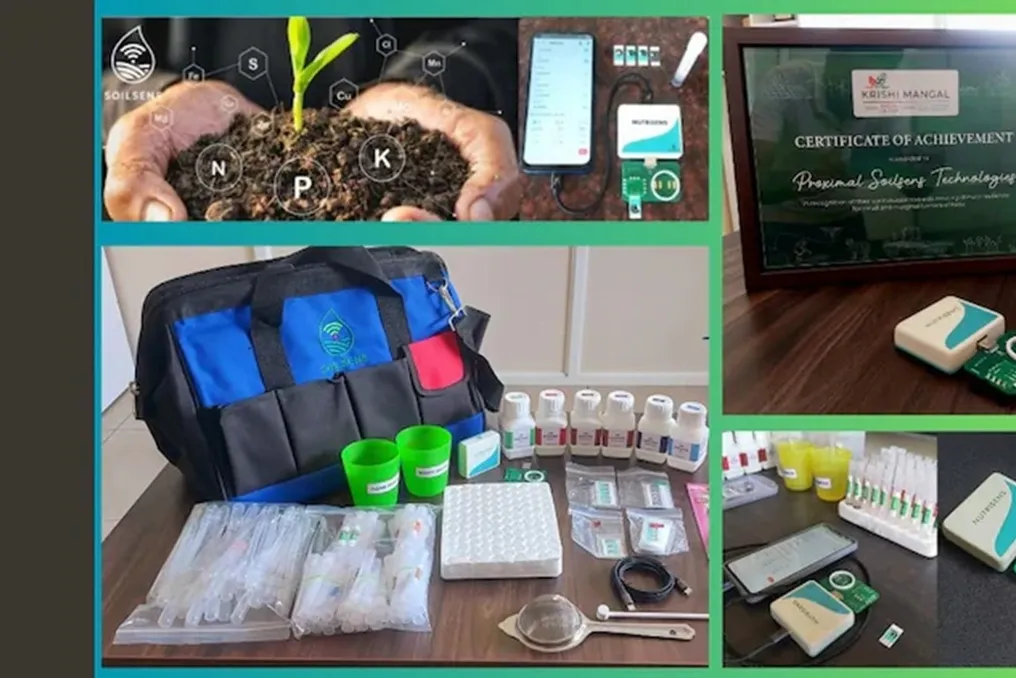
The platform of the Ministry of Information Technology, Frontier Tech, mentioned a Maharashtra company that offers soil testing devices called NutriSense. The goal of NutriSense is to make soil testing simple and accessible for the farmer. There are also many other options available in the market for monitoring soil quality.

According to information on Frontier Tech, NutriSense was developed by Dr. Rajul Patkar. With this device, soil quality can be tested using only 1 gram of earth, and it takes five minutes. The results are displayed in a mobile application.

The NutriSense product analyzes soil quality based on six parameters. It measures the pH level, which indicates the acidity or alkalinity of the soil. Additionally, the device shows the content of nitrogen, phosphorus, potassium, and the level of organic carbon in the soil.

Frontier Tech reports that this invention is used by 10,000–15,000 farmers and is applied in 8 states. One device can perform about 3,000 tests per year, and its cost ranges from 35,000 to 60,000 rupees.

Popular