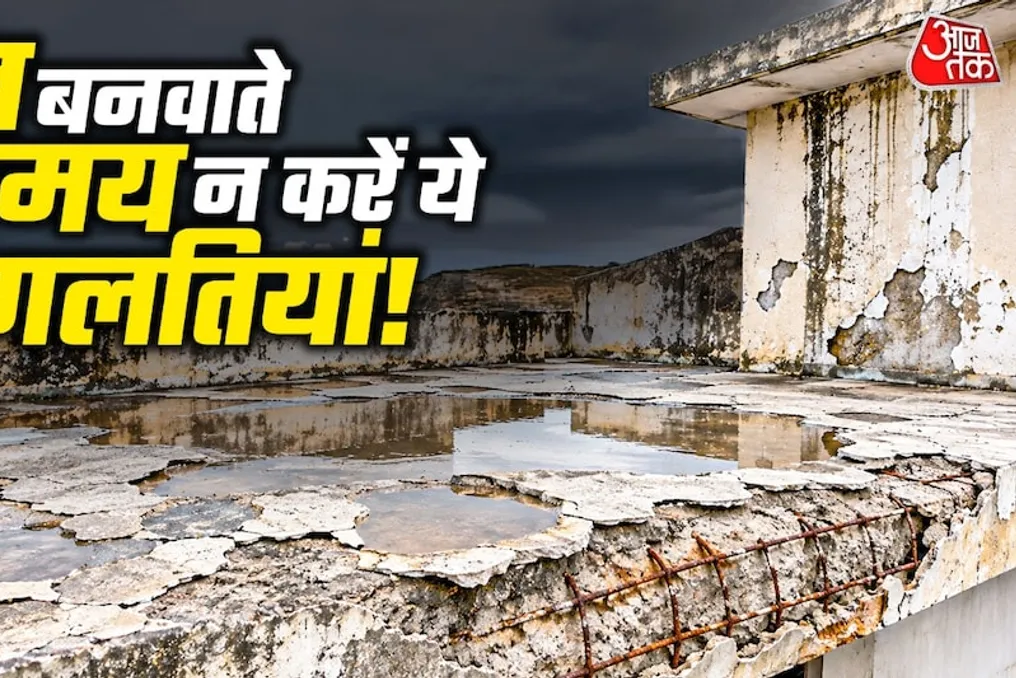
When building residential houses, people often pay close attention to walls, floors, doors, and windows, but they make minor mistakes when constructing the roof. These shortcomings may remain unnoticed for some time, but over time their consequences become obvious. This often leads to water leaking through the roof during the rainy season, dampness appearing on the walls, or cracks forming in the roof itself, the repair of which requires significant financial investment.
If you are planning to build a new house or preparing to pour a roof (the process of pouring concrete to create a roof, beam, or slab), it is crucial to familiarize yourself with some key points in advance. The strength of the roof depends not only on the quality of cement or reinforcement but also on the correct selection of materials, the ratio in the concrete, the pouring method, and subsequent care for the structure.
1. Use high-quality materials when pouring the roof: The strength of the structure is largely determined by the type of materials used. Therefore, when pouring the roof, you should avoid purchasing cheap and low-quality components. It is necessary to use strong reinforcement, cement, sand, and high-quality crushed stone.
According to experts, besides material quality, it is critically important to maintain their correct ratio. If the components are mixed in incorrect proportions, this can negatively affect the strength of the concrete.
During roof pouring, cement, sand, and crushed stone must be mixed in exact proportions. Experts indicate that for M20 class concrete (strong concrete used for roofs, beams, columns, and slabs), a ratio of 1:1.5:3 can be used. This means one volume of cement is mixed with one and a half volumes of sand and three volumes of crushed stone.
However, the strength is also determined by the correct composition of the mixture, the amount of water, and the conditions under which the construction is carried out. Therefore, roof pouring must be carried out under the supervision of an experienced engineer.
Sometimes, several years after the roof is built, water begins to seep into the house. One reason for this is the lack of proper waterproofing. To prevent this, special waterproofing chemicals can be added during the concrete pouring.
Experts advise that, in addition, after the pouring and curing process is complete, the surface should be thoroughly cleaned and covered with the correct waterproofing coating. This helps prevent rainwater from penetrating the concrete.
After the roof is built, constant maintenance is required. Sometimes small cracks, holes, or pits appear on the roof. At first, they seem insignificant, so people often ignore them. However, during rain, water can enter through these cracks.
Constant water ingress can cause corrosion of the reinforcement inside the roof, which gradually reduces the strength of the concrete. Therefore, any crack or pit on the roof should be repaired promptly, as postponing a small problem can result in large expenses in the future.
During rainy days, special attention should be paid to cleaning the roof. Leaves, dirt, plastic, and other debris can accumulate on the roof. Over time, this debris clogs the drainage channels, and the water cannot drain outside.
As a result, water remains on the roof for a long time, which can lead to dampness and leaks. Therefore, it is recommended to clean the roof daily during the rainy season. Drainage channels must be kept clear, and you must ensure that water does not accumulate anywhere.