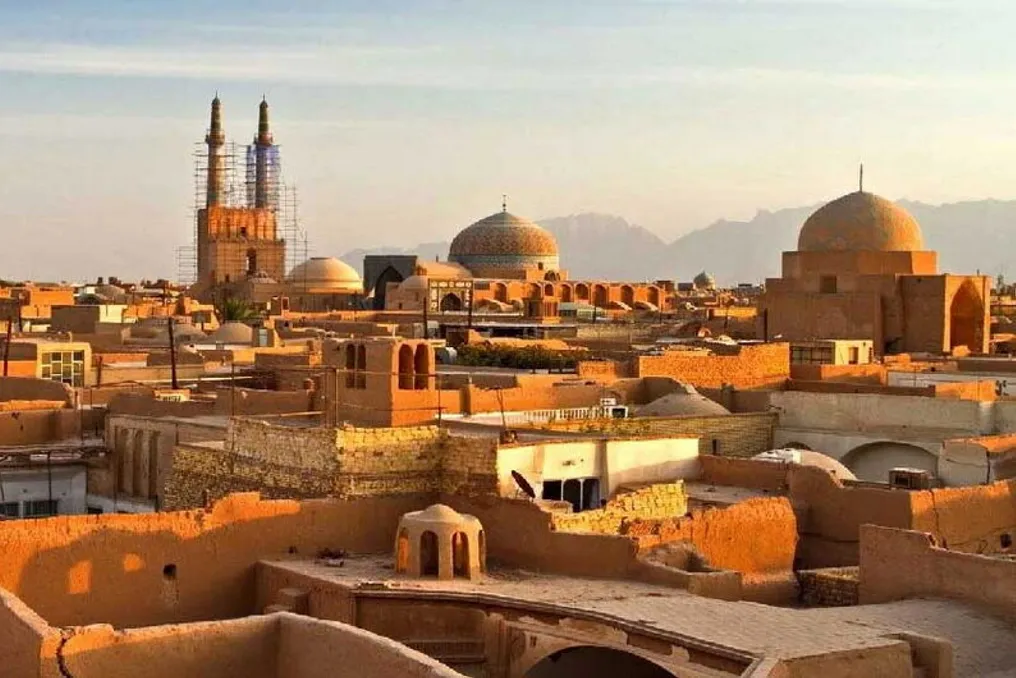
For photographer Herbert Karim-Masighi, the cultural heritage of Iran is not merely a collection of historical buildings and monuments. It is also the history of the people, cultures, and beliefs that have shaped the country over millennia.
In a recent interview with Tehran Times, Karim-Masighi noted: 'Iran is a living land that has embraced thousands of years of life, cultures, beliefs, and experiences of various peoples.' He added that everything formed on this land—from mosques, churches, and temples to palaces, villages, and the homes of ordinary people—is part of the identity of this land.
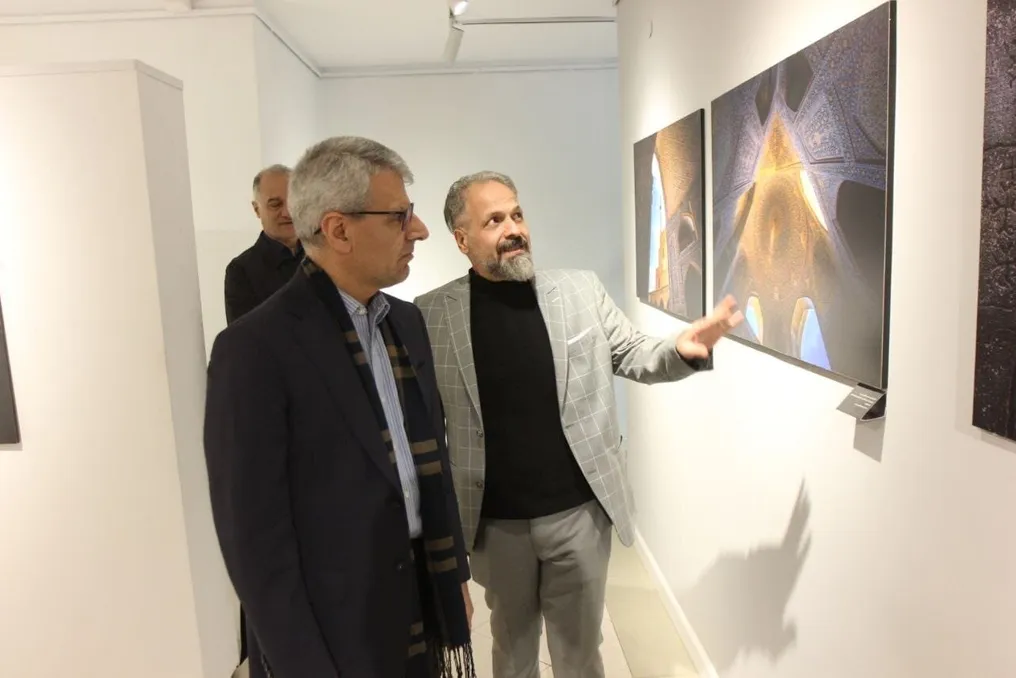
These reflections came after the presentation of his photo book, 'A Thousand Years, Iran,' last month. The book showcases various aspects of the country's historical, cultural, and architectural heritage. The official ceremony took place at the Bank Melli of Iran and was attended by the Minister of Tourism Seyed Reza Salehi-Amiri, the South Korean Ambassador to Iran Kim Joonpyo, Bank Melli CEO Mohsen Saifi Kafshgari, and the head of Bank Melli Publishing Company Amin Arefnia.
The event also gathered archaeologists, cultural heritage experts, members of parliament, and cultural officials, including Jabreal Nokandeh, head of the National Museum of Iran, Mohammad Mehdi Asgarpour, chairman of the board of directors of the Iranian House of Cinema, and Gholamareza Amirhani, head of the National Library and Archives of Iran.
Instead of focusing exclusively on famous landmarks, Karim-Masighi's photographs aim to capture the broader cultural landscape of Iran, encompassing different historical periods, religious traditions, communities, and daily life. He also prefers to leave many shots without detailed captions, allowing viewers to engage with them before encountering historical explanations or interpretations.
In a subsequent interview, he discusses the ideas behind his book, his approach to photographing Iran's diverse heritage, and the role of personal perspective in documenting the country's past and present.
When asked about the motivation for the project, he replied that he, Herbert Karim-Masighi, a photographer of this land, had traveled through Iran for many years, photographing quiet monuments and remote landscapes in search of something subtle: the continuity of life in a country that has repeatedly changed its appearance but never stopped moving forward.
From his perspective, Iran cannot be reduced to a single historical period associated solely with one ruling dynasty or defined by one religion. It is a living land carrying the accumulated experience of its people. He emphasized that the soil of Iran is sacred, and everything that has grown or been formed on it matters.
He makes no distinctions between buildings from the Achaemenid or Sasanian eras and those from the Safavid era, nor between Ilkhanid monuments and others. In his view, all of these are parts of a greater whole, which is Iran.
Regarding his approach to shooting different historical periods, Karim-Masighi strives to distance himself from ideological views and historical prejudices. For him, history is a combination of greatness and defeat, kindness and oppression. He does not wish to glorify one period due to personal convictions while ignoring another.
He believes that the inheritors are not only the Achaemenids and Sasanians but also all ethnic groups, languages, religions, cultures, and ways of life that have developed on this land throughout history. This is why he rarely feels the need to classify or label everything in his photographs, as he does not want to limit the viewer's imagination to a specific historical name or date before they see the image.
Karim-Masighi explained that he wanted the audience to first encounter the photograph itself before learning its name or background, because written explanations sometimes stand between people and what they see. He believes that the initial contact should belong to the image and the viewer.
Discussing the link between daily life and cultural heritage, he stated that history cannot be understood by looking only at magnificent buildings and archaeological remains. Sometimes history remains alive in the simplest actions of ordinary people. He recalled a visit to a village near Persepolis, where he observed a man cleaning a cattle shed, which reminded him of the continuity of traditional life.
He also recounted meeting a Japanese traveler who chose a difficult mode of transport, and remembered his response: many cultures are best understood among ordinary people. He asserts that Iran's heritage is not limited to stones and museums, but is present in the lives of people who continue traditions.
Speaking about the role of time, light, and patience, Karim-Masighi notes that photography, for him, is understanding time and discovering moments. He believes that a change in light can reveal a completely different meaning in a historical structure. He also stressed that patience and familiarity with the place are necessary, as sometimes understanding the rhythms of a place requires living there long enough.
Regarding the value of an image in an era of rapid technological development, he insists that what matters is not so much technical perfection as the photographer's vision and narrative. What remains in photography is what the author saw, why they decided to capture it, and what story lies behind the frame.
In conclusion, Karim-Masighi expressed hope that readers would see Iran again, free from prejudice and ideological constraints, with greater curiosity. He believes that Iran is the shared heritage of countless generations, and each of us is a storyteller of one of its chapters.