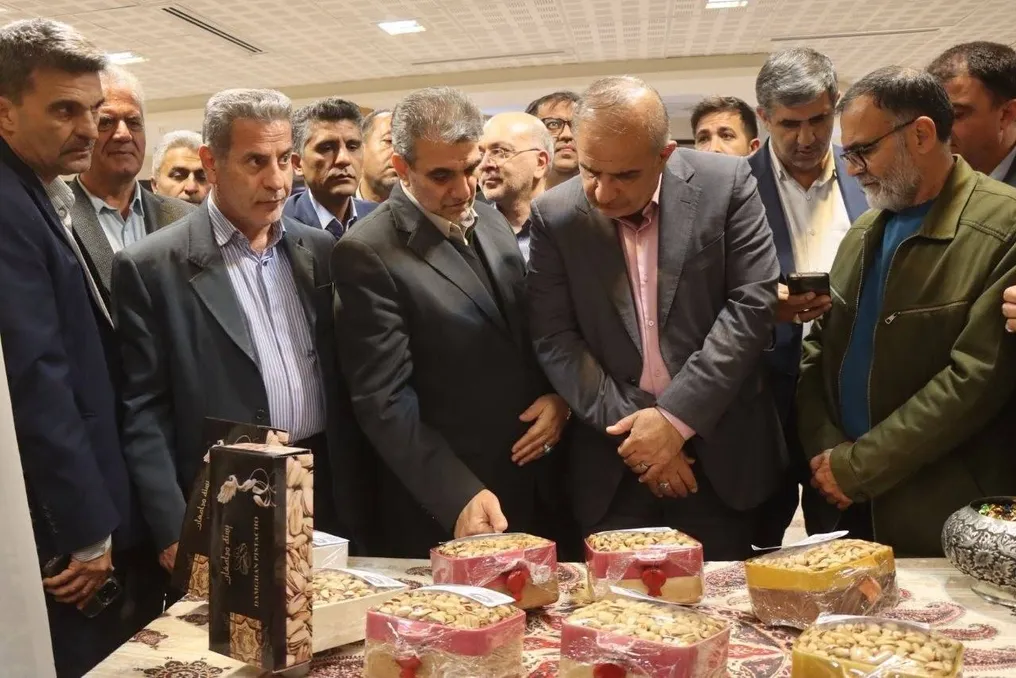
The Thirteenth National Pistachio Festival of Iran took place in Damghan from November 18 to 20. The event aimed to showcase the region's capabilities in pistachio production and processing, enhance farmers' knowledge, facilitate experience exchange among industry participants, and promote efforts to gain international recognition for Damghan pistachios through the Food and Agriculture Organization of the United Nations (FAO).
The festival kicked off with the opening of a specialized pistachio industry exhibition at the International Conference Center of Damghan University. Over three days, it gathered orchard owners, producers, business operators, experts, and researchers involved in the pistachio sector.
Damghan, being one of the key centers for pistachio production in Iran, holds an important position in the agricultural economy of Semnan province. This area hosts over 130 pistachio processing centers and approximately 5,000 orchard owners and farmers, underscoring the significance of this crop for local employment and household welfare. According to available data, agriculture accounts for about 35 percent of employment in Damghan.
Mansour Abbasiian, secretary of the Thirteenth National Pistachio Festival, reported that the pistachio yield per hectare in Damghan orchards this year reached approximately 1,200–1,500 kilograms, significantly higher than the national average of about 800 kilograms per hectare. He attributed the improved productivity of the orchards partly to regular training courses and seminars organized in cooperation with the Agricultural Jihad Organization, as well as the utilization of expertise from specialists and experts. Abbasiian urged orchard owners to utilize the festival's educational programs and benefit from its scientific and technical resources.
One of the central elements of the Thirteenth National Pistachio Festival was a series of eight specialized training seminars held on November 19 and 20 in partnership with the Pistachio Research Institute. Leading Iranian scientists and experts participated in these sessions. The seminars covered a wide range of topics, including winter leaching, stigmomycosis (a stone-like spot), pests and pesticides, heat stress, pistachio tree nutrition, sustainable production, diseases, autumn pruning, and the market for green pistachio kernels. Participation in these courses was free for orchard owners, pistachio growers, and other interested parties, providing an opportunity to learn modern production methods, orchard management techniques, and ways to improve product quality.
The specialized pistachio industry exhibition also ran for three days at the International Conference Center of Damghan University. The exhibition featured 15 booths, showcasing pistachio-related products, agricultural machinery, tools, fertilizers, pesticides, and industry achievements. It served as a platform to demonstrate the sector's potential and familiarize farmers with the latest technologies and equipment.
A primary objective of the Thirteenth National Pistachio Festival was to advance efforts to secure international recognition for Damghan pistachios through the Food and Agriculture Organization of the United Nations (FAO). Abbasiian noted that the festival secretariat, the Semnan Province Pistachio Association, and Damghan University are jointly working towards this goal. He described gaining international recognition for Damghan pistachios as one of the most crucial objectives of this year's festival.
Another item on the agenda was the creation of a parliamentary faction for pistachios in the Iranian parliament to address the problems and difficulties faced by industry participants. The festival secretary also mentioned the transfer of management of the Iranian Pistachio Office to the private sector as another achievement resulting from the efforts of previous editions. According to Abbasiian, the office, previously managed by the Ministry of Agricultural Jihad, is now administered with the participation of the Iranian Pistachio Association, industry participants, and experts. This step aims to ensure a more serious and effective response to the issues of producers and orchard owners.
Alongside the potential and successes of the industry, the festival actively discussed the challenges faced by producers. Among the main issues raised by orchard owners were the reduction of permitted water withdrawal from agricultural wells and adjustments to water usage permits. Industry representatives warned that such measures could undermine irrigation capacity and, if continued, lead to reduced production, poorer product quality, and the drying up of some orchards. Power outages, rising costs of agricultural resources, and high production costs were also cited as serious problems requiring attention from relevant authorities.
In response, officials and representatives from national agricultural institutions, the Ministry of Energy, the Ministry of Agricultural Jihad, the Parliamentary Agriculture Committee, and its Article 90 Committee were invited to the festival to study the industry's problems.
Beyond the technical and economic focus, the Thirteenth National Pistachio Festival included cultural and artistic programs. Local artists from Damghan, alongside renowned artistic groups from across Iran, participated in the opening and closing ceremonies. These programs were designed to create a vibrant atmosphere, encourage public participation, and strengthen the social appeal of the event.
A digital book documenting the XII National Pistachio Festival was also presented as part of efforts to preserve the records and achievements of the event. The publication contains reports, materials from training seminars, speeches, and programs from the previous edition. Readers can access its text, audio, and video content by scanning a special QR code.
The Thirteenth National Pistachio Festival once again demonstrated the economic, scientific, and social importance of this strategic agricultural product. In addition to showcasing production and processing capabilities, the event provided a platform for farmers to voice their concerns, exchange technical knowledge, and raise infrastructural issues facing the sector. Approximately 30,000 hectares of orchards in Semnan province are used for growing pistachios; expanding domestic and international markets, improving product quality, and striving for international recognition for Damghan pistachios can help strengthen the position of this crop in Iran's agricultural economy.