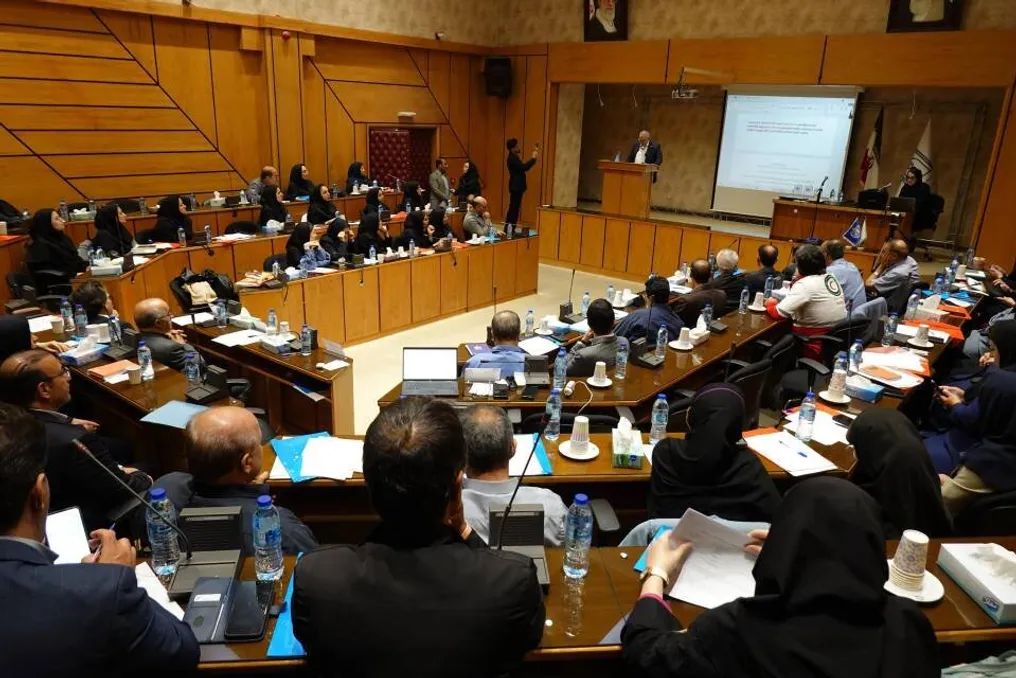
The National Center for Public Health Management, a collaborating center of the World Health Organization (WHO), conducted a one-day seminar aimed at improving qualifications in the implementation of Essential Public Health Functions (EPHFs) in hospitals.
The event was organized by the WHO Country Office in the Islamic Republic of Iran in collaboration with the WHO Regional Office for the Eastern Mediterranean and Tabriz University of Medical Sciences. According to a press release published on the WHO website on November 17, the seminar's goal was to help participants better understand EPHFs and support their practical application in inpatient settings.
The seminar was opened by Said Aslanabadi, Vice Chancellor of Tabriz University of Medical Sciences, and Jean Jabbar, WHO representative in the Islamic Republic of Iran. In his remarks, Jabbar affirmed WHO's commitment to improving population health, promoting Universal Health Coverage (UHC), and strengthening the resilience of the healthcare system.
Jabbar noted that implementing EPHFs is an economically efficient and sustainable method for improving population health, expanding UHC, and enhancing the resilience of the healthcare system. He emphasized that this work aligns with WHO's priorities in primary health care and health security, as well as the flagship initiative of the WHO Regional Director for Health Workforce. According to him, having a qualified, supported, and sustainable health workforce is critical for the effective implementation of EPHFs. Ultimately, protecting public health is the shared responsibility of the entire healthcare system, and this cooperation aims to enhance hospitals' focus on public health and contribute to creating more resilient healthcare systems and improving health outcomes for all.
The participation of Askar Jafari Rouhi, Vice Chancellor for Medical Affairs at Tabriz University of Medical Sciences, demonstrated the importance of partnerships between WHO and national academic and medical institutions. It also reflected the leadership of the University's clinical and medical departments' commitment to strengthening hospitals' focus on public health and promoting the integration of primary health care and EPHFs into hospital services.
The seminar in Tabriz continued a previously initiated joint initiative involving WHO, the Iranian University of Medicine, and the National Center for Public Health Management. Under this initiative, hospital directors from Tehran and various provinces received training on applying EPHFs in hospital settings.
Four staff members from Tabriz University of Medical Sciences—Mohammad Yousefi, Ali Ebadi, Reza Akebati, and Farzaneh Alikhah—participated in the initial training and subsequently worked on implementing EPHFs in Mardani Azar and Osku hospitals. By applying the knowledge and experience gained, they helped translate the EPHF framework into practice, laying the foundation for further institutional collaboration.
Their work highlights the value of investing in the potential of healthcare workers and hospital leaders who can become catalysts for change in their institutions. It also demonstrates how mutual learning and inter-agency cooperation can support the practical application and broader adoption of public health approaches in healthcare facilities.
Jabbar's mission continued with a visit to the Zahra Mardani Azari Child Education, Research, and Medical Center. Following substantive discussions with local specialists and healthcare workers regarding pressing pediatric issues and tours of several departments, including the Child Development Program, WHO commemorative trophies were presented to the Center's director, Mohammad Barzegar, and one distinguished healthcare worker. This gesture recognized their unwavering dedication and tireless daily efforts to protect Iran's youngest and most vulnerable patients.