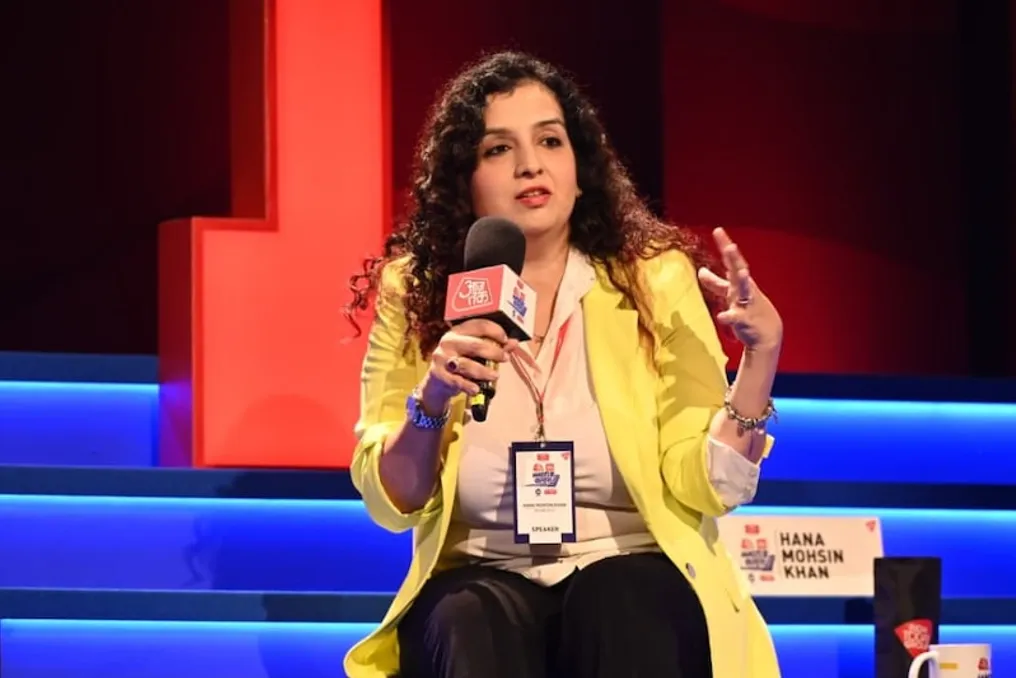
Commercial pilot Hana Mohsin Khan participated in the 'Career Flight' session as part of the Aajtak Masterclass program. During this event, she openly discussed her career path, the process of learning to fly, the participation of women in the aviation industry, and the challenges of this profession.
Hana shared that she started her career in journalism, then worked in event management, and only after that decided to become a pilot. Today, she flies herself and inspires other girls to join this field based on her experience.
Describing her journey, Hana Mohsin Khan mentioned that she first worked in journalism and then founded her own event organizing company. During one trip to Thiruvananthapuram, she met some pilots. Discussing flight experiences, she was greatly impressed. That night, around eleven o'clock, she called her mother and told her about her desire to become a pilot. Although her mother initially advised her to sleep because she had already changed professions, the idea of becoming a pilot did not leave her. As a result, she began studying this profession and made the decision to change careers.
Speaking about the process of becoming a pilot, Hana emphasized that it is necessary to have studied mathematics and physics in the 10th and 12th grades. If a student did not study these subjects in the 12th grade, they can complete them through an open course or another recognized system.
When asked how important medical fitness is for a pilot and whether people wearing glasses can choose this career, Hana replied that wearing glasses itself is not an obstacle to becoming a commercial pilot. During the medical examination, vision and other necessary health parameters are checked. She specified that the medical standards for commercial airline pilots and military pilots may differ. Therefore, every student should clarify their medical fitness according to the DGCA medical tests.
Hana recounted that she trained in piloting in Florida, USA. There, she was required to complete about 200 flight hours, and her training took approximately one year. According to her, piloting training can be undertaken in different countries around the world. It usually takes from six months to a year, but in India, this process can sometimes stretch to one and a half to two years. She added that initially, students are taught to fly small aircraft, such as the Cessna, and then, depending on experience and qualification, they move on to training on larger aircraft.
Hana noted that behind the glamorous appearance of a pilot's job lies immense hard work and responsibility. She warned that this profession should not be chosen solely for its glamour; a passion for flying is necessary. She mentioned that pilots sometimes have to wake up at two or three in the morning to perform flights. Despite lack of sleep and fatigue, they must remain completely alert, as they are responsible for the safety of hundreds of passengers on board.
In her opinion, a pilot must love all aspects of flying—from the sound of the engine to the actual process of flying in the air. This profession requires not only excitement but also a high degree of discipline and responsibility.
