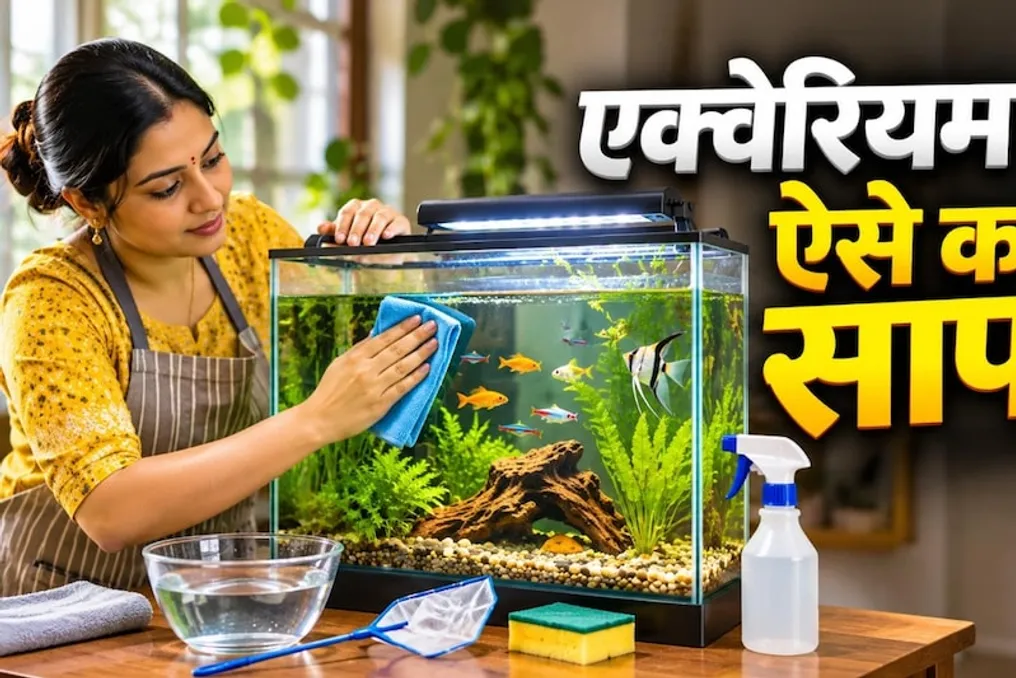
Tips for cleaning a small aquarium: how to maintain cleanliness at home
Read more
Aaj Tak
www.aajtak.in

Tips for cleaning a small aquarium: how to maintain cleanliness at home

People who value the beauty of their home and enjoy keeping fish often place a small aquarium in the living room. Although watching colorful fish in a glass tank is very pleasant, caring for it requires no less attention. Despite buying aquariums out of a hobby interest, many owners do not know how to properly clean them.

The water in the aquarium can become dirty, and moss can form on the walls. In such cases, the fish living in the aquarium may die, and the owners do not understand the reason for their disappearance. Therefore, it is extremely important to clean even a small home aquarium in a timely manner.

It is important to remember that the water and filter in the aquarium contain beneficial bacteria necessary for the fish. When cleaning, a number of rules must be followed. Below are simple ways to maintain the cleanliness of a small aquarium.

How to clean algae from the glass

Green mold often appears on the glass of small aquariums, making the fish inside difficult to distinguish. To get rid of this, you should use a special magnetic aquarium cleaner or an algae scraper. It is important to ensure that the brush has not been treated with soap or detergent.

Partially change the dirty water

It is necessary to monitor the condition of the water. As soon as the water in the aquarium starts to look cloudy, you should not change all the water at once. Instead, it is recommended to change about 20–30 percent of the water weekly. The new water must be free of chlorine and have a temperature close to the existing water temperature in the aquarium. This will help protect the fish from sudden changes.

Removing sediment from the bottom

Small stones, gravel, and sand are located at the bottom of the aquarium. Food remnants and fish excrement accumulate between them. To clean this area, you can use an aquarium siphon or a gravel vacuum. This will allow you to remove accumulated dirt and maintain cleaner water.

Cleaning the filter

The filter plays a key role in maintaining water cleanliness in the aquarium. Sometimes food residue and dirt from the fish accumulate in it. In this case, the filter must be removed and carefully rinsed in the water you drained from the aquarium. It should not be washed under running tap water, as chlorine can damage beneficial bacteria. Also, the filter should not be left completely closed or dry.

Immediately remove food scraps

When feeding fish, owners sometimes give them too much food at once due to laziness. However, it is this leftover food that can dissolve in the water and cause contamination. Therefore, you should feed the fish only as much as they can eat in a few minutes. If food remains, it must be removed using a small net. This will prevent rapid water contamination and ensure long-term aquarium cleanliness.

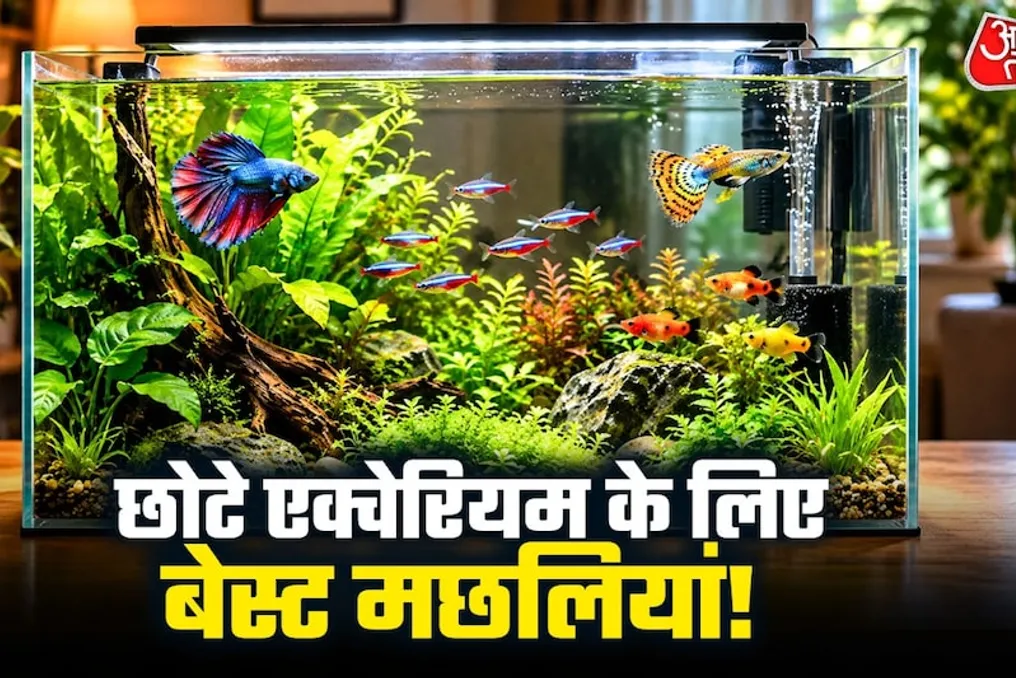
Pay attention to these points when cleaning

Similar stories

Cleaning tips: how to remove hair and dust from the floor after mopping using an old sock
Read more
www.aajtak.in

Cleaning tips: how to remove hair and dust from the floor after mopping using an old sock

Daily household cleaning involves using a broom and mop. To make the floor shine, it is first thoroughly swept with a broom, and then a cleaning agent is applied with a mop. During this process, all items such as chairs and tables are moved to polish every corner. However, even after thorough cleaning, clumps of hair, dust, and fine clothing fibers may remain on the floor. It is especially difficult to clean dirt accumulated under sofas, beds, and cabinets, which forces people to repeatedly use the broom or mop.

People often get frustrated by the need to repeat this work. If you encounter such a problem, there is a simple solution: an old sock you have at home can significantly simplify the process. This sock, which you were planning to throw away, can be used on a mop to easily collect scattered hair, fine dust, and lint from the floor. The advantage of this method is that it does not require purchasing any new items.

How to create a simple cleaning method using an old sock

If you have an old sock that you no longer wear, instead of throwing it away, you can utilize it in the cleaning process. For this, you will need a clean sock and a flat mop. The sock's fabric helps attract and hold fine hair, dust, and lint on the floor. Thus, the dirt accumulates on the sock instead of scattering across the floor, turning a useless sock into a dust collector.

How to use the sock on a mop

To understand exactly how to apply the sock for cleaning, you should know that this technique is very simple. First, choose a clean sock that does not have large holes. A cotton or cotton-blend sock is best, provided that threads or fibers do not fall out of it. Second, securely put this sock over the wide bottom part of a flat mop. It is important that the sock fits well on the mop and does not shift during cleaning. Third, slowly move the mop across the floor, paying special attention to areas where more hair, dust, and lint accumulate. The sock's fabric will help capture these particles, and the dirt will begin to gather in one place.

What to do with the sock after cleaning

After you finish cleaning the room this way, remove the sock from the mop. There is no need to scrub the floor with it again; instead, take it over the trash can so that the hair and dust go directly into it. If the sock is not heavily soiled, it can be washed and thoroughly dried, and then reused. Thus, a useless sock becomes a useful cleaning tool.

Do not use this trick with wet mops

It is important to remember that this method using an old sock works most effectively with dry cleaning. If you wet the sock, dust and lint may stick to the floor. This can cause difficulties during cleaning and leave wet marks on the surface. If water, oil, food, or any sticky substance has spilled on the floor, you should use a regular mop and cleaning agent.

Do not use an overly worn-out sock

Before applying this technique, you must ensure that the chosen sock is not too worn out. Using a heavily frayed or torn sock can cause fine fibers to shed and stick to the floor. Therefore, choose a sock whose fabric is still in satisfactory condition, even if it is old.

A selection of five beautiful and low-maintenance fish for small home aquariums
Read more
www.aajtak.in

A selection of five beautiful and low-maintenance fish for small home aquariums

Lately, many people have shown interest in keeping fish at home, but they may worry about caring for large aquariums. In such cases, they often purchase small freshwater tanks. It is important to understand that fish for small aquariums differ from others, and their care requires a specific approach. These types of fish are not too temperamental and can easily adapt if provided with suitable conditions.

Even if an aquarium is set up, owners often do not know how to care for it properly. Before getting fish, it is necessary to familiarize oneself with their keeping methods. Therefore, it is crucial to ensure the fish in the aquarium have the right water, temperature, and habitat. Below are five types of fish that even beginners can successfully keep due to their simple care.

Fish species for small aquariums

Betta Fish

The Betta is known for its magnificent colors and long fins, making it a good choice for those starting aquarism for the first time. However, keeping it in a small container is incorrect; a Betta requires a tank of at least 5 gallons, which is about 19 liters. To maintain water cleanliness and the required temperature, a filter and heater must be used. The optimal water temperature for this species should be between 26 and 28 degrees Celsius. It should be avoided to keep several male Bettas together, as they may conflict.

Guppy Fish

Additionally, Guppy fish can be added to an existing aquarium, valued for their bright colors and small tail fins. Their characteristic is a calm temperament, allowing them to coexist with other small and quiet species of fish. A tank of at least 10 gallons, or approximately 38 liters, is recommended for Guppies. They can be fed special flakes or fine pellets. It is advisable to place Guppies in an aquarium with plants and hiding places. It must be remembered that Guppies reproduce quickly, which can lead to a rapid increase in population.

Neon Tetra

Many have noticed that aquariums look colorful thanks to the presence of Neon Tetras. This fish is small and very striking, with bright blue and red stripes on its body, giving the aquarium a picturesque appearance. They prefer to live in schools, so instead of keeping them alone, they should be kept in a group of at least 5-6 individuals. An aquarium with aquatic plants is suitable for them, and they can be fed small flakes or pellets.

Platy Fish

Platies come in many shades—from orange and red to yellow and blue. Their nature is calm, and they get along easily with other quiet species of fish. Caring for them is also not very difficult. Platies require a tank of at least 40 liters. Adding small plants to the aquarium will provide them with space to move around and hide. Flakes and fine pellets can be included in the Platy's diet.

White Cloud Mountain Minnow

These fish are small, shiny, and have a calm temperament. Notably, unlike many other species, they do not require warm water. They are capable of living in normal cool water. For them, an aquarium of about 40 liters and a group of at least six individuals is optimal. If there are no sharp temperature fluctuations in the house, an additional heater may not be necessary for them.

Important points before setting up an aquarium

Keeping a small aquarium does not mean that the fish should be in a cramped space. It is extremely important to install filters in the tank, regularly clean the water, and not overfeed the fish. Before combining different types of fish, you must thoroughly study their individual needs, including water temperature and character traits. This approach guarantees the health of the fish and will keep your aquarium aesthetically pleasing for a long time.

How to organize the kitchen after the holidays: 6 simple ways to arrange things
Read more
www.aajtak.in

How to organize the kitchen after the holidays: 6 simple ways to arrange things

After holidays such as Diwali and Govardhan, homes and kitchens often become very messy, and it is unclear where to start cleaning. After the festivities end and guests leave, the kitchen looks especially cluttered due to numerous prepared dishes, sweet packaging, and gift baskets. Often, the refrigerator becomes overloaded with sweets and food products.

Questions arise about what to do with leftover dishes, how to properly store sweets, and where to put the received gift boxes. If your kitchen looks like this after Diwali, there is no need to worry; there are several simple methods that will allow you to organize the space without extra effort.

To begin organizing the kitchen space, you need to divide all items on the countertop into three groups. Three baskets or large containers can be used for this to speed up the arrangement process. Dedicate one group to sweets intended for gifting to relatives or friends. The second group is for received gifts and baskets, and the third is for other contents, such as open snack bags, sweets, and other food products.

It is also necessary to separate and remove gift wrapping, ribbons, and unnecessary plastic. This will free up the kitchen workspace and create space for storing other items.

A large amount of sweets and snacks remains after Diwali, so proper storage is critical to prevent the food from spoiling quickly. Special attention should be paid to dairy sweets, such as barfi, kalakand, and rasgulla, as they can spoil quickly; they must be stored in the refrigerator and used shortly after opening the packaging. It is best to place opened sweets at the front so family members use them first. It is also recommended to check the packaging information regarding expiration dates and storage conditions.

Dry snacks, including chivda, chakli, and mathuri, must be protected from moisture and air, so they should be completely cooled before being placed in airtight containers. Glass or high-quality plastic containers can be used, and their contents and packaging date must be labeled.

Among the gift baskets received during Diwali, there are often beautiful stands, plates, and boxes that can be reused instead of simply being thrown away.

After the holidays, the refrigerator accumulates sweet boxes, food leftovers, and various bags. Therefore, thorough cleaning and organization of the refrigerator are necessary. First, check any food that might be spoiled or has been stored for a long time. Large packages of sweets should be transferred to clean, lidded containers. Then, distribute the food among the sections: dedicate one part to desserts and sweets, another to food leftovers, and a separate area for vegetables and fruits. Items used daily should be placed in a visible location. Using transparent organizers in the refrigerator simplifies finding the necessary products.

During the holidays, most of the kitchen space is occupied by sweets, snacks, and treats. Now, it is necessary to restore the usual order, focusing on daily use. To do this, organize fruits, greens, oats, mahana, and necessary legumes in the pantry. Some vegetables can be washed and cut beforehand and stored in the refrigerator, which will facilitate cooking while working or at home. Dried fruits can also be consumed in small portions as a daily snack. Thus, the gifts received during Diwali can be useful, and food will not go to waste.

Since Christmas and New Year are expected after Diwali, it will be useful to organize storage and organizers in the kitchen in advance. Separate shelves must be allocated for spices, special compartments for containers, and a permanent place for large cookware. This will help avoid problems with finding space and items when guests arrive again.

Popular