Nine geological sites in India are vying for UNESCO World Heritage status
Read more
The Better India
thebetterindia.com

Nine geological sites in India are vying for UNESCO World Heritage status

The most outstanding landscapes of India do not always attract attention due to monuments or well-marked tourist routes. Some are hidden in tropical forests, others rise above the sea, and some retain evidence of geological events that occurred millions of years ago.

Currently, several such remarkable places are attracting international attention. India's preliminary UNESCO heritage list was expanded in 2026, adding two particularly interesting natural heritage sites on the Andaman and Nicobar Islands: the Baratang Karst Mud Volcano Complex and the Andaman Subduction Volcanoes, which include the Barren and Narcondam Islands.

These new sites complement seven natural heritage sites presented in August 2025, showcasing a broad cross-section of India's geological history.

However, the question arises: what makes these places special, where can tourists visit them, and what should they know before traveling? More importantly, how can they be explored without damaging the very landscapes that make them unique?

Landscape shaped by two types of volcanoes

The first of the two new natural sites is the Baratang Karst Mud Volcano Complex, located on Great Andaman Island, approximately 100 km north of Sri Vijaya Puram (Port Blair).

Imagine a forested island where the earth opens into limestone caves, narrow fissures, and underground chambers. Over millions of years, marine organisms, including shells and corals, accumulated and compacted, forming limestone. Rainwater gradually dissolved parts of this rock, creating complex cave systems.

But the island has another geological feature. Its mud volcanoes, known locally as Jalki, erupt suspensions of mud, water, and gases, rather than molten rock. Unlike typical volcanoes, these formations do not erupt magma; their movement is driven by pressure and movement within layers of underground deposits.

After a period of dormancy of about 20 years, the Baratang mud volcanoes reactivated in 2025. The Geological Survey of India designated the mud volcano as a geo-heritage site in the same year. The caves also support specialized underground ecosystems, making their preservation important beyond geological appeal.

The second site, the Andaman Subduction Volcanoes, encompasses the Barren and Narcondam Islands. Both originated from tectonic processes related to the Indian Plate moving beneath the Burmese microplate.

Barren Island, located approximately 138 km northeast of Sri Vijaya Puram, is the only active volcano in South Asia. Its first recorded eruption dates back to 1787. It recently experienced minor eruptions in September 2025, after which an ash plume rose to about 1.2 km in January 2026.

Meanwhile, Narcondam presents a different picture. Its densely forested volcanic landscape rises 710 meters above sea level and supports species found nowhere else, including the Narcondam woodpecker. Unlike Barren Island, known for its marine environment, Narcondam is not open to tourism. Access is restricted, and visitors should not attempt independent trips or landings.

These islands are important precisely because their ecosystems remain relatively untouched. Inclusion in the UNESCO list should not be taken as an invitation to explore every part of them.

Seven other landscapes telling India's geological story

The two Andaman sites join seven natural sites presented to UNESCO in August 2025. Together, they demonstrate the diversity of India's geological heritage.

In Maharashtra, the Deccan Traps in Panchgani and Mahabaleshwar preserve evidence of massive volcanic eruptions around 66 million years ago. Successive lava flows created characteristic stepped rock formations in the region. Tourists are advised to stay on designated viewpoints and avoid damaging exposed geological formations.

Off the coast of Malpe in Karnataka, the St. Mary's Island Cluster is famous for its unusual columnar basalt formations. These polygonal rock structures formed when molten lava cooled and contracted approximately 85 million years ago. The islands are accessible by ferry, depending on seasonal conditions. Visitors should refrain from collecting rock fragments or climbing fragile formations.

The Meghalaya Megalayan Caves, including Maumlu, Mawsmai, Arwah, and Krem Puri, contain important geological data. The Maumlu Cave is particularly significant because mineral deposits found there helped establish the Meghalayan age—the youngest stage of the Holocene geological epoch. Cave formation takes thousands of years, so visitors must never touch, scratch, or break them. Research must be conducted with the permission of authorized guides.

The Naga Ophiolite in Nag district, Kiphire, provides insight into ancient oceanic crust and the Earth's upper mantle. Ophiolites are fragments of seafloor uplifted onto land due to tectonic activity. The landscape also holds ecological significance, necessitating local guidance and respect for wildlife.

In Andhra Pradesh, Erra Matti Dibbalu, or Red Sand Hills, near Visakhapatnam, displays striking reddish-brown sedimentary formations. These hills were formed under the influence of wind and water erosion, preserving evidence of changes in climatic and environmental conditions. Tourists should avoid walking on unstable formations and not leave litter.

Further south, the Tirumala Hill Natural Heritage includes the Eparkhayan unconformity and the Silatorananam natural rock arch. The latter is particularly interesting: its formation reflects an extremely ancient geological history, with rocks in this region recording over a billion years of Earth's past. The surrounding hills also hold religious significance, so visitors must adhere to temple and forest rules.

Finally, the Varkala cliffs in Kerala expose layers of the Varkala Formation, dating back to the Miocene-Pliocene period. Their vibrant sedimentary bands face the Arabian Sea, and natural springs add to the geological significance. However, the cliffs are under pressure from growing tourism and construction. Visitors should stay away from unstable edges and follow safety instructions.

Responsibility that comes with discovery

The popularity of a place can bring income to local communities, but it can also put pressure on fragile ecosystems. The challenge is to ensure that tourism does not destroy what makes these destinations worth visiting.

Before traveling, it is necessary to check local entry permits, seasonal restrictions, and forestry department guidelines. Access to some areas, especially caves and protected islands, is limited. One should never assume that being on the preliminary UNESCO list means it is open to unlimited tourism.

Whenever possible, choose local guides and community-managed accommodation. Use reusable water bottles, avoid single-use plastic, and take all trash with you. Do not collect stones, fossils, shells, or any other natural material. In coastal areas, avoid disturbing marine habitats, and in forested areas, maintain low noise levels and keep a safe distance from wild animals.

There are already examples of nature-conserving tourism in India. In Khonoma village in Nagaland, community tourism allows visitors to experience local culture while supporting conservation efforts. Similarly, community-run tour operators create opportunities for travelers to directly contribute to local livelihoods.

Travelers can also draw inspiration from five Indian trips that support wildlife and nature conservation, studying sustainable travel methods that minimize waste and respect local ecosystems.

India's geological heritage is not just a collection of impressive sights. These landscapes preserve evidence of volcanic eruptions, shifting tectonic plates, ancient oceans, and evolving ecosystems. Their significance extends far beyond their potential as tourist destinations.

Inclusion in the preliminary UNESCO list is an important step toward international recognition, but it is not the final goal. The true achievement will be ensuring that these places remain pristine for future generations.

Ultimately, the best way to experience a natural wonder is to leave it as wonderful for the next person.

}, {
Similar stories

Nine Living Monuments of India: From Kerala's Five-Hundred-Year-Old Teak to the Grandmother Tree in Kochi
Read more
thebetterindia.com

Nine Living Monuments of India: From Kerala's Five-Hundred-Year-Old Teak to the Grandmother Tree in Kochi

Besides the well-known banyan trees and sacred groves of India, there is a number of lesser-known ancient trees that are preserved in forests, villages, and historical settlements due to local traditions, religious beliefs, and community ties. Their histories demonstrate how communities helped protect these trees long before they received official recognition.

In the Tiger Parambikulam Reserve in Palakkad district, there is a teak tree estimated to be around 450–500 years old, located in a forest area associated with indigenous communities such as Kadar and Malasar.

In Karnataka, on an area spanning 21.85 hectares, there is a grove containing about 300 tamarind trees, which became the first biodiversity heritage site in India to receive official notification in 2007.

In Joshimath, an old peach tree has botanical assessments linking its age to approximately the 8th century AD. This tree stands in the Kullu valley of Himachal Pradesh state. Throughout Himachal, ancient tree groves are traditionally protected as sacred groves (dev van).

The mango tree in Sanjan has been listed in the catalog of monuments of India. Sanjan holds an important place in the history of the Parsis and is connected to the arrival of this community in India.

This Exbucklandia populnea plant is located in Chowrasta, the public square in Darjeeling, where traders and visitors gather in the city center.

A large Dipterocarpus indicus tree near Subramaniyam represents the old-growth evergreen forests of the Western Ghats.

The Grandmother Tree

In Kochi, the term 'Grandmother Tree' (commonly known as Muttassi or Ammachiyal) refers to giant heritage trees, particularly a massive rain grove in Veliground, which is illuminated annually in December as a major natural Christmas tree.

In the Kangra-Wali National Park, this documented teak tree grows in a forest associated with the Gond, Maria, and Muria communities in Bastar. It is considered one of the oldest living teak trees in India.

Urbanization and the fading of traditional knowledge pose a threat to these living monuments. Protecting these trees implies recognizing the communities, local customs, history, and ecosystems that have helped them survive.

Archaeological Experience Pavilion at Purana Qila Showcases India's History Dating Back to Ancient Times
Read more
timesofindia.indiatimes.com

Archaeological Experience Pavilion at Purana Qila Showcases India's History Dating Back to Ancient Times

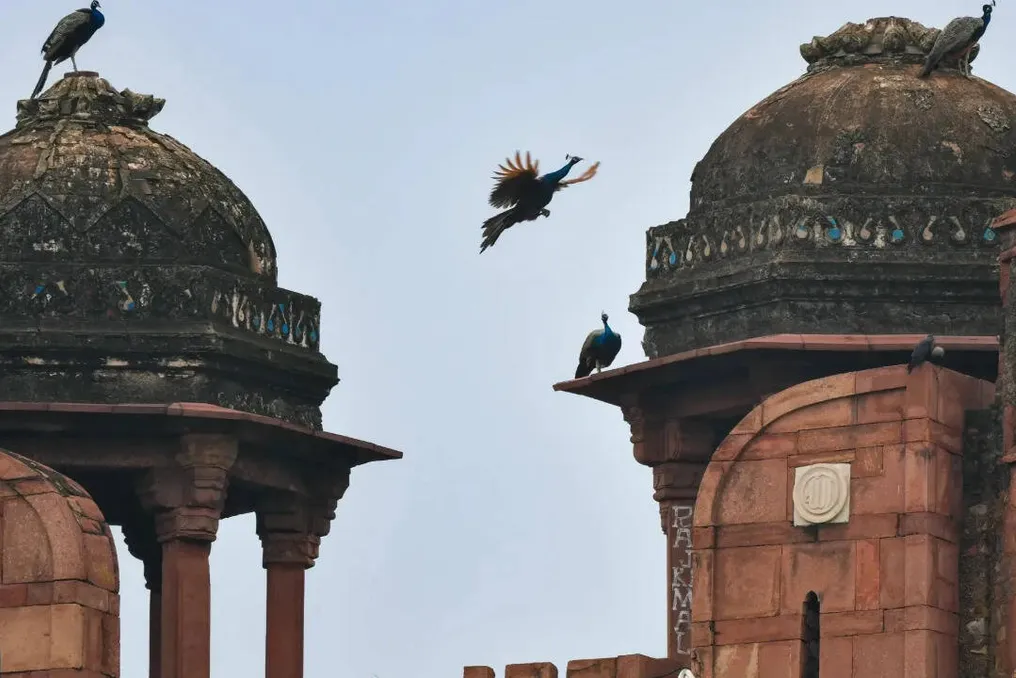
Archaeologists and workers are methodically excavating soil layer by layer on the grounds of the iconic Purana Qila complex to uncover artifacts that testify to India's civilizational journey. In an adjacent trench at the excavation site, which reaches a depth of 6.5 meters, eight layers have been identified, spanning the period from the Mauryan to the Mughal eras. These layers tell stories of once prosperous dwellings, used pottery, preserved wood, and details of daily life that evolved over many epochs of India.

This unique archaeological experience pavilion, which is the first to present the live excavation site and finds made at Purana Qila, displaying Delhi's history dating back nearly 3000 years, will open to visitors starting Monday. Purana Qila, also known as Pandavankula Qila, has been identified as the ancient city of Indraprastha, mentioned in the literary work Mahabharata.

The walls and other structures were built by Sher Shah Suri between 1538 and 1545 after the destruction and reconstruction of Dinpan, a city founded by Humayun, the sixth city of Delhi, around 1533 after his return from Persia.

Usually, after excavations are conducted, the area is covered with earth; however, in this case, an exhibition space called 'Astitva'—'The Essence of Our Existence'—has been created so that people can experience the history while preserving the integrity of the site.

Prime Minister Narendra Modi will inaugurate the first Shanghai Cooperation Organisation (SCO) Forum on Civilizational Dialogue at Purana Qila on Friday evening, followed by sessions on Saturday and Sunday. The opening ceremony will include a special program titled 'Dialogue of Civilizations — Cultural Performance.' It will showcase a unique blend of music, dance, visual storytelling, and narration. Based on the theme Vasudhaiva Kutumbakam—the World is One Family—the presentation will highlight cultural ties between India and Eurasia. World leaders attending the Dialogue will also be able to view the 'Astitva' exhibition, which opens on Friday evening.

Director of the Archaeological Survey of India, Vasant Kumar Swarnkar, who has been working at the Purana Qila site since 2013–2014 and supervised the latest excavations in 2022–2023, reported that excavations across the entire complex from the 1950s to the present have revealed a nine-stage cultural sequence, ranging from settlements to the Mauryan period and up to the Mughals, without any breaks.

Among the oldest finds are sherds from Painted Grey Ware (PGW), belonging to the Hauryan level. These will become part of the experience pavilion, which also includes the Mauryan Ashvamedha Yajna, a circular pit, and the Sunga-Kushan house complex, providing insights into ancient rituals, water resource management, and domestic life.

When the publication TOI visited the site on Wednesday, the construction of an elevated platform above and around the trenches was observed, which will allow visitors to observe the exposed archaeological remains. An area, likely a room from the Mughal period house, a Kushan-period brick platform, a Gupta-period rammed floor, Rajput-era ceramics, and a Mauryan-era furnace, was examined.

Through display cases with artifacts and interpretive panels, the exhibition will present visitors finds ranging from ceramics, coins, seals, beads, terracotta figurines, a Kushan-period Gajalakshmi terracotta plate, and a Rajput-period Vaikuntha Vishnu stone sculpture—each revealing stories of craftsmanship, trade, beliefs, and daily life.

Hundreds of thousands-year-old rock carvings discovered in tourist cave in Spain
Read more
super.abril.com.br

Hundreds of thousands-year-old rock carvings discovered in tourist cave in Spain

In 1853, a resident of Catalonia, Spain, began excavating a well in his backyard and found an underground gallery leading to an underground river. Access to this cave was complicated, and only in 1957 was one of its entrances cleared.

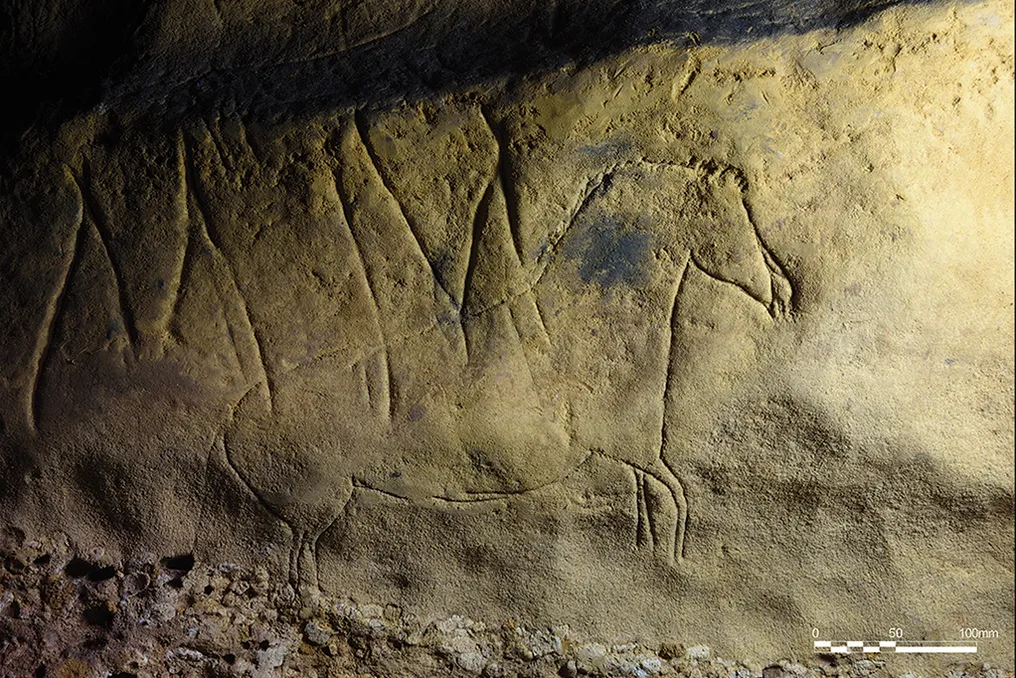
At the site, researchers identified geological layers and archaeological finds that help in understanding human presence in the area over time, including prehistoric tools and a Homo sapiens femur. This cave is known as Cova de la Font Major, and it is one of the largest in the world, with over 3.5 kilometers of galleries.

The site underwent restorations starting in the 1990s and has since operated as a cave museum open to daily visitors. However, it was only in 2019 that researchers detected parallel traces and other markings on the cave walls indicating the existence of Paleolithic engravings, which had been practically invisible for decades.

Because of this, regional archaeology teams have focused recent efforts on finding more engravings. A new study, published in the scientific journal Antiquity, conducted a detailed analysis of the cave and cataloged 280 graphic symbols, 55 of which are animal representations. The other drawings are more conceptual, such as geometric patterns and sequences of parallel lines.

This discovery is noteworthy because most of the known rock art assemblages in the Mediterranean do not have such a high number of fauna drawings. The material highlights representations of horses and bears, as well as figures of goats, cattle, and deer.

The study's authors state that 'the Font Major assemblage is one of the largest assemblages of Paleolithic rock art in the Iberian Mediterranean. Its recent discovery requires a reconsideration of regional prejudices.'

This discovery changes the way the Paleolithic period in northeastern Iberia is interpreted, an area that was long considered sparsely populated during prehistory, with few records of rock art. Previously, only two Upper Paleolithic engravings were known in Catalonia.

This suggests that local communities might have possessed their own artistic tradition and be more numerous than previously thought. Although the precise dating of the engravings is still under discussion, the research points to the possibility that many of them belong to pre-Magdalenian phases, i.e., earlier than the Magdalenian, a final phase of the Upper Paleolithic known for its artistic expressions. This implies that some of these representations may be more than 18 thousand years old.

The next step in the investigation is to try to determine the age of the animal representations through uranium series analyses in calcite deposits covering one of the figures. It is important to note that many of the engravings have suffered damage over the decades due to intense foot traffic at the site, which caused wear, graffiti, and inscriptions on the walls, including names and dates over some representations. Currently, the areas with the engravings are closed to the public.

Popular