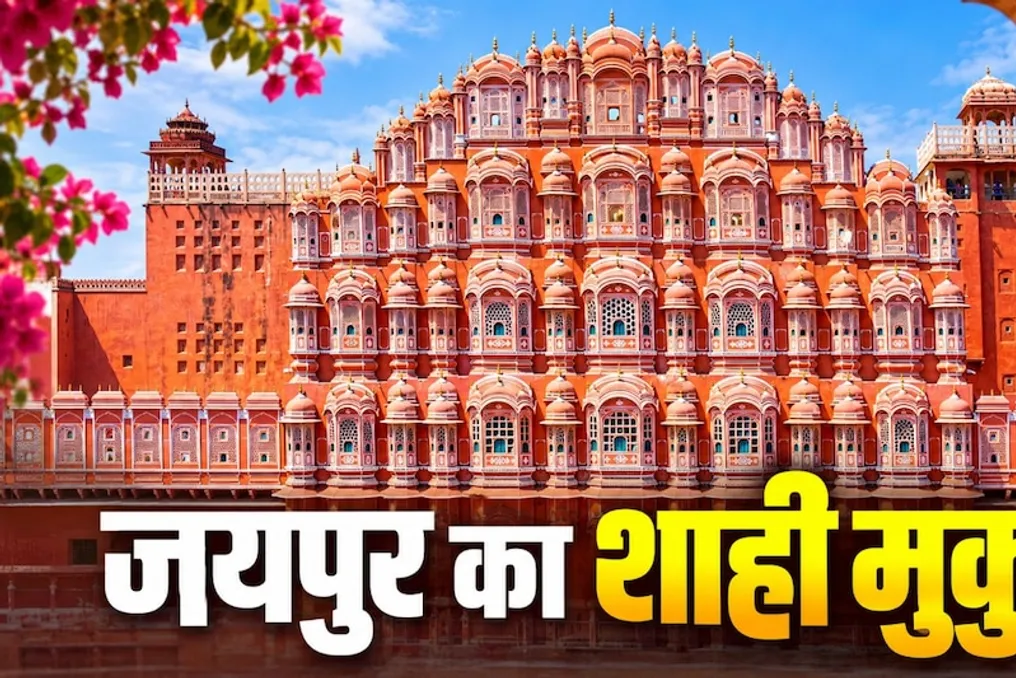
Today, the capital of Rajasthan, Jaipur, is known worldwide as the 'Pink City.' Its wide and straight streets, markets with uniform shop designs, and historical buildings distinguish it from other cities. However, few people know that a Bengali Brahmin played a key role in the creation of this city about 300 years ago.
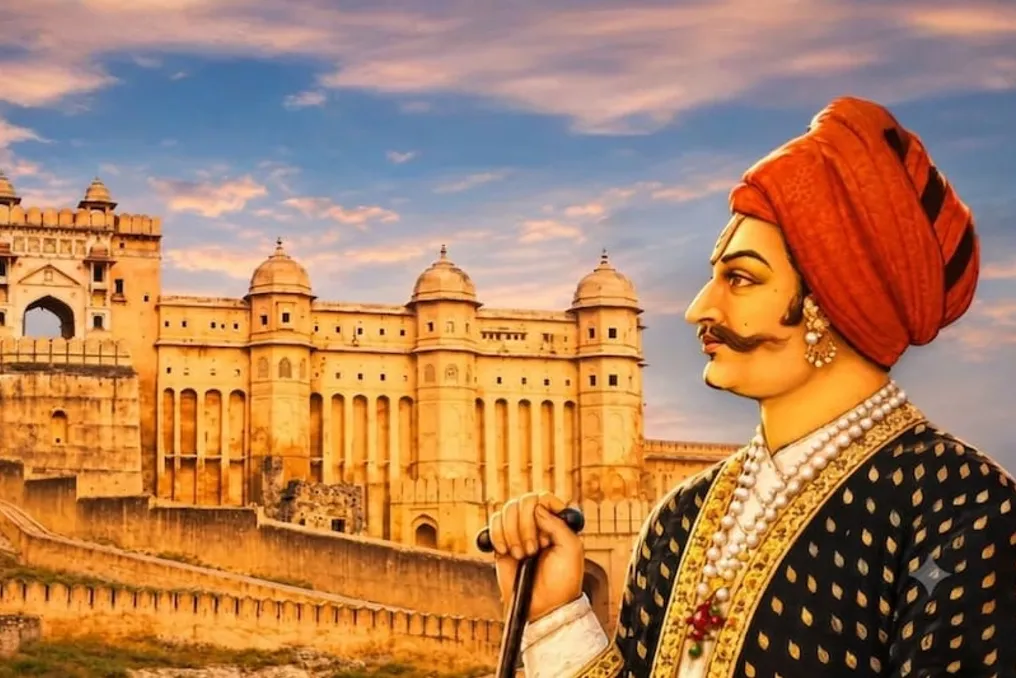
His name was Vidyadhar Bhattacharya. He collaborated with Maharaja Sawai Jai Singh II in developing the city plan, where markets, roads, residential areas, and the water supply system were pre-designed.
A special point is that Jaipur was founded in an area where there was no perennial river. The Aravalli hills and sandy-rocky soil surrounded it. Despite this, an organized capital was built here. This raises the question: how did the idea of founding Jaipur arise, what role did the Bengali Brahmin play, and how was the water supply organized in the city without a river?
The founding of Jaipur took place in 1727 at the initiative of Maharaja Sawai Jai Singh II. Before that, the capital of the Kachwaha dynasty was Amer, located about eight kilometers north of Jaipur, on the Aravalli hills. For approximately six hundred years, Amer remained the center of power for this dynasty.
However, by the beginning of the 18th century, the boundaries of Amer began to shrink due to growing population and trade needs. Although the location on the hill provided good defense, expanding the city was difficult. The streets were narrow, and there was not enough space for new markets, houses, and administrative buildings.
Furthermore, the Mughal power was weakening at that time. After the death of Aurangzeb, a struggle for the throne began in the empire. Sawai Jai Singh supported Azam Shah in 1707 but was defeated by his brother Bahadur Shah. Bahadur then took action against Jai Singh, and Muslim troops captured Amer. Nevertheless, in 1708, Jai Singh regained his power with the support of the rulers of Jodhpur and Udaipur.
Against the backdrop of these political changes, Jai Singh wanted to create a capital that was not just a fortress and defense, but also a major center for trade, art, and administration. For this, he chose an open plain south of Amer.
This location was favorable for trade, as routes led from it to Amer, Sanganer, Agra, Ajmer, and Delhi. The surrounding hills provided protection, and access to the forts of Amer and Jaigarh was possible if necessary.
The preparation for the creation of Jaipur did not happen suddenly. According to historian Jadunath Sarkar, Sawai Jai Singh began planning the construction of the palace and garden named Jai Niwas in this area around 1725. In November 1727, the construction of the new city, its walls, and gates began, accompanied by religious ceremonies.
Mention of the founding of Jaipur is also contained in the poem 'Bhodhanasar,' written by the court poet Girdhari in 1739. According to this poem, the Maharaja instructed Vidyadhar Bhattacharya to found a new city, ordering the use of all necessary resources for this work.
Thus, Jaipur was conceived not merely as a collection of houses and palaces, but as a capital where not only members of the royal family but also traders, artisans, and common people could live.
Vidyadhar Bhattacharya hailed from a Brahmin family in Bengal. They were part of the circle of trusted officials of Sawai Jai Singh II. They possessed deep knowledge of ancient Sanskrit texts related to architecture and urban planning. Jadunath Sarkar called him the true designer of Jaipur in his book 'A History of Jaipur.'
Nevertheless, historians Vibhuti Sachdev and Giles Tilton express a different view on his role in their book 'Building Jaipur.' According to them, Vidyadhar played an important role in the construction and supervision of it, but it is difficult to claim that he designed the entire city alone. They believe that the names of the true architects and planners of the city may never have been recorded in history.
Despite this, old royal documents testify that Vidyadhar's instructions were of great importance in the construction work. An official decree stated that the work must be carried out according to Vidyadhar's directions, which allows us to assess his authority and influence on the city's construction.
The most outstanding feature of Jaipur is its organized streets and markets. The city was divided into large sectors using wide and straight streets called 'Chaukadi.' Within these sectors, residential and commercial zones were created.
In the very center of the city was the complex of the royal palace, around which markets and other buildings developed. Traditional Indian architectural principles and Vastu science were taken into account during the city planning. Shops on both sides of the main streets were built in a uniform style: their height, facade, and verandas were determined. The long verandas in front of the shops still provide people with protection from sun and rain.