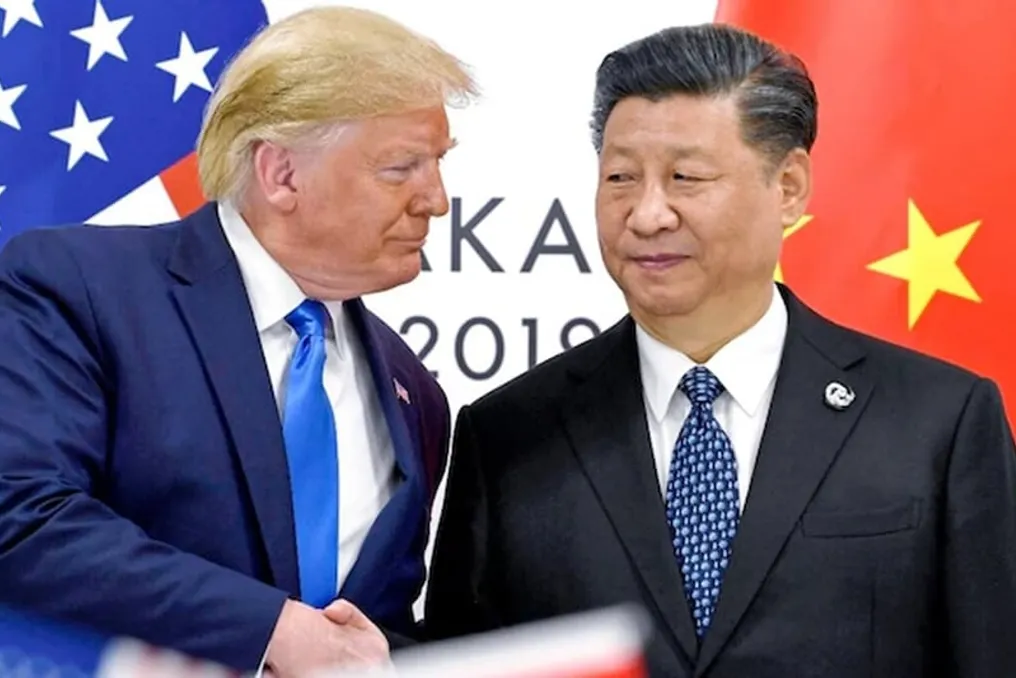
The conflict between the US and China in the semiconductor sector has intensified: America has banned the export of advanced artificial intelligence (AI) chips to five countries to prevent China from accessing them through foreign data centers. This move comes amid new regulatory pressure on NVIDIA, including reports of potential accounting issues from the US Securities and Exchange Commission (SEC).
Following the publication of these reports, Nvidia's shares dropped by 11.5% on November 20. According to the GREED & fear report from November 19, the export restrictions could halt investments in AI infrastructure across Southeast Asia while accelerating China's efforts toward semiconductor self-sufficiency.
The report warns that the technological rivalry between Washington and Beijing has entered a new phase as Washington tightens control over advanced AI chips, preventing Chinese companies from accessing American technologies via foreign cloud infrastructures.
According to GREED & fear on November 19, the US Bureau of Industry and Security (BIS) began requiring export licenses for AI chips to countries such as Malaysia, Thailand, Indonesia, Singapore, and Brazil, with exceptions only for qualified exports to American companies. These restrictions are capable of reshaping the global semiconductor supply chain and calling into question the sustainability of the AI investment boom.
The new measures aim to close potential loopholes in existing export regulations. Although Chinese companies face a ban on purchasing advanced American chips, they continue to obtain computing power through overseas data centers. GREED estimates that approximately 240,000 Nvidia chips were shipped to China after the restrictions were implemented in 2024.
The report also cites estimates from the Institute for Progress, which suggests that MegaSpeed in Singapore leases about 86,000 GPUs for Alibaba and other Chinese clients. These restrictions are introduced to prevent such indirect access.
Increased US control over semiconductor exports and foreign computing infrastructure could pose challenges for NVIDIA. GREED highlighted NVIDIA's significant financial involvement in the AI ecosystem, which includes $61 billion in equity investments, along with $164.5 billion in leasing guarantees and cloud capacity reserves. A reduction in AI infrastructure funding could affect smaller cloud providers heavily reliant on advanced chips.
The report states that the stock price of CoreWeave, an AI infrastructure company, has already fallen by 25% following news related to NVIDIA, and its bond yield has risen to 15.7%.
China is intensifying efforts to reduce dependence on American technologies by developing domestic capabilities in semiconductor design, manufacturing, equipment, and materials. Goldman Sachs Global Investment Research's semiconductor supply chain map identified Chinese companies operating in these segments. In chip design, domestic capabilities are demonstrated by companies such as HighSilicon, Cambricon, and Lungsun, while SMIC and Hua Hong are involved in semiconductor manufacturing. Among equipment suppliers are Nora and AMEC, and in the materials sector, NSIG and Zhonghuan Semiconductor.
It is projected that by 2025, the semiconductor equipment market in China will reach $49 billion, and the materials market will reach $16 billion, demonstrating the scale of domestic supply chain potential.