
According to the Garuda Purana: Why is it forbidden to leave the body of the deceased alone before burial?
Read more
Aaj Tak
www.aajtak.in

According to the Garuda Purana: Why is it forbidden to leave the body of the deceased alone before burial?

In Hinduism, birth and death are considered immutable truths of life. There is a belief that everyone born on this earth will eventually die. Many traditions related to human burial are observed in Hinduism. One such tradition is not to leave the body of the deceased alone. You have probably noticed that when someone dies at home, relatives sit near the body. Even at night, someone stays by it. But have you ever wondered why this is done? The Garuda Purana mentions certain religious beliefs related to this.

Why should the body not be left alone? According to religious beliefs, after death, the soul leaves the body, but its attachment to family and home does not disappear instantly. In common interpretations of the Garuda Purana, it is said that after death, the soul remains near its relatives and familiar places for some time. This is why it is considered necessary to respect and care for the body of the deceased before the funeral. It is believed that leaving the body alone can lead to its desecration or neglect. Therefore, a family member sits near it and cares for the body until the funeral. This is also seen as part of respecting and saying goodbye to the deceased.

Why do relatives stay near the body even at night? In Hindu traditions, if a person dies at night, the funeral is often held the next day. During this time, the body remains at home, and relatives stay near it. According to religious beliefs, leaving the body alone at night is undesirable. Therefore, a lamp is lit near it, and a family member sits there all night. This is done to maintain the safety and dignity of the deceased's body.

Why is a lamp lit near the body? There is also a tradition of lighting a lamp near the body before the funeral. In religious beliefs, the lamp is considered a symbol of light, purity, and positivity. It is believed that lighting the lamp maintains a calm and sacred environment. At the same time, relatives pray for the peace of the deceased's soul.

Why is it important to care for the body? Before the funeral, the body of the deceased must be kept clean and safe. If the body is left exposed or unprotected, insects or other creatures may harm it. Therefore, relatives sit nearby, taking care of it. This tradition also demonstrates the family's respect and responsibility towards the deceased person.

What does the Garuda Purana say?

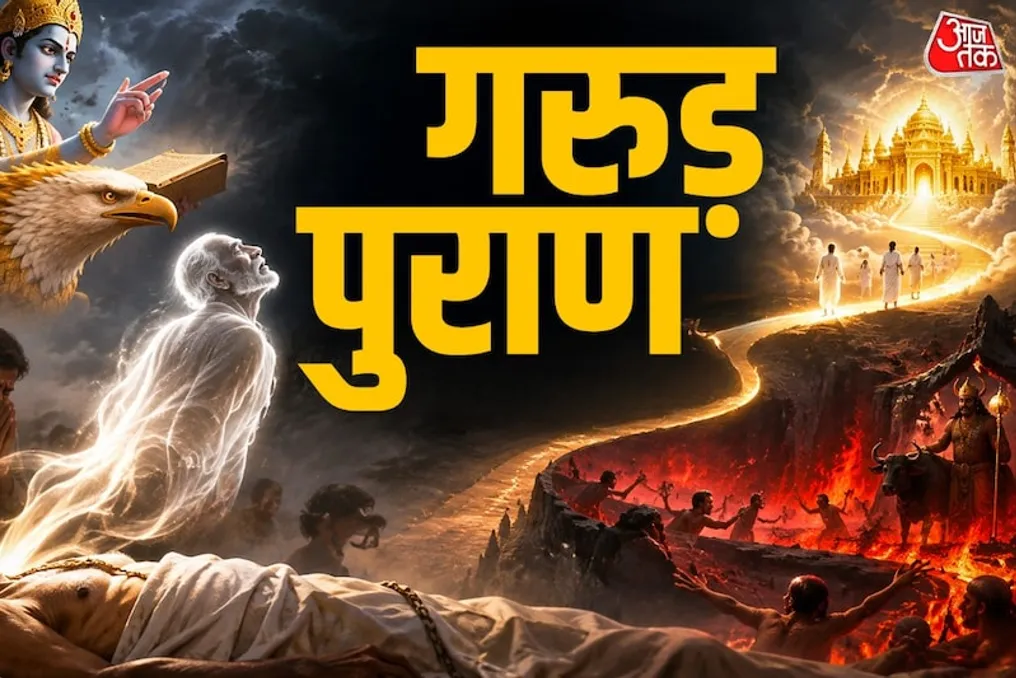
The Garuda Purana is one of the main puranas of Hinduism. It tells about a conversation between Lord Vishnu and the bird Garuda, touching upon themes of death, the soul, karma, and the afterlife. Special importance is given to rituals performed after death. According to religious beliefs, it is extremely important to conduct the funeral according to established rites to achieve peace and a state of grace for a person's soul after death. This is why the tradition of not leaving the body alone is observed. However, traditions related to this may vary in different places and families.
Similar stories

According to the Garuda Purana: Where does the soul go after death and when does it reach Yamaloka?
Read more
www.aajtak.in

According to the Garuda Purana: Where does the soul go after death and when does it reach Yamaloka?

When the human body ceases to exist, the question arises about the fate of the soul: does it immediately go to Yamaloka after leaving the body, or does it remain near home and family for some time? Can it see its loved ones and experience hunger or thirst? These questions always arouse strong curiosity in people.

The Garuda Purana, one of the most important texts of Hinduism, provides answers to these questions through a dialogue between Lord Vishnu and Garuda. It examines themes of death, the soul, sins, and merits, as well as the afterlife. According to religious beliefs, after death, the soul begins a new journey where the good and bad deeds of the person are decisive.

The Garuda Purana illuminates various aspects of life and death. According to the teaching, the influence of a person's actions persists not only during life but also after its end. It is believed that a person reaps the fruits of their past actions, whether good or negative.

This scripture details the process of the soul separating from the body during death and the nature of its subsequent path. It also explains the significance of religious rites such as Sharaddha, Tarpan, and Pindadana, as well as the concept of Yamaloka.

What happens to the soul at the moment of death?

According to the Garuda Purana, when a person dies, their soul leaves the body. During this period, Yamadakshas are mentioned, described in a terrifying manner; they hold a noose and a staff. According to religious beliefs, the consequences of life's actions affect even after death. People who have committed sins may experience fear and suffering at the moment of death. After this, the soul proceeds on a further journey according to its deeds.

The Garuda Purana also contains a description of the subtle body. It is believed that the soul's journey does not cease even after the physical body is destroyed, as it continues to move under the influence of accumulated karma.

Does the soul return home after death?

The question of whether the deceased's soul remains in the house for some time is often asked. According to beliefs associated with the Garuda Purana, after death, the soul may retain an attachment to its home and family. It is said that the soul is capable of seeing its family members but cannot communicate with them due to the absence of a body. There is also a belief that it feels sorrow from being separated from relatives and loved ones.

This is why various rituals are performed in Hinduism after death. However, there are different religious opinions regarding how long the soul stays in the house, and this should be considered purely as a religious belief.

What does the soul receive from Pindadana?

In Hinduism, there is a tradition of performing Pindadana and Tarpan after a person's death, and the Garuda Purana emphasizes their importance. According to religious beliefs, during Pindadana, food is offered on behalf of the deceased. It is believed that this helps the soul on its further journey and brings it peace. Therefore, family members perform Pindadana, Tarpan, and other religious rites on specified days after death.

Why are special rituals held on the tenth, eleventh, and twelfth day?

In Hinduism, special worships and rituals are conducted after death on the tenth, eleventh, and twelfth days. The Garuda Purana also mentions Pindadana and other rites performed on these days. According to religious beliefs, the Pindadana performed on these days completes the process of forming the deceased's subtle body. It is believed that this facilitates the soul's further journey, after which representations of its path to Yamaloka follow.

What does the journey to Yamaloka look like?

The Garuda Purana describes the journey to Yamaloka as very difficult. Especially the journey of people who have committed evil deeds is depicted as full of suffering. Various difficulties and complex circumstances are mentioned during this journey. This journey also mentions the river Vaitarani, which is depicted as a terrible stage in religious texts. According to beliefs, the soul goes through various trials depending on its actions. Ultimately, it reaches the kingdom of Dharmaraja, where it is destined to reap the fruits of its deeds.

Can the soul see family after death?

According to the Garuda Purana, the soul's attachment to family and past life does not disappear instantly after death. It can feel attached to its home, loved ones, and things associated with its entire life. It is said that after the soul leaves the body, it can see its relatives but cannot establish contact with them. Because of this, it experiences anxiety and sadness.

Due to these beliefs, rituals such as Sharaddha, Tarpan, and Pindadana are performed in Hinduism after burial. It is believed that this brings peace to the soul of the deceased and eases its further journey.

Does the soul experience hunger and thirst after death?

The Garuda Purana also mentions that the soul experiences hunger and thirst after death.

During the festival of Bhai Dooj, worship is offered to the god Chitragupta, who keeps account of karma
Read more
www.aajtak.in

During the festival of Bhai Dooj, worship is offered to the god Chitragupta, who keeps account of karma

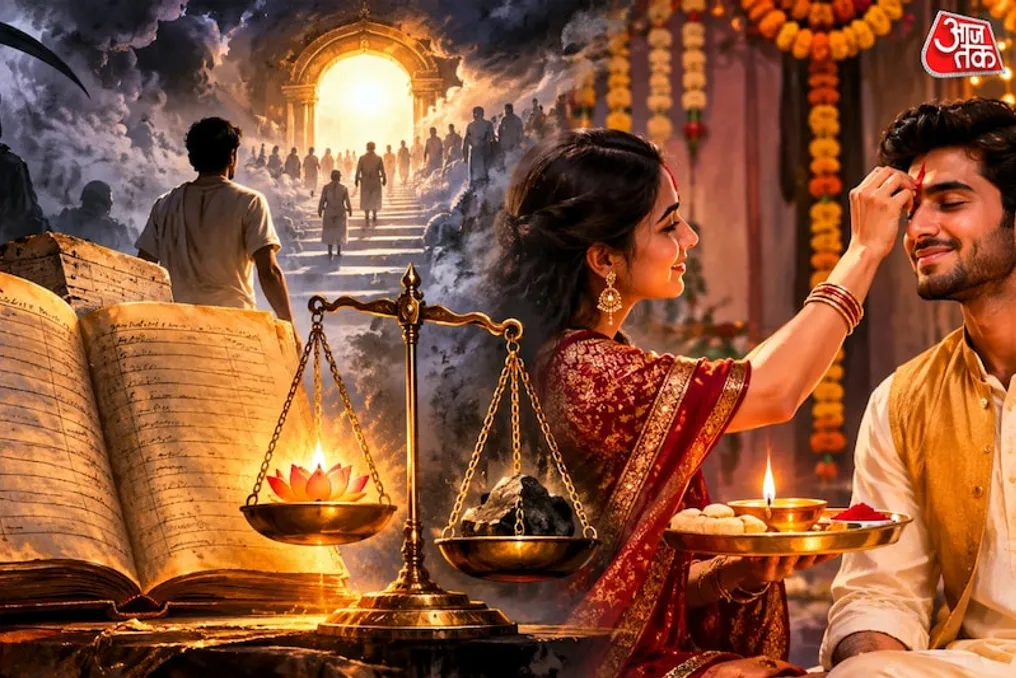
In Hinduism, the festival of Bhai Dooj is revered as a symbol of love between brothers and sisters. On this day, sisters place a tilak on their brothers' foreheads, wishing them longevity and well-being. However, it is known that Bhai Dooj is associated not only with familial bonds but also with the god of death Yamaraja and his registrar, the god Chitragupta. According to religious beliefs, Chitragupta keeps a complete record of a person's good and bad deeds, which is why he is also given special significance on this day.

Bhai Dooj 2026:

The god Chitragupta is considered the registrar of Yamaraja. His function is to record all good and bad actions of people. There is a belief that everything a person does in life is recorded by Chitragupta. According to religious traditions, after death, the soul of the living reaches Yamaloka, where its deeds are counted. It is based on this that a person's destiny and next life are determined. The god Chitragupta is depicted with a feather, an inkwell, and an account book, with which he keeps track of every person's actions.

According to mythological history, once Yamaraja approached the god Brahma asking for an assistant to keep track of people's deeds and make corresponding records. After this, Brahma immersed himself in meditation. It is said that after long meditation, a divine man emerged from his body. Since he was born from Brahma's body, he was named Chitragupta. Brahma entrusted him with the duty of keeping track of people's actions, and since then he has been revered as the registrar of Yamaraja.

There is a tradition of worshipping the god Chitragupta on the day of Bhai Dooj. This holds particular significance in the Kayastha community. On this day, people worship the pen, inkwell, account books, and all items related to writing. It is believed that worshipping the god Chitragupta on this day brings blessings of wisdom, knowledge, and success in endeavors. In many places, people also start their important tasks using a new pen.

Popular