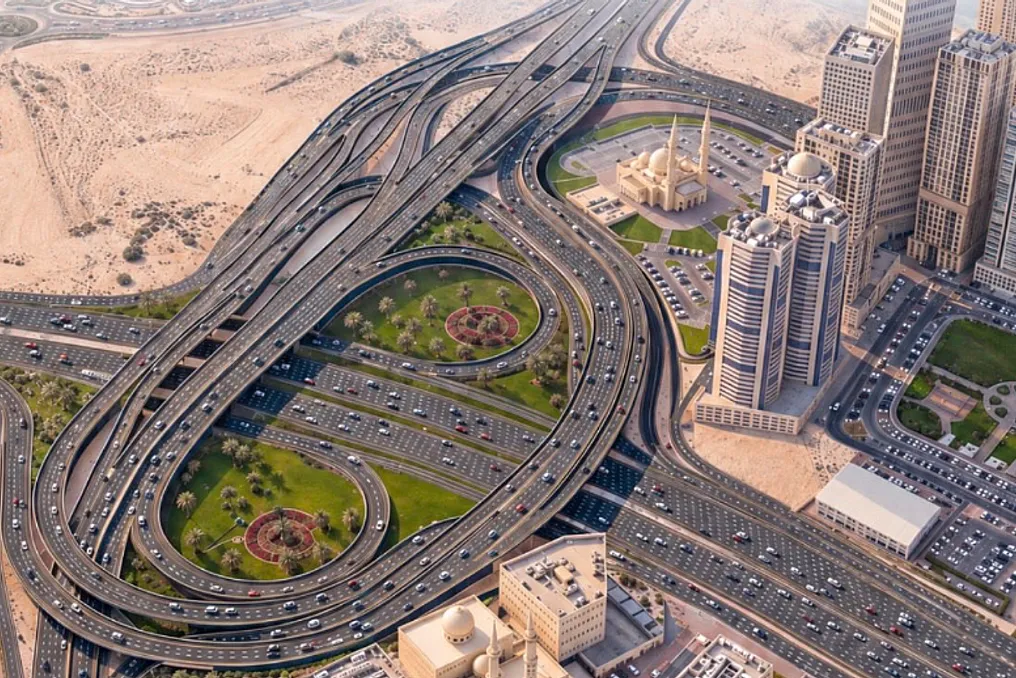
UAE Ministry of Energy and Infrastructure to Modernize Al Ittihad Road to Reduce Travel Time
Read more
Khaleej Times
www.khaleejtimes.com

UAE Ministry of Energy and Infrastructure to Modernize Al Ittihad Road to Reduce Travel Time

The Ministry of Energy and Infrastructure of the United Arab Emirates has announced plans to reconstruct the Al Ittihad Road (E11) at the intersection of Al Nahda. This road is a vital transport corridor connecting Dubai and Sharjah, and the modernization aims to significantly ease traffic conditions for drivers.

As part of this project, eight new bridges with a total length of four kilometers will be built, and the construction of 4.5 km of service roads in this area is also planned. These improvements will increase the daily capacity of the Al Ittihad Road from 100,000 to 190,000 vehicles, representing an increase of 90 percent.

The capacity of the Al Nahda intersection itself will also rise from 188,000 to 310,000 vehicles per day, an increase of approximately 65 percent. The Ministry stated that thanks to these changes, drivers can expect a 79 percent improvement, and travel time on main routes will be reduced from fifteen minutes to just three minutes.

The goal of the Al Ittihad Road project is to optimize movement between Sharjah and Dubai. Furthermore, the ministry noted that this will contribute to raising road safety standards, improving intersection efficiency, and supporting sustainable development.

These improvements represent the first phase of work for the development and modernization of the Al Ittihad Road project. A tender for this phase (number 2026-025, Category A) is currently open. The UAE Ministry has called on potential participants with experience in implementing high-capacity highway projects with heavy traffic within the geographical area of the project to submit applications by the deadline of January 5, 2027.

Previously, in September, a new lane was added to Al Ittihad Road at the Al Kiada intersection. This improved traffic flow towards Abu Hail and Salah Al Din streets. The Dubai Roads and Transport Authority (RTA) predicts that during peak hours, waiting time at this intersection may decrease by up to 15 percent. Additionally, the authority has added new parking spaces along Abu Hail Street.
Similar stories

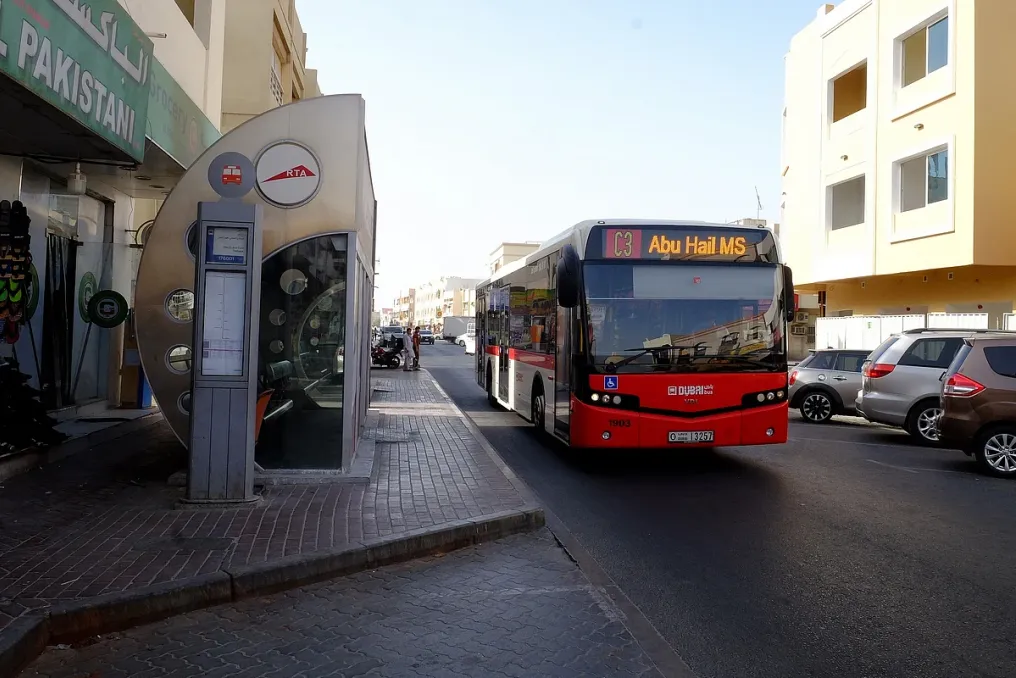
Dubai Transport Authority updates bus routes in seven districts and offers alternatives
Read more
www.khaleejtimes.com

Dubai Transport Authority updates bus routes in seven districts and offers alternatives

The Dubai Roads and Transport Authority (RTA) has announced changes to several bus routes across the emirate. These updated routes will take effect on November 20th.

The changes include extending existing routes, making adjustments, and introducing alternative connections to improve the connectivity of the transport network and service key areas. Passengers have been advised to check the current routes and revised schedules via the S'hail application before traveling.

The following changes have been made:

  • Jebel Ali/JAFZA: The section serving the Life Pharmacy bus stop on the waterfront has been cancelled; Route 99 is suggested as a replacement.
  • Al Wasl/Al Quoz F29: The route section between Al Quoz Bus Station and Equiti Metro Stop via Al Wasl Road will be cancelled. Instead, passengers can use Routes 93 and F29. This route connects to Equiti Metro Stop via Al Manara Street, First Al Khail Street, and Fourth Street.
  • Al Ghubaiba/al Faqa: The route will be extended to serve the Khalifa Bin Saeed Al Maktoum Mosque in both directions.
  • Dubai Hatta Road/Lehbab: Stops have been added along Dubai Hatta Road to allow transfers to Route E16.
  • Al Quoz Industrial Area: The route will be diverted to use Sheikh Zayed Service Road instead of First Al Khail Street when traveling from the Garmin bus station.
  • Dubai World Central: The route will be extended to serve Dubai World Central facilities and Freight House.
  • Cherrywoods: RTA has extended the bus route to serve the Cherrywoods area.

Dubai provides public bus services using a large fleet of 1518 buses. This system helps residents move around the city, connecting metro stations and transporting passengers to other emirates. The network covers 82 percent of Dubai's urban areas and transports approximately 369,248 passengers daily.

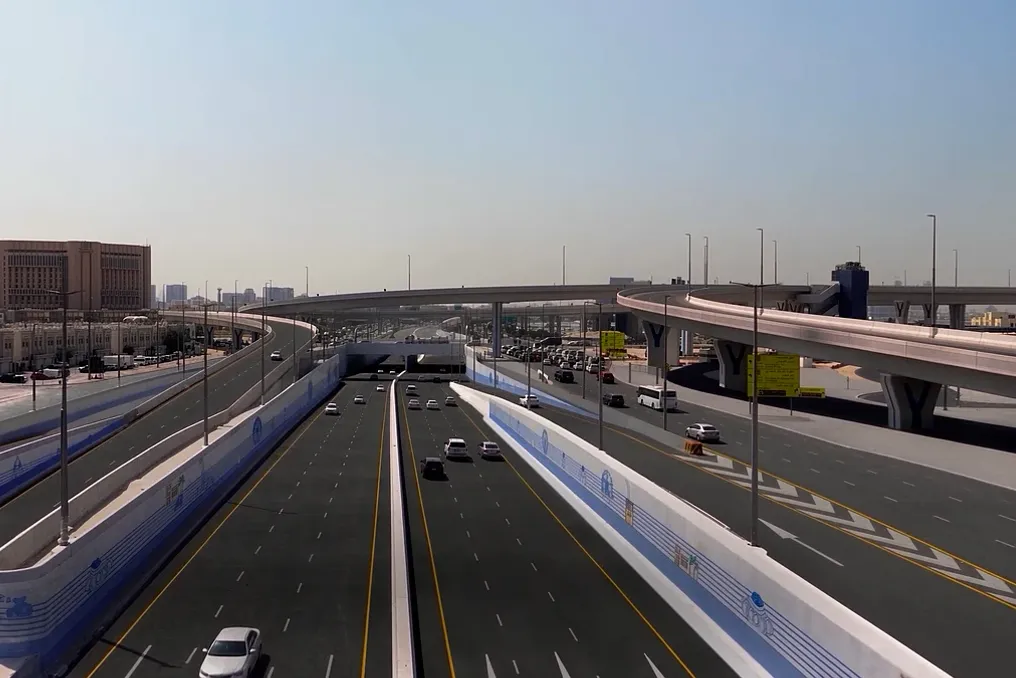
Dubai opens 1.65 km tunnel connecting Infinity Bridge to Deira, capable of handling 12,000 vehicles per hour
Read more
www.khaleejtimes.com

Dubai opens 1.65 km tunnel connecting Infinity Bridge to Deira, capable of handling 12,000 vehicles per hour

A new 1.65-kilometer tunnel with three lanes in each direction has been opened in Dubai, allowing motorists to travel between the Infinity Bridge and Deira. This route can now accommodate up to 12,000 vehicles per hour.

The Roads and Transport Authority (RTA) of Dubai commissioned the tunnel on Al Khaleej Street (Al Khaleej Street Tunnel) on Sunday. It ensures seamless connectivity between the end of the Infinity Bridge exit and the intersection of Al Khaleej and Al Wajid streets.

The opening of the tunnel is expected to improve access to the Deira, Al Mamzar, and neighboring residential areas, including Abu Hail and Al Wajid, as well as to landmarks such as The Palm Jumeirah, Waterfront Market, and Al Hamriya Port.

This opening is part of the larger Al Shindagha Corridor Improvement Project. The goal of this project is to reduce travel time on a key road section spanning 13 kilometers. According to RTA forecasts, after the entire project is completed, travel time along this corridor is expected to decrease from 1 hour and 44 minutes to 16 minutes by 2030.

Matar Al Tayer, CEO and Chairman of the Board of Directors of RTA Executive Directors, noted that the tunnel will enhance connectivity between residential zones, commercial centers, and tourist destinations in Deira, which continues to develop both residentially and commercially.

The works also include replacing roundabouts on Cairo Street and Al Wajid Street with traffic-controlled intersections. This improves traffic flow on Cairo Street and connects the Infinity Bridge exit to The Palm Jumeirah via the new tunnel towards Al Mamzar.

The wider 13 km corridor runs along Sheikh Rashid Road, Al Mina Street, Al Khaleej Street, and Cairo Street. It involves the development of 15 intersections and is designed to serve approximately one million people.

As part of the corridor improvement, RTA is also constructing a 1425-meter bridge across Dubai Creek, which will be located between the Infinity Bridge and the Rashid Port redevelopment area. This bridge will have four lanes in each direction and a total capacity of about 16,000 vehicles per hour. It will be situated 18.5 meters above the creek, with a 75-meter wide shipping channel passing beneath it.

Plans also include establishing a dedicated pedestrian and cycling path equipped with two elevators for access to the route, as well as constructing about 2 km of connecting roads on the Palm Jumeirah and Bur Dubai side.

Meanwhile, the newly opened tunnel features a large mosaic fresco depicting the Dubai cityscape, including landmarks such as the Infinity Bridge. This artwork was created by Emirati artist Mariam Al Khatbor and utilizes 36 million mosaic elements.

RTA reported that about 77 percent of the material extracted during construction, equivalent to approximately 522,000 cubic meters, was reused in projects implemented by the authority and other entities. The construction required the participation of 2,200 engineers, technicians, and workers, as well as 350 units of equipment and machinery. According to RTA, the project recorded nearly 11 million man-hours without any registered injuries.

Popular