Over 500 minors remain homeless on the streets of Ceuta nearly four months after mass migrant influx
Read more
Noticias ao Minuto
noticiasaominuto.com

Over 500 minors remain homeless on the streets of Ceuta nearly four months after mass migrant influx

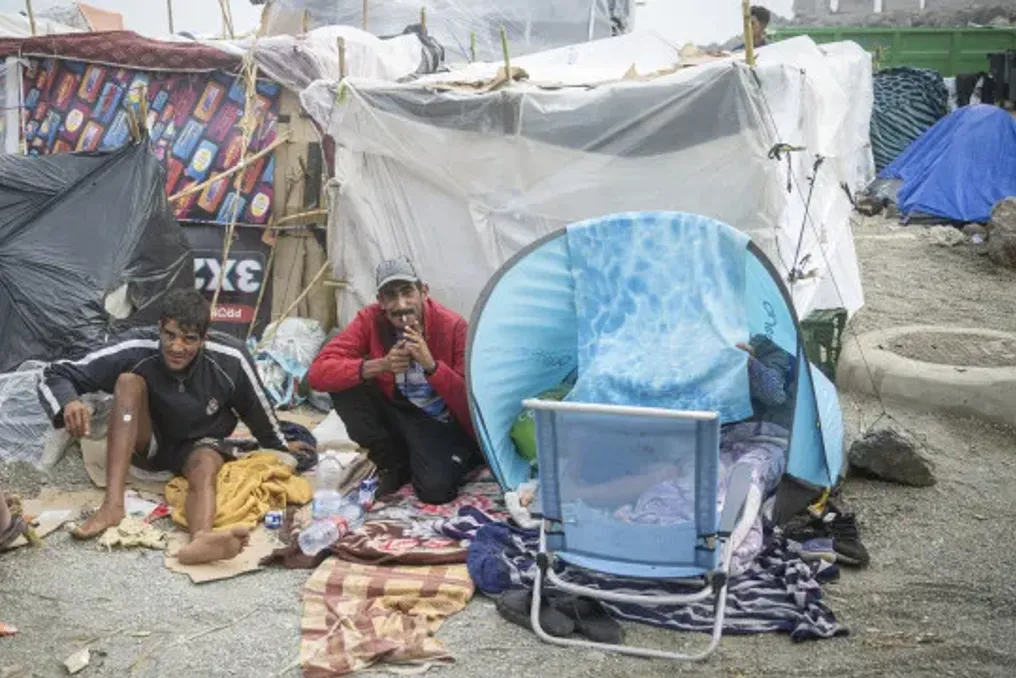
More than five hundred minors continue to live on the streets in the Principe area of Ceuta, despite almost four months having passed since tens of thousands of people arrived in the city, according to the residents' association.

Ahmed Enfedal, president of the Principe Residents' Association, told Lusa in Ceuta that the situation in his neighborhood remains virtually unchanged. He noted that in the city, which is a Spanish enclave in North Africa with a population of 83,500, there are still many people on the streets.

The Principe area, located on the slope near the Moroccan border, became the zone of the greatest direct impact of the summer event when over 90,000 people illegally crossed the border at the end of July, according to security service estimates. This area, classified as one of the poorest and most vulnerable in Spain, faced serious problems.

Enfedal described observing a 'river of people rising up,' as 80% of those who arrived crossed through Principe. After almost four months, a large number of people still remain in the area, which suffers from obvious social and infrastructural deficiencies.

He emphasized that among them are mainly 'many minors who are not yet in reception centers and are living on the streets.' According to the association, there are 'definitely more than 500' such children. The association keeps track of these individuals and passes information to authorities and non-governmental organizations (NGOs).

Most of them are 'boys aged 16 to 17' who wander the streets, asking for food and clothes in homes, and sleep on the street, a situation Enfedal considers unacceptable and incomprehensible.

Authorities claim that reception centers are overcrowded and have no additional capacity. According to their data, 3,767 unaccompanied minors are housed in special facilities for children and adolescents of the city's autonomous government, and another 532 are in temporary camps originally intended only for adults. Enfedal objected to this, stating that camps are being created everywhere, and that children could be placed where the camp is currently being dismantled at the port after thousands of adults return to Morocco.

He added that 'they don't care or they don't want to. It has no explanation, especially because child protection rights are being violated.' Under Spanish law, foreign minors arriving in Spain without accompaniment are under the guardianship of regional governments, which the central government (currently led by socialists) has repeatedly stressed in connection with this situation in Ceuta.

The president of the Principe Residents' Association noted the lack of response regarding boys aged 17, who will soon turn 18 and may be 'considered adults,' leading to repatriation and deportation processes.

A significant part of the Principe area slope offers a picturesque view of Morocco, the sea, and an eight-kilometer fence along the land border between the Spanish city and the North African country.

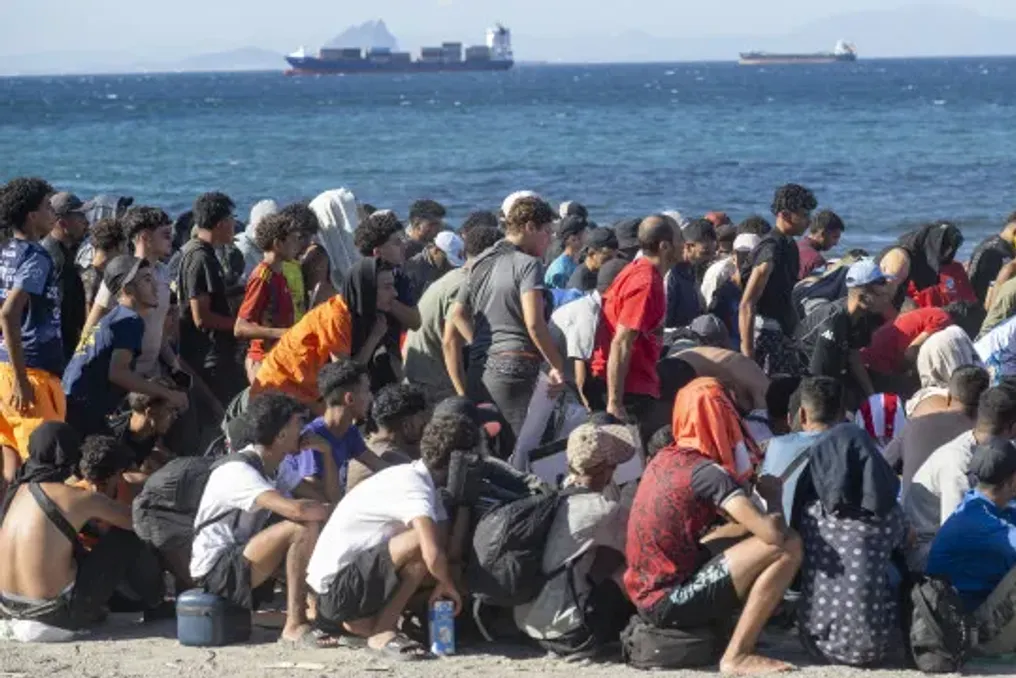
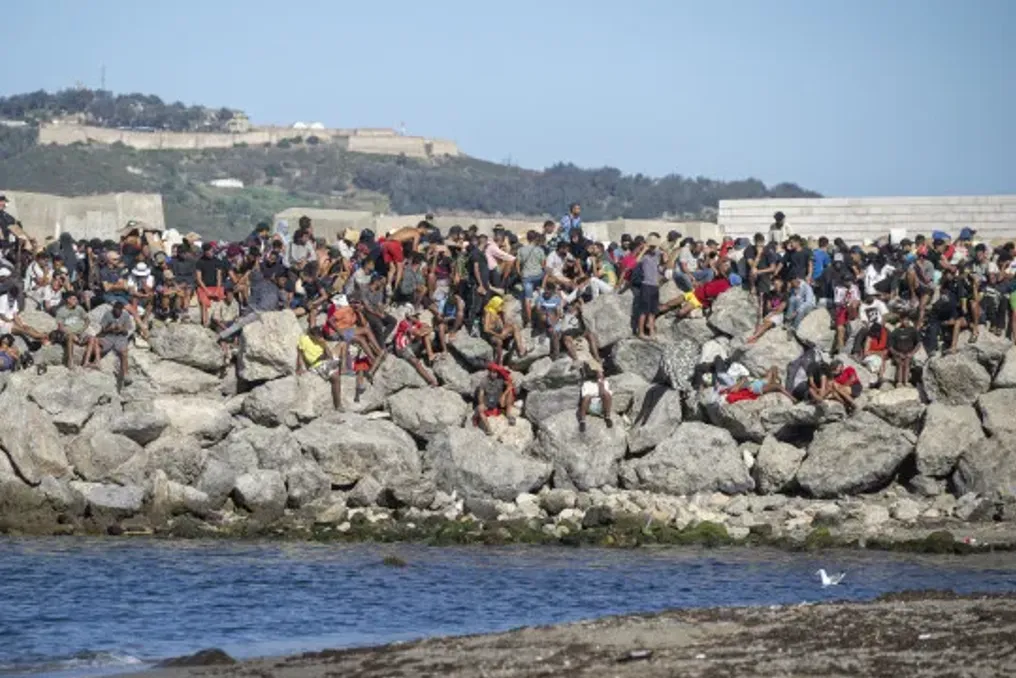
On July 30 and 31, tens of thousands of people who illegally entered Ceuta did so through the Tarrahal border crossing at the foot of Principe, with most crossing the border by swimming, bypassing a pontoon located near Spanish police posts.

When the 'flow of people rising up Principe' began, members of the residents' association started helping the arrivals, cleaning them of sand, and bringing first aid kits for the wounded, Enfedal recounted. He added that they saw girls aged 13, 14, and 15 climbing with a group and began accepting them into the association. There were many of them.

The association contacted elderly residents of the area to ask them to take in several girls, and in the following days decided to conduct a census of minors filling the streets of Principe—they registered more than 4,800 people in 48 hours. Enfedal explained that they needed an approximate figure of children in Ceuta, as institutions initially claimed the number was between 500 and 1,000, which shocked them because they saw far more.

Due to the slow institutional response, the association, which has an annual budget of 1,800 euros, organized a temporary camp to house minors and some women. Enfedal reported that the camp started with 100 euros collected from five people at 20 euros each to buy tarpaulin. They then asked for mats in local mosques, and when this was reported in the television media, NGOs, associations, and private individuals began bringing clothes, blankets, and food.

The camp eventually accommodated 350 girls and 180 women over 47 days until all of them were transferred to official reception centers. Enfedal, citing the area itself—which is heavily stigmatized, characterized by high levels of poverty, unemployment, and drug problems among its 12,000 inhabitants, over 99% of whom are Muslim—believes that 'the border cannot be a problem' and can be both safe and compassionate.

He stated that 'the problem lies in managing this border. What should not be done is to delegate control of the border to a third country. There should be a Frontex border agency here, there should be more patrols, and one must not impede the arrival of people seeking asylum, as they are vulnerable people. I think that if everything is done correctly, we can have an orderly border, as the far-right side says, but also a safe and compassionate one.' Enfedal emphasized that the camp was created 'to try to protect minors and so that the area would not be further stigmatized,' after 'the city cleaned the center in the first days and expelled everyone [who entered illegally] to the periphery, mainly to Principe.'
Similar stories

Trampolim Beach in Ceuta has become a waiting area for dozens of migrants
Read more
noticiasaominuto.com

Trampolim Beach in Ceuta has become a waiting area for dozens of migrants

Trampolim Beach in Ceuta served as a temporary stay for numerous migrants. Kadi, Asita, and Marwan entered Ceuta in July. Despite days spent without food and sleeping on the streets, they do not regret their choice and maintain hope for the possibility of working or studying in Spain.

Kadi from Senegal, 27 years old, Asita from Malaysia, 28 years old, and Marwan from Morocco, 17 years old, are part of more than 90,000 people who illegally entered Ceuta on July 30th. Ceuta is a Spanish enclave in North Africa, bordering Morocco.

According to the Spanish Civil Guard, since then, over 88,000 people have returned to the Moroccan side of the border, either voluntarily or after deportations.

According to the Spanish government, at least 3,500 adults and over 4,000 unaccompanied minors remain in the city, housed in temporary reception centers such as camps. Adults await decisions on their asylum applications, while minors, according to Spanish law and international treaties, cannot be repatriated without an individual assessment that guarantees, among other things, their handover to families in countries of origin and the provision of certain socio-economic conditions.

Moroccan adults initially do not have the right to asylum, except for LGBTQI individuals and others who can prove they are victims of abuse, as Morocco is classified by the European Union as a 'safe country of origin', unlike sub-Saharan African countries. Kadi, Asita, and Marwan fit the profile of migrants in Ceuta who may be eligible for residence permits in Spain.

Trampolim Beach was covered by international television channels for over two months as it became an improvised camp for thousands of people who illegally entered Ceuta. Among them were Kadi and Asita. Today, this beach, already cleared of tents and trash, is a place where the two friends and dozens of other sub-Saharan migrants spend evenings waiting for answers to their asylum applications. A similar scene is observed on other beaches and promenades in the city.

Sitting at one end of Trampolim Beach, Kadi and Asita showed Lusa where they slept for a week before being taken to a nearby temporary foreign reception center. Asita said: 'It was a week on the street; NGOs gave us food, but there were two days when we ate nothing, only biscuits.' Kadi shared: 'We are waiting for documents and good news. We are asking for international protection. We wanted to get to Europe, and here we are. I don't know if I am better now than I was in Morocco. But I believe I will be better; this is an opportunity.'

Kadi had been in Morocco since 2019 and worked in a cafe in Tangier. Asita also lived in Tangier for five years and worked in agriculture, picking fruit. They left their home countries being poor and facing conflicts to reach Morocco, where, they say, they had nothing—they worked 'without contracts and sometimes didn't even get paid.'

They were told that they could cross the border into Ceuta at the end of July, and they joined this flow, but no further details are provided. Both dream of going to work in Bilbao, a city they saw online and liked. Currently, they have no contacts with local residents in Ceuta: 'Not a word with the Spaniards,' says Kadi.

At the other end of the city, near the entrance to the minor reception center located in an industrial zone warehouse in Tarajal, Marwan, 'from a village near Marrakech,' explained to Lusa, that he slept on the street for two weeks and 'there were days' when he didn't eat after entering Ceuta. When he got to the children's center, he underwent a bone medical examination to determine his age. He is 17 years old and hopes his name will soon be 'on the list for travel to Spain' before reaching adulthood. He stated that he does not want to return to Morocco. 'I want to study computer science, artificial intelligence,' he said. Like other teenagers around him, he learned about arriving in Ceuta through the social network Instagram, knowing how and when to enter the city.

Following an increase in human and logistical resources, the review of asylum applications in Ceuta has recently become faster, in 'less than two weeks,' although the results are mostly negative, especially for Moroccans, reported Lusa immigration lawyer Africa Monsalve. Africa Monsalve has been part of the assigned lawyers group since September working in the city's migrant registration centers and reported that new asylum requests have 'decreased from 20 to five lawyers, maximum.'

Despite thousands of people leaving Ceuta voluntarily or not, the lawyer notes that 'many people still remain and have not applied for asylum.' Some of them are in camps but have not started the registration process. Others probably have not done so due to fear, fearing that everything will end in 15 days. Africa Monsalve's colleague, lawyer Alma Ruiz, noted that many people have left, but the population of Ceuta will grow by at least 4,000 people, whom she believes can remain in the city in some way.

Seuta residents still feel the effects of the migration crisis months after the mass influx of people
Read more
noticiasaominuto.com

Seuta residents still feel the effects of the migration crisis months after the mass influx of people

Residents of Seuta note that the city is far from normal after tens of thousands of people entered in July, which shocked the local population.

Lawyer and political analyst Alma Ruiz told Lusa that although normal life has returned to most areas thanks to the departure of some illegally entered individuals, an emotional trace remains, and many fear going outside due to a sense of danger.

For this lawyer from Seuta, 'the news does not help,' and among the population there is a feeling that the city is in a state of 'security crisis.' This happens despite the fact that most crimes registered after July 30 were committed by people who illegally arrived in this Spanish enclave in North Africa from Morocco, as well as cases of resistance and attacks on authorities.

Ruiz emphasized that crime against the residents of Seuta was minor. According to official data, more than 90,000 people illegally entered Seuta on July 30. In this Spanish enclave in North Africa, bordering Morocco, about 83,500 residents live, and according to Alma Ruiz, 'the population was in shock in the first days.'

She described this state as a feeling of 'before and after, like a tsunami, how everything changed in a second, like something uncontrollable' during a conversation with Lusa.

Nearly four months later, after 'anger' gave way to 'frustration' among part of the population, and the call for legislative elections in Spain on November 29 distracted and dispersed attention, according to Alma Ruiz, the city has become calmer but is in a state of a kind of 'post-traumatic stress' and dealing with the 'social rift' that exposed this crisis.

There used to be a certain 'status quo' that allowed various communities to coexist in some peace, referring to each other as Spaniards. However, Muslim families in Seuta, who have been Spaniards for decades or always have been, are now required to present identification, she explained.

Alma Ruiz noted that 'there were moderate people who radicalized,' and the far-right is trying to use Seuta as a laboratory for spreading anti-immigration narratives. She recalls 'very difficult days' in the first weeks when people criticized those who fed children on the streets or tried to boycott the work of non-governmental organizations (NGOs).

'There is a lack of cross-cultural dialogue, which is broken,' she summarized.

Seuta positions itself as a city of four cultures, and various assessments show that 45% of the population are Catholics, 45% are Muslims, as well as historically significant communities of Hindus and Jews. The president of the Principe neighborhood association, where 99% of the population are Muslims and educated 'native residents,' insisted that they were never Moroccans, concluding: 'There are four cultures here; we have always respected each other, but we have never lived together.'

For Ahmed Efenal, it is clear that this crisis 'stripped away the masks from some people' who previously claimed that everyone was part of one city, but now accuse communities and groups of being 'invaders.' He also told Lusa that 'it is only 2000 or 2500 fools, it is not the whole city,' defending those who, for example, dehumanize migrants, including minors, calling them 'invaders.'

Dr. Kuman Nanwani from the Hindu community believes that Seuta is a 'city of four cultures, and that does not mean division,' but the events of this summer sowed 'seeds of division' threatening coexistence. She assured Lusa that there have always been disputes or misunderstandings between residents, as everywhere, but 'we never looked at the other as a Muslim or Christian; it was a misunderstanding between neighbors.'

Kuman Nanwani is one of the founders of the 'Women of Cavalas' association (so called those born in Seuta). On October 25, they mobilized 30,000 people in Madrid to demand an 'impenetrable border' with European control measures, as well as 'new immigration laws' to respond to situations like the one experienced by the enclave, which does not exclude 'invasion.'

The protest was led by the president of the regional government, Juan Jesús Vivás from the Popular Party (PP, Spain's main opposition force), but Kuman Nanwani insists that the movement is completely apolitical, uniting women of different professions and from different communities, and carries a message of unity, a 'call for calm and agreement.'

'Nothing has ever happened between us; we will not let it happen now,' she stressed.

To date, one week before the national legislative elections, the movement has scheduled a new demonstration in Seuta, a procession that will end in front of the Spanish government delegation in the King's Square in the city center. Most windows and balconies are decorated with the flags of Spain and Seuta, which retains the Portuguese coat of arms against a black and white pattern identical to the flag of Lisbon. Flags are absent in the Tarajal industrial zone, on the slope of the Principe neighborhood, and a few meters from the border crossing with Morocco. Some warehouses have been closed and semi-abandoned since the closure of the border with Morocco during the COVID-19 pandemic, which stopped trade between the two sides. Other warehouses have been turned into reception centers for minors, and some house shops and workshops, almost all in the hands of members of the Muslim community. At the Nicerin women's clothing and accessories store, business today brings 'less than half' of what it did in July. The Tarajal industrial zone was one of the first places where people illegally entered Seuta on July 30, and the Nicerin store was closed for two weeks. After reopening, it still has improvised tents at the entrance, where thousands of people, including adults and children, slept, similar to what happened on beaches and other peripheral areas of the city. 'Only Muslim customers have returned; Christians do not come,' reported Nicerin. Migrating minors continue to move through the streets of the industrial zone, housed in warehouses that 'scream all day' and where 'fights occur between them,' according to Sara, who works in the same store, whose children 'are pitiful.' 'But it has affected all residents of Seuta, one way or another,' she admitted.

Popular