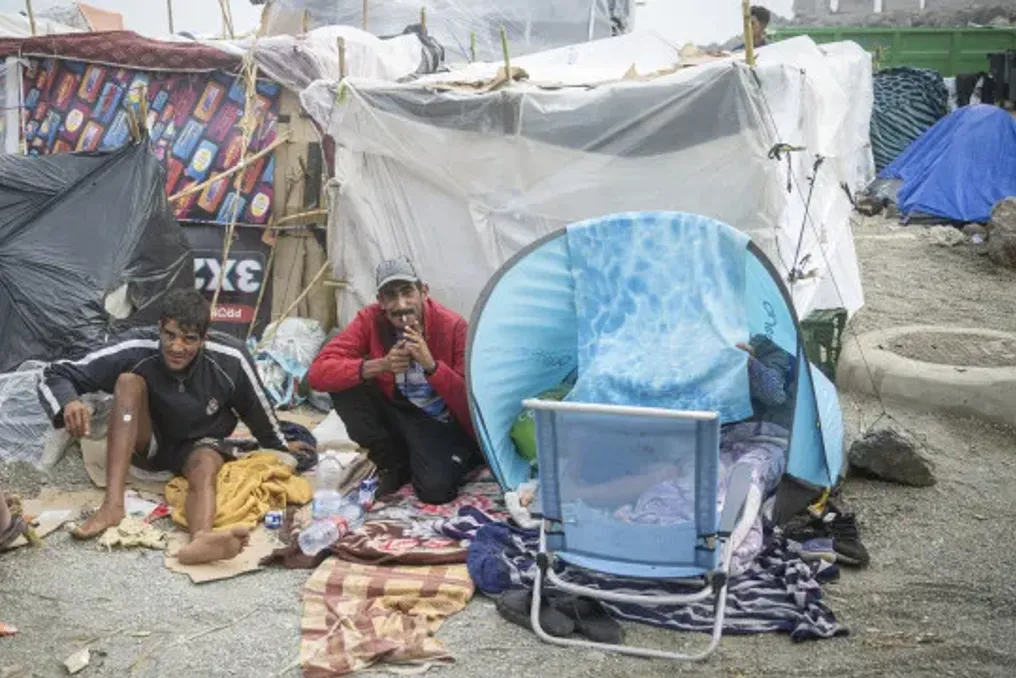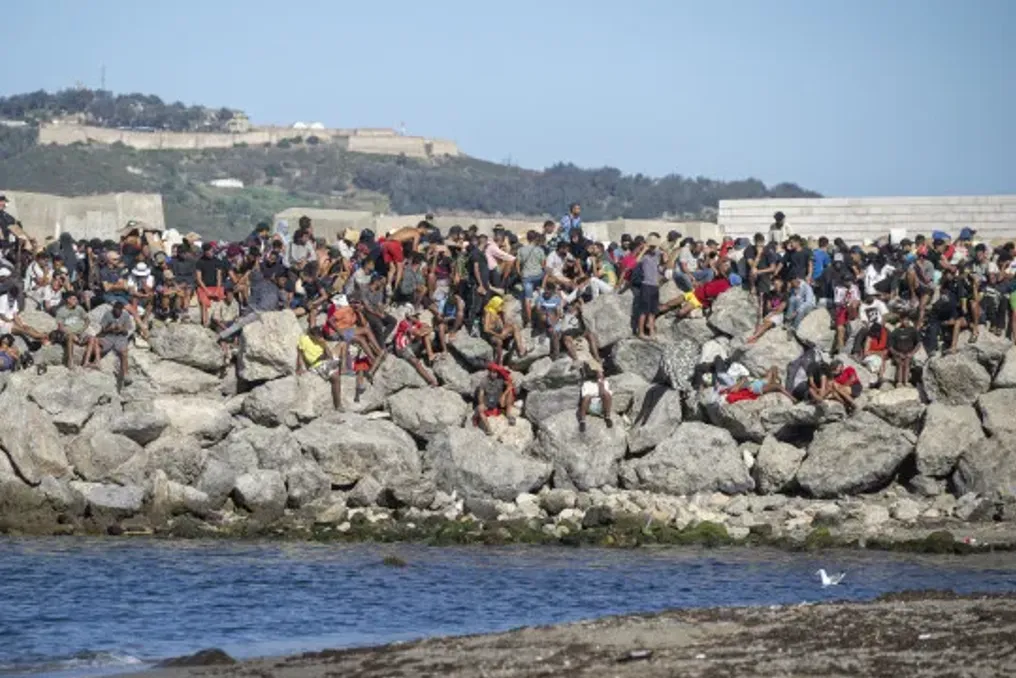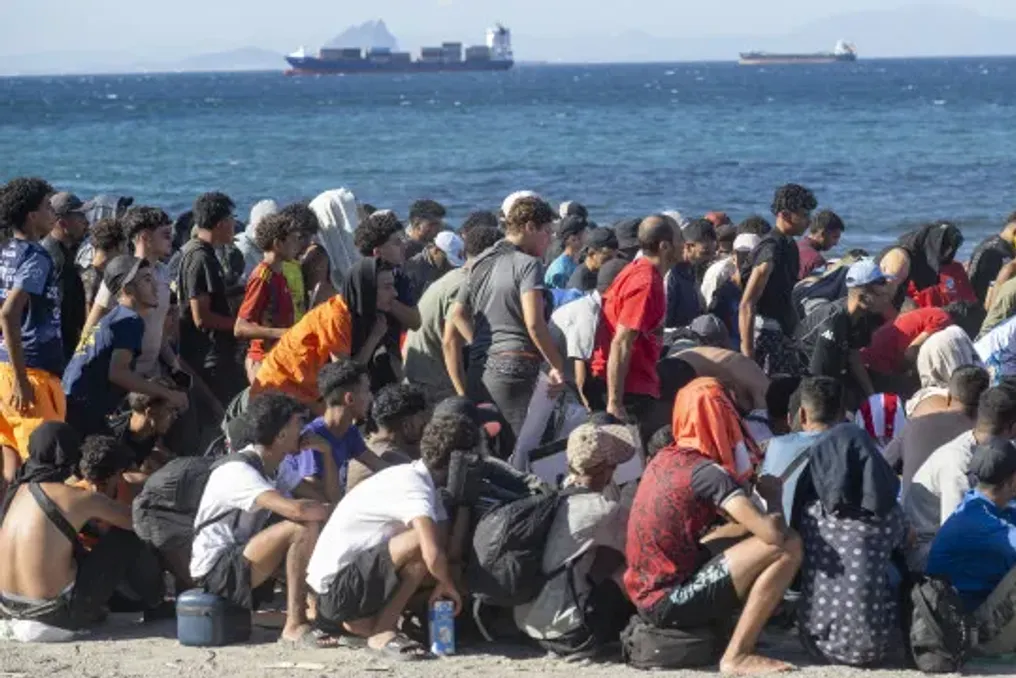
Trampolim Beach in Ceuta served as a temporary stay for numerous migrants. Kadi, Asita, and Marwan entered Ceuta in July. Despite days spent without food and sleeping on the streets, they do not regret their choice and maintain hope for the possibility of working or studying in Spain.
Kadi from Senegal, 27 years old, Asita from Malaysia, 28 years old, and Marwan from Morocco, 17 years old, are part of more than 90,000 people who illegally entered Ceuta on July 30th. Ceuta is a Spanish enclave in North Africa, bordering Morocco.
According to the Spanish Civil Guard, since then, over 88,000 people have returned to the Moroccan side of the border, either voluntarily or after deportations.
According to the Spanish government, at least 3,500 adults and over 4,000 unaccompanied minors remain in the city, housed in temporary reception centers such as camps. Adults await decisions on their asylum applications, while minors, according to Spanish law and international treaties, cannot be repatriated without an individual assessment that guarantees, among other things, their handover to families in countries of origin and the provision of certain socio-economic conditions.
Moroccan adults initially do not have the right to asylum, except for LGBTQI individuals and others who can prove they are victims of abuse, as Morocco is classified by the European Union as a 'safe country of origin', unlike sub-Saharan African countries. Kadi, Asita, and Marwan fit the profile of migrants in Ceuta who may be eligible for residence permits in Spain.
Trampolim Beach was covered by international television channels for over two months as it became an improvised camp for thousands of people who illegally entered Ceuta. Among them were Kadi and Asita. Today, this beach, already cleared of tents and trash, is a place where the two friends and dozens of other sub-Saharan migrants spend evenings waiting for answers to their asylum applications. A similar scene is observed on other beaches and promenades in the city.
Sitting at one end of Trampolim Beach, Kadi and Asita showed Lusa where they slept for a week before being taken to a nearby temporary foreign reception center. Asita said: 'It was a week on the street; NGOs gave us food, but there were two days when we ate nothing, only biscuits.' Kadi shared: 'We are waiting for documents and good news. We are asking for international protection. We wanted to get to Europe, and here we are. I don't know if I am better now than I was in Morocco. But I believe I will be better; this is an opportunity.'
Kadi had been in Morocco since 2019 and worked in a cafe in Tangier. Asita also lived in Tangier for five years and worked in agriculture, picking fruit. They left their home countries being poor and facing conflicts to reach Morocco, where, they say, they had nothing—they worked 'without contracts and sometimes didn't even get paid.'
They were told that they could cross the border into Ceuta at the end of July, and they joined this flow, but no further details are provided. Both dream of going to work in Bilbao, a city they saw online and liked. Currently, they have no contacts with local residents in Ceuta: 'Not a word with the Spaniards,' says Kadi.
At the other end of the city, near the entrance to the minor reception center located in an industrial zone warehouse in Tarajal, Marwan, 'from a village near Marrakech,' explained to Lusa, that he slept on the street for two weeks and 'there were days' when he didn't eat after entering Ceuta. When he got to the children's center, he underwent a bone medical examination to determine his age. He is 17 years old and hopes his name will soon be 'on the list for travel to Spain' before reaching adulthood. He stated that he does not want to return to Morocco. 'I want to study computer science, artificial intelligence,' he said. Like other teenagers around him, he learned about arriving in Ceuta through the social network Instagram, knowing how and when to enter the city.
Following an increase in human and logistical resources, the review of asylum applications in Ceuta has recently become faster, in 'less than two weeks,' although the results are mostly negative, especially for Moroccans, reported Lusa immigration lawyer Africa Monsalve. Africa Monsalve has been part of the assigned lawyers group since September working in the city's migrant registration centers and reported that new asylum requests have 'decreased from 20 to five lawyers, maximum.'
Despite thousands of people leaving Ceuta voluntarily or not, the lawyer notes that 'many people still remain and have not applied for asylum.' Some of them are in camps but have not started the registration process. Others probably have not done so due to fear, fearing that everything will end in 15 days. Africa Monsalve's colleague, lawyer Alma Ruiz, noted that many people have left, but the population of Ceuta will grow by at least 4,000 people, whom she believes can remain in the city in some way.