Adani Energy to Secure 2500 MW Renewable Energy Supply Contract for West Bengal Discom
Read more
Business Standard
business-standard.com

Adani Energy to Secure 2500 MW Renewable Energy Supply Contract for West Bengal Discom

Adani Energy Solutions Ltd (AESL) has announced that its subsidiary, Powerpulse Trading Solutions Ltd (PTSL), has secured a project to supply up to 2500 MW of renewable energy to the West Bengal distribution company (West Bengal discom) for a period of 25 years.

Under this agreement, formalized via a Letter of Award (LoA) from West Bengal State Electricity Distribution Co Ltd (WBSEDCL), the initial provision is set at 1750 MW of round-the-clock renewable capacity. There is an option to increase the contract by an additional 750 MW, bringing the total contracted capacity to 2500 MW, as stated in the AESL announcement.

This contract was awarded following a competitive tender process. Power supply is scheduled to commence on July 1, 2028, for the 1750 MW volume, and if the 'green shoe option' is exercised, the supply of an additional 750 MW will begin on April 1, 2029.

AESL emphasized that round-the-clock renewable energy is crucial for India's energy transition, as it combines the sustainability of renewable sources with optimized use of transmission systems. This major order reinforces the company's commitment to providing scalable energy solutions and allows collaboration with WBSEDCL to meet West Bengal's long-term needs for sustainable power supply.

Kandarp Patel, CEO of AESL, noted that PTSL is rapidly becoming the preferred partner for large electricity consumers, capable of developing customized and scalable solutions tailored to their specific energy requirements.

This order is a significant addition to PTSL's growing portfolio of energy solutions. In addition to securing deals for approximately 4.6 GW of solar and wind energy, and 3.5 GWh of energy storage system capacity on the supply side, the company is actively expanding its footprint by signing long-term supply contracts with major consumers such as industrial enterprises, data centers, commercial entities, and discoms.

As part of the Adani Group, AESL is involved in power transmission and distribution, smart metering, and cooling systems. AESL is the largest private power transmission company in the country, possessing a cumulative transmission network spanning 30,683 km and a transformer capacity of 146,585 MVA. The company serves about 13 million retail consumers in the metropolis of Mumbai and the industrial hub of Mundra SEZ, while also expanding its smart metering business with the aim of becoming a leading smart metering integrator in India.

Similar stories

International Energy Agency: Green energy development helped India save over $100 billion in 15 years
Read more
timesofindia.indiatimes.com

International Energy Agency: Green energy development helped India save over $100 billion in 15 years

According to a recent report by the International Energy Agency (IEA), the expansion of renewable energy (RE) capacity over the past fifteen years has allowed India to save over $100 billion by avoiding expenditures on coal and natural gas imports.

With existing RE capacities of 300 GW, India has become the world's second fastest-growing renewable energy market, strengthening its energy security. Between March 2014 and September 2026, India added 168 GW of solar and 38 GW of wind capacity, while installed bioenergy capacity reached nearly 12 GW.

The IEA forecasts that by 2030, if international fuel prices remain around the average level of 2024–2025, the cumulative savings from coal and natural gas imports could reach $240 billion. The annual savings at that time are projected to be about $35 billion, which will exceed India's total expenditure on non-coking coal and natural gas imports in fiscal year 25.

The 'India Renewable Energy Market Report 2026' also showed that without the addition of solar photovoltaic, wind, and bioenergy capacities since 2010, India's coal imports in 2025 would have been approximately 110 million tons higher.

IEA Executive Director Fatih Birol noted that India's experience demonstrates how consistent policy can reduce renewable energy costs and attract investment, providing valuable lessons for other developing economies.

India achieved its goal of ensuring 50% of installed electricity capacity from non-fossil fuels in 2025, five years ahead of schedule. The IEA emphasized that this growth was not only due to large-scale projects but also to rooftop solar installations, corporate RE procurement, and the expansion of domestic production. Special attention was paid to the PM Surya Ghar Muft Bijli Yojana program to accelerate rooftop solar panel installation and PM-KUSUM to support solar-powered irrigation pumps and farm feeders.

Rosatom plans to begin construction of two large 1000 MW power units in Uzbekistan in 2027
Read more
podrobno.uz

Rosatom plans to begin construction of two large 1000 MW power units in Uzbekistan in 2027

The nuclear power plant project is continuing in Uzbekistan. Although the main activity is currently focused on building small power units, Rosatom intends to start large-scale construction of power units with a capacity of one thousand megawatts each as early as 2027.

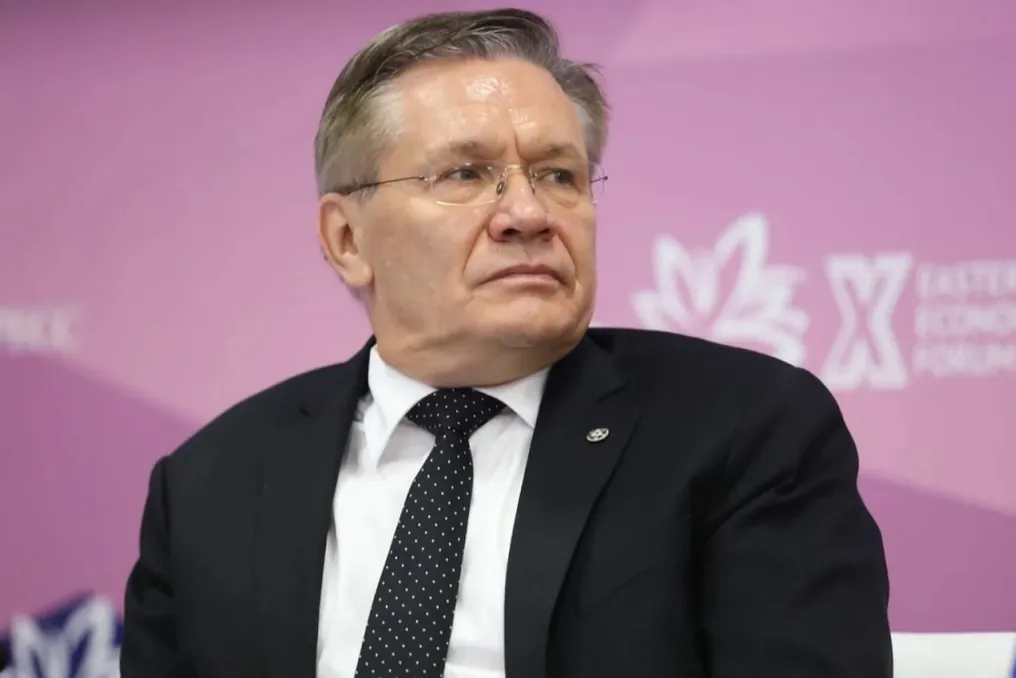
This was reported by the CEO of the state corporation, Alexey Likhachev, during his visit to the construction site. Currently, work is underway on two low-power units, each with a capacity of 55 megawatts. Builders expect to complete the concreting of the foundation slab for these units by the end of this year.

The head of Rosatom noted that this project has a unique status as it represents the world's first small nuclear power plant implemented under an export model. It is planned that two large power units, each with a capacity of one thousand megawatts, will be built next to these small reactors. Specialists are currently refining design solutions and conducting engineering surveys, and work in the area is expected to enter an active phase next year.

The scale of work at the site is constantly increasing: currently, over a thousand people are employed there, and the workforce is planned to double in the near future. The peak construction period, which falls in 2030–2031, may require attracting up to 13.5 thousand specialists. Furthermore, Rosatom plans to transfer a significant part of the construction tasks to Uzbek companies.

Training personnel to operate the first small power unit is scheduled for the end of 2027. Simultaneously, necessary equipment is being manufactured; for example, the reactor body template for one of the small power units, weighing 105 tons, is already ready.

In addition, a city will be created near the NPP for the station workers and their families. At the initial stage, this city is designed to accommodate about 33 thousand residents, where development is planned not only for residential areas but also for facilities in education, healthcare, science, sports, and culture.

Hydroelectric project in Arunachal approved despite protests, leading to felling of 100 thousand trees
Read more
www.aajtak.in

Hydroelectric project in Arunachal approved despite protests, leading to felling of 100 thousand trees

The central government is striving to accelerate the implementation of projects in Arunachal Pradesh despite ongoing protests against the 'Siang Apur Multipurpose Project' (SUMP), which has a capacity of 11,200 megawatts. Amid this situation, a new hydroelectric power plant planned for the Siang River tributary—the 'Siyom' River—received important approval from the Forest Advisory Committee (FAC) of the central government's Ministry of Environment.

This project, named the 'Nying Hydroelectric Project,' has a capacity of 1,000 megawatts and will be operated by 'North Eastern Electric Power Corporation Limited.' Construction is planned in the Shi Yomi and Siang districts of Arunachal Pradesh. The realization of the project requires the use of about 470 hectares of land classified as 'unclassified forest,' which will result in the felling of over one hundred thousand trees.

'Unclassified forest' territories are areas registered as forests but do not fall under the categories of 'reserve' or 'protected forest'; the ownership status of such forests varies in each state. According to the FAC meeting held on October 23, the proposed project area is located in an area of 'high conservation value,' meaning there are very dense forests on the land that is to be used.

The committee recommended granting this project 'Phase I' (theoretical) approval for the use of forest lands. This approval is accompanied by certain conditions, including 'compensatory reforestation,' meaning the necessity of planting trees in exchange for those felled. Fulfilling these conditions is mandatory before obtaining official permission for 'Phase II.'

This development occurred against the backdrop of growing tension surrounding the SUMP project. Local communities claim that the construction of this project will negatively affect their ancestral lands, river system, livelihoods, cultural heritage, and regional rights. Last week, Tagori Maiz, a representative of the 'Siang Indigenous Farmers Forum' (SIFF), stated that more than 3,000 paramilitary personnel are stationed in three districts—East Siang, Siang, and Upper Siang. SIFF is one of the most active organizations opposing the protests related to SUMP.

Maiz also emphasized that local communities or landowners never received information about the proposed dam project nor participated in consultations. He stated: 'Instead, illegal methods are being used to achieve majority consensus, and people are being pushed into signing documents through deception.' This is why the recent approval of the 'Nying Hydroelectric Project' may further worsen the situation in the region.

The project plans to construct a concrete gravity dam 138 meters high with the deepest foundation, which will affect more than 400 families and 12 villages. The environmental impact assessment report noted that although commercial fishing is not conducted here, local residents sometimes fish using cast-nets, gill-nets, and drag-nets. Research and interviews revealed the presence of 20 fish species in the river and its tributaries. The report further indicated that the construction of the dam and the formation of the reservoir will change the natural habitat of fish and affect their reproductive cycle, which is one of the most significant consequences that cannot be completely eliminated. Furthermore, the land used for this project is located 9.71 km from the Yorde-Rabe Supse wildlife sanctuary and 19.55 km from the Mauling wildlife sanctuary.

Popular