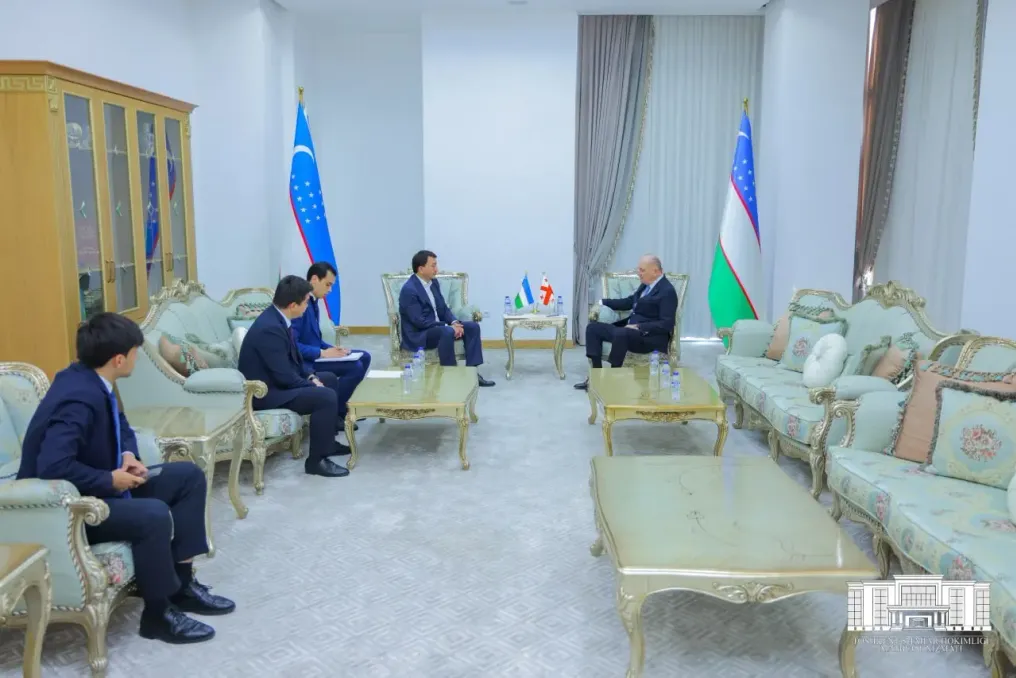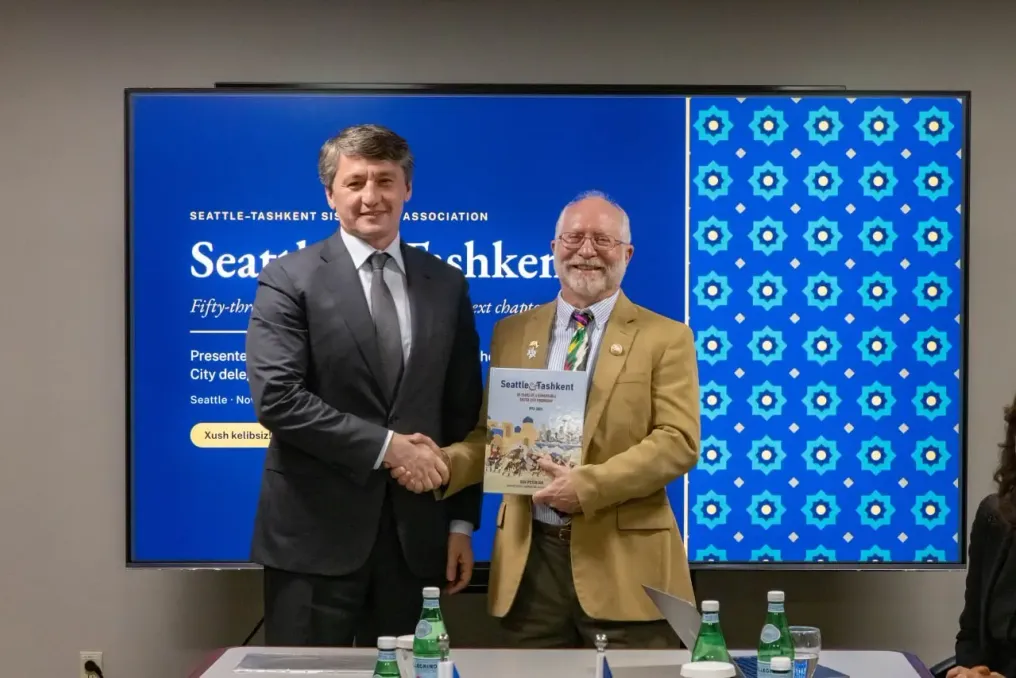
The Tashkent City Administration reported that a delegation from Tashkent, led by Mayor Shavkat Umurzakov, conducted a series of working meetings in Seattle. The purpose of these meetings was to discuss projects in the fields of investment, technological interaction, and strengthening cultural ties.
At a round table held at the Rainier Club, Shannon Braddock, President and CEO of Greater Seattle Partners, along with representatives from about twenty companies, participated. Participants examined opportunities for collaboration with Tashkent, exchanged proposals, and discussed potential involvement in city projects.
Following a meeting with Vano Nakaiдзе and Craig Kramer from Gulf Petrocas Energy Group, the parties signed a memorandum of cooperation. This document provides for the creation of a network of gas stations in Tashkent under the Gulf brand.
The delegation also discussed possible areas of cooperation with representatives of Amazon Web Services (AWS) and agreed on further steps for joint work.
In a meeting with Beth Barrett, Artistic Director of the Seattle International Film Festival (SIFF), participants talked about the experience of organizing major film festivals, opportunities for professional exchange, and attracting experts to develop the film industry in Tashkent.
A memorandum of cooperation was separately signed with Yale Lee, Executive Chairman of the World Academy of Digital Technologies. The parties discussed future areas of interaction, including the possibility of holding the World Digital Conference in Tashkent in 2027. Representatives of the academy were invited to visit the Uzbek capital.
The delegation also met with the leadership of the Sister Cities Association Seattle-Tashkent. Participants exchanged proposals on strengthening ties between the two cities, developing cultural exchange, and implementing joint initiatives.
Furthermore, the delegation held a separate meeting with members of the Uzbek community residing in Washington State. They shared information about their activities, exchanged professional experience, and presented ideas that could be useful to Tashkent and Uzbekistan.
Proposals were put forward for developing cooperation in the fields of healthcare and digital technologies. Aziza Mirsaidova presented solutions for implementing personal data storage standards and proposed expanding cooperation in cybersecurity. She emphasized preventing information leaks, protection against cyberattacks, and ensuring the security of artificial intelligence-based services.
A 17-year-old participant named Yasmina suggested creating a unified online platform where members of the Uzbek community could communicate and find each other. This platform would also help users learn more about Uzbek culture. After a group discussion, the delegation held individual meetings with participants, where they outlined their ideas and possible directions for further cooperation in special questionnaires.