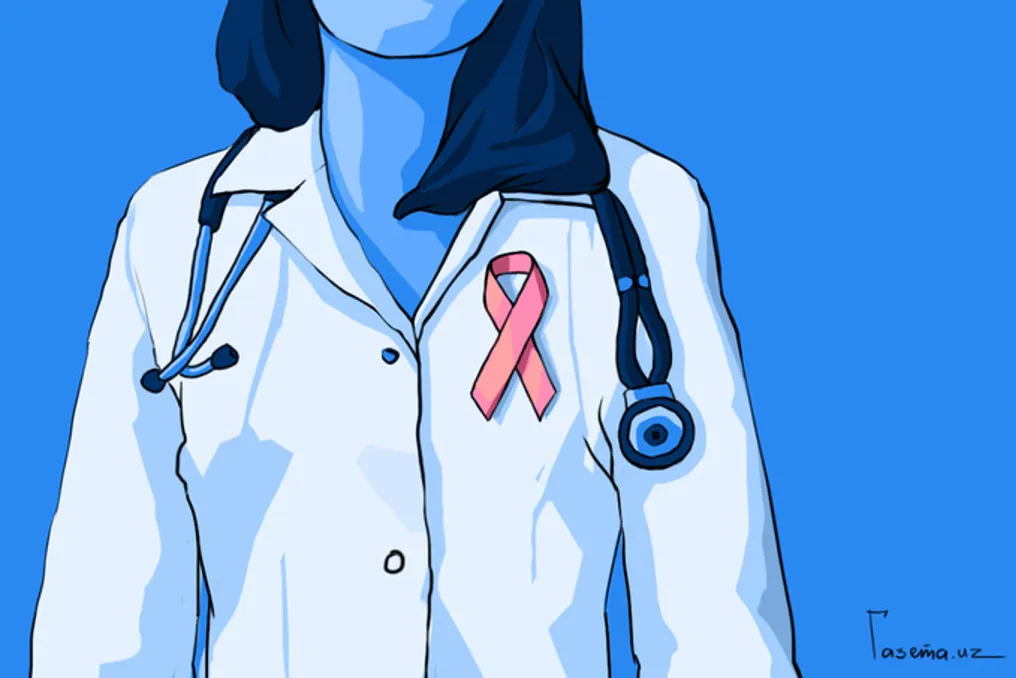
Oncopsychologist Inna Orlova discusses finding strength and the support of loved ones when facing cancer
Read more
Gazeta.uz
gazeta.uz

Oncopsychologist Inna Orlova discusses finding strength and the support of loved ones when facing cancer

Oncopsychologist Inna Orlova emphasizes that a person's identity significantly surpasses their medical diagnosis. She shared advice on how to find inner strength when dealing with cancer, as well as methods of support for patients' relatives.

Breast cancer is the second most common cancer after lung cancer. Globally, approximately 2.43 million new cases were detected in 2024. Among women, it ranks first both in terms of the number of diagnoses and mortality rate.

According to data from the Republican Specialized Scientific and Practical Medical Center of Oncology and Radiology, 4,843 new cases of breast cancer were registered in Uzbekistan in 2025. In the previous year, 2,085 people died from this disease, of whom 2,069 were women. It was noted that 61.9% of cases were found during preventive check-ups, and 70.8% of patients were diagnosed at stages I-II.

A diagnosis affects not only the patient but also their surroundings, causing fear, anxiety, uncertainty, the need for difficult conversations, and adaptation to new conditions. In an interview with 'Gazeta,' Inna Orlova discussed how to cope with post-diagnosis feelings, how to support a loved one, and how to find support during treatment.

When a person learns about a suspicion or receives a confirmed oncological diagnosis, they inevitably experience psychological shock. This shock arises from the sudden disappearance of a familiar lifestyle, which is divided into the 'before diagnosis' and 'after diagnosis' periods. The person's attention focuses entirely on the illness, pushing aside former goals, plans, and daily concerns, which causes intense fear.

After receiving news of a diagnosis, it is crucial to allow the person to process this news in their own way. Reactions can be diverse: some people spend weeks in crying and confusion, others fear the unknown or perceive the situation as unfair. There are also those who appear outwardly calm and begin actively seeking information and planning treatment, which may be a defense mechanism against overload, and the absence of visible emotions does not mean a lack of awareness of what is happening.

There is no single correct way to react to a diagnosis. In the first days, one should not demand immediate acceptance of the situation or the search for strength to fight. The psyche needs time to process what has happened and determine the next steps.

There is a model of five stages of grief—denial, anger, bargaining, depression, and acceptance—but this is not a universal path for all people with cancer. Emotions do not follow a strict psychological route; fear can turn into hope, and anger into acceptance, and these feelings can return multiple times within a single day. A person might discuss a treatment protocol today and feel intense anxiety about it tomorrow.

Many factors influence the reaction: psychotype, nervous system resilience, past life experience, stress coping methods, quality of relationships with loved ones, availability and financial status of medical care, as well as the characteristics and degree of prognosis certainty. It is important how the person learned about the illness, how clearly they were explained the next steps, and whether they feel they have a right to choose and the ability to ask questions.

Inna Orlova advocates for the idea that acceptance is not necessarily a final stage or a constant state of calm. Acceptance is rather the ability to gradually find ways to live in changed circumstances. It is much more important to understand what will help a person cope with the current situation so that they can learn to live with their diagnosis.

Waiting for test results is often the hardest period because the person knows about their illness but has no idea about the future. This creates a zone of uncertainty, which the psyche tends to fill with frightening scenarios. In such cases, it is recommended to separate what is known, what is unknown, and what can be done. For example, compiling a list of questions for the doctor, clarifying examination timelines, or asking a loved one to accompany them to the appointment helps restore a sense of control over one's life.

It is extremely important to avoid endless reading of information on the internet. When a person is anxious, they strive for complete certainty, but reading others' stories about side effects or ineffective treatments that do not account for individual situations only increases fear.

Simple actions are useful for self-support: regular nutrition, sufficient rest, moderate physical activity, and communicating with people who bring calmness. When anxiety increases, breathing exercises, grounding techniques, or visualization of a favorable outcome can be used to bring focus back to the present moment.

The mistake is trying to live through the entire illness in advance. It is enough to determine what to do today, and at most, tomorrow, without demanding an answer about one's entire future life. Inner strength is formed not only by knowing the future but also by understanding what can be done in conditions of uncertainty.

It is recommended to abandon internal pressure. When a person tells themselves, 'I must be strong' or 'I cannot be weak,' they may unconsciously add guilt to their suffering over their emotions, creating a double burden: fear of the illness and fear of one's own feelings.

Emotions are not a measure of character strength; fear does not make a person weak, tears do not signify defeat, and anger does not indicate ingratitude. Instead of harsh demands on oneself, supportive phrases should be used. For example, instead of 'I must cope,' one can say: 'I am having a hard time right now, and I can ask for help.' Instead of 'I must not be afraid,' say: 'I am afraid because I am facing a serious and uncertain situation, and that is normal.' It is also helpful to acknowledge: 'I can hope, worry, get angry, and be tired. I don't have to choose just one emotion.'

Positive thinking is not a guarantee of recovery, and psychological state does not directly determine the outcome of treatment, as sometimes patients are told. Therefore, one should not take excessive responsibility for the course of the illness by trying to control every thought. Negative thoughts are part of the process of experiencing the diagnosis and its consequences; the main thing is not to dwell on them.

For women with a cancer diagnosis, fears extend beyond life and death issues. Topics that women are ashamed to discuss openly cause particular pain. They often worry about how their body will change, whether they will lose their hair, if they will be able to maintain attractiveness, how their relationship with their partner will change, whether they can have children, and how others will perceive them primarily as a sick person.

The transformation of appearance is experienced most heavily. Society places high demands on women to conform to an image of youth and attractiveness, which becomes an additional source of suffering amidst treatment. These feelings should not be dismissed with phrases like 'health is what matters most,' as appearance is closely linked to identity, sexuality, and self-perception.

Body changes can cause an identity crisis. However, not all women experience these changes equally; some want to discuss them in detail, while others prefer to focus on other areas of life. One cannot dictate to a woman what is more important to her—health, appearance, relationships, or the future. A diagnosis does not define a person entirely; a woman retains her desires, character, interests, and the right to personal boundaries.

In psychological work, it is important to create a safe space where a woman can talk about her fears without judgment. The goal is not to convince her that she needs to accept her changed body, but to help her gradually build new relationships with herself in these circumstances.

Professional support is needed not due to weakness, but because the situation is objectively complex. It is better to consult a specialist not at the moment of complete collapse, but at early stages of the journey, to more easily find effective adaptation methods and reduce emotional load.

Reasons for seeking help include constant anxiety, panic attacks, sleep problems, feelings of hopelessness, pronounced depression, difficulties in communicating with loved ones, feelings of isolation, or inability to concentrate on daily tasks. Loved ones should also pay attention to situations where a person maintains an active lifestyle but is under constant internal tension and does not allow themselves a break.

Similar stories

ArchDaily presents 7 unbuilt health projects exploring holistic well-being
Read more
archdaily.com.br

ArchDaily presents 7 unbuilt health projects exploring holistic well-being

Few architectural themes carry as much meaning as health. Depending on the context, this concept ranges from disease treatment and illness prevention to physical rehabilitation or a broader state of physical, mental, and social well-being. The projects presented, shared by the ArchDaily community, address these diverse facets, varying from hospitals focused on diagnostic and surgical efficiency to centers prioritizing sensory regulation, contact with nature, or community life.

These projects, whether incomplete or conceptual, encourage reflection on health that transcends mere injury or illness, moving towards a more complete vision of well-being. How a building can aid in healing does not have a universal answer, as it depends on culture, available resources, and user needs.

Global Health Project Proposals

Proposals for projects located in the United Kingdom, China, Cyprus, Turkey, Saudi Arabia, and Canada were presented. Among them, notable are a ten-room wellness retreat in Kent, a community health center in Tengjiao, a day hospital in Nicosia designed as a sensory regulation system for adults on the severe autism spectrum, and a rehabilitation unit and day hospital in Antakya.

Three hospital proposals in Khobar, Mississauga, and London demonstrate how the concept of care is addressed at different scales, covering teaching missions, digital connectivity, and the progressive replacement of existing structures.

Sacred Space Healing Retreat Centre

The objective of the Sacred Space Healing Retreat Centre is to use architecture to foster the health and well-being of its visitors. This is achieved through the application of principles of sacred geometry, fractality, and quantum field resonance, creating an environment considered 'bioactive' that enhances the body's natural healing capacity. These bioenergetic spaces can be measured by a subtle electromagnetic field maintained by the architecture itself, functioning as a 'biological capacitor.' The project consists of a boutique wellness destination with ten rooms, located on the slopes of Canterbury in Kent, and includes therapeutic spaces. The core of the complex is composed of an engineered wood structure and an ETFE dome, designed to establish a protected microclimate. A modular spiral staircase vertically distributes biophilic rooms, resembling plant shoots, optimizing natural light entry and ensuring privacy.

Tengjiao Hospital

Upon completion, the Tengjiao Community Health Services Center will provide basic public health services to the population, in addition to offering integrated care for the diagnosis and treatment of common and recurring diseases, nursing care, and rehabilitation. Furthermore, the center will assume, by delegation from municipal health and family planning departments, the management of public health and technical family planning services under its purview. It will also be responsible for the complete management, technical guidance, and training of rural doctors in local health units and community service stations.

The concept of this project is based on the medical premise of 'protecting health and ensuring growth,' the humanist vision of 'lush mountains and rivers and the ascent of the Tengjiao phoenix,' and the spatial concept of 'ecological green valley and sunny home.'

Controlled Day Center for Adults on the Severe Autism Spectrum

This Day Center is situated within an established social assistance campus in Strovolos, integrated into a wider network of green areas and support facilities. The site, positioned between a busy avenue and a quieter secondary street, allows for clearly separated access for staff, visitors, and service deliveries, while minimizing external interruptions. The building features a continuous corrugated metal envelope, in a soft shade of green, giving it a serene and easily recognizable identity.

The proposal was conceived as a controlled sensory environment intended for adults with severe autism. The functional program is organized into five distinct cores, each with different sensory conditions, and they are connected by a covered external circulation. This circulation allows for gradual transitions between the cores, avoiding visual and auditory interference. The arrangement of these cores defines a protected central courtyard, which serves as a space of sensory neutrality for recovery and orientation.

THE LODGE HESYA: Rehabilitation Center and Day Hospital

HESYA adopts a mixed approach between landscape and architecture, harmoniously integrating built forms into the natural environment while meeting the programmatic requirements of a center for people with intellectual disabilities and community production and learning facilities. This project was planned to contribute to the improvement of social spaces and buildings in the Hatay region following the earthquake. It envisions deep integration with the surrounding landscape, promoting permeability between internal and external spaces and reinforcing a biophilic philosophy that values natural materials, natural lighting, and sensory engagement.

Prince Mohammad Bin Fahd University Hospital

The main purpose of the project for Prince Mohammad University Hospital is to establish a cutting-edge regional medical center whose primary function is to serve as a teaching hospital for future generations of nurses, physicians, and medical technicians, aligned with the university's future medical school. The campus master plan defines a flexible and agile clinical platform capable of supporting the evolution of medical technology, new treatment protocols, and changes in care delivery models. This strategy aims to facilitate future horizontal expansion of larger floors. The PMU Hospital is structured into large functional zones: the basement constitutes the central nucleus for diagnosis, treatment, and support services; the tower houses inpatient care with a design adaptable to patient gravity; and the outpatient pavilion offers a complete program of external care, including multidisciplinary and rehabilitation clinics.

Peter Gilgan Mississauga Hospital and Shah Family Hospital for Women and Children

The Peter Gilgan Mississauga Hospital and the Shah Family Hospital for Women and Children are considered highly significant healthcare infrastructure projects in Canadian history. By completely replacing the previous structure, the complex will become the largest and most digitally connected in the country upon completion. With twenty-two floors and approximately 260,000 square meters, the new hospital will be nearly three times the size of the current facility. It will be built at the intersection of Queensway West and Hurontario Street, in the same iconic location where the current hospital has been located since 1958. The tower will accommodate over 950 beds, increase the number of operating rooms to 26, and include a new 24-hour emergency room (one of the largest in the province), in addition to advanced imaging diagnostics, a new pharmacy, and a clinical laboratory. All patient rooms will be individual, reflecting a modern standard of care, control, and infection prevention.

St Mary's Hospital and Paddington Life Sciences Campus Expansion

St Mary's Hospital has a long tradition of care and discovery dating back almost two hundred years. The urban revitalization of the complex will build upon this legacy with a new 800-bed teaching hospital, custom-designed, and a large trauma center, both located in the center of a vibrant life sciences campus. This intervention will renew the current four-hectare site, bringing together health, research, and innovation sectors, and generating more employment opportunities, investments, and green spaces for the community.

The new hospital will initially be built on an eastern area of the lot that can be vacated relatively easily, as it does not contain active clinical services. Constructing a more verticalized hospital on a smaller area will allow the old hospital to remain operational during the construction of the new one. Subsequently, activities will be transferred to the newly constructed building, freeing up the rest of the land for urban restructuring.

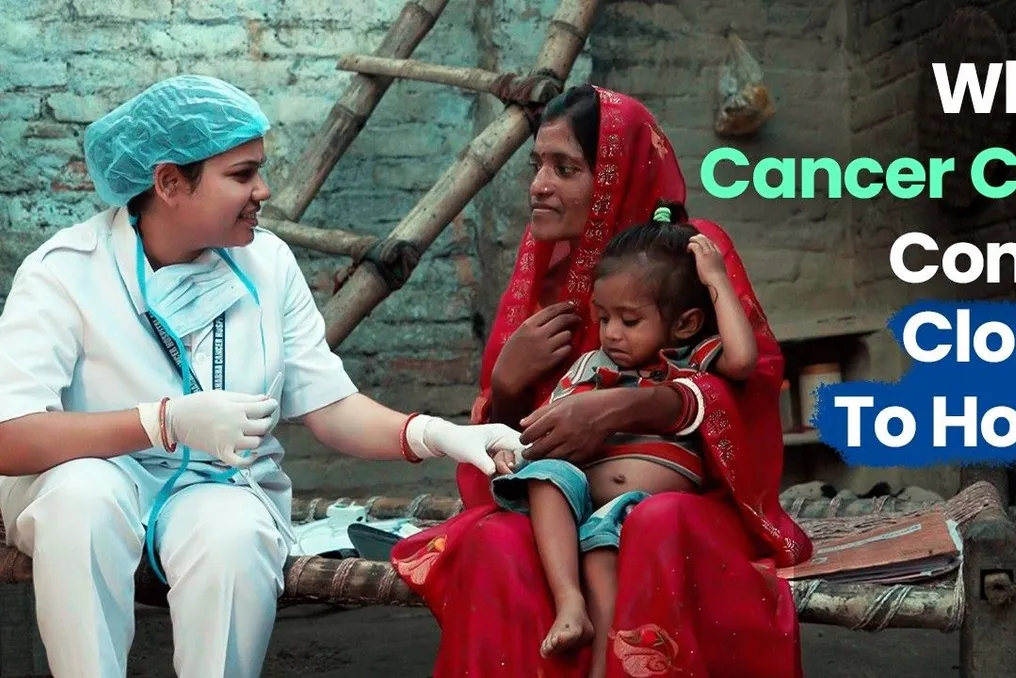
Alkem Foundation is working to increase the accessibility of quality cancer treatment
Read more
thebetterindia.com

Alkem Foundation is working to increase the accessibility of quality cancer treatment

Cancer affects not only the patient; it can disrupt the work, financial situation, family relationships, and daily life of those around them.

Access to proper medical care can change this difficult journey—from early detection and treatment support to helping patients live with dignity when the goal of treatment shifts from cure.

Through its work in cooperation with medical institutions and local communities, the Alkem Foundation strives to make high-quality cancer care more comprehensive and accessible.

Daily Horoscope for Libra on November 11, 2026
Read more
www.aajtak.in

Daily Horoscope for Libra on November 11, 2026

According to the forecast for November 11, 2026, Libra sign holders will be accompanied by good luck. However, it is recommended to make decisions after consulting with family. It is also emphasized that it is necessary to take care of one's health and think carefully before speaking. Furthermore, long trips should be avoided.

Popular