Transport Minister provides update on India's first high-speed railway: launch timelines and progress
Read more
Aaj Tak
www.aajtak.in

Transport Minister provides update on India's first high-speed railway: launch timelines and progress

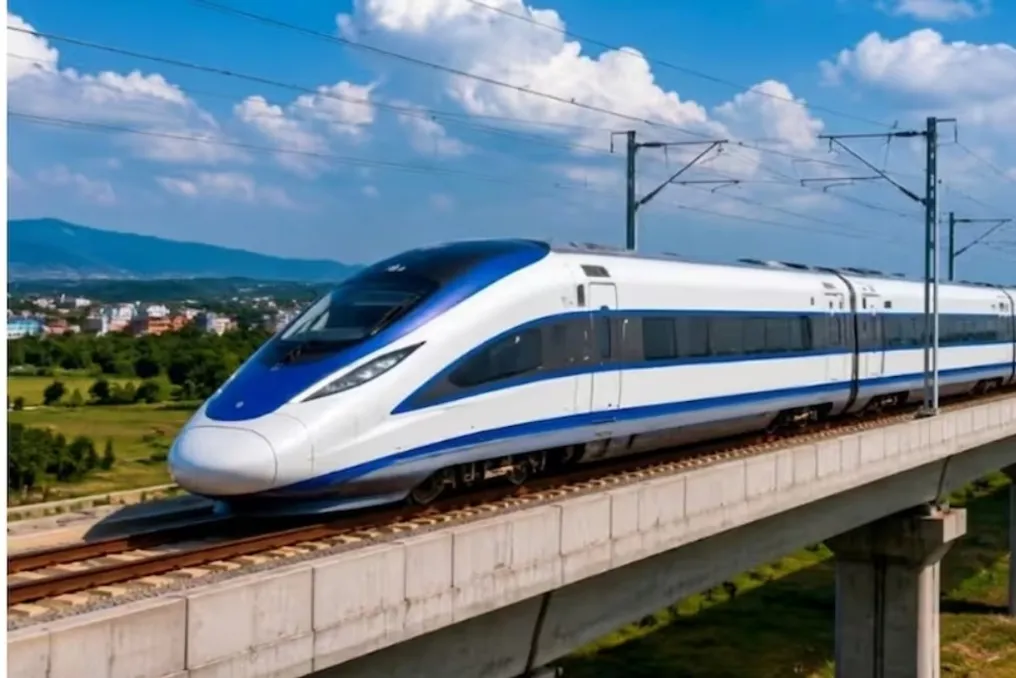
Transport Minister Ashwini Vaishnaw once again provided an update regarding the country's first high-speed rail service. He announced on Friday that this service will begin operating in the last quarter of 2027, with its initial section running between Surat and Vapi. Furthermore, it was clarified that the entire corridor up to Mumbai will be opened in phases.

Regarding the current construction status, the minister noted that work on 456 kilometers of pillars has been completed by September, and 371 kilometers of viaduct have been erected. Additionally, 600,000 noise barriers have been installed on a 299-kilometer stretch, and 9,300 overhead line support poles (OHE) have been mounted on 206 kilometers of viaduct.

The minister added that excavation work for four mountain tunnels has been completed. Specifically, 5 kilometers out of the 21-kilometer Maharashtra tunnel has been bored using a mountain tunneling system. Moreover, civil works at 8 stations are finished, and final architectural finishing is ongoing. Active work is underway at three maintenance depots—Sabarmati, Surat, and Thane.

Providing details on the underwater tunnel construction, Vaishnaw mentioned that this corridor passes through the 21-kilometer tunnel in Maharashtra, with 7 kilometers of this section crossing the sea via Thane Creek. Two tunnel boring machines were commissioned in Vikroli and Savli in July 2026.

These machines are among the largest ever deployed in India. They reach the height of a multi-story building, and each machine weighs over 3000 tons, equivalent to approximately 500 Asian elephants. Each machine is 96 meters long, comparable to five cricket fields placed end-to-end.

Concerning the production of the country's first high-speed trains, the minister stated that ICF and BEML are manufacturing indigenous B28 sets designed for a speed of 280 km/h. The first coach is ready, and structural testing is currently being conducted. Track testing is expected by mid-2027. The next step is the development of the faster B35 train, designed for a speed of 350 km/h.

Similar stories

Power supply begins on the high-speed track of India's first high-speed railway
Read more
www.aajtak.in

Power supply begins on the high-speed track of India's first high-speed railway

Preparations for the launch of high-speed trains in India are proceeding at an accelerated pace, with expectations that people will be able to travel on the first high-speed train on the Mumbai-Ahmedabad corridor in 2027. November 20th (Friday) is considered an important and historic day for India, as power supply will be switched on for the first high-speed train section between Surat and Bilimora.

This marks a significant achievement on the path to operating the high-speed train on the track. According to information published by the National High Speed Rail Corporation (NHSRCL) on the social network Twitter (now X), the first 50 kilometers of the section between Surat and Bilimora in the Mumbai-Ahmedabad corridor will receive power through the Overhead Equipment (OHE) system.

This railway corridor is equipped with an advanced 2 x 25 kV traction power supply system, which includes both overhead and under-track lines on an elevated platform. Within the entire 508-kilometer corridor, 14 Traction Substation (TSS) units are planned, nine located in Gujarat and five in Maharashtra. These substations will receive energy from the main grid and supply it to the overhead power system at designated points.

The electrical network of the high-speed corridor will be monitored via a centralized control center. Furthermore, the railway has issued a special warning to the general public, especially residents and passersby near this section, as well as to workers engaged in construction and living near the trajectory, strongly advising them not to approach or touch the overhead electrical equipment.

When the high-speed train operates at full capacity, its speed will reach 320 kilometers per hour; however, the average speed between Ahmedabad and Mumbai is expected to be around 300 kilometers per hour starting next year. The 508 km Mumbai-Ahmedabad corridor passes through the states of Maharashtra, Gujarat, and Dadra and Nagar Haveli, and it has 12 major stops planned. These include Mumbai (BKC), Thane, Virar, Boisar, Vapi, Bilimora, Surat, Bharuch, Vadodara, Anand, Ahmedabad, and Sabarmati.

The Compound Catenary System plays a key role in achieving the 320 km/h speed, as it is being implemented for the first time on a high-speed railway corridor in India. This advanced railway electrification system involves installing an additional auxiliary wire between the main contact wire and the contact wire, allowing high-speed trains to receive constant and stable power.

India's First High-Speed Train: Bullet Train Construction Progress, Including Underwater Tunnels and Underground Stations
Read more
www.aajtak.in

India's First High-Speed Train: Bullet Train Construction Progress, Including Underwater Tunnels and Underground Stations

The construction of India's first bullet train is nearing completion, and the wait for this event is gradually shortening. The Indian Railways is scheduled to begin operations in August 2027 on the Vapi-Surat section of the Mumbai-Ahmedabad high-speed rail corridor. Work is proceeding at an accelerated pace, and the Prime Minister personally visited the site to assess the progress of the tasks.

The bullet train project will incorporate Japanese Shinkansen technology into the Indian Railways and will operate on the 508-kilometer Mumbai-Ahmedabad corridor. Initial service is planned for the Surat-Vapi section. Recently, Prime Minister N. Modi inspected the nearly complete Surat Bullet Train station.

The National High Speed Rail Corporation (NHSRCL) published a video on the X platform (formerly Twitter) showcasing the latest achievements of the bullet train project. This video shows how passengers will move between stations through underground terminals, utilizing tunnels laid under the sea and bridges over the Sabarmati River.

In the viral video, the railway described the work on this route as 'unstoppable progress.' The video reflects the construction of tracks laid by mountain excavation, the erection of deep underground railway stations, and other infrastructure works, including bridges.

An underground station is being built in the Bandra-Kurla Complex (BKC) area of Mumbai on the Mumbai-Ahmedabad high-speed corridor, located approximately 100 feet below ground level. This depth exceeds the height of a ten-story building. A single underground point is being created in the heart of Mumbai's business district, which represents a significant engineering achievement.

Several kilometers from the Bandra-Kurla station, a 3200-ton machine is working to form India's first underwater railway tunnel, cutting through the rock under Thane Creek. The bullet train will travel at high speed through this tunnel. This section of the corridor in Maharashtra passes through a 21 km tunnel, with 7 km of it being underwater, making it India's first underwater railway tunnel.

The railway has completed the construction of a bullet train bridge over the Sabarmati River, which is 12 stories high. NHSRCL previously reported this milestone, specifying that the construction of a 480-meter long and 36-meter high bridge for the Mumbai-Ahmedabad project is finished. This bridge, reaching a height of about 118 feet, equivalent to a 12-story building, is one of the key parts of the Mumbai-Ahmedabad corridor's infrastructure.

At full speed, the bullet train will reach a speed of 320 kilometers per hour, and between Ahmedabad and Mumbai, it will travel at an average speed of 300 kilometers per hour starting next year. The 508 km Mumbai-Ahmedabad corridor covers the states of Maharashtra, Gujarat, and Dadra and Nagar Haveli, and includes 12 major stops. These stops include Mumbai (BKC), Thane, Virar, Boisar, Vapi, Bilimora, Surat, Bhuchar, Vadodara, Anand, Ahmedabad, and Sabarmati.

Major railway modernizations planned in Kanpur: high-speed rail, viaduct, and modern station
Read more
www.aajtak.in

Major railway modernizations planned in Kanpur: high-speed rail, viaduct, and modern station

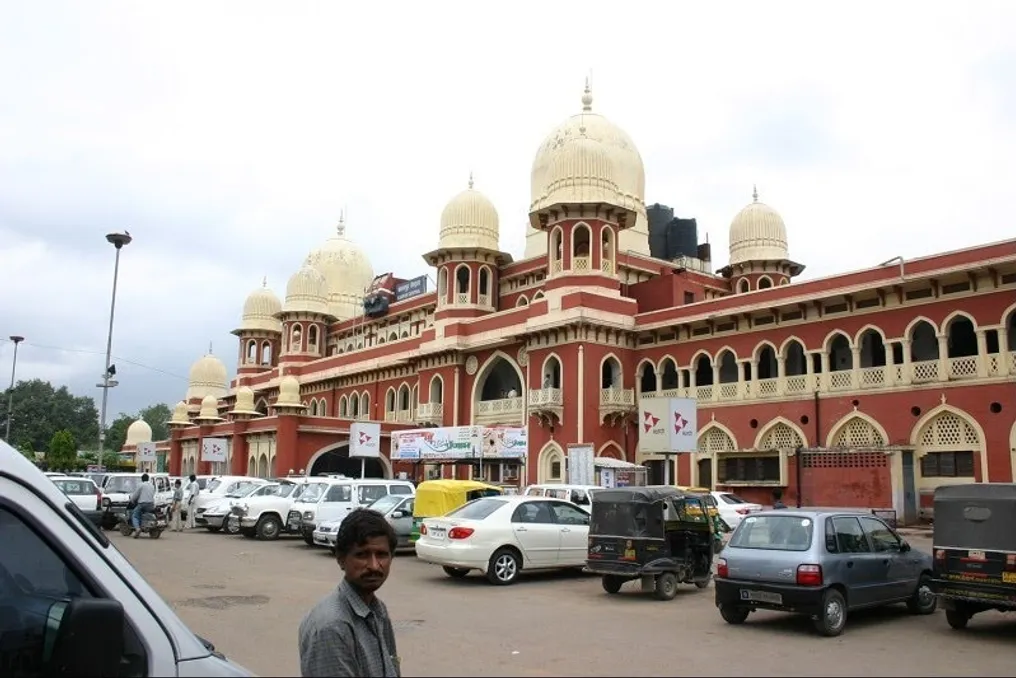
The face of railway transport in the city of Kanpur, Uttar Pradesh, may change significantly in the near future due to the implementation of three major railway projects. These projects include the construction of a 16-kilometer elevated railway line between Anavarganj and Mandhana, comprehensive reconstruction of Kanpur Central Station, and the introduction of a proposed high-speed rail corridor.

These initiatives are designed not only to alleviate congestion at railway crossings but also to simplify access to major cities such as Delhi, Lucknow, and Prayagraj.

Rail Minister Ashwini Vaishnaw presented information on these projects during the inauguration of the new daily train 14153/14154 Kanpur Express between Kanpur Central and Andan Vihar Terminal. He stated that the detailed project report (DPR) for the viaduct corridor is ready and the necessary permissions have been obtained, after which construction is expected to begin soon.

The problem of congestion at railway crossings in Kanpur has long been a concern for residents. When trains pass through certain sections, the closing of barriers leads to long queues of vehicles on the roads. To solve this problem, the railways have developed a plan to build a 16-kilometer elevated railway line between Anavarganj and Mandhana. According to the Rail Minister, the project for this line is complete, and all necessary permissions have been received; construction should start shortly. The creation of this corridor should help city residents eliminate traffic jams caused by train movements at crossings.

Kanpur Central Station is also undergoing modernization. Its reconstruction is being carried out under the Amrit Bharat Station Scheme. The Rail Minister noted that work at the station is progressing actively. The goal of this project is to improve existing station amenities and provide passengers with the experience of being at a modern railway hub. In the future, many other infrastructure projects related to railways are planned for Kanpur.

There is a plan to connect Kanpur with the proposed Northern high-speed rail corridor. This corridor will provide a link between Kanpur and major cities such as Delhi, Agra, Varanasi, Lucknow, and Ayodhya. Furthermore, the possibility of extending this route to Patna, Siliguri, and Guwahati is being considered. Launching this high-speed rail route will significantly reduce travel time from Kanpur to other major cities. However, it should be noted that this is currently only a proposed project.

Approximate travel times between various cities were also announced within the framework of the proposed high-speed rail corridor. Upon commissioning, the journey from Delhi to Kanpur could take about 1 hour and 45 minutes. Similarly, traveling from Lucknow to Kanpur would take approximately 27 minutes, and the journey from Kanpur to Prayagraj is estimated at approximately 1 hour and 15 minutes. These timeframes are tentative for the proposed corridor, and exact data on timing and services will become available after the finalization of the project and commencement of operations.

All three railway projects can benefit the residents of Kanpur and surrounding areas. The construction of the elevated railway corridor should reduce congestion at crossings. After transforming Kanpur Central into a world-class station, passengers will receive higher quality services. Moreover, thanks to the high-speed rail corridor, travel to major cities will become significantly faster. The Rail Minister emphasized that high-speed rail connectivity will contribute to the development of the regional and economic sectors. Currently, the start of construction for the elevated corridor has been announced, while the high-speed rail project is still in the proposal stage, and information regarding its construction and launch timelines is awaited.

Popular