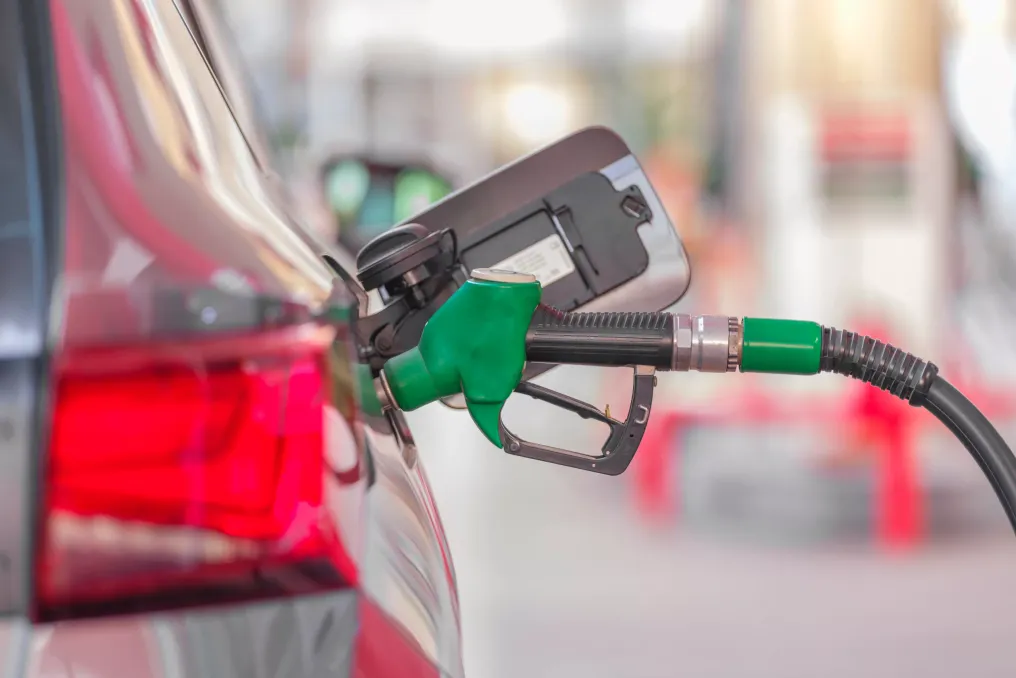
Gasoline and diesel prices in South Africa may decrease before the December holidays
Read more
Getaway
getaway.co.za

Gasoline and diesel prices in South Africa may decrease before the December holidays

A potential drop in fuel prices is expected in South Africa during December, which could ease the financial burden on drivers during holiday travel. According to the latest data from the Central Energy Fund, prices for gasoline and diesel may fall, although final adjustments have not yet been confirmed.

According to a BusinessTech report, gasoline and diesel prices have made a 'complete turnaround,' moving into an overspend zone, despite the partial cancellation of a temporary government tax relief in December.

Data from the Central Energy Fund (CEF) as of the end of the third week of November shows an overspend of R3.44 per liter for 93-grade gasoline and R3.68 per liter for 95-grade gasoline. Regarding diesel, an overspend of R1.58 for 0.05% diesel and R2.00 for 0.005% diesel has been observed.

Current forecasts suggest a possible decrease of R3.44/L for 93-grade gasoline and R3.68/L for 95-grade gasoline, while diesel could drop by between R1.58/L and R2/L before accounting for other monthly adjustments.

BusinessTech warns that CEF figures are not final, as they do not include factors such as the slate levy and other monthly adjustments.

These projected decreases come against the backdrop of the Ministry of Finance beginning to revoke its temporary intervention in fuel pricing. Starting in December, 50 cents per liter will be added to the gasoline tax, and R1.50/L to diesel, with remaining support scheduled to be withdrawn in January.

These changes mark a sharp reversal compared to previous forecasts. Previously, BusinessTech reported that in October, gasoline and diesel faced underspending, with gasoline showing a deficit of up to R1.38/L. It was anticipated that temporary fuel tax cuts announced by Finance Minister Enoch Godongwana would prevent a significant price hike.

Subsequently, the government reduced gasoline prices by only 1 cent/L in November, while diesel prices fell by more than R1/L. The Department of Mineral Resources and Energy stated that the November adjustment was due to rising international oil and petroleum prices, the weakening rand, and an increase in the slate levy.

Reuters at the time reported that diesel would fall, while gasoline would remain 'almost unchanged' after the fuel tax reductions.

The latest improvement is mainly driven by a sharp drop in global oil prices. BusinessTech reported that the price of oil fell to approximately $91 per barrel, after trading above $100 for most of the previous month and reaching around $118 in early November. The lower oil price has significantly improved South Africa's position regarding fuel price recovery.

TopAuto also reported that gasoline is on track for a decrease of approximately R3/L, describing December as a potential significant relief for drivers.

However, the rand exchange rate remains a potential risk. BusinessTech noted that currency fluctuations partially offset the benefit of cheaper oil, although this impact is currently not large enough to completely negate the fuel price overspend.

Thus, the December adjustment could provide one of the most substantial reliefs at petrol stations this year, although final prices will be confirmed by the Department of Mineral Resources and Energy in early December.
Similar stories

Mahesh Gupta founded Kent RO after the idea arose from his children's illness
Read more
www.aajtak.in

Mahesh Gupta founded Kent RO after the idea arose from his children's illness

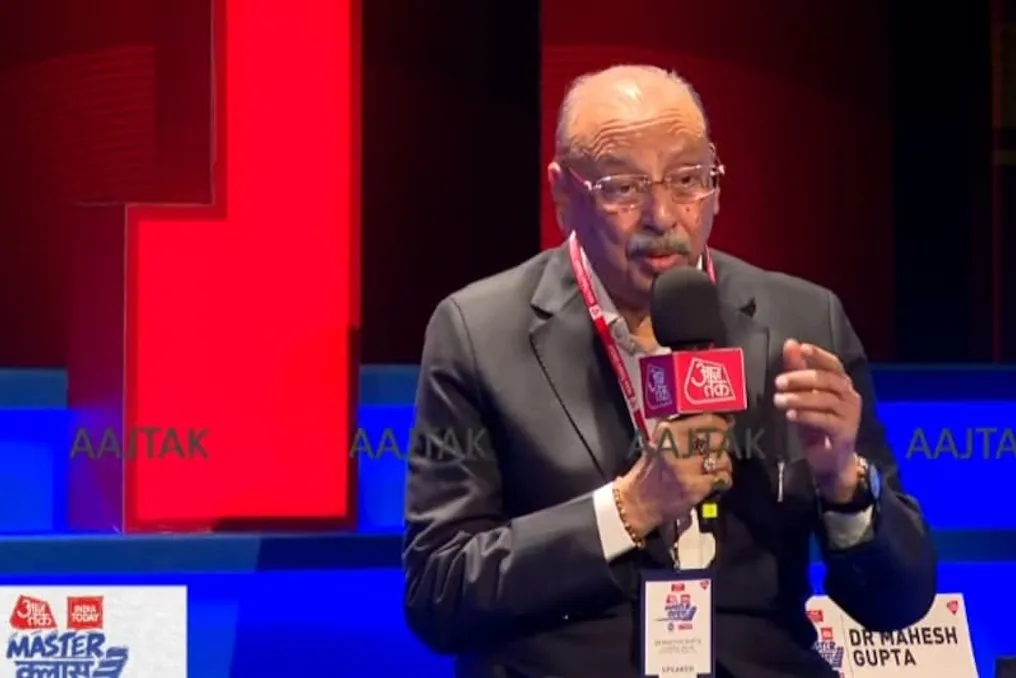
During the 'How to Become a Successful Businessman' session within the Today's Masterclass program, Kent RO Systems Managing Director, Dr. Mahesh Gupta, shared his entrepreneurial story, detailing the transition from employed work to launching his own business and how an idea born from personal experience evolved into a major company.

Dr. Gupta explained that the foundation for creating Kent RO stemmed from personal experience. In 1990, both of his children, who were studying at IIT, were diagnosed with hepatitis. A doctor advised them to drink purified water. Visiting the water purifier market, he, being a mechanical engineer, tried to understand the existing technologies. At that time, most filters operated on UV technology, capable of destroying bacteria and viruses, but they could not remove dissolved impurities such as salt, arsenic, and fluoride.

He concluded that a water purifier was needed that could remove both chemical impurities and provide protection against microorganisms, knowing that reverse osmosis (RO) technology was suitable for this. Initially, he created such a filter for his family's needs, which required ordering some components from abroad and involved significant financial expenditure. When the water purified by this device was well-received by his family and guests, demand arose for the production of similar filters.

He first manufactured about four to five such devices. Realizing that a similar product was absent from the market and that consumers showed interest, he decided to monetize this idea, and thus the development of Kent RO began.

After completing his studies in Mechanical Engineering at IIT Kanpur in 1975, he continued his education at the Indian Institute of Petroleum in Dehradun, earning a master's degree in petrochemicals. He then started working at Indian Oil. His career at Indian Oil progressed successfully; he received promotions and held high positions. Nevertheless, a desire to contribute to the country's development by working in the field of fuel conservation was growing within him.

In 1988, he decided to leave his job at Indian Oil to start his own company. His initial goal was to reduce consumption and save energy in the country, a direction that continues to this day. The idea for the water purifier only came in 1990, and he began working in that area.

Dr. Gupta noted that no one in his family had previously been in business; his father worked in the government Ministry of Finance. He became the first member of his family to decide to start his own business. When he told his father of his intention to leave his job, his father was displeased, insisting that he remain in stable government service until retirement. His father believed that with a good job, career growth, and a guaranteed future, there was no need to take risks.

However, Gupta harbored a desire deep down to do something special for the country, as energy is one of the world's most valuable resources. He decided that he must contribute to its preservation. Although his father initially did not approve of his choice, he later accepted the decision. Gupta himself took this risk, assuming that if he failed, he could find another job, but the company began to bring success from the very beginning.

During the masterclass, one student asked how Kent RO managed to stand out among large brands such as Aquaguard, Eureka Forbes, and AO Smith, which use similar RO and UV technologies. Dr. Gupta replied that the key advantage of his company lies in the uniqueness of its technologies and patents. The company holds thirteen patents related to its products.

He explained that the standard reverse osmosis process removes necessary minerals from water. Kent developed a special technology that allows water to be purified while preserving beneficial minerals. Furthermore, the company focuses not only on purification but also on maintaining water purity over a long period by using a UV lamp in its products, which reprocesses the water every two hours.

Tehran to Host International Transport and Logistics Exhibition Focusing on Chabahar Port and Eastern Corridor
Read more
www.tehrantimes.com

Tehran to Host International Transport and Logistics Exhibition Focusing on Chabahar Port and Eastern Corridor

The seventh International Exhibition of Transport, Logistics, and Related Industries will take place in Tehran in December 2026. The event will run from December 17 to 20 at the permanent site of Tehran International Exhibitions, with support from the Ministry of Transport and Urban Development.

The exhibition will provide an opportunity to demonstrate the potential of the country's transport industry, explore investment opportunities, and strengthen cooperation between various industry sectors.

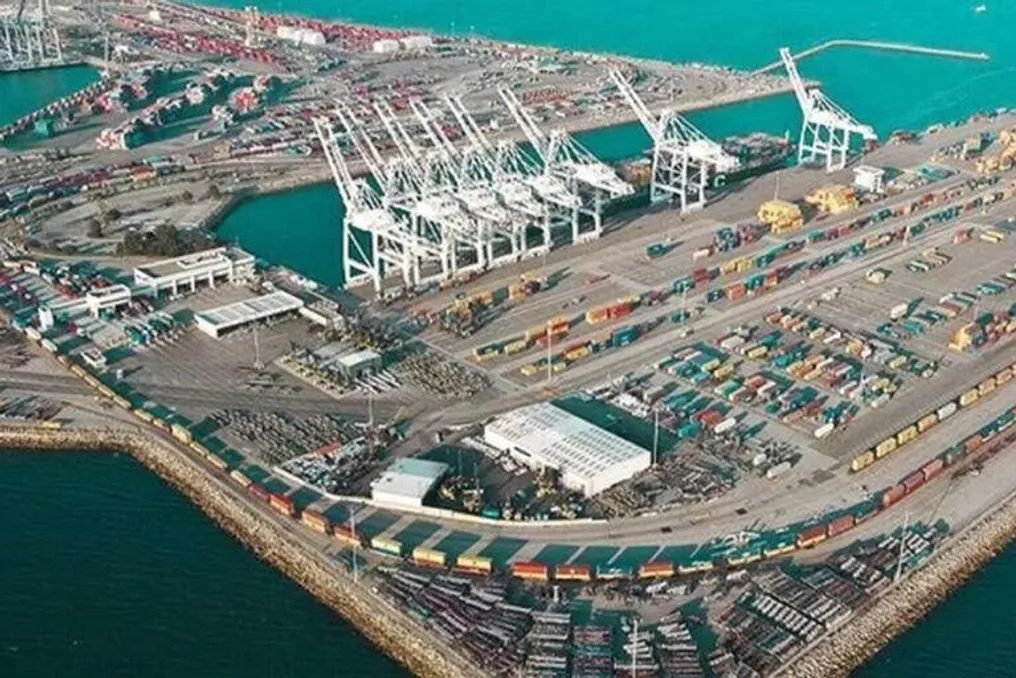
The seventh International Exhibition of Transport, Logistics, and Related Industries will serve as a platform for analyzing the potential of the Chabahar Port and the country's eastern corridor, seeking investment prospects, and strengthening interaction among participants from the port, railway, road, and logistics sectors.

According to a report published by the IRNA agency on Saturday by the Ministry of Transport and Urban Development, the development of the Chabahar Port and the completion of transport networks in the eastern part of Iran present a strategic opportunity. This opportunity allows Iran to strengthen its position in regional transit, expand trade exchange with Central Asian states, and connect open waters with regional markets.

The development of port, railway, and road infrastructure, as well as the improvement of logistics services, can transform this capability into one of the key directions of the country's international trade and transport.

Popular