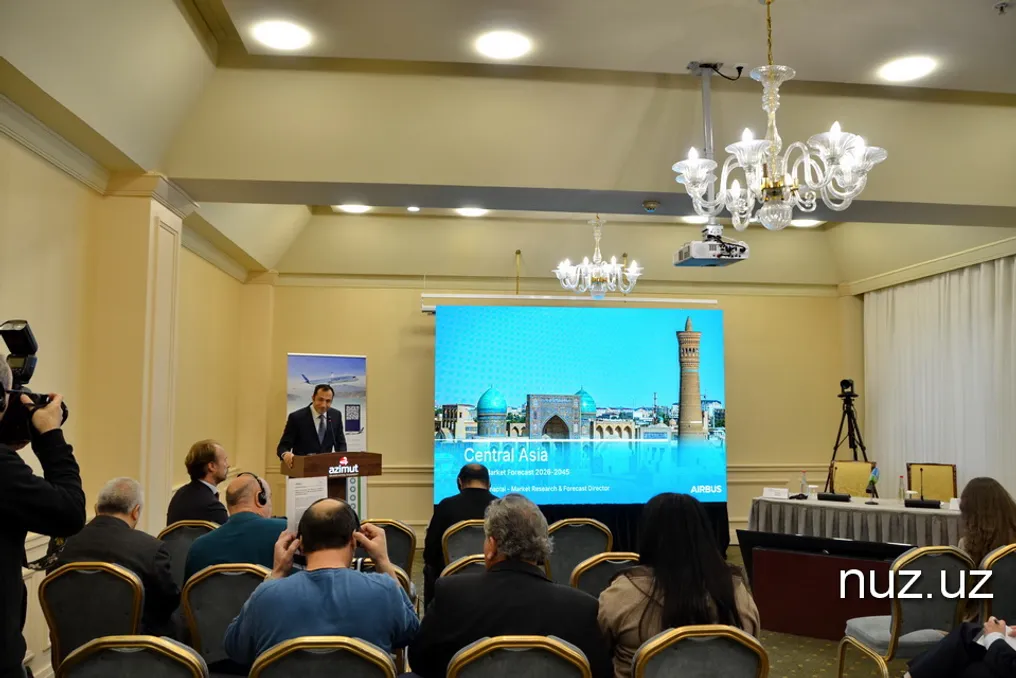
Airbus forecasts significant growth in air transport in Central Asia by 2045
Read more
Nuz.uz
nuz.uz

Airbus forecasts significant growth in air transport in Central Asia by 2045

Airbus expects that due to economic growth and tourism development, air transport in Central Asia will increase almost threefold by 2045. According to the Airbus Global Market Forecast (GMF) report on the development of the global aviation market, the average annual growth rate of air transport volume in the region over the next two decades—including flights to, from, and within it—will be 5.1%.

It is projected that passenger traffic (RPK) will grow from 89 billion passenger kilometers in 2025 to 242 billion by 2045. Airbus has been operating in the region for three decades; its presence began with the introduction of the first Airbus aircraft into the Uzbekistan Airways fleet in June 1993. Various Airbus models are operated in Uzbekistan, from the A300 to the A321XLR, as well as military aircraft A400M and over 80 helicopters.

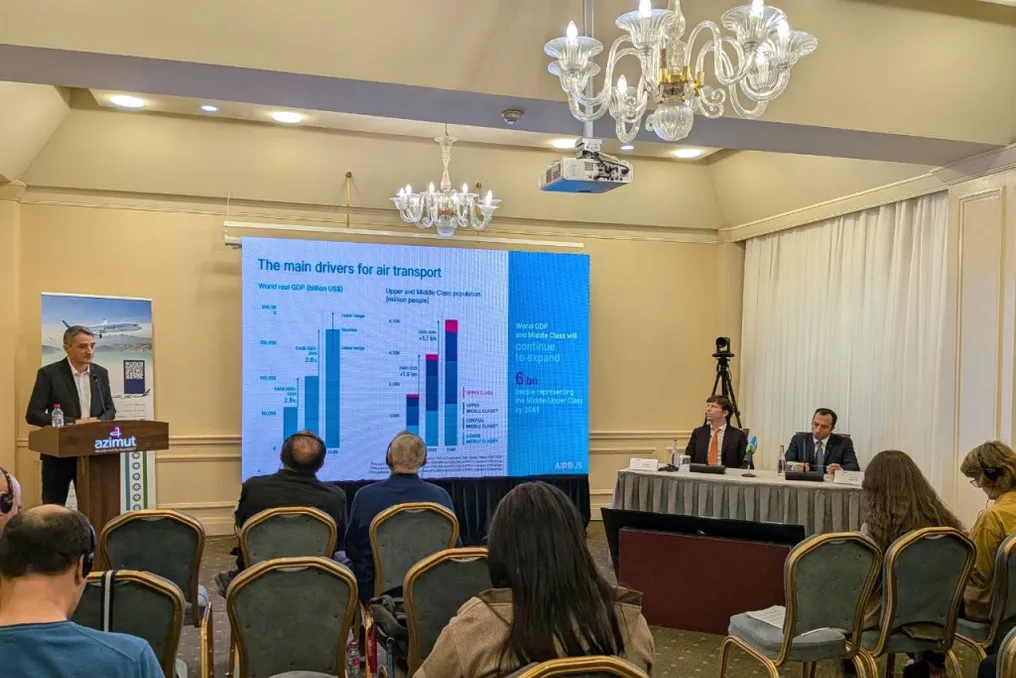
The sustainable growth of the aviation sector in Central Asia is driven by a number of demographic and economic factors. By 2045, the middle class population in Kazakhstan, Kyrgyzstan, Tajikistan, Turkmenistan, and Uzbekistan will increase by 26 million people, reaching 80 million. An average GDP growth of 3.8% per year, an increase in the urban population by 15 million people, and an annual trade growth of 3.1% will contribute to increased incomes, leading to an almost twofold increase in the intensity of air travel per resident in the region.

Currently, five Central Asian countries show a higher propensity for air travel compared to similar economies. It is expected that this indicator will exceed the global average of 0.2 air trips per person per year in the next twenty years. The main volume of transport will be concentrated on domestic routes, but the fastest growth rates are predicted for destinations connecting China, Europe, and CIS countries.

Jerome Schapthal, Airbus Director of Strategic Analysis and Global Market Forecasting, emphasized that 'Central Asia's strategic position within the Middle Corridor contributes to strengthening the region's role as a key trade link between Europe and Asia.' He added that regional airlines are modernizing their fleets and expanding flight geography to meet growing demand and improve air transport efficiency.

Experts have identified three main trends in the development of the aviation industry. Firstly, there is premiumization, which means the availability of onboard comfort above economy class, whether business, first, or premium economy. Although economy class grew by 1.4% annually over the last two decades, premium seats grew by nearly 3% during the same period, indicating high demand for wide-body aircraft like the A350-1000.

Secondly, airlines are actively expanding their route networks for three reasons. The first relates to the need of markets in the Middle East, Asia, and India for flights to the USA, which requires increasing aircraft range. The second reason is geopolitical and related to airspace restrictions affecting range and product flexibility. The third, more specific reason, was setting the world record for the A350-1000 flight duration of 24 hours and 24 minutes last week, highlighting the importance of range flexibility for adapting to market changes.

Furthermore, rapid modernization of the aviation fleet is observed in the region: the share of new-generation aircraft has grown from 0% to 42% over the last decade, and is forecast to reach 86% by 2035.
Similar stories

Airbus forecasts threefold growth in passenger traffic in Central Asia by 2045
Read more
podrobno.uz

Airbus forecasts threefold growth in passenger traffic in Central Asia by 2045

Airbus predicts a significant increase in global passenger traffic over the next decade. The company's analysts suggest that the fastest growth will be observed on routes connecting the five countries of Central Asia (CA).

Airbus representatives presented their forecast for the development of commercial aviation until 2045 during a briefing held in Tashkent on November 17. The growth in demand for air transport in this region is attributed to the economic development of these states and the increasing share of the middle class within them.

Passenger Transport in Central Asia

According to the presented model, the average annual GDP growth in the region will be 3.8%, which exceeds the global average. Trade is projected to grow at a rate of 3.1%, which in turn will ensure an increase in population income.

By 2045, the middle class in Kazakhstan, Kyrgyzstan, Tajikistan, Turkmenistan, and Uzbekistan could increase by 26 million people, reaching 80 million. Airbus believes that a higher standard of living in the region stimulates residents to use aviation services more often.

According to Airbus data, passenger traffic on flights within Central Asia and between it and other regions will increase from 89 billion passenger-kilometers in 2025 to 242 billion by 2045. This figure accounts for the distance traveled by passengers.

The Airbus presentation noted that passenger flow between departure and destination points in Central Asia will almost triple between 2025 and 2045. Growth is expected to be 5.1% annually, which is higher than the global rate of 3.9%. The largest increase in passenger flow is predicted between the Central Asian countries themselves—on average at 6.5% per year. Internal routes are expected to grow by 5.8% annually.

By 2045, the fleet of passenger aircraft capable of carrying from 100 passengers in the region may increase from 160 to 450 units. At the time of preparing the forecast, there were 140 aircraft in the regional order book.

Europe and CIS countries were named as important external markets, and the possibility of expanding ties with Asian markets was also emphasized. Conditions conducive to launching international flights include visa regime simplification, expansion of airlines' commercial rights, and the development of airport infrastructure.

Global Forecast and Fleet Renewal

According to Airbus estimates, global passenger traffic will increase from just under 10 trillion passenger-kilometers to over 21 trillion by 2045. For calculations, the company used macroeconomic data from external experts, including Oxford Economics and Standard & Poor’s.

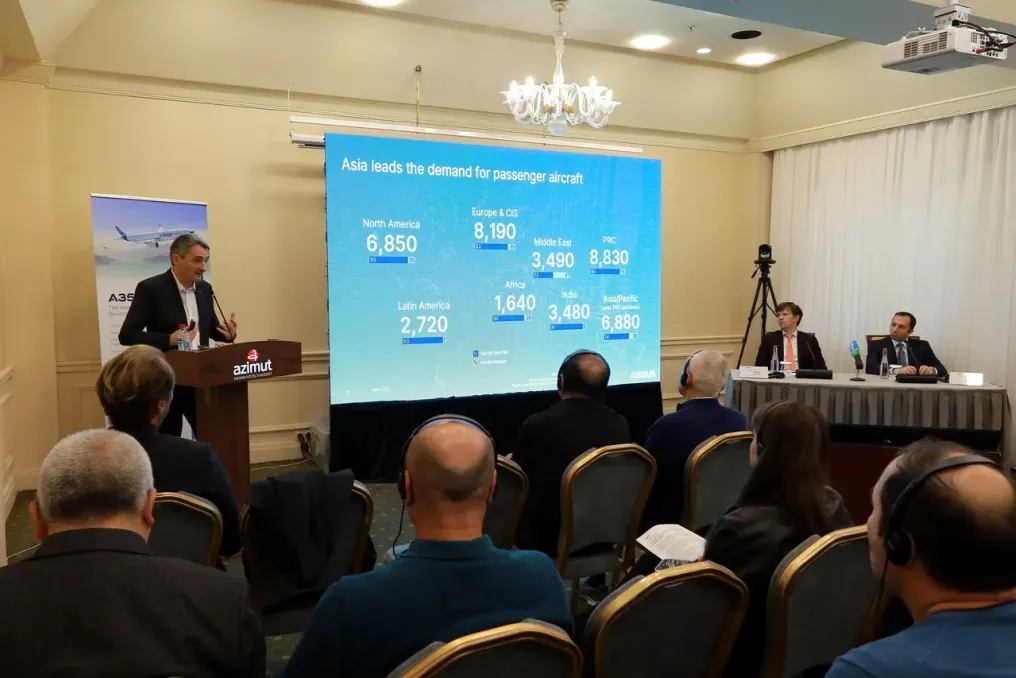
In the company's opinion, China's domestic transport will become the largest market in terms of passenger traffic. Airbus expects higher growth rates in the developing markets of Asia, Africa, and South America.

The presentation also highlighted the growing demand for more comfortable classes of service and increased interest from airlines in long-range aircraft. Wide-body aircraft account for 18–19% of the global fleet; they are used more frequently in the Middle East than in Latin America, which Airbus attributes to differences in market geography and carrier business models.

Additional range capacity allows carriers to open new routes and change existing ones if there are airspace restrictions. The global fleet of passenger aircraft with a capacity of 100 seats is projected to increase from approximately 23 thousand to over 45.5 thousand aircraft. Over two decades, the market will require about 42 thousand new deliveries, with a significant portion being replacements for outdated equipment. Approximately four-fifths of all deliveries will be narrow-body aircraft. About half of global deliveries may go to China, India, and other markets in the Asia-Pacific region combined.

According to the company's estimate, the transition to new generation equipment will reduce fuel consumption by approximately 20–25%. In 2025, the share of such aircraft in the global fleet was about 39%, and in the regional fleet—42%. By 2035, the share of new generation aircraft in the regional fleet of Western production could increase from 42% to 86%.

Cargo Transport

The volume of international air cargo transport connecting Central Asian countries with each other and with other regions could double by 2045. On routes within CA, an average annual growth of 5.1% is expected.

The global fleet of cargo aircraft will increase from approximately 2.4 thousand to 3.5 thousand aircraft over two decades. To support this growth, about 2.7 thousand deliveries will be required, including specialized cargo aircraft and passenger aircraft converted for cargo transport. Among the factors stimulating demand is the transportation of expensive high-tech equipment for data processing centers.

Airbus Presence and Aircraft Maintenance

Airbus representatives noted that the company's history in the region began in June 1993 when the manufacturer's first aircraft was commissioned in Uzbekistan. Currently, more than 130 Airbus aircraft and over 80 helicopters from the company are operated in the region.

The briefing also discussed issues of airport construction and modernization, as well as the expansion of aviation specialist training programs. Operators from Uzbekistan carry out line and basic technical maintenance of their aircraft. Furthermore, aircraft maintenance is developing in Kazakhstan, and mechanics and pilots are being trained in the region.

Airbus mentioned already concluded orders and noted the interest of local carriers in leasing aircraft with the possibility of delivery within the next two to four years.

Airbus forecasts nearly threefold increase in air traffic by 2045
Read more
uzdaily.uz

Airbus forecasts nearly threefold increase in air traffic by 2045

According to the latest Global Market Forecast (GMF) from Airbus, air traffic in Central Asia, including both domestic and international routes, is expected to grow at an average annual rate of 5.1% over the next two decades.

One of the key drivers of passenger flow growth is the change in the region's socio-economic conditions. Airbus estimates that by 2045, the middle class in Kazakhstan, Kyrgyzstan, Tajikistan, Turkmenistan, and Uzbekistan will increase by 26 million people, reaching 80 million.

It is projected that the cumulative annual GDP growth of these five countries will be 3.8%, and the urban population will increase by 15 million people, while trade is expected to grow by 3.1% annually.

Against this backdrop of trends, the frequency of air travel per capita in the region is expected to almost double. Airbus notes that Central Asian countries already show a greater propensity for air travel compared to economies of comparable development levels. Over the next two decades, this indicator will exceed the global average of 0.2 flights per person per year.

Prospects for the Aviation Market Development

The majority of air traffic will be generated within the region itself. However, the fastest growth is predicted on routes connecting China, Europe, and CIS countries. Damien Cassak, Airbus Commercial Director for Central Asia, stated that population growth and the expansion of the middle class open up significant potential for the aviation market.

He added that the company intends to offer modern and reliable aircraft to regional airlines to ensure safe and efficient operations. Cassak emphasized: "We see significant potential for expanding air connections from Central Asia to mainland China, Southeast Asia, and Europe."

For residents, further development of the aviation sector could mean a wider choice of destinations and more opportunities for tourism, business travel, and international communication. Increased competition and expanded route networks could also make air travel more affordable.

Airbus also highlighted the strategic position of Central Asia along the Middle Corridor, which strengthens trade and transport links between Asia and Europe.

Fleet Modernization and Demand Growth

Jerome Shaptal, Airbus expert in strategic analysis and global market forecasting, noted that local airlines are already working to expand their networks and modernize their fleets to meet growing passenger demand and improve operational efficiency.

Fleet renewal figures confirm this trend: over the last decade, the share of new-generation aircraft in Central Asia has grown from 0% to 42%. Airbus forecasts that this figure will reach 86% by 2035.

Thus, the expected growth in air traffic will be accompanied by fleet renewal, expansion of international routes, and strengthening of transport connectivity across Central Asia. For Uzbekistan, which is developing its aviation infrastructure and international air links, these trends provide additional opportunities for integration into regional and global transport markets.

Popular