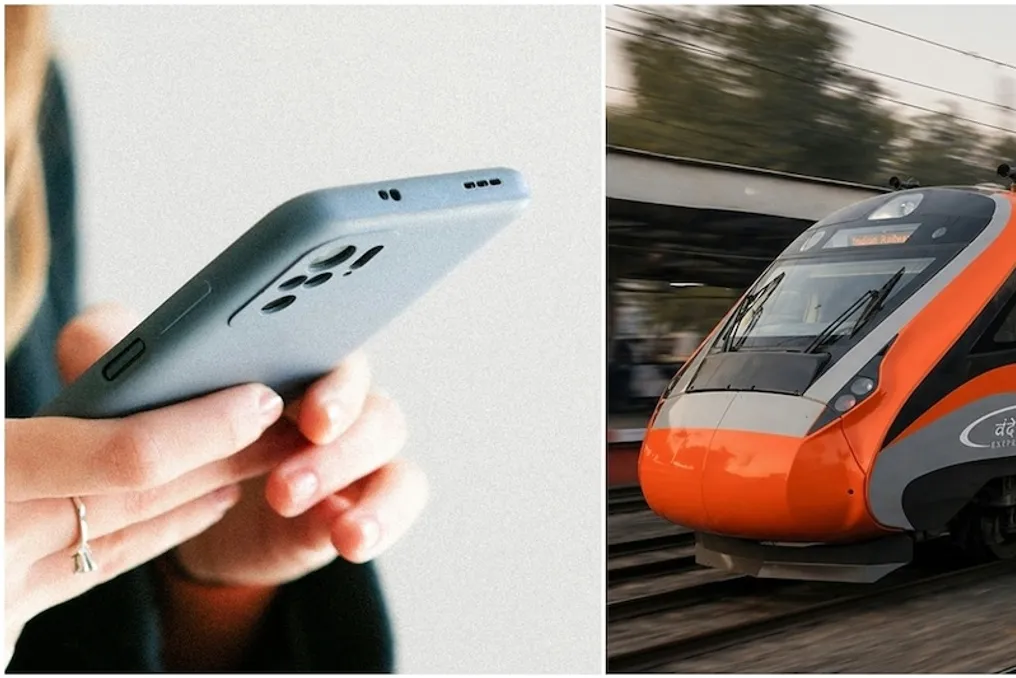
State application Rail One provides a full range of services for railway passengers
Read more
Aaj Tak
www.aajtak.in

State application Rail One provides a full range of services for railway passengers

Millions of people travel on Indian railways every day. Previously, to purchase tickets for reservations, general tickets, or check PNRs, passengers either stood in queues at ticket counters or installed various applications.

Now, Indian Railways has introduced the unified Rail One App, which provides a complete set of services. With this application, one can purchase both reserved and general tickets, as well as track train movement status in real time and use the 'Rail Madad' service.

Logging into the Rail One App is simple, and one account allows the use of all services. Additionally, during the journey, food can be ordered using the R Wallet feature. The application is available on the Google Play Store and Apple App Store.

With the Rail One App, users can book tickets for themselves and their families, including sleeper and AC compartment tickets.

Purchasing general tickets through the Rail One App is also simplified. To do this, one needs to scan a QR code located at the station, after which general tickets can be purchased for oneself and family members.

Through the Rail One App, platform tickets can also be bought. These tickets are necessary for access to the railway platform, for example, if you are accompanying someone to the platform.

The Rail One App allows checking the current train status. Users can see at what stage the train is and how much it is delayed. Furthermore, the app allows checking the carriage location and PNR number.

Similar stories

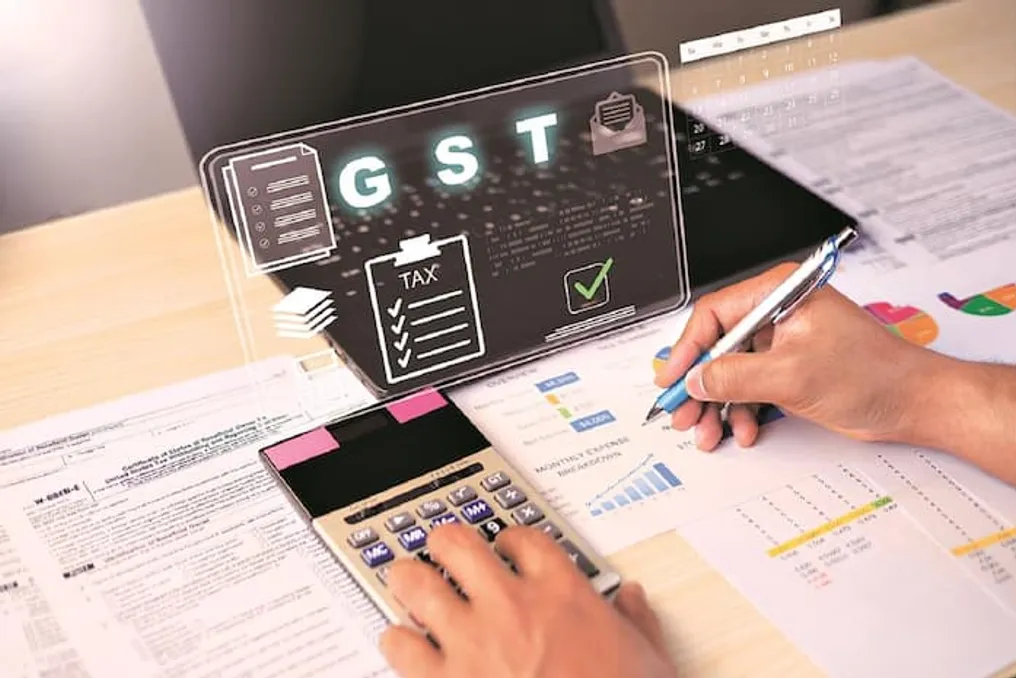
GST Network includes metro in electronic consignment note system
Read more
business-standard.com

GST Network includes metro in electronic consignment note system

GST Network (GSTN) has made changes to the electronic waybill (e-way bill) system by adding metro as a mode of transport.

The new option is available to web users for creating electronic waybills and updating transport data. Meanwhile, API users can test this feature in the 'sandbox' before its full implementation. GSTN, which manages the IT infrastructure for Goods and Services Tax, announced that the launch of the API in the production environment will be announced separately.

This addition aligns with the government notification from October 26. The e-way bill system now includes five modes of transport: road, rail, air, sea, and metro.

According to the Goods and Services Tax (GST), an electronic waybill is mandatory for goods transported between states or within a state with a value of ₹50,000 or more.

In a consultative communication dated November 20, GSTN clarified that the new option is available to web users for generating e-way bills and making changes to transport details. Users transporting goods via metro are required to select this mode of transport and specify the corresponding transport document number.

The new feature is also applicable for updating transport data, as well as for creating and regenerating consolidated electronic waybills. GSTN advised API users to make the necessary changes and complete testing before the production launch.

Within the GST system, API users are enterprises or transporters that use software directly connected to the GST portal to process electronic waybills and perform other GST-related tasks instead of manually entering data on the portal.

Railway services are considering abolishing the RAC ticketing system due to discrepancies between payment and seat allocation
Read more
www.aajtak.in

Railway services are considering abolishing the RAC ticketing system due to discrepancies between payment and seat allocation

The RAC (Reservation Against Cancellation) ticketing system on Indian Railways may be changed for passengers traveling on trains. Indian Railways is considering the possibility of abolishing this long-standing service. The main reason is that passengers who purchase RAC tickets pay the full fare but are not provided with a proper sleeping berth.

Under the RAC system, one side lower berth is shared by two passengers, forcing them to share sleeping space. RAC, which stands for Reservation Against Cancellation, is part of the old railway system. According to this system, passengers are allowed to travel on the train, but they are not allocated an entire seat. Nevertheless, they are obliged to pay the same amount as for a confirmed ticket. Questions arise about the feasibility of charging the full price if the passenger does not receive a proper sleeping place.

According to sources, the Ministry of Railways is studying this system. The railway considers it unfair to charge the full fare from a passenger who is not provided with enough sleeping space. With an RAC ticket, two passengers occupy one side lower berth: during the day it is used as a seat, and at night both passengers are forced to sleep on the same surface. In such conditions, it is difficult for passengers to find a comfortable spot. Furthermore, it becomes difficult for the Ticket Examiner (TTE) to arrange an alternative seat if there are no vacant seats on the train.

The issue of charging the full fare to RAC passengers was also raised before a parliamentary committee. The committee questioned the existing railway practice and recommended a review of it. The committee asserts that the rules regarding charging the full fare to passengers who are not allocated separate full berths must be re-examined. That is, the railway should assess how justified it is to charge the full fare to passengers traveling in a shared space. Following this recommendation, discussions about maintaining or changing the long-standing RAC system have intensified.

RAC stands for Reservation Against Cancellation. It is a railway ticket status where the passenger may not be allocated an entire seat but is allowed to travel in a reserved coach. It can be seen as an intermediate state between a confirmed ticket and a waiting list. Passengers with waiting list tickets usually wait for their ticket confirmation to board the reserved coach. Meanwhile, passengers with RAC tickets can travel in their assigned spot. If a passenger's confirmed ticket is cancelled, the vacated seat may go to the RAC passenger. Thus, an RAC ticket can be upgraded to a full seat upon cancellation and availability of a seat. However, this depends solely on the ticket cancellation and seat availability.

The RAC system was introduced when railway reservations were mainly done manually. At that time, it was difficult to quickly find out about cancelled tickets or available seats. Therefore, the railway introduced the RAC system to utilize last-minute cancellations and provide the opportunity to travel to the maximum number of passengers. This system allowed those who could not get a confirmed seat to travel on the train. Later, the railway ticketing system became computerized. This simplified the process of detecting cancelled tickets, vacant seats, and providing full seats to RAC passengers. Despite this, the RAC service continued to operate.

This is not the case currently. The Ministry of Railways is considering abolishing the RAC system, but no final decision has been announced yet. Consequently, passengers with RAC tickets can travel in reserved coaches just as before, according to current rules. If the railway decides to abolish or change this system in the future, it may affect ticket booking rules and seat allocation. For now, passengers need to await an official announcement from the railway.

New app in China popularizes requiring approval from strangers before purchasing goods
Read more
www.aajtak.in

New app in China popularizes requiring approval from strangers before purchasing goods

An unusual application is gaining popularity in China, designed to combat impulsive purchases amid the rise of online shopping. The principle of this app is that the user must obtain the opinion of random people before making a purchase of a desired item.

The app is named Wallet, Please Wait and functions as a mini-program within WeChat. Its main goal is to help people save money and prevent thoughtless spending.

If a user needs to buy an item, they must first provide complete information about it. This information includes the item's name, its cost, and the justification for the purchase. Furthermore, the user indicates whether cheaper alternatives exist on the market.

After filling out the data, the user sends an approval request. This request can be directed not only to friends or family but also to complete strangers. Other users vote on whether the item should be purchased and can leave their comments and advice.

An interesting example of the app's use occurred in China: one journalist requested public approval to buy milk tea costing 20 yuan (about 20 rubles). Out of seven voters, five refused to approve the purchase, considering the tea slightly overpriced for that price, and suggested more budget-friendly options.

Similarly, when asking for an opinion on buying a diary of the same cost, six out of seven respondents supported the purchase. This showed that people form their opinions about an item based on its usefulness and necessity, not just its price.

The app's popularity is driven by the prevalence of online shopping and people's tendency towards unplanned expenses, especially during sales and discounts. In China, Singles' Day on November 11th is celebrated annually as a shopping festival, when online platforms offer significant discounts and promotions. Under such conditions, buyers often rush to place orders due to the fear of missing out on a good deal.

This application allows buyers to pause and consider their intentions before making a purchase. Users can learn the opinions of those around them about the planned item and understand if it is truly necessary for them.

The main advantage of such an app is that it forces a person to think about their needs before making a purchase. When a user describes the reason for the purchase, they themselves begin to better understand their need. For instance, if a person needs a new mobile phone even though the old one still works, others might advise waiting. At the same time, if it concerns a laptop for work, people might recommend its purchase.

Thus, collective opinion can simplify the purchase decision-making process. However, it should be noted that each person's needs and financial situation are unique, so others' opinions should not become the final verdict.

Some users have expressed concerns about excessive reliance on the opinions of strangers for every small and large purchase. They believe that such a practice could gradually weaken a person's self-confidence. Therefore, such an app should be used more as a consultation tool rather than an organ making final purchasing decisions.

Ultimately, the decision of what a person needs and how much they are willing to spend from their income remains with the individual. Overall, the app represents an interesting mechanism that encourages people to slow down and reflect before spending. Although buying everything one likes is not a mistake, avoiding expenses caused solely by promotions is a sensible approach.
Popular