Seven Portuguese-speaking nations emit less than 3% of global greenhouse gases, yet some of them are among the most susceptible to the impacts of climate change, dealing with issues such as droughts, floods, and sea-level rise, according to official data.
According to the EDGAR report (Global Atmospheric Research Emissions Database), released in September 2026, Angola, Brazil, Cape Verde, Guinea-Bissau, Mozambique, São Tomé and Príncipe, and Timor-Leste accounted for 2.62% of global emissions in 2025, totaling 54.149 million tons.
Excluding Brazil, the participation of these countries drops to 0.21%, information noted by Lusa during COP31, held in Antalya, Turkey, the annual United Nations climate conference.
The EDGAR document points out that Brazil was responsible for 1.307 million tons of carbon dioxide equivalent (CO2e) in 2025, which corresponds to the sixth largest volume globally among countries and represents 2.4% of the global total. Following Brazil were Angola, with 70.7 million tons, and Mozambique, with 36.5 million.
Other listed countries included Guinea-Bissau, with 3.4 million; Timor-Leste, with 1.8 million; Cape Verde, with 990 thousand tons; and São Tomé and Príncipe, which recorded 260 thousand tons, being one of the smallest values among the 208 cataloged countries and territories.
Guinea-Bissau and São Tomé and Príncipe are particularly affected by sea-level rise and coastal erosion. In Guinea-Bissau, up to 80% of the population lives in low-lying coastal areas, while in São Tomé and Príncipe, floods could affect more than 4% of national wealth by the end of the century.
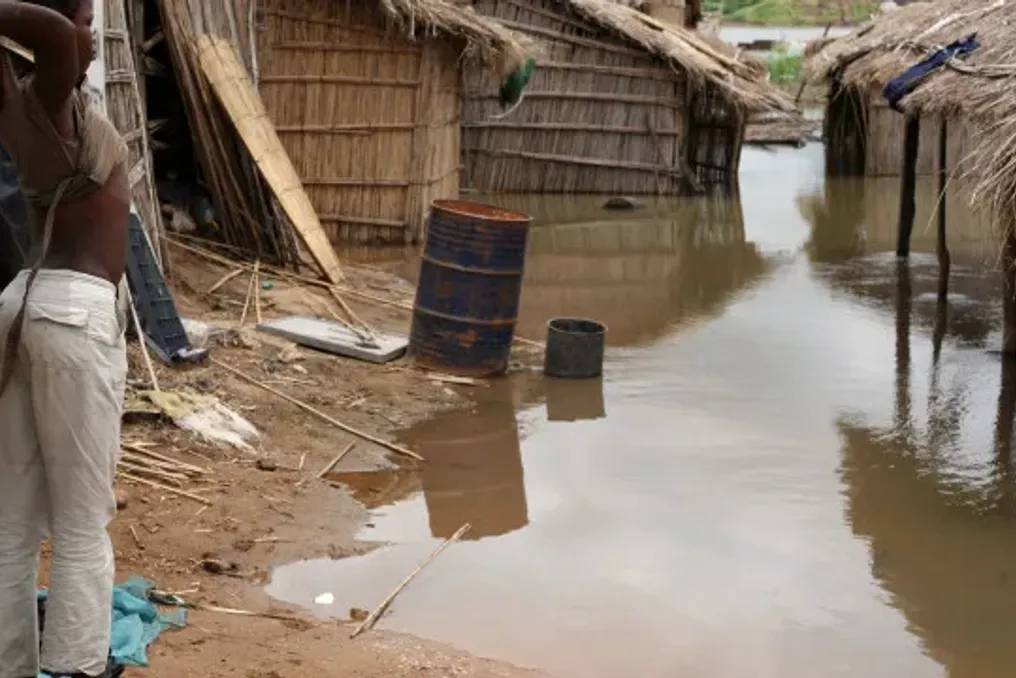
Cape Verde faces recurrent droughts and irregular rainfall, according to the report. In Timor-Leste, sea-level rise is occurring at a rate higher than the global average, and Mozambique is subject to increasingly frequent cyclones and floods. Meanwhile, Angola deals with prolonged drought periods that affect thousands of inhabitants.
The seven countries have already submitted their Nationally Determined Contributions (NDC 3.0) to the United Nations. These climate plans establish emission reduction targets and adaptation measures, mandatory for signatories of the Paris Agreement every five years.
EDGAR, developed by the European Commission's Joint Research Centre, uses a comparative methodology for all nations, but its figures do not include forests and land use, which may underestimate the contribution of countries where this is the main source of emissions.
In the case of Angola, the national inventory cited in the NDC revealed that, in 2020, 211.5 million tons of CO2e were emitted, with 84% coming from deforestation and land use, and 10% from energy, even though it is an oil-producing country.
In Mozambique, emissions in 2020 jumped from 30.6 million tons without considering forests to 91.3 million tons with them, according to the NDC.
Forests absorb carbon dioxide from the atmosphere and store it during their growth; however, when they are felled or burned, they release this carbon. Thus, in national inventories, deforestation is counted as an emission, and preserved forests as absorption.
There are cases, such as in Guinea-Bissau, where forests and mangroves absorb more carbon than the country emits, turning it into a net sink, with a forecast to restore 60% of mangroves by 2035.
Most countries link their climate goals to some form of external support, according to the NDCs analyzed by Lusa. Brazil commits to reducing its emissions by between 59% and 67% by 2035, compared to 2005, being the only one of the seven to measure this cut against a previous year.
The other countries with global targets calculate their reduction relative to the 'business as usual' scenario, meaning without implementing new actions. Cape Verde plans an 18% reduction without relying on external aid (unconditional target), but admits achieving up to 39% by 2035 with international support (conditional target). Guinea-Bissau promises 40%, and São Tomé and Príncipe, 38.2%. Mozambique set a target between 15% and 25%, classified as 'developing' in the NDC, while Angola set 5% with own resources and 11% with external aid.
In Guinea-Bissau, Mozambique, and São Tomé and Príncipe, all targets depend on external financing. Regarding financial needs, Angola estimates a mitigation cost of 412 billion dollars between 2025 and 2035, plus 235 million dollars for adaptation. São Tomé and Príncipe requests 886 million dollars by 2035, and Guinea-Bissau requires 684 million dollars for mitigation, which is approximately 23% of GDP. Cape Verde's NDC mentions a World Bank projection of 140 million dollars annually until 2030, while Mozambique and Timor-Leste did not specify a total amount.
Brazil also did not detail this amount, but its previous NDC mentioned the need for 'at least 10 billion dollars per year' starting from 2021 to deal with climate challenges.
Additionally, a synthesis report from the United Nations Framework Convention on Climate Change (UNFCCC), published in October, reported that 127 new NDC 3.0s had been submitted by August 31.