US Imposes Sanctions on Iranian 'Oil Trusted Persons' for Circumventing Restrictions
Read more
Middle East Eye
www.middleeasteye.net

US Imposes Sanctions on Iranian 'Oil Trusted Persons' for Circumventing Restrictions

The U.S. Department of the Treasury imposed sanctions on four Iranian citizens on Friday who held positions as 'oil trusted persons.'

According to the Treasury Department statement, these individuals attempted to collect funds from illegal international oil sales and transfer them to the Iranian government in order to circumvent previously imposed sanctions and the U.S. maritime blockade.

In several cases, as noted by the Treasury Department, the trusted persons misappropriated oil revenues for personal gain.

Among the sanctioned individuals are Mohammad Javad Bavand, a former intelligence officer of the Islamic Revolutionary Guard Corps (IRGC) of Iran, and Majid Taj, brother of Mehdi Taj, president of the Iranian Football Federation.

Similar stories

Hyundai plans launch of seven-seater SUV to compete with Mahindra XUV 7XO
Read more
www.aajtak.in

Hyundai plans launch of seven-seater SUV to compete with Mahindra XUV 7XO

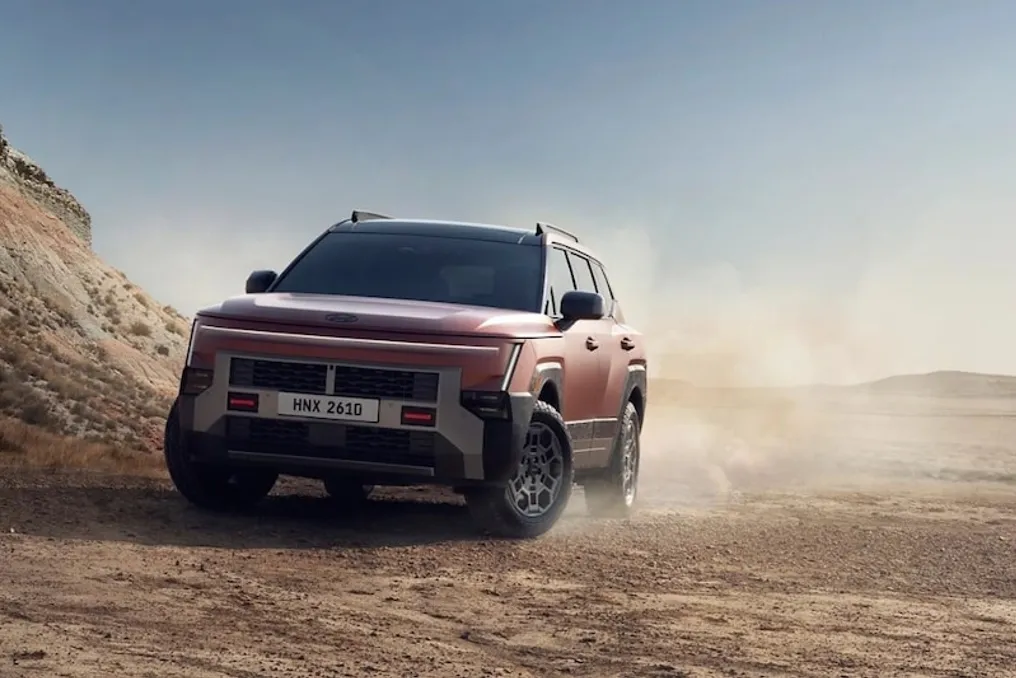
Hyundai is preparing to release a new SUV for the Indian market. This is not their affordable electric SUV, but a large seven-seater SUV that could be launched directly to compete with the Mahindra XUV 7XO. This vehicle was recently spotted during testing.

Hyundai is working on a range of models for the Indian market, including both a small electric SUV and a seven-seater vehicle. A three-row hybrid Hyundai SUV was recently spotted that could potentially appear in India. This vehicle has the code name Ni1i.

Photos of this camouflaged vehicle appeared from South Korea. The car was seen fitted with tires from Indian brands, suggesting its possible arrival in India. This is not the first time news about a seven-seater Hyundai has emerged.

There have also been previous reports about the development of a seven-seater hybrid SUV that Hyundai could launch in India above the Alkazar level. Recent surveillance photos demonstrate progress in the development of this vehicle, although information regarding its production name, specifications, and launch schedule is still unavailable.

The camouflaged vehicle showed an HEV designation, indicating it is a hybrid electric vehicle. Furthermore, the car displayed the test identification number C122. This SUV will be equipped with a gasoline hybrid powertrain, but details about the engine and battery are currently unknown.

It might use the 1.6-liter gasoline hybrid kit that Hyundai previously offers. A similar engine was used in the Kia Sorento recently launched in India. The vehicle was seen with JK Tyre tires, and the presence of local manufacturer tires hints at its import into India.

Although the presence of Indian brand tires is not definitive confirmation of a launch in India, there is a suggestion that the last letter 'i' in the code name Ni1i is specifically used for India. The design of this vehicle is boxy. It features a high body, a flat roof, vertical sides, and a vertical tailgate. The rear design confirms the presence of a third row of seats. The vehicle may have thick cladding with pointed wheel arches, large rectangular side mirrors, and angular wheels.

In India, this vehicle will compete with the Mahindra XUV 7XO.

New Airbus A321neo with improved cabin and satellite internet arrives in Tashkent
Read more
podrobno.uz

New Airbus A321neo with improved cabin and satellite internet arrives in Tashkent

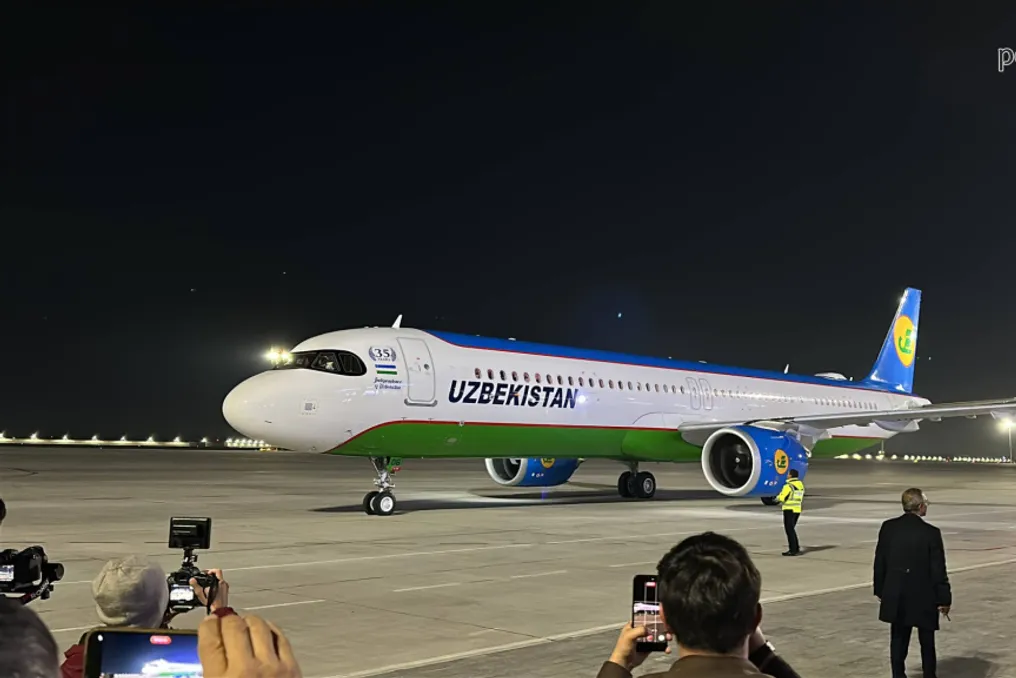
The sixth Airbus A321neo aircraft has arrived in Uzbekistan, featuring a new cabin layout, reclining seats, and an upgraded multimedia system compared to previous models. A correspondent from Podrobno.uz visited the aircraft's arrival at Tashkent-Khumo Airport.

This new airliner belonging to Uzbekistan Airways, bearing registration number UK32106, arrived from Hamburg, Germany. The plane was ceremoniously decorated to mark the 35th anniversary of Uzbekistan's independence and was greeted with a water arch upon landing before being presented to guests and journalists.

Key Differences of the New Aircraft

The main difference in the new aircraft lies not so much in its external appearance as in its internal modifications. While earlier A321neos accommodated 188 passengers, this specific aircraft can carry 172 people: 16 in business class and 156 in economy. This represents a reduction of 16 seats, accompanied by a change in the overall organization of the passenger space.

In business class, passengers are provided with seats that fully transform into a horizontal position. Additional amenities include individual lighting, power outlets, USB ports, and separate compartments for personal belongings. Economy class features new seats with adjustable backrests and dedicated charging ports for gadgets.

Other cabin elements have also been modernized. Larger baggage racks have been installed to accommodate a greater volume of hand luggage, and the lighting system can change its brightness and color temperature depending on the flight phase. Each seat is equipped with a screen: 17.3 inches in business class and 13.3 inches in economy. The multimedia system allows passengers to watch movies, listen to music, and track the flight path on an interactive map.

One of the innovations is the equipping of onboard equipment for high-speed satellite internet, which will allow network usage during the flight in the future; however, information regarding the service start date and connection conditions is currently unavailable.

Economic Efficiency and Operational Plans

The new aircraft is also significant from an economic perspective. Airbus asserts that thanks to new engines and structural changes, the A321neo family consumes up to 20% less fuel per passenger compared to previous generation models. Furthermore, the noise impact area during takeoff for this model is approximately 50% smaller than that of its predecessor, the A321ceo. These parameters refer to the characteristics of the model itself, not the results of tests conducted on the specific arriving aircraft.

The arrival of the aircraft is part of a fleet renewal program. Although the airliner will soon begin regular flights, its specific routes have not yet been determined. It is worth noting that Airbus forecasts an almost threefold increase in passenger turnover in Central Asia by 2045.

Popular