Beyond the Dark: Nightwatch is an asymmetrical cooperative horror game designed exclusively for two players and available on Nintendo Switch 2. The game has an interesting concept: two players use two consoles and two incomplete sets of information, with neither being able to survive alone. However, the developers made serious mistakes in the learning process; the game relies too heavily on trial and error and lacks Portuguese language support, which is critical for the mechanics based on reading and explaining what is seen.
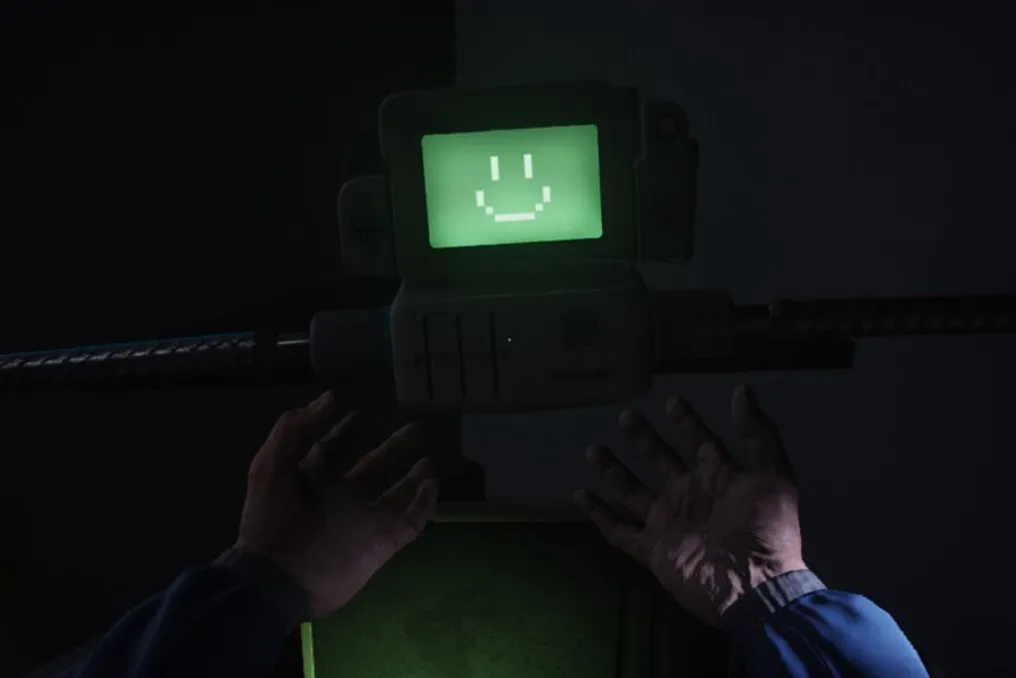
The game does not offer a single-player mode and does not include an AI-controlled companion; its functionality depends entirely on the presence of a second partner. The core idea is the division of roles: one player acts as the Explorer, who enters the house in first-person view in the dark, searches for clues, opens passages, and tries to find an exit. The second player takes the role of the Overseer, staying outside, in front of a camera system and tactical tools, observing what their partner cannot see. They are hunted by the Gloam entity, which reacts to noise.
Neither character possesses complete information. The Explorer sees danger up close but does not understand the overall map, while the Overseer knows the map but is physically outside the action. The only bridge between these two viewpoints is communication, and this is where the game either succeeds or fails. The principle is similar to the classic game Keep Talking and Nobody Explodes, where one sees the bomb and the other has the defusal guide; here, it is the same concept of divided information and mandatory communication, but instead of a table and a timer, there is a dark house and an entity that watches every step.
The game was developed by the independent studio Atlantis Studio, based in Avignon, France, co-founded by Nico Augusto, who also directs, and Rui Vieirasuria, co-founder of Ready at Dawn, the studio behind The Order: 1886. Nightwatch is the studio's first original project and is built on the Unreal Engine 5. Publication in Asia is handled by Q-Games from Kyoto, which also participated in the animation of Gloam. Notable names were involved in the project: Troy Baker, known for his voice work in The Last of Us, Death Stranding, and BioShock Infinite, voiced the game, and Oscar Araujo, composer of the Castlevania: Lords of Shadow trilogy, wrote the original soundtrack. According to the reviewer, the musical component is one of the most successful parts of the entire package, fulfilling half the job of creating tension that the visuals cannot provide.
There are four ways for a pair to connect: local co-op, GameShare, local network, and online. The most commercially advantageous aspect is that only one person needs to buy the game. The other player can download the Friend's Pass for free from the eShop and join the game without owning a copy. Through GameShare, even an original Nintendo Switch, rather than necessarily a Switch 2 on both sides, can host the session.
However, there is a significant drawback: the online mode lacks a matchmaking system. Players can only play with those already on their friends list, severely limiting the potential of a game that is entirely dependent on having a second person. Furthermore, playing online requires a paid Nintendo Switch Online subscription. During testing, the reviewer played with Winnie Pereira in local mode, which allowed both to avoid using the console chat and adhere to the rule of not looking at each other's screens. Playing in the same room is the best way to experience the gameplay, as communication is faster, and the shared panic experience becomes more entertaining.
It must be stated clearly: Beyond the Dark: Nightwatch does not teach the player. The game throws the player into a situation and requires them to find solutions independently. There is no clear tutorial material presenting commands for each function, nor a controlled prologue to understand each character's tools. Basic things, such as opening the inventory, are discovered through exploration. Some interactions are too subtle for the player to notice on their own. For example, at the beginning, the Explorer picks up a cube, but it turns out that the Overseer—the player at the cameras—is the one managing the inventory, checking items and activating usage. This aligns with the logic of divided information, where the Overseer holds the database, but the mechanic is unintuitive.
This type of friction creates unnecessary complexity. Getting stuck due to a difficult puzzle is a challenge, but getting stuck because you don't know a command exists is a flaw in the game's communication with the player. Nightwatch's learning curve is built on repetition. To learn how to deceive the Gloam or use the monitoring system effectively, many playthroughs are required. Moreover, the cost of a mistake is high: encountering the Gloam immediately ends the game. Although there is permanent progress—found notes and documents are saved, and solved obstacles remain solved—which speeds up return, lost items for the Explorer force a significant portion of the path to be replayed. Thus, one clumsy mistake can cost a lot of time, and repeating mastered sections kills the game's strongest quality: the tension of the unknown. Adding additional checkpoints could solve this problem without making the game easy.
During testing, it was noted that some elements change position between sessions, such as statues in the first section. This helps prevent the house from becoming a mere set piece, but it does not compensate for the volume of repetitions required after errors. The reviewer did not observe if they change within a single playthrough, but the puzzle solutions remain constant. Each session ends with an evaluation based on the pair's performance, calculated separately for each role. The Explorer is rated on time spent crouching, running, and walking, number of rooms visited, and objectives completed before being detected by the entity. That is, stealth and efficiency are valued; running around for the sake of running costs dearly. The Overseer is rated on different criteria: marking the entity's position for the partner, using distractions, and correctly identifying clues. The game also features an achievement system for both characters, aimed at those striving for 100% completion.
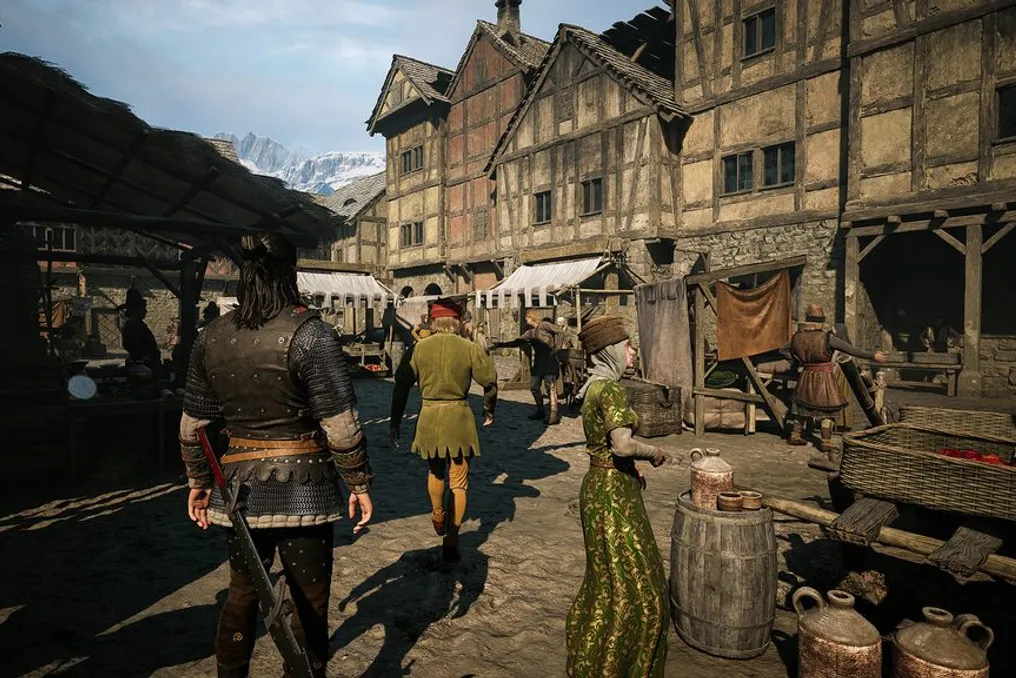
There is no global leaderboard in the game itself. The reviewer did not understand the purpose of these scores. Graphical realism should not be expected. Despite using Unreal Engine 5, the final polish matches the level of indie production: simple textures, economical modeling, and 'soft' edges in some areas. The darkness of the house partially masks this, but in some rooms, the result looks raw. Nevertheless, the immersion works; the reviewer experienced genuine scares, and the sound design supports the atmosphere even with weak visuals. Delays were noted on the Overseer when quickly opening items or changing cameras, especially in GameShare games. International analyses also point to strange behavior from the Gloam, which sometimes freezes on its patrol trajectory and lingers longer than expected in a specific area of the map. Loading takes about 6.9 GB, and the game runs in TV, semi-portable, and portable modes.
The most serious issue for the Brazilian audience is the lack of Portuguese language support. The game is available in English, Spanish, French, German, Italian, and Japanese, but it lacks interface or subtitles in Portuguese. In this game, this is critical because the main mechanic requires reading documents and relaying instructions to a partner while the Gloam approaches. If one of the players does not read English fluently, the pair loses the advantage the game is supposed to create. For a pair comfortable with English, this is a minor detail; for others, it is a real obstacle to be aware of before purchasing for R$ 89.90.
The answer depends on the question. The game is worth it if you have a suitable partner. The central idea is creative, and the console is part of the concept: two screens, two consoles, two pieces of information. When the pair establishes interaction, crossing a corridor turns into tense and very fun negotiations. The game truly changes depending on the partner, which is normal for many cooperative games. But it should be viewed as entertainment. The game is not worth it if you expect flawless horror. The initial story is weak and fails to capture the atmosphere. The learning process is so poor that much of the beginning is frustrating rather than frightening. The cost of death is too high for a game that makes you learn from mistakes. And the lack of Portuguese language support is costly in a game dependent on reading.