Biopics face the challenge of condensing an entire life into a limited cinematic format. There are various approaches to answering this question: some seek to cover several decades of a public figure's journey, while others opt to focus on a specific event or period.
In a reflection on this topic, productions such as *I Am Rocky*, *Oppenheimer*, and *Madden* were analyzed. Furthermore, the edition highlights new releases in theaters, including a new chapter of the *Hunger Games* franchise, and lists releases on platforms like Netflix, Prime Video, Disney+, and HBO Max.
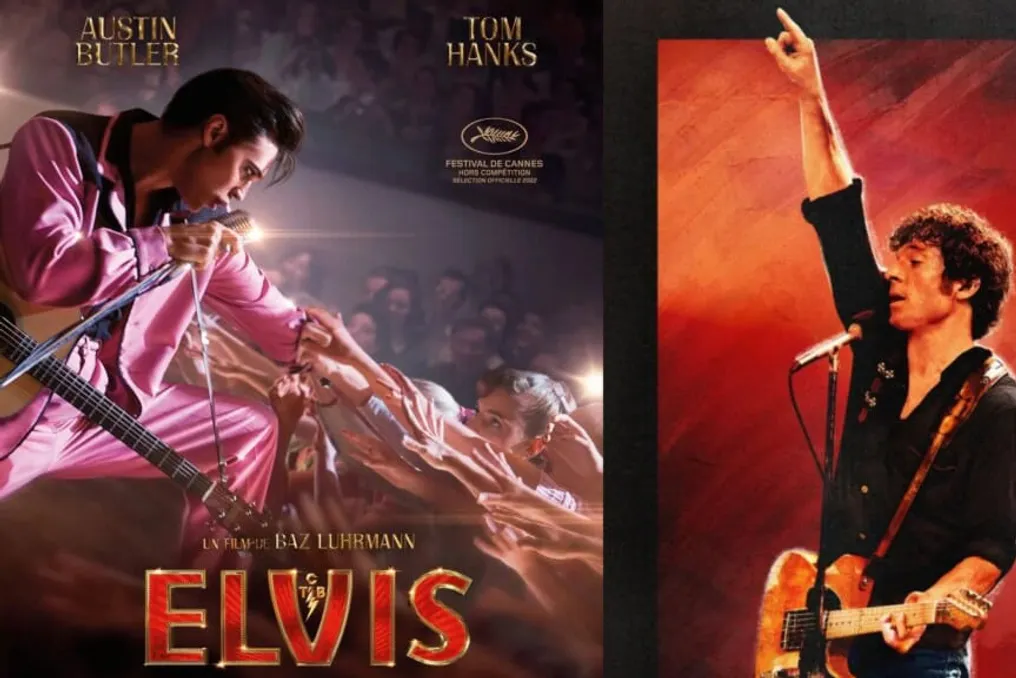
A frequently cited piece of advice in the corporate environment is to avoid 'chicken work,' which means trying to do many things without excellence. In the context of biopics, many productions fall into this trap by trying to summarize the complete life of the subject in just two hours, as seen in *Elvis* (2022) and *Michael* (2026).
Conversely, there are films that explore specific excerpts. *I Am Rocky*, which recently premiered, narrates Sylvester Stallone's trajectory in the production of *Rocky: The Fighter*. Other focused biopic examples include *Springsteen: Save Me From The Unknown* (2025) and *Oppenheimer* (2023).
The cinematic technique known as *montage* allows covering long periods of time in just a few minutes, functioning as a visual summary. Although useful, its excessive use in a biopic can obscure important nuances, which are crucial for generating empathy for the subject.
The film *Elvis* was described as an accelerated compilation of *montages*, used to portray the career of the artist played by Austin Butler. Meanwhile, *Springsteen: Save Me From The Unknown* offers a dive into the mind of Bruce Springsteen (played by Jeremy Allen White) during the recording of the album *Nebraska* (1982) and tracks from *Born In The U.S.A.* (1984), allowing the viewer to observe the artist in the 1980s.
Similarly, *Oppenheimer*, directed and written by Christopher Nolan, does not cover the physicist's entire career, but rather the moment when Oppenheimer (played by Cillian Murphy) led the development of the atomic bomb during World War II.
The choice of narrative approach is fundamental, as it defines the audience's experience and what the work manages to reveal about the protagonist. *Madden*, a recent Prime Video film about John Madden (played by Nicolas Cage), exemplifies this by attempting to combine different phases of the American football coach's career, which included achievements with the Oakland Raiders, sports commentary, and association with video games. However, the feature struggled to create a cohesive narrative.
Films like *Jackie* (2016), which follows Jacqueline Kennedy (played by Natalie Portman) in the week after her husband, President John F. Kennedy (played by Caspar Phillipson), was assassinated, and *The Damned United* (2009), focused on Brian Clough's (played by Michael Sheen) 44 days of command at Leeds United in 1974, demonstrate how a specific excerpt can be a powerful starting point for exploring personality and conflicts.
In the *Hunger Games* franchise, the sixth film jumps forward 24 years to show the youth of Katniss Everdeen's (played by Jennifer Lawrence) mentor. In *The Hunger Games: Catching Fire*, Haymitch Abernathy (played by Joseph Zada) is shown at age 16, when he is separated from his family and sent to the Second Quarter Quell. In this setting of deadly games organized by the Capitol regime, the young man discovers that survival requires challenging the rules, which puts him in the crosshairs of President Snow (played by Ralph Fiennes).
*I Am Rocky* details how Sylvester Stallone, before becoming famous, invested in his talent in the 1970s. Played by Anthony Ippolito, young Stallone wrote the script for *Rocky: The Fighter* and gained the interest of a major studio. Despite needing money, he refused a high offer, demanding to star in the film. The studio agreed, and the film became a box office success in 1976, winning Oscars in 1977.
Another mentioned title is a thriller directed by Brazilian Beth de Araújo, where an eight-year-old girl, Josephine (played by Mason Lily Reeves), witnesses a brutal crime in San Francisco, USA, changing her life. Traumatized, she begins to act violently and report a ghost linked to the case, putting her parents, Damien (played by Channing Tatum) and Claire (played by Gemma Chan), in a dilemma between protecting their daughter and complying with police pressure.
An epic inspired by a Hindu poem over 2,500 years old brings to the screen the story of Prince Rama, an incarnation of Vishnu, and his romance with Princess Sita. Due to political intrigue, the couple is forced into a 14-year exile in dangerous forests, accompanied by his brother Lakshmana. The visual effects are from the same team as *Dune* and *Interstellar*.
Finally, the newsletter invites readers to share their favorite biopics, mentioning that personally, they prefer *Schindler's List* (1993) and *The Imitation Game* (2014) for the way they present real stories and impactful characters.