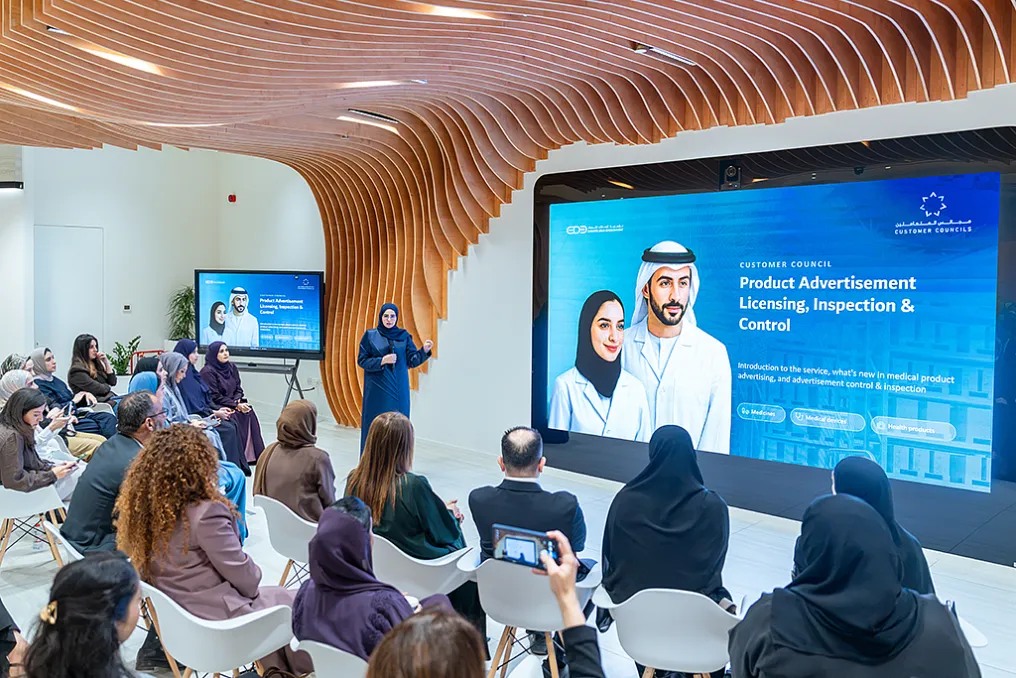
UAE Regulatory Body Introduces Mandatory Approval for Medical Product Advertising
Read more
Khaleej Times
www.khaleejtimes.com

UAE Regulatory Body Introduces Mandatory Approval for Medical Product Advertising

The UAE Drug Authority (Emirates Drug Establishment) has reviewed key changes in the regulatory framework concerning the advertising of medical goods, specifically introducing the possibility of promoting Prescription Only Medicines (POMs) provided that approved regulatory standards are met.

A Council for Medical Product Advertising Clients was established to implement the latest updates in regulating advertising content and to strengthen compliance with applicable rules and requirements.

Various advertising placement channels were discussed, including print media, audiovisual materials such as billboards, as well as websites, social media platforms, and other digital channels.

The Council meeting took place at Emirates Towers, where industry representatives, partners, and clients gathered to raise stakeholders' awareness about the importance of obtaining permission before publishing or distributing advertising materials.

The application procedure through the advertising licensing system was examined, which includes the necessary supporting documents and advertising content depending on the type of advertisement and the chosen channel, as well as the application review process and submission requirements.

Furthermore, regulatory requirements regarding advertising content were discussed, with special emphasis placed on ensuring accuracy, clarity of information, and the absence of misleading claims.

Advertising materials must comply with the approved product information and its use, and must clearly state any relevant risks or side effects. Participants also reviewed appropriate disclaimers required depending on the product type and target audience, as well as the importance of preventing the encouragement of self-diagnosis or self-medication by the general public without proper medical supervision.

The Council also addressed issues of monitoring and inspecting advertising across various media channels, including mechanisms for handling non-compliant content and coordination with relevant authorities to take action and remove non-compliant materials when necessary.

The requirement to obtain approval from the Emirates Drug Establishment (EDE) before publishing or distributing any advertisement was reaffirmed, as well as adhering to the rules and regulations governing advertising claims and promotion methods, including the prohibition of advertising, promoting, or endorsing medical products through social media influencers.

The meeting also provided an opportunity for dialogue with clients regarding their experience working with the service and practical aspects of submitting applications. Participants shared questions, feedback, and suggestions, while discussions explored ways to refine procedures and simplify application requirements, contributing to continuous service improvement and increased overall customer satisfaction.

The Council was held as part of Emirates Drug Establishment's ongoing efforts to expand communication channels with stakeholders and involve them in developing services within its purview, supporting advertising compliance, public protection, and promoting the safe use of medical products.
Similar stories

Alembic Pharma receives USFDA approval for Binimetinib drug for lung cancer treatment
Read more
business-standard.com

Alembic Pharma receives USFDA approval for Binimetinib drug for lung cancer treatment

Alembic Pharmaceuticals has received final approval from the U.S. Food and Drug Administration (US FDA) for its Abbreviated New Drug Application (ANDA) for Binimetinib tablets, intended for the therapy of lung cancer.

The company reported in regulatory documentation submitted on Saturday that the approved ANDA is therapeutically equivalent to the reference listed drug Mektovi Tablets (15 mg) from Array BioPharma Inc.

Alembic is entitled to 180 days of exclusivity for the generic drug Binimetinib Tablets in 15 mg and 45 mg dosages. This is because the company was one of the first ANDA applicants for the 15 mg dosage and the sole first applicant for the 45 mg dosage, submitting a substantially complete ANDA with Paragraph IV certification.

Binimetinib is a kinase inhibitor shown in combination with encorafenib for treating patients with unresectable or metastatic melanoma, as well as non-small cell lung cancer with the BRAF V600E mutation.

According to IQVIA data, the estimated market size for Binimetinib tablets is valued at $282 million USD over 12 months ending in September 2026, as stated in the submitted documentation.

Thanks to this approval, Alembic has accumulated a total of 248 US FDA ANDA approvals, including 230 final and 18 preliminary approvals.

UAE conditionally approves new use of Ultomiris for treating immune-mediated kidney disease
Read more
www.khaleejtimes.com

UAE conditionally approves new use of Ultomiris for treating immune-mediated kidney disease

The United Arab Emirates (UAE) has granted conditional approval for the use of the drug Ultomiris to treat immune-mediated kidney disease. Previously, this drug was registered in the UAE in 2022 for the therapy of several rare diseases.

The conditional approval for a new indication for Ultomiris (ravulizumab) from AstraZeneca was issued by the Emirates Drug Authority (EDA). The purpose of this approval is to reduce proteinuria in adult patients with primary IgA nephropathy who are at risk of disease progression.

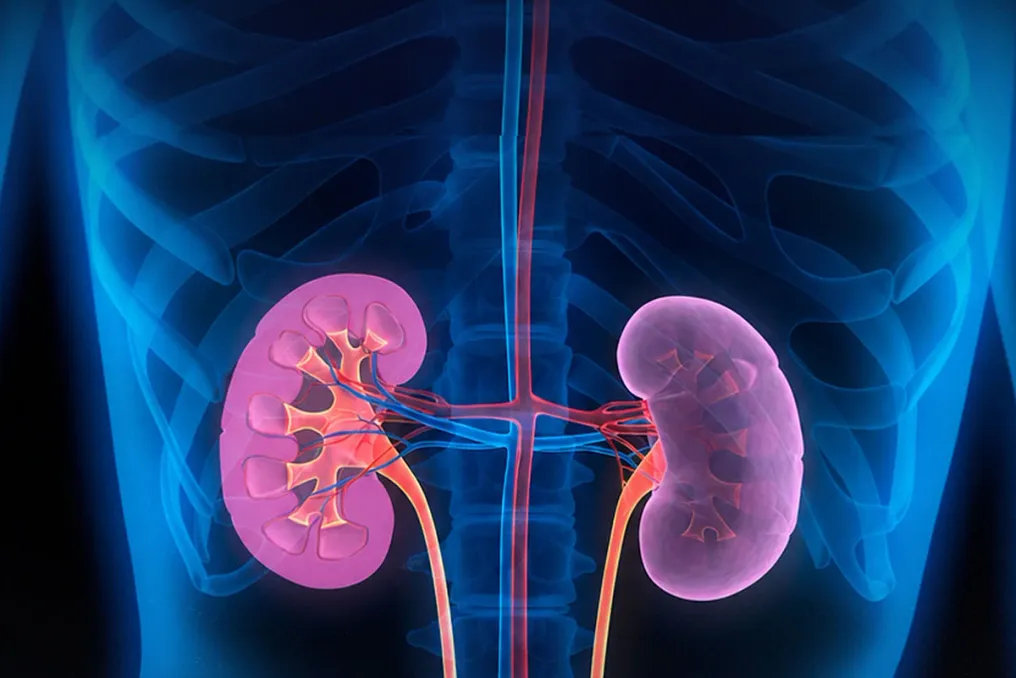
Primary IgA nephropathy is an immune-mediated kidney disease that occurs due to the deposition of immune proteins in kidney tissues. This condition can potentially cause inflammation and gradual deterioration of kidney function.

Elevated levels of protein in the urine serve as an important indicator associated with disease development, highlighting the significance of choosing treatment methods capable of reducing proteinuria and aiding in condition control.

The EDA emphasized the critical importance of early diagnosis, regular monitoring of kidney function and urine protein levels, as well as strict adherence to treatment plans prescribed by specialist physicians, to support disease management and minimize the risk of complications.

This decision aligns with the strategic priorities of the UAE and the goals of the 'We Are UAE 2031' concept, which aims to strengthen competitiveness in vital sectors, including pharmaceuticals and healthcare, as well as promote innovation, research, and development.

Furthermore, it is consistent with EDA's efforts to create an advanced and proactive pharmaceutical regulatory system based on efficacy, the highest regulatory standards, and international criteria for quality, safety, and effectiveness, while accelerating patient access to new treatment methods.

UAE Launches National Anti-Doping Platform to Manage Athlete Therapeutic Exemptions
Read more
www.khaleejtimes.com

UAE Launches National Anti-Doping Platform to Manage Athlete Therapeutic Exemptions

The United Arab Emirates (UAE) has introduced the National Anti-Doping Platform (NAPD). This unified digital system is designed to administer Therapeutic Use Exemptions (TUEs), which allow athletes to use substances or medications prohibited in sports.

The platform enables the electronic submission, verification, approval, and tracking of applications. Furthermore, it automatically sends notifications and checks data, as well as professional licenses through relevant government bodies.

The system also creates a national database of athletes and medical professionals. This supports data analysis, informed decision-making, readiness for doping-related risks, improved operational efficiency, and ensuring the fairness of sporting competitions.

The launch of the platform was carried out by the UAE Ministry of Interior in collaboration with the Ministry of Sport and the National Anti-Doping Agency. Dr. Mai Ahmed Sultan Al Jaber, Chairman of the National Anti-Doping Agency, explained that the platform fully automates the process of submitting applications electronically. This includes document preparation, attaching medical reports, submission, status monitoring, and completion according to established rules.

This transition reduces reliance on paper forms and manual data entry, minimizes procedural errors, and increases the accuracy of the information provided. Dr. Al Jaber added that the platform helps medical specialists make decisions by giving them access to information about prohibited substances in sports and allowing them to check approved alternative treatments.

This contributes to preventing the unintentional use of banned substances while ensuring that athletes retain access to necessary medical care and treatment. The official start occurred after approximately one year of operation, during which the platform underwent testing and its procedures were refined in cooperation with various partners.

This period allowed for the automation of key anti-doping processes, simplified the processing of TUE applications, and improved data exchange between involved parties. The platform also allows for the cross-checking of data and professional licenses in coordination with government structures, ensuring that medical personnel working with sports organizations meet the required licensing standards and preventing athletes from receiving assistance from unqualified specialists.

Dr. Al Jaber emphasized that NAPD is not limited to online application acceptance; it also serves as a preventive and regulatory tool supporting international anti-doping standards, improving interaction among athletes, doctors, and relevant authorities, and encouraging disclosure and verification before the use of medicines or medical products.

Services of the National Anti-Doping Platform are available on the website npad.ae, and the helpline can be found at 600566635.

Popular