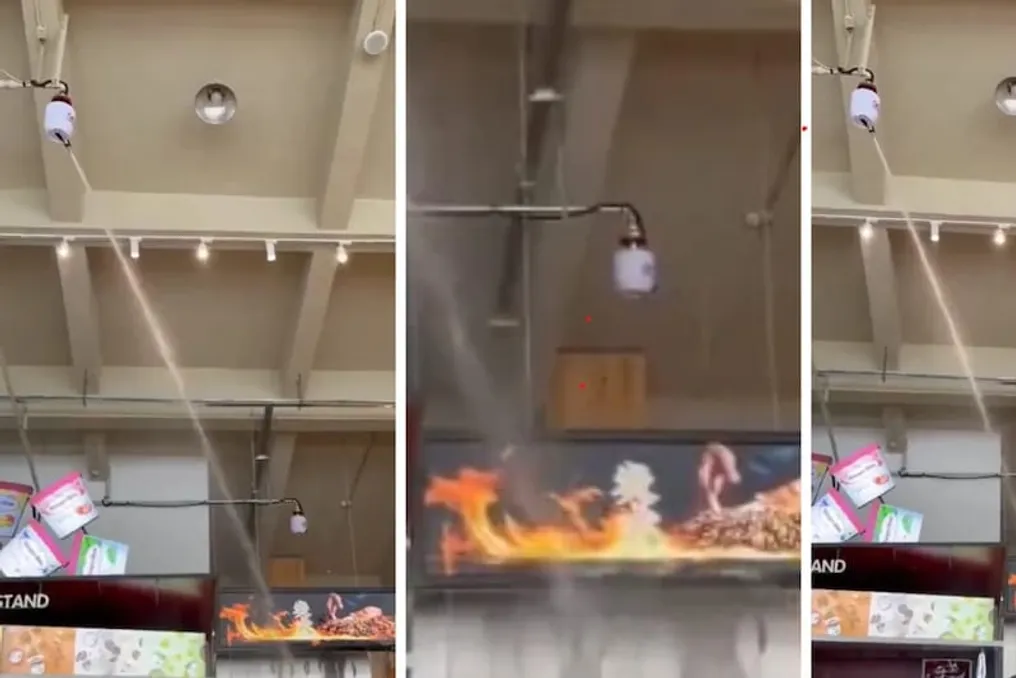
An unusual incident occurred in Hebei Province, China, involving an artificial intelligence (AI)-based fire suppression system. The system, installed at a ski resort, mistook the flame animation displayed on a digital screen for an actual fire.
As a result, the system directed a water nozzle at the display and began spraying water onto a neighboring food kiosk. Soon, the water soaked the goods and the area around the kiosk.
This incident took place on November 19th in Zhangjiakou, Hebei Province, at the Wanglang ski resort. A digital display was located in front of a restaurant, showing a flame animation. The AI system interpreted this image as a real fire and subsequently aimed its water nozzle toward the display.
The system, equipped with cameras, is designed to detect fires at the resort. It analyzes surrounding images to try and identify fire. However, in this case, the system made a mistake. A video that went viral on social media shows a strong stream of water falling onto the display, next to which was an ice machine and bar stools that also got wet.
No one was injured as a result of the incident. Nevertheless, the kiosk had to be temporarily closed for cleaning, after which the rest of the resort's operations continued as usual. Resort staff explained that the system is designed for rapid fire detection and suppression, but this time it sprayed water in the wrong place.
Various reports mention that the cause of the alarm activation could have been equipment located in the kitchen, and then the system started spraying the display showing the fire instead of the real source.
Typically, fire suppression systems react to heat or smoke. However, AI systems are also capable of analyzing images received from cameras. They attempt to recognize signs of fire, such as flames, colors, and movement. The advantage of this approach lies in the ability to respond quickly when a fire occurs. But the incident in China demonstrated a serious drawback of this technology: AI can mistake an image with fire for a real fire.
Therefore, experts note that relying solely on cameras for safety is insufficient. For accurate fire detection, data on temperature, smoke, and information obtained from cameras must be checked simultaneously. This case, although seemingly amusing, raises an important question about the degree of trust that should be placed in AI in critical areas such as safety.