Robotic blacksmiths manufacture Toyota pickup body, excluding equipment over 20 tons
Read more
AutoPapo
autopapo.com.br

Robotic blacksmiths manufacture Toyota pickup body, excluding equipment over 20 tons

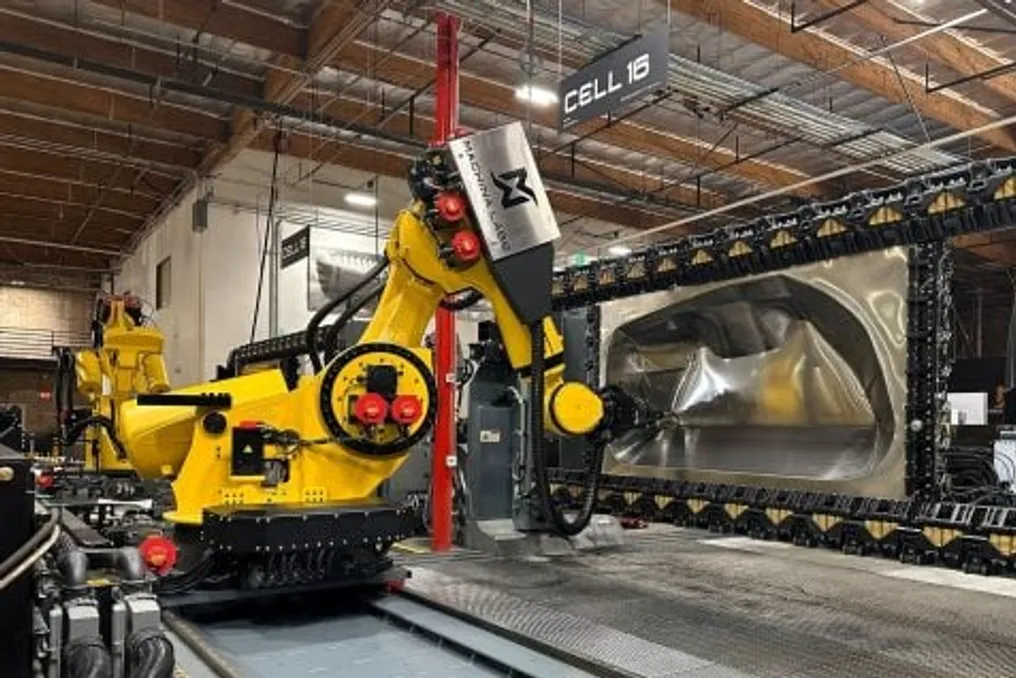
The robots were able to form an individual body for the Toyota Tacoma pickup in approximately three weeks. This process, according to the company, would take up to six months using traditional manufacturing methods.

The Lassen vehicle, which was presented at the Los Angeles Auto Show this Friday (the 20th), is a demonstration of the new automotive division of Machina Rebellis, belonging to the California company Machina Labs. The Tacoma is a mid-size pickup that Toyota sells in the US and is comparable in size to the Hilux.

The project's design was developed by the British studio Callum, led by Ian Callum, who headed Jaguar's design for two decades. The hood, tailgate, front, and side fenders are inspired by California's volcanic national park and are exclusive elements.

In traditional industry, body sheets are formed in press dies—tools that can exceed 20 tons in weight, and this is only economically viable when producing thousands of identical parts. However, the Machina platform, named RoboCraftsman, eliminates this stage: two robotic manipulators positioned on either side of the sheet press it point by point based on a digital file, mimicking the work of a blacksmith.

In the Lassen model, the hood and tailgate were created based on original Tacoma parts, onto which a topographic pattern and the Machina name were embossed. As for the aluminum fenders, which are 2.5 cm wider on each side, and the side panels, they were formed from smooth sheets.

According to the company, engraving the pattern on the finished part takes only a few minutes, whereas forming a new part requires several hours.

Machina Labs previously served mainly the aerospace and defense sectors but has already demonstrated Anvil—a Ford F-150 Lightning pickup with a robot-manufactured body. Investors include Toyota through its investment arm, Woven Capital.

The new division focuses on special editions, prototypes, and body kits for accessory companies. Furthermore, Machina plans to integrate its robotic cells, each valued at 5.9 million Brazilian reais ($1 million USD), directly into automakers' factories.

Regarding Lassen, CEO Edward Meier expects to deliver ten units to customers in 2027 as part of a pilot project.
Similar stories

Japanese Engineers Created TwinX Robotic System for Cargo Transport
Read more
nplus1.ru

Japanese Engineers Created TwinX Robotic System for Cargo Transport

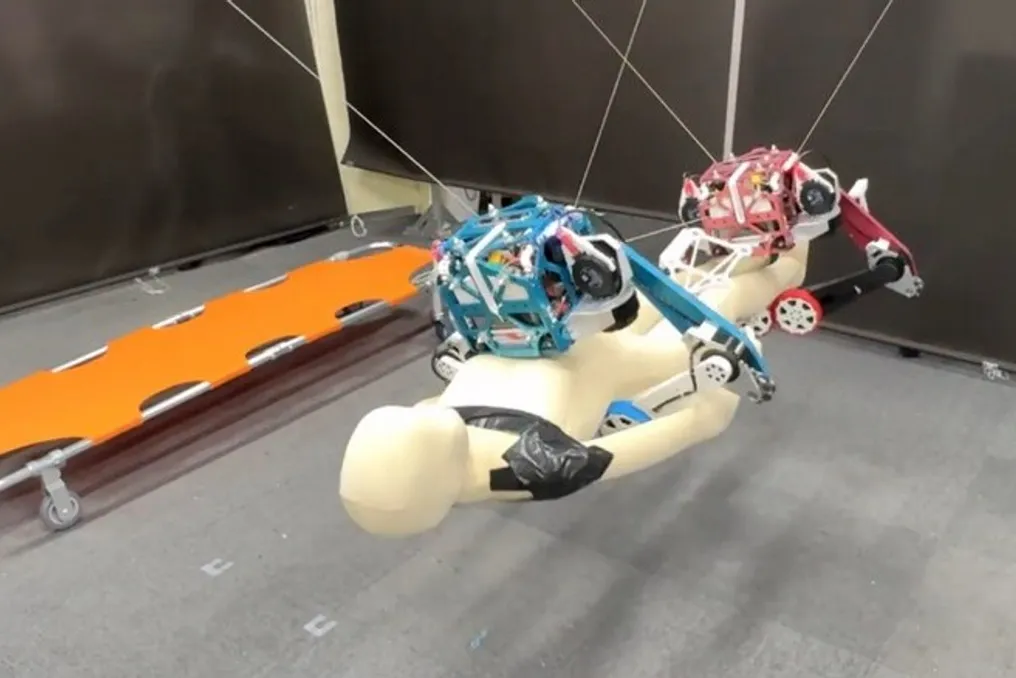
Engineers from Japan have developed a cable parallel robot called TwinX. This system is based on the use of two identical bipedal robots equipped with wheels.

The robots are attached to surrounding supports via cables, and they are connected by an additional cable. This design allows them to move synchronously in the air and jointly transport various objects, using their legs as mechanical grippers.

During tests, TwinX successfully lifted a human mannequin from the floor surface and then transported it onto a stretcher. The results of this development were presented in the scientific publication IEEE Robotics and Automation Letters.

DiDi plans to integrate robotaxis and human drivers into the same transport application
Read more
tecnoblog.net

DiDi plans to integrate robotaxis and human drivers into the same transport application

The Chinese mobility giant, DiDi, intends for both autonomous vehicles and human drivers to provide services to passengers through a single ride-hailing application. Stephen Zhu, who is responsible for the company's international operations, which includes the 99 app in Brazil, explained that driverless cars will play a complementary role within a 'hybrid model' that unites robots and people.

Zhu demonstrated vehicles to foreign press, including Tecnoblog, at the company's headquarters in Beijing. He believes that robotaxis can be useful during peak periods. According to him, a fleet of car with drivers sized only for rush hour might sit idle during the middle of the day, while a fleet adjusted for calmer hours might suffer from a lack of vehicles during high demand times.

The executive raised several questions about implementing thousands of autonomous cars on the streets, arguing that the challenges go beyond simple driving. He questioned who would be responsible for cleaning the vehicles in case of dirt or liquid spills, as well as for maintaining these automobiles. Furthermore, Zhu pondered which entity would have the necessary capital to acquire and maintain a fleet of this magnitude.

To expand the service to other markets, Zhu highlighted the need to conduct local tests and obtain the necessary authorizations from regulatory bodies. Although he did not specify where commercial operations outside of China will begin, he emphasized that the launch of autonomous driving will be done progressively. In April, DiDi announced the United Arab Emirates as its first international destination for this technology, with tests and pilot initiatives scheduled for 2026.

DiDi has been developing its own autonomous vehicle technology since 2016. According to Zhu, the company began testing in Beijing without a safety driver on board in 2024. At one of the project facilities, it is possible to observe the evolution of the cars, from the first to the fourth generation. The most recent model, named R2, was created in collaboration with GAC Aion, which is the electric vehicle division of GAC, also Chinese and present in Brazil.

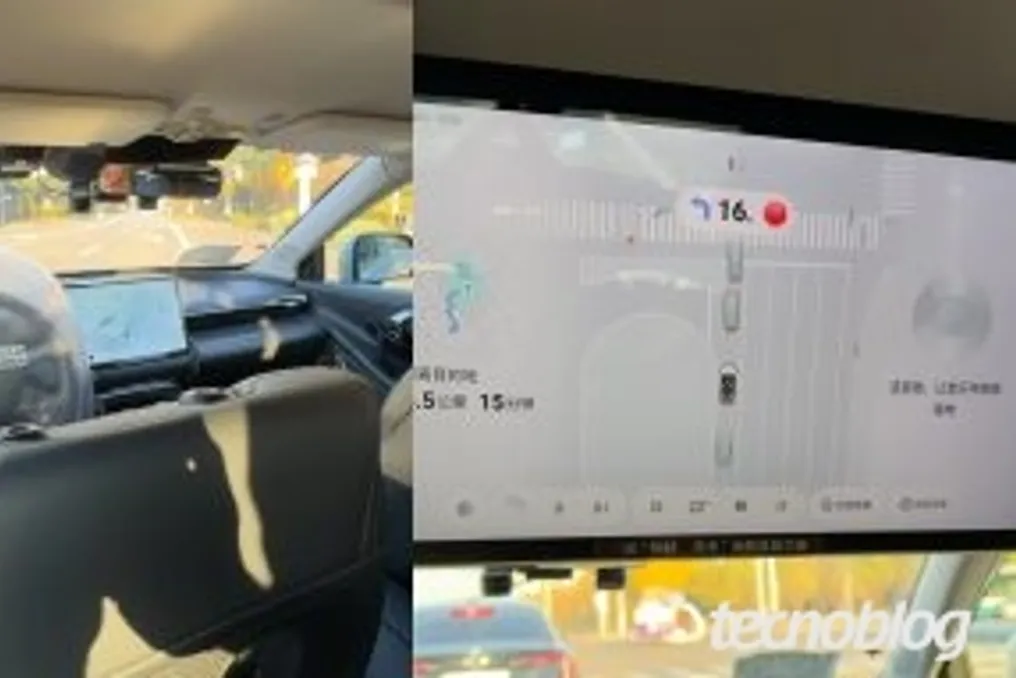
During a service demonstration, the report described a smooth boarding in a comfortable vehicle. A notable detail is that the steering wheel is protected by a plastic cover, preventing any physical access. DiDi reports that the R2 uses 33 sensors to interpret the environment, including radars and cameras, with LiDAR being one of them, which uses laser pulses to create a three-dimensional map of the surroundings. The trip lasted approximately 20 minutes, during which the car repeatedly traveled the same route. The two internal screens display a graphic representation of what the vehicle is perceiving, showing cars in front, behind, and on the sides. The system also recognizes common traffic elements, such as bicycles, cones, and traffic signs.

In the test conducted, the car maintained a cautious pace, described as monotonous, reaching speeds of 30 km/h on a road with a 70 km/h limit. During the demonstration, there was no option to select a riskier driving mode in case of urgency. Starting in August 2026, it will be possible to request the R2 via the DiDi app in test areas in Beijing and Guangzhou. Meanwhile, Waymo already offers passenger transport in 15 restricted markets in the United States, and the author of the text has personally used a company vehicle in San Francisco, California, with great comfort.

BYD introduced automated robotic charging mount in UAE that connects automatically
Read more
pandaily.com

BYD introduced automated robotic charging mount in UAE that connects automatically

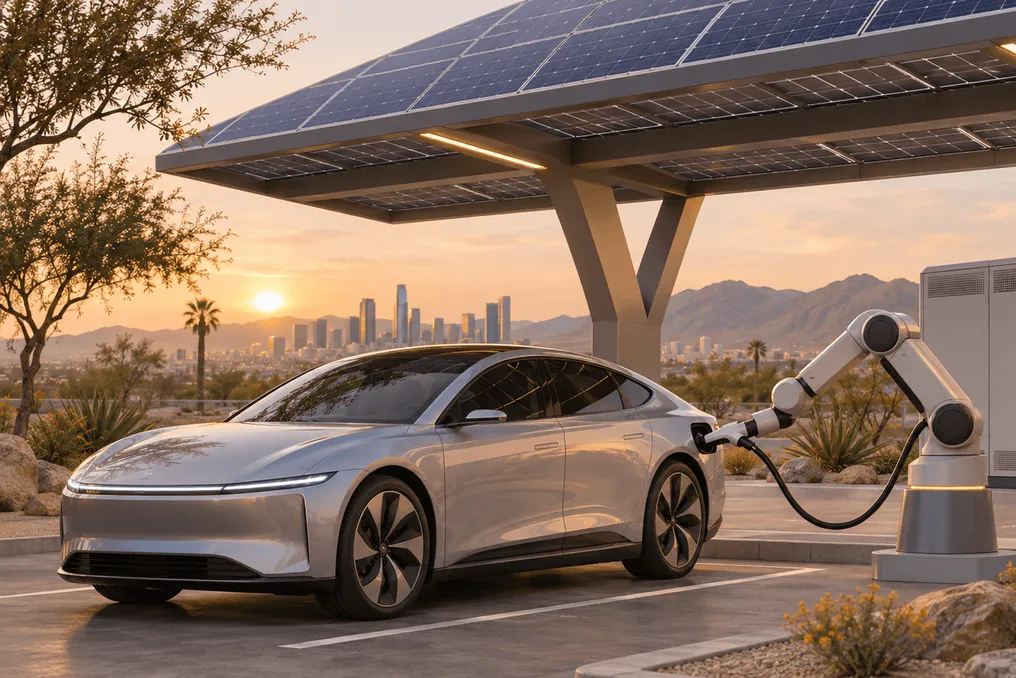
According to Chinese reports published on November 9, BYD demonstrated an automated robotic mount for its fast-charging network in the United Arab Emirates. This mechanism handles the entire charging process: after the vehicle parks in a designated bay, the mount opens the charging port cover, grips and inserts the connector, initiates charging, then removes the connector and closes the cover. The driver does not need to leave the vehicle during this process.

It is reported that the mount uses visual recognition combined with feedback control to locate the charging port. It is also compatible with various local connector specifications, which is important for deployment abroad where charging standards differ from Chinese ones.

The demonstration site integrates solar generation, energy storage system, and a charging station. Solar panels collect energy, and storage cabinets buffer it, allowing the station not to draw peak load directly from the grid. The charging power shown at the facility reached 1000 kilowatts. According to reports, using BYD's second-generation Blade battery, this enables a five-minute top-up and a nine-minute full charge. However, the reports do not specify the initial and final charge levels, the vehicle used, or the environmental conditions during the demonstration.

BYD also presented a one-click parking and charging function, where the vehicle autonomously drives into the charging bay and then hands over control to the robotic mount, combining automatic parking and automatic charging into a single process. As noted in the report, in hot desert climates similar to those in the UAE, this eliminates the need for drivers to stand outside while connecting the cable.

BYD has been developing robots for automated charging for several years. Early versions were used for topping up automated guided vehicles before the work was expanded to parking areas for passenger cars. Previously published patents by the company describe additional potential functions, including reading battery charge levels and tire pressure, locating tire valves for inflation, and operating without modifying the vehicle itself. However, these patent descriptions are not features announced for the system in the UAE.

BYD has not yet provided information on the number of spots that will receive this mount, the timeline for its availability to customers, or whether it will be offered outside the UAE.

Popular