Uzbekistan plans to purchase materials worth $2.2 billion for the NPP in Jizzakh region
Read more
UzDaily
uzdaily.uz

Uzbekistan plans to purchase materials worth $2.2 billion for the NPP in Jizzakh region

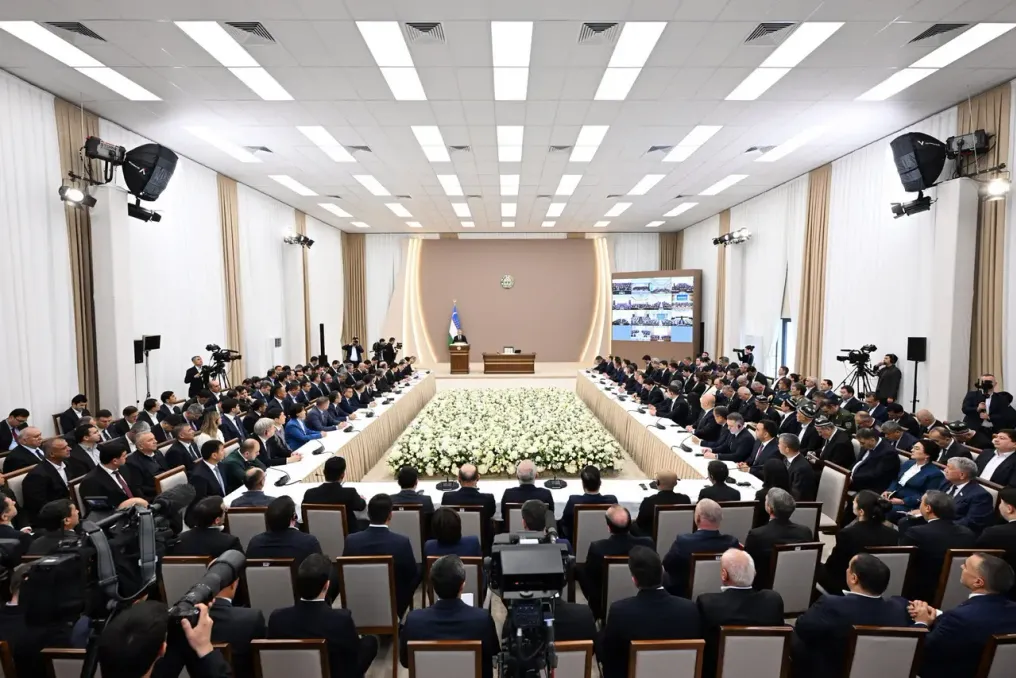
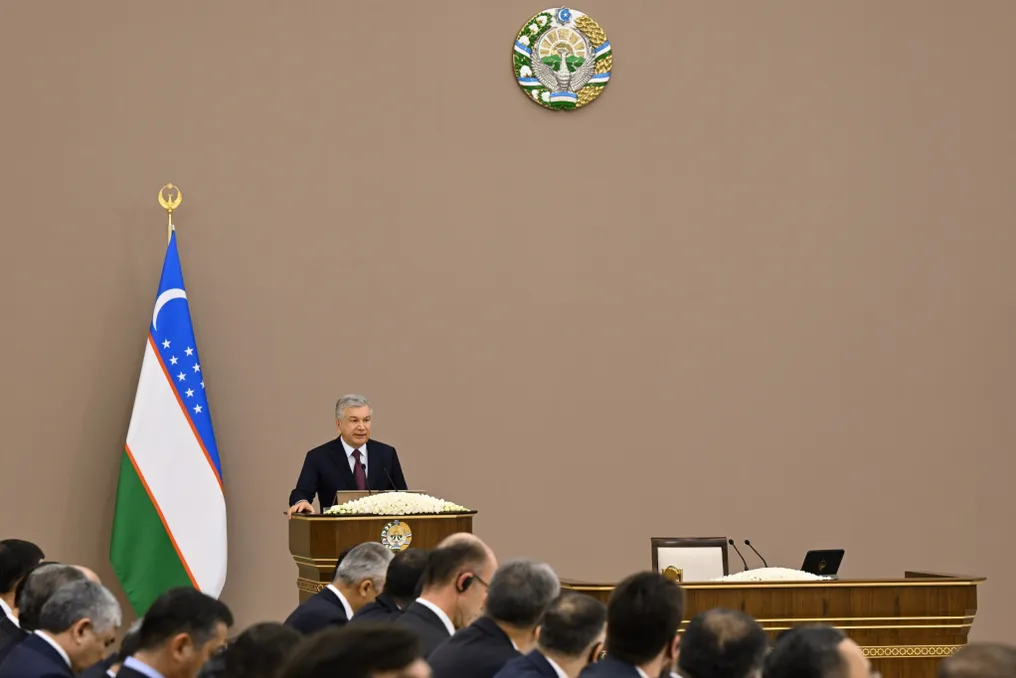
President of Uzbekistan Shavkat Mirziyoyev announced that approximately $2.2 billion will be required to purchase construction materials for the nuclear power plant project in the Jizzakh region. This information was shared during his meeting with representatives of businesses and investors in the construction and tourism sectors.

A special industrial zone covering 200 hectares has been planned in Egizbelok to supply the necessary products. It is anticipated that production facilities capable of manufacturing 70 different types of materials and products for the NPP construction will be located on this site.

Mirziyoyev instructed officials to assess the demand for import-substituting products needed for major industrial and infrastructure projects. Based on the data obtained, a list of sectoral initiatives totaling $20 billion will be prepared. Furthermore, starting in 2027, $200 million is allocated for developing the production of new high value-added construction materials. Financing will be provided at an annual interest rate of 6% with a two-year grace period.

Companies will also receive compensation covering 10% of the costs for energy-saving equipment, with the maximum subsidy limited to 1 billion soms. During the same meeting, the president announced plans to build a paint and coating production plant owned by the Turkish company Betek near Tashkent and directed an improvement in the quality of domestic building materials.

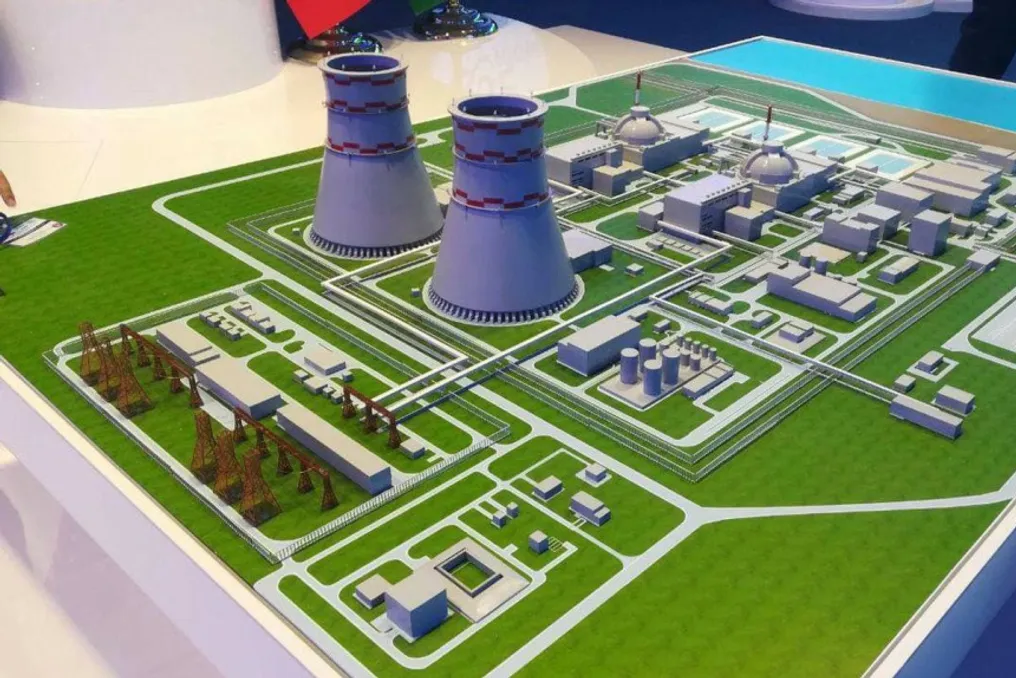
The Uzbekistan NPP project includes the construction of two large-capacity power units and two small modular reactors. In September 2025, Uzatom and Rosatom agreed on the configuration of the integrated station. The project involves two power units equipped with VVER-1000 Generation III+ type reactors and two units with RITM-200N reactors, each with a capacity of 55 MW. The total installed capacity of the station is expected to exceed 2.1 GW, of which 2 GW belongs to the large NPP and 110 MW to the small NPP.

Earth excavation work at the site in the Jizzakh region began in October 2025 to prepare the pit for the power unit with the RITM-200N reactor. Initial concrete works at the site started in March 2026. According to Uzatom data, at this stage, foundation preparation for the reactor building, including waterproofing and grounding system, was underway.

On June 4, 2026, a ceremony marking the start of construction of the integrated NPP took place in the Farish district of the Jizzakh region, where the first power unit was laid and the first concrete was symbolically poured. In early September 2026, Mirziyoyev instructed officials to increase the share of local production in the NPP project to 30%. The head of Uzatom, Azim Ahmedkhojav, stated at that time that plans were being developed to create an industrial zone in the Farish district for the production of construction materials for the nuclear industry.

In August 2026, the president also announced the start of large-scale preparations for the second nuclear power plant in Uzbekistan. Later, on September 8, Serbian President Aleksandar Vučić stated at a business forum in Belgrade that Uzbekistan is considering attracting Chinese partners to the new nuclear project.
Similar stories

Special industrial zone to be created in Jizzakh region of Uzbekistan for the needs of NPP construction
Read more
podrobno.uz

Special industrial zone to be created in Jizzakh region of Uzbekistan for the needs of NPP construction

A special industrial zone is planned to be opened in the Jizzakh region of Uzbekistan, covering an area of 200 hectares. This zone will be intended for the production of building materials and other products critically important for the construction of the nuclear power plant.

President Shavkat Mirziyoyev announced this during a meeting with investors and entrepreneurs in the Parkent district. Local producers are expected to master the production of seventy new types of products as part of this project.

The creation of this zone is driven by the large-scale construction of the NPP in the Jizzakh region, for which the need for construction materials is preliminarily estimated at $2.2 billion. The new industrial zone will be located on the territory of the Egizbulok mahalla.

Enterprises operating in this zone will receive special customs and tax conditions designed to facilitate the start of production and stimulate investment inflow. In addition to materials for the nuclear power plant, authorities aim to expand the production of goods that are currently imported.

To achieve this goal, it has been ordered to conduct an analysis of the needs of major investment projects and approve a plan for the implementation of projects totaling $20 billion. Furthermore, to support industry, starting next year, $200 million will be allocated to projects producing high value-added goods. Financing will be provided at an annual rate of 6% with a two-year grace period.

Enterprises will also be able to receive compensation for part of the costs of implementing energy-efficient equipment. The state will cover 10% of the costs, but the limit per project will not exceed 1 billion soms. Uzbekistan is also studying the possibility of attracting companies that participated in the construction of the 'Akku' NPP in Turkey to work on its first nuclear power plant.

Zone for Manufacturing Equipment for Central Asia NPPs to be Created in Jizzakh Region of Uzbekistan
Read more
podrobno.uz

Zone for Manufacturing Equipment for Central Asia NPPs to be Created in Jizzakh Region of Uzbekistan

A specialized industrial zone is being formed in the Jizzakh region of Uzbekistan where enterprises will produce components for nuclear power plants not only for Uzbekistan but also for other countries in Central Asia.

President Shavkat Mirziyoyev announced these plans during a meeting of the Uzbek-Turkish Council for Business Support. Within the 'Atom-Industry' zone, it is planned to establish production across fifteen different areas. This product is intended for use in the construction and operation of nuclear power plants both within the country and in neighboring states.

During this meeting, the president also invited Turkish companies to participate in new initiatives related to the mining industry, deep processing of mineral raw materials, and the development of 'green' energy.

Furthermore, Uzbekistan has set goals to increase gold production to 175 tons, silver to 500 tons, and to increase copper production capacity to 500 thousand tons by 2030. Concurrently, a target has been set to expand renewable energy capacity to 25 gigawatts, with the share of renewable sources in total electricity generation reaching 54%.

It was previously announced that Uzbekistan is studying the option of attracting Turkish firms that participated in the construction of the Akkuyu NPP to manufacture components and equipment for its first nuclear power plant.

Uzbekistan to launch 164 industrial projects worth $11.6 billion over three years
Read more
podrobno.uz

Uzbekistan to launch 164 industrial projects worth $11.6 billion over three years

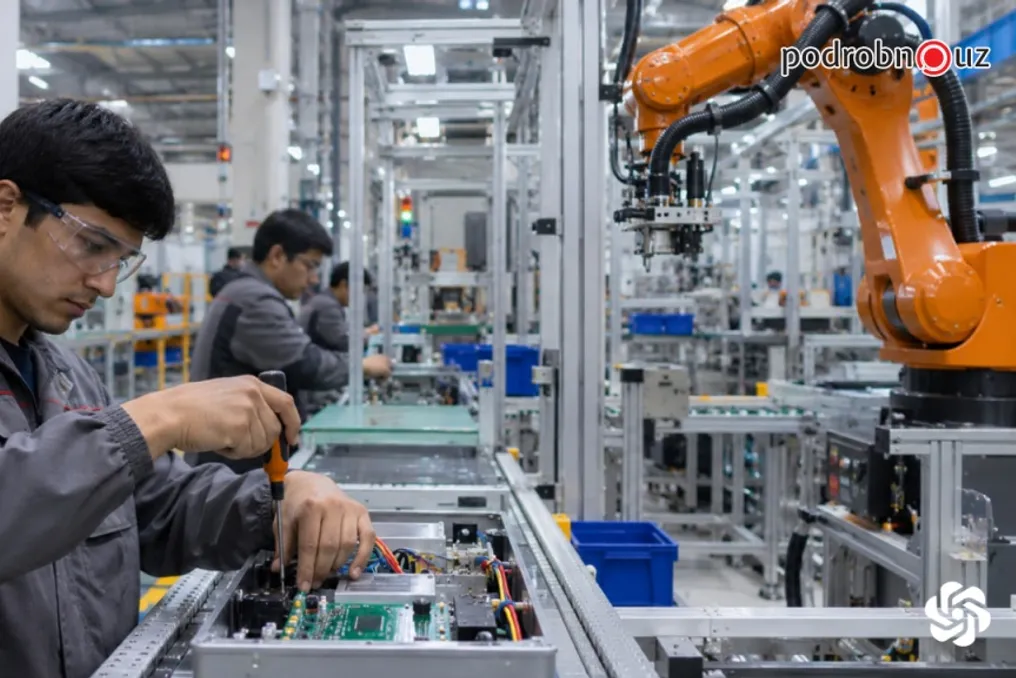
Uzbekistan plans to implement 164 industrial projects over the next three years. The total value of these projects, which cover electrical engineering and related sectors, amounts to $11.6 billion. The main focus of development will be placed on six key areas, including robotics, microelectronics, production of electric vehicle and home appliance equipment.

These plans were presented at a meeting held on November 9th, attended by President Shavkat Mirziyoyev, as well as representatives of the business community and investors. The projects are distributed across various industries:

  • Cable industry — 41 projects worth $2.5 billion.
  • Production of transformers and pumps — 29 projects worth $1.4 billion.
  • Industrial robotics and equipment manufacturing — 45 projects worth $3 billion.
  • Electrical products for transport and electric vehicles — 9 projects worth $650 million.
  • Electronic components and microelectronics — 21 projects worth $3.5 billion.
  • Home appliances — 19 projects worth $600 million.

Responsible managers and main clients have been appointed to ensure the implementation of these directions. Their task is to attract major investors and establish cooperation with technical universities and scientific centers to accelerate the market introduction of new developments.

Focus on Robotics and Infrastructure Development

Special attention is being paid to the development of robotics. Microprocessor module production is already underway in the Akhangaran Technopark, and a project to produce robots is starting in Tashkent in collaboration with South Korean partners. Furthermore, many enterprises have appeared in the country that deal with the production of technological equipment for the textile, metalworking, construction, and other sectors.

To further promote these industries, a Center for Future Technologies will be established in Nurafshan. Residents of this center will be granted benefits similar to those enjoyed by participants of the IT Park. Raw materials and components necessary for the production of electronics, robots, and technological equipment will be exempt from import duties, and income from scientific discoveries in these fields will be tax-exempt.

A national platform called "Yangi sanoat" ("New Industry") will also be launched in Uzbekistan. This platform will serve as a link between researchers, developers, and industrial enterprises, promoting faster innovation adoption in production.

The President instructed that a testing site for new products be organized in every region by May 1st, utilizing the base of research centers or technoparks. These sites should help strengthen ties between small producers, large companies, and scientific institutions.

Responsible agencies have been ordered to prepare a draft resolution regarding robotics development within two weeks, and to develop a comprehensive program to support electronics and technological equipment production by March 1st.

Example of Successful Cooperation

During the meeting, an example of the work of the enterprise "NURA Electric," which focuses on engineering design and dual education systems, was reviewed. At this enterprise, about one hundred design engineers and technologists use their own developments in the production process. Additionally, another 50 students combine studies with paid work, gaining practical experience directly in production.

The President emphasized the critical importance of having qualified engineers, designers, and researchers for creating high-tech products. Currently, 20 students from technical universities and scientific staff are undergoing internships at electronics enterprises in South Korea, and this figure is planned to be increased to one hundred people soon.

It should be noted that joint productions with South Korea have previously been launched in Uzbekistan, including a factory for producing robots and their components.

Popular